
AI-Driven Drug Discovery: The Clinical Validation and Development of ISM001-055 for Idiopathic Pulmonary Fibrosis
🚀 Key Takeaways
- Radical Acceleration of R&D: Generative AI collapsed a traditionally decade-long discovery timeline into under 30 months from initial hypothesis to early clinical validation.
- Dual-Stage Computational Discovery: The candidate represents a true end-to-end AI breakthrough, utilizing algorithms to discover both the biological target and the chemical molecule.
- Tackling Intractable Fibrosis: ISM001-055 specifically inhibits TNIK to halt debilitating pro-fibrotic signaling in idiopathic pulmonary fibrosis.
- Demonstrated Clinical Efficacy: Phase 2a clinical results confirmed solid safety and tolerability along with dose-dependent gains in forced vital capacity.
- A Precedent for Algorithmic Medicine: Successful human trials have transformed AI-driven molecular generation from theoretical ambition into clinically validated science.
For decades, pharmaceutical research has navigated a grueling path defined by billions of dollars in capital expenditure, prolonged development cycles, and high attrition rates in early-stage pipelines. Bringing a single viable therapeutic molecule into patient trials typically required over a decade of painstaking biological screening and medicinal chemistry.
The journey of ISM001-055 (also known as rentosertib) has fundamentally redefined this paradigm. Developed by Insilico Medicine through its generative AI platform, the investigational therapy tackled idiopathic pulmonary fibrosis (IPF)—a chronic, life-threatening respiratory disease with notoriously limited therapeutic options—by algorithmically prioritizing a novel kinase target and designing a complementary small molecule tailored specifically to inhibit it.
As the drug advances through clinical evaluations with encouraging safety and respiratory readouts, it offers compelling proof that computational chemistry can reliably translate into bedside therapeutics. Examining the milestones behind ISM001-055 illuminates how generative algorithms are converting vast biological datasets into tangible medicine.

1. Rethinking R&D Economics: Generative AI vs Conventional Drug Timelines
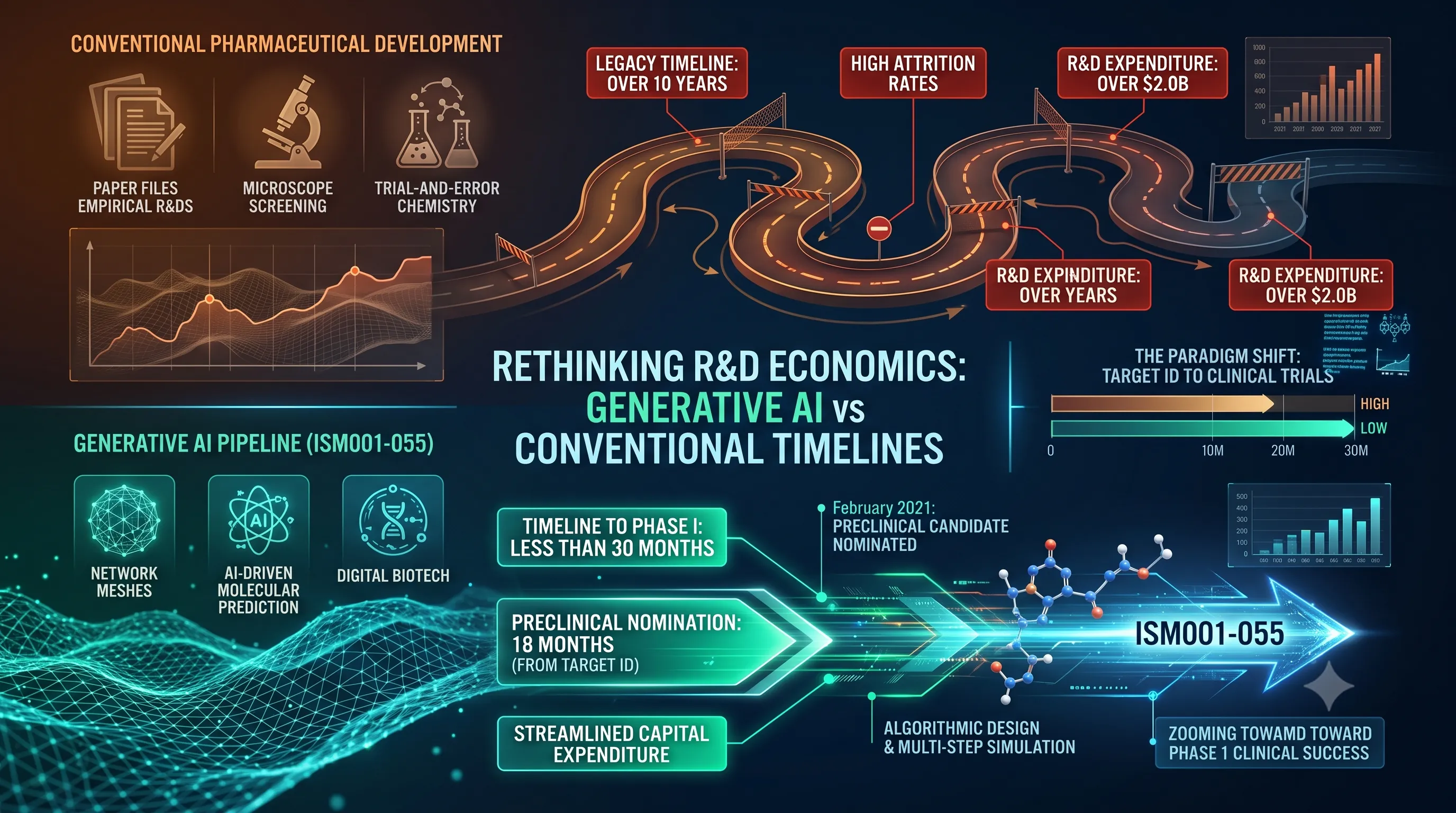
Understanding the clinical progression of the computer-designed drug candidate ISM001-055 requires examining the broader economic and temporal transformation taking place in pharmaceutical research.By replacing legacy empirical screening with algorithmic design, computational pipelines alter the capital requirements and duration needed to advance small molecules into human trials.
Traditional Discovery Bottlenecks vs 30-Month AI Acceleration
Conventional pharmaceutical development is widely characterized as a time-consuming, financially demanding, and risk-filled process.Under legacy R&D paradigms, bringing a drug through standard discovery and development pathways typically takes more than 10 years to complete.
Furthermore, traditional drug discovery typically costs more than $2.0B, driven by high attrition rates and iterative experimental trial-and-error.
To counteract these structural inefficiencies, Insilico Medicine utilizes generative artificial intelligence approaches to streamline drug development pipelines.
The primary objective of this computational strategy is to accelerate bringing novel therapies safely into clinical testing while mitigating early-stage operational risks.
Demonstrating this efficiency, the novel candidate ISM001-055 progressed from initial hypothesis to Phase 1 clinical success in less than 30 months.
| Pipeline Metric | Traditional Drug Discovery Pipeline | Generative AI Pipeline (ISM001-055) |
|---|---|---|
| Overall Development Duration | Typically more than 10 years to complete | Initial hypothesis to Phase 1 clinical success in less than 30 months |
| R&D Capital Expenditure | Typically costs more than $2.0B | Streamlined through generative AI pipeline efficiency |
| Preclinical Candidate Nomination | Multi-year, iterative screening process | 18 months after initial target identification |
| Strategic Objective & Risk Profile | Financially demanding, risk-filled legacy pipeline | Safely accelerates novel therapies into clinical testing |
Nomination Milestones: From Target Identification to Preclinical Candidate
The foundational compression of timelines in the ISM001-055 program occurred during the transition from biological validation to lead selection.Preclinical candidate nomination for ISM001-055 was officially achieved in February 2021.
This milestone was reached just 18 months after initial target identification, setting a definitive operational benchmark for computational design workflows.
By deploying generative algorithms to navigate chemical and biological space simultaneously, the platform bypasses the conventional bottlenecks that historically stall preclinical drug evaluation.
2. From Target to Molecule: Pharma.AI Architecture and TNIK Inhibition
The journey of how a computer-designed molecule advances into a bona fide clinical candidate forms the core technological breakthrough behind the clinical entry of ISM001-055.Understanding this transition requires examining the dual-stage architecture of computational biology and generative chemistry that systematically navigated from target selection to novel molecular structure.
Unlocking Idiopathic Pulmonary Fibrosis via TNIK Prioritization
Idiopathic pulmonary fibrosis is a debilitating, age-related lung condition lacking a curative treatment.To address the pathological complexity of this disease, computational target discovery was deployed to uncover novel therapeutic intervention points.
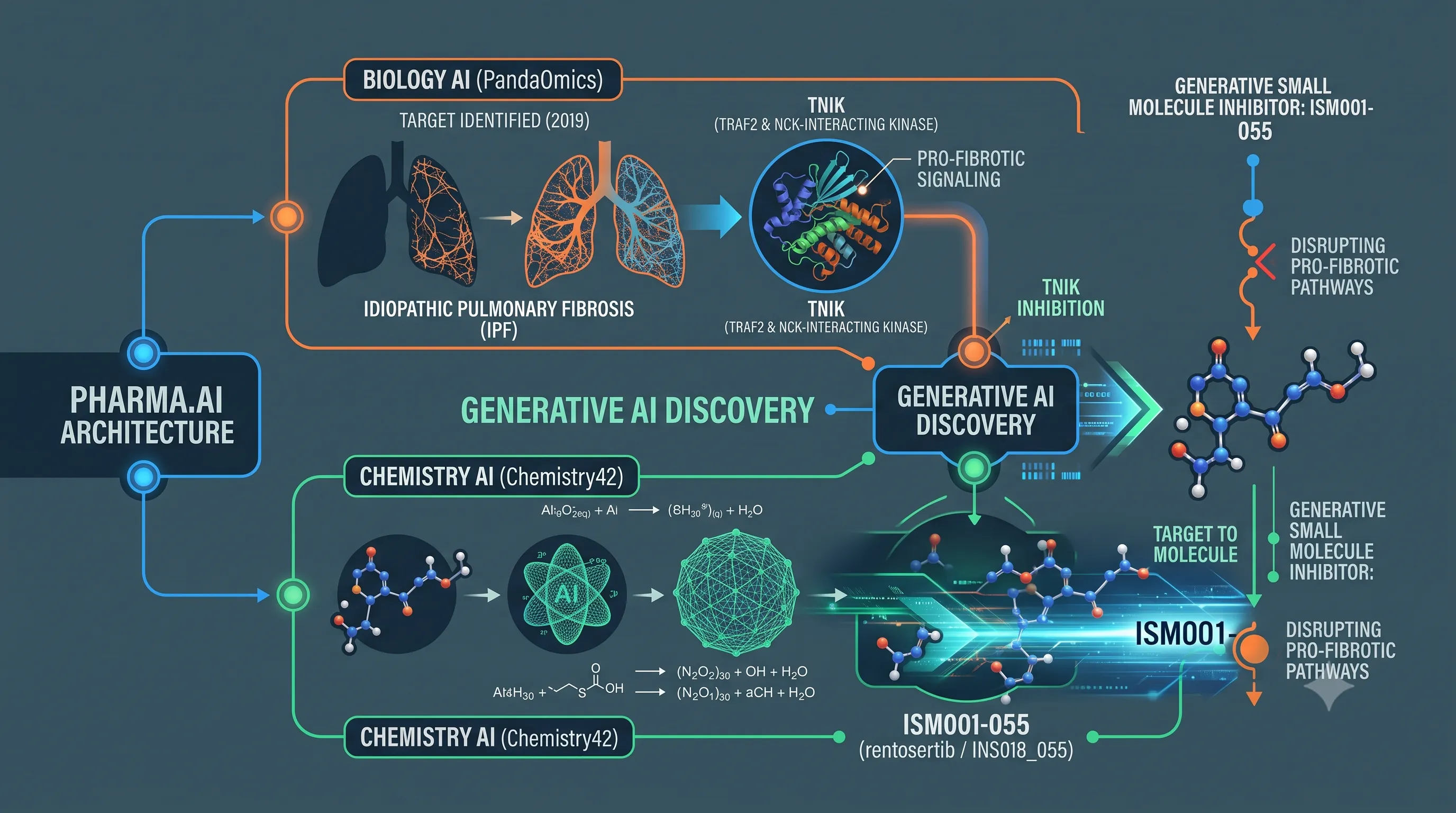
In 2019, the target prioritization process was conducted using the Biology AI module of the Pharma.AI platform, associated with PandaOmics.
Through this systematic screening, TNIK (TRAF2 and NCK-interacting kinase) was first identified and prioritized as an idiopathic pulmonary fibrosis target in 2019.
TNIK functions as a protein kinase orchestrating multiple pro-fibrotic pathways associated with idiopathic pulmonary fibrosis pathology.
Generative Small Molecule Synthesis via PandaOmics and Chemistry42
Once PandaOmics pinpointed TNIK as a critical biological driver, the pipeline shifted toward molecular design.Molecule synthesis was guided by the Chemistry AI module of Pharma.AI, associated with Chemistry42.
Rather than relying on conventional chemical libraries, the compound was developed as a small molecule inhibitor designed using generative AI.
The resulting drug specifically targets TNIK (TRAF2 and NCK-interacting kinase) to disrupt the pro-fibrotic signaling cascades driving disease progression.
This generative AI-designed compound bears the developmental code ISM001-055, and is also designated as rentosertib and INS018_055.
| Pipeline Component / Entity | System Designation | Role in ISM001-055 Discovery |
|---|---|---|
| Disease Target | TNIK (TRAF2 and NCK-interacting kinase) | Protein kinase orchestrating multiple pro-fibrotic pathways in idiopathic pulmonary fibrosis; prioritized in 2019. |
| Biology AI Module | Pharma.AI (associated with PandaOmics) | Executed target identification and prioritization for idiopathic pulmonary fibrosis. |
| Chemistry AI Module | Pharma.AI (associated with Chemistry42) | Guided generative AI design and molecule synthesis for novel small molecule inhibition. |
| Drug Candidate | ISM001-055 (rentosertib / INS018_055) | Small molecule inhibitor designed using generative AI that specifically targets TNIK. |
3. Translational Proof: Preclinical Profiling, Phase 0 Microdosing, and Phase 1 Safety
This section establishes the empirical translational bridge connecting computational generative design to actual biological efficacy in the development of the AI-designed drug candidate ISM001-055.Validating an in silico molecule requires rigorous verification across living biological systems, advancing from multi-organ animal disease models to controlled human clinical cohorts.
In Vivo Multi-Organ Fibrosis Models and Toxicity Benchmarks
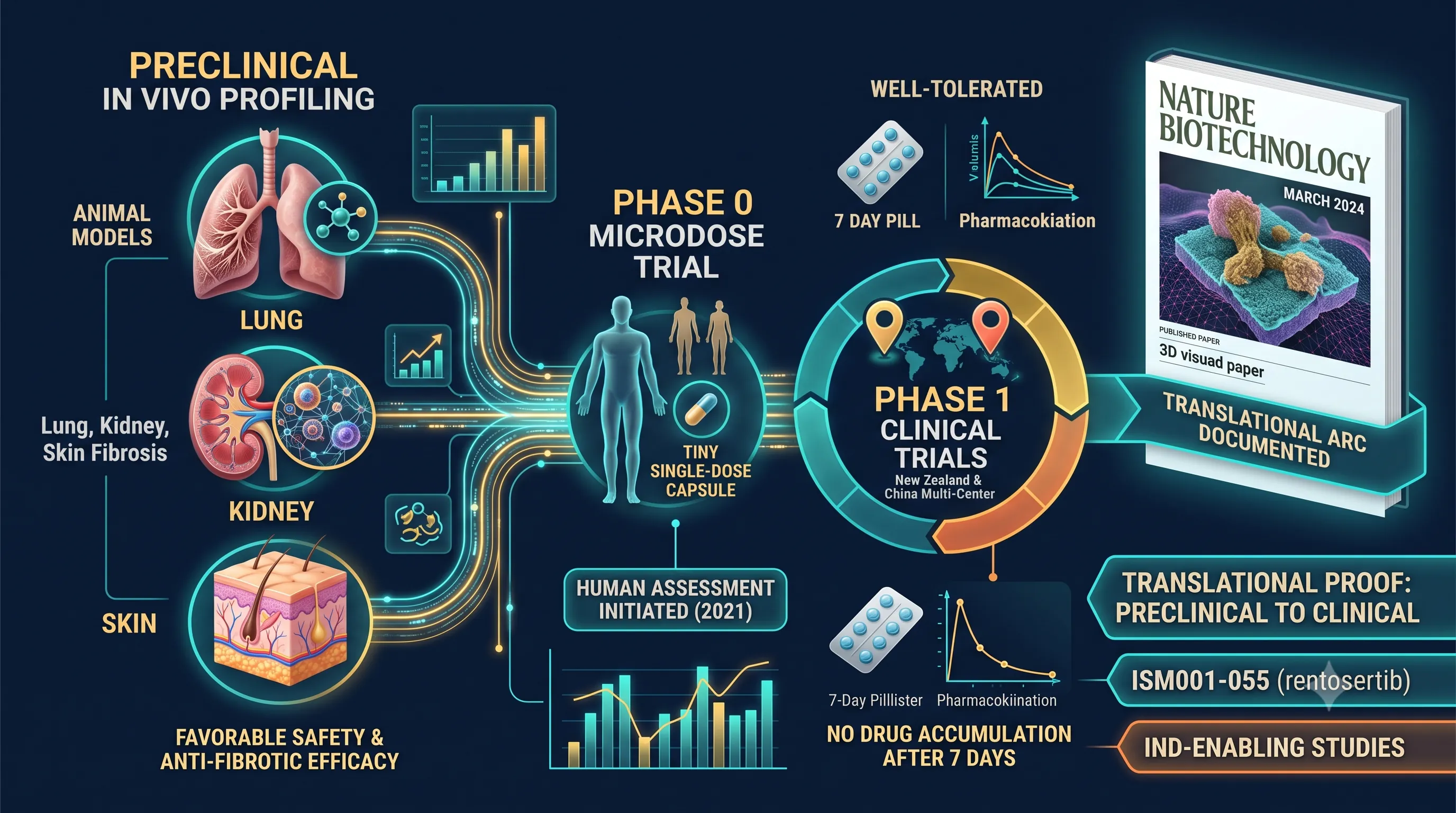
Preclinical validation established the biological viability of ISM001-055 across complex disease pathways.Researchers evaluated the molecule in animal models representing three distinct fibrotic manifestations: lung fibrosis, kidney fibrosis, and skin fibrosis.
Across these preclinical models, the candidate demonstrated favorable safety, manageable toxicity, and robust in vivo efficacy.
These comprehensive findings served as the investigational new drug-enabling studies necessary to clear regulatory thresholds for human exposure.
Phase 0 Microdose and Phase 1 Pharmacokinetics Across International Cohorts
Following the completion of investigational new drug-enabling evaluations, human clinical testing officially initiated in 2021.Early clinical verification utilized a multi-stage approach consisting of one Phase 0 microdose trial and two independent Phase 1 trials conducted across sites in New Zealand and China.
Throughout all Phase 0 and Phase 1 trials, the candidate was well-tolerated and established a favorable pharmacokinetic profile.
Clinical monitoring demonstrated that volunteers exhibited no significant drug accumulation after 7 days of administration.
The comprehensive translational arc—spanning initial target identification through to Phase 0 and Phase 1 completion—was formally documented and published in Nature Biotechnology in March 2024.
| Development Stage | Evaluation Scope / Setting | Key Translational Findings |
|---|---|---|
| Preclinical In Vivo Profiling | Animal models of lung, kidney, and skin fibrosis | Demonstrated favorable safety, toxicity benchmarks, and in vivo anti-fibrotic efficacy. |
| Phase 0 Clinical Trial | Single microdose evaluation cohort | Initiated early human assessment; confirmed favorable tolerability and initial pharmacokinetics. |
| Phase 1 Clinical Trials | Two independent cohorts in New Zealand and China | Demonstrated well-tolerated profiles, favorable pharmacokinetics, and no significant drug accumulation after 7 days. |
4. Phase 2a Readout: Safety and Dose-Dependent FVC Efficacy in NCT05938920
Connecting computational molecular generation to verifiable human clinical benefit represents the decisive threshold in the journey of the AI-designed drug candidate ISM001-055.The randomized, double-blind, placebo-controlled China Phase 2a clinical trial (NCT05938920) delivers the crucial clinical proof point, demonstrating that an algorithmically conceived molecule targeting an AI-identified biological mechanism can achieve both safety and therapeutic signals in idiopathic pulmonary fibrosis (IPF) patients.
China Phase 2a Study Architecture and 12-Week Intervention Cohorts
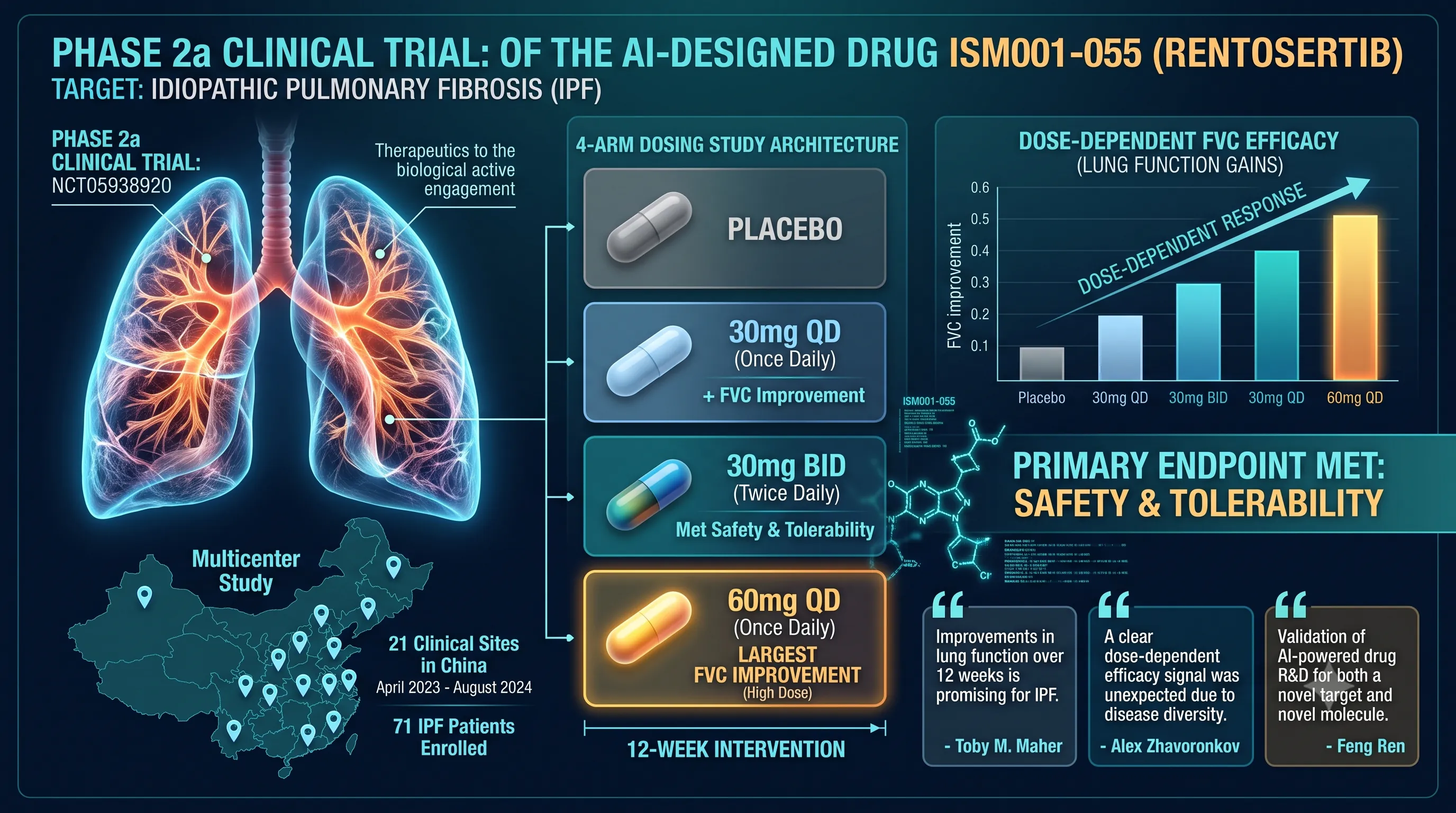
The trial architecture was constructed as a multicenter, randomized, double-blind, placebo-controlled study conducted across 21 clinical sites in China.Patient enrollment commenced in April 2023 and completed subject follow-up in August 2024, ultimately enrolling a total of 71 IPF patients.
The protocol evaluated an intervention window of 12 weeks across four distinct treatment arms: a placebo cohort, an active 30mg once daily (QD) cohort, an active 30mg twice daily (BID) cohort, and an active 60mg once daily (QD) cohort.
This multi-arm stratification enabled clinicians to assess drug behavior across varied daily exposure intervals within a complex and heterogeneous patient population.
| Trial Cohort / Arm | Dosing Regimen | Treatment Duration | Observed Clinical Outcomes |
|---|---|---|---|
| Placebo | Placebo comparator | 12 weeks | Established comparator baseline for safety, tolerability, and pulmonary function metrics. |
| Low Dose (QD) | 30mg once daily (QD) | 12 weeks | Met primary safety and tolerability endpoints; secondary endpoint evaluation demonstrated initial FVC profile. |
| Split Dose (BID) | 30mg twice daily (BID) | 12 weeks | Met primary safety and tolerability endpoints; secondary endpoint evaluation contributed to comparative FVC analysis. |
| High Dose (QD) | 60mg once daily (QD) | 12 weeks | Met primary safety and tolerability endpoints; delivered the largest improvement in forced vital capacity (FVC). |
Primary Safety Validation and Dose-Dependent FVC Lung Function Gains
ISM001-055 successfully met its primary endpoint of safety and tolerability across all tested dosing levels throughout the 12-week intervention window.In addition to a favorable safety profile, the Phase 2a trial satisfied secondary efficacy endpoints by demonstrating measurable improvements in forced vital capacity (FVC).
The therapeutic response in lung function exhibited a clear dose-dependent pattern across the active dosing groups.
The 60mg QD cohort achieved the largest FVC improvement among all tested regimens, establishing an observable relationship between drug concentration and respiratory functional recovery.
These preliminary findings capture clinical changes within a 12-week dosing window in a diverse patient population, confirming biologically active engagement in human tissue.
Clinical Perspectives on AI Target and Novel Molecule Validation
The emergence of measurable efficacy signals within a relatively brief 12-week trial window drew significant clinical attention from pulmonary and computational drug development specialists.Toby M. Maher stated that seeing improvements in lung function over 12 weeks is a promising indication for a new therapeutic option in a devastating disease like IPF.
Alex Zhavoronkov noted that observing a clear dose-dependent efficacy signal after a short dosing period in IPF was unexpected due to disease diversity.
Feng Ren emphasized that the clinical data provides validation of AI-powered drug R&D for both a novel target and a novel molecule.
Together, these findings establish that computational pipelines can progress beyond theoretical modeling to yield clinically active drug candidates capable of demonstrating dose-dependent physiologic gains in rigorous human trials.
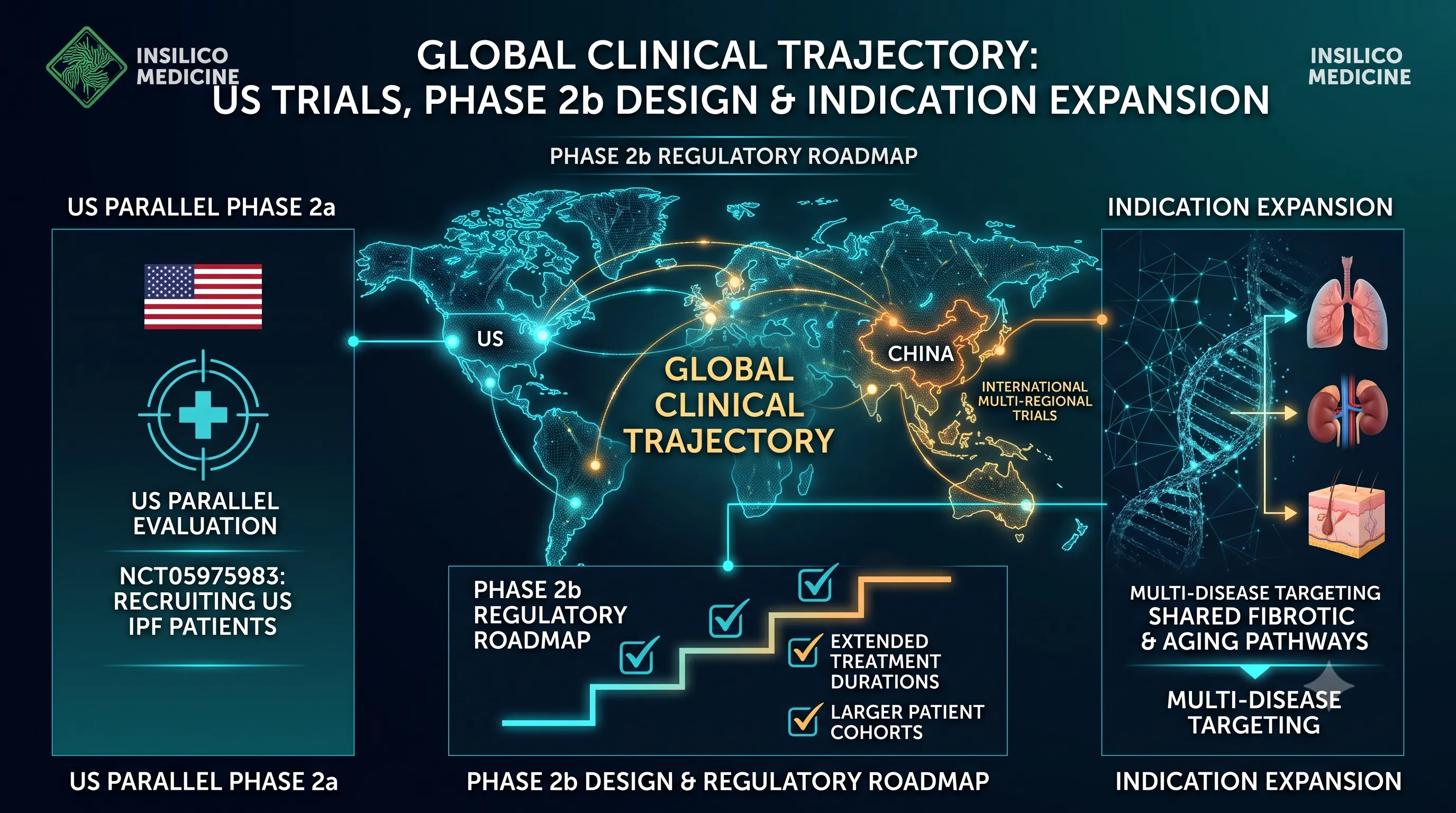
5. Global Clinical Trajectory: US Trials, Phase 2b Design, and Indication Expansion
Translating an AI-designed drug candidate like ISM001-055 into an effective therapy requires validating computational predictions across broader human patient cohorts.Following initial exploratory evaluation, the development trajectory expanded into multi-regional programs and advanced trial planning.
US Parallel Phase 2a Evaluation (NCT05975983)
To establish clinical efficacy across diverse clinical sites, a parallel Phase IIa clinical trial was initiated in the United States.This separate Phase IIa trial is registered under identifier NCT05975983.
The trial was designed specifically to recruit idiopathic pulmonary fibrosis (IPF) patients, ensuring that therapeutic signals observed with the candidate are evaluated systematically under standard clinical protocols in the US.
Phase 2b Regulatory Roadmap and Shared Fibrotic Pathway Expansion
Building upon early clinical phases, Insilico Medicine planned discussions with regulatory authorities regarding the design of a Phase IIb study.The strategic planning for the Phase IIb program targets extended treatment durations and larger patient cohorts to assess long-term efficacy and tolerability.
In addition to pulmonary fibrosis, Insilico Medicine seeks to explore indication expansion based on shared fibrotic and aging mechanisms.
Because the underlying target biology intersects with core pathways governing tissue remodeling and senescence, the computational candidate offers opportunities to target multiple diseases driven by conserved fibrotic pathology.
Related Posts
Inside Anthropic's Vision: How AI Will Eradicate Major Diseases in a DecadeAnthropic CEO Dario Amodei predicts AI will eradicate major diseases like cancer and Alzheimer's...

Google Opens Up ML Drift to Power Cross-GPU AI Inference on Edge DevicesDiscover Google's ML Drift, an open-source GPU compute engine for LiteRT designed to deliver...

AI Video Generation for Commercial Production: Prompt Engineering, Luma Ray, and Runway Gen-3 AlphaLearn how to use structured prompt engineering, Luma Ray, and Runway Gen-3 Alpha to create...
Generative AI may have assisted with research or drafting for this article. Topic selection, fact-checking, final wording, and publication remain the responsibility of DragonStone74. AI use disclosure