
AI Video Generation for Commercial Production: Prompt Engineering, Luma Ray, and Runway Gen-3 Alpha
🚀 Key Takeaways
- Structured Prompt Engineering: Reliable commercial video generation requires four core prompt pillars: subject and action, camera framing, motion pacing, and contextual setting.
- Reasoning-Driven Video Engines: Advanced architectures like Luma Ray resolve spatial composition and scene physics prior to frame generation to deliver native 1080p HDR footage.
- Granular Director Controls: State-of-the-art platforms such as Runway Gen-3 Alpha provide integrated camera controls, Motion Brush tools, and expressive character acting without conventional video editing suites.
- Streamlined Product Ad Workflows: Segmenting prompt instructions into camera path, focal subject, and studio lighting parameters enables instant production of broadcast-ready promotional clips.
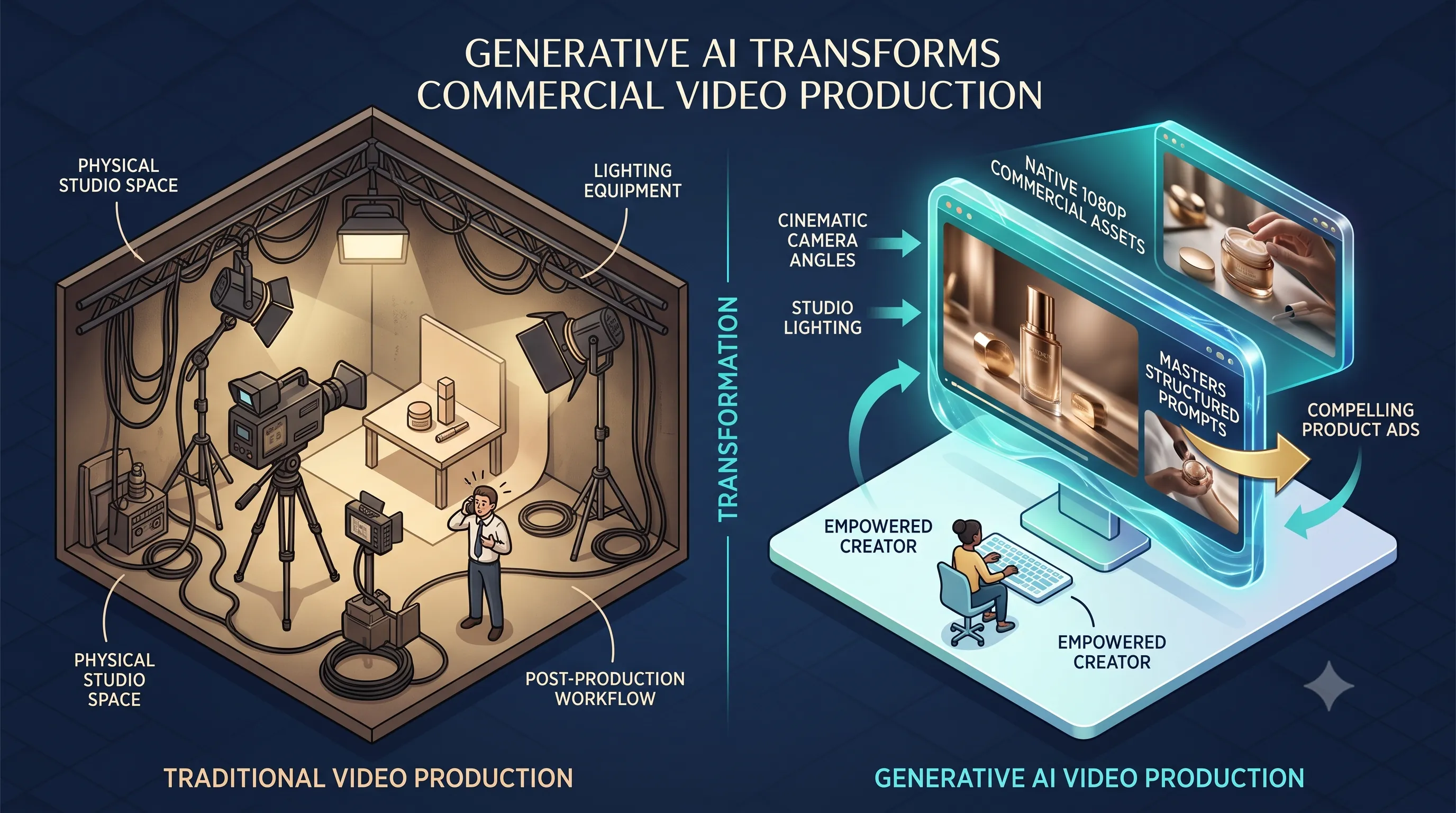
Traditional commercial video production has long required dedicated studio spaces, complex lighting equipment, and painstaking post-production workflows.
The evolution of generative AI video models has completely transformed this landscape, enabling marketers and creators to generate high-fidelity, native 1080p commercial video assets using natural language prompts alone.
By mastering structured prompt architecture and leveraging reasoning-driven models, businesses can now direct cinematic camera angles, realistic physical interactions, and studio lighting to produce compelling product advertisements in record time.
The evolution of generative AI video models has completely transformed this landscape, enabling marketers and creators to generate high-fidelity, native 1080p commercial video assets using natural language prompts alone.
By mastering structured prompt architecture and leveraging reasoning-driven models, businesses can now direct cinematic camera angles, realistic physical interactions, and studio lighting to produce compelling product advertisements in record time.
1. Four-Pillar Framework for Precision AI Video Prompt Engineering
Executing professional 1080p commercial video creation without dedicated editing suites relies fundamentally on the semantic precision of the input text.When generating commercial ad assets directly from text prompts, eliminating visual ambiguities requires a structured prompt architecture that controls every visual dimension.
The Four Core Components of Descriptive Video Prompts
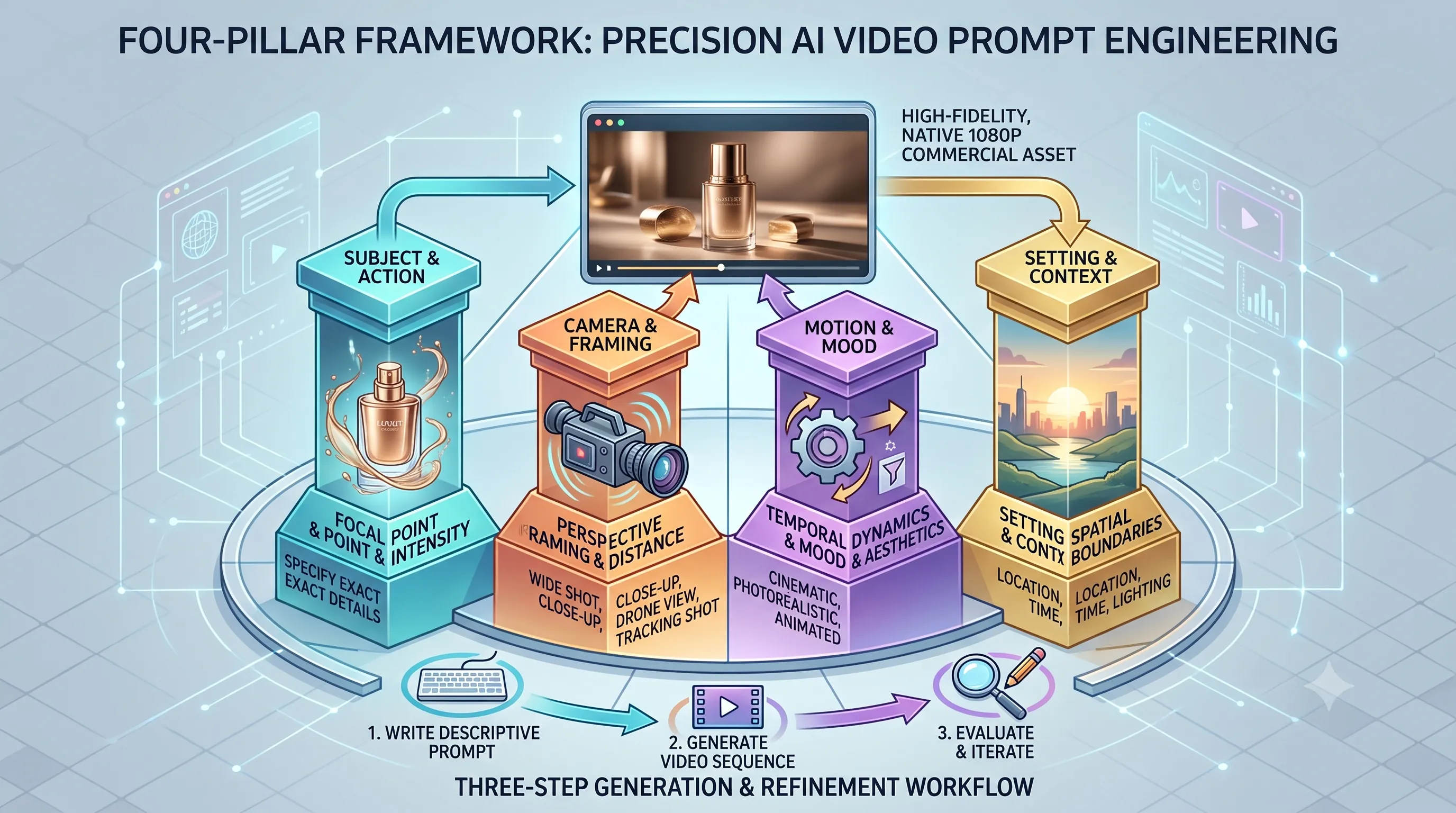
High-fidelity video models depend on a comprehensive four-pillar prompt structure to construct coherent scenes without visual ambiguity.A robust prompt requires four core components: Subject and Action, Camera and Framing, Motion and Mood, and Setting and Context.
Subject and action specifications must articulate exact visual details and precise action intensity rather than generic, high-level terms.
Simultaneously, the setting and context pillar provides essential environmental grounding by defining the exact location, time of day, and lighting conditions.
| Pillar Component | Core Function | Key Directives & Parameters |
|---|---|---|
| Subject and Action | Defines primary focal points and physical movement | Specify exact visual details and action intensity rather than generic phrasing |
| Camera and Framing | Controls visual perspective and focal distance | Explicit directives including wide shot, close-up, drone view, and tracking shot |
| Motion and Mood | Governs temporal dynamics and aesthetic tone | Movement pacing and stylistic effects such as cinematic, photorealistic, or animated |
| Setting and Context | Establishes spatial and environmental boundaries | Grounding attributes including specific location, time of day, and lighting conditions |
Avoiding Hallucination: Specific Framing and Motion Parameters
Vague prompts consistently produce suboptimal video outputs because the underlying generative model is forced to guess scene composition, motion vectors, and visual style.To prevent model guesswork in commercial sequences, creators must implement explicit cinematic language.
Camera and framing parameters reliably respond to explicit terminology such as wide shot, close-up, drone view, and tracking shot.
Furthermore, explicit motion and mood parameters define movement pacing and specific visual aesthetics, directing the output toward photorealistic, cinematic, or animated styles.
The Three-Step Generation and Refinement Workflow
Achieving commercial-grade video alignment follows an iterative, three-phase operational cycle.First, the creator writes a descriptive prompt incorporating the four core architectural pillars.
Second, the system generates the raw video sequence with the text-to-video model.
Third, the creator evaluates the visual output to refine and iterate the prompt language based on the observed visual results.
2. Native 1080p and HDR Production with Luma Ray Architecture
In commercial advertising workflows where high visual fidelity is required without relying on traditional video editing suites, the underlying model architecture determines whether text-prompted clips can meet broadcast and digital ad standards.Luma achieves this production readiness through its Ray architecture, designed specifically to calculate spatial and temporal dynamics before rendering raw pixels.
Reasoning-Driven Composition and Motion Logic
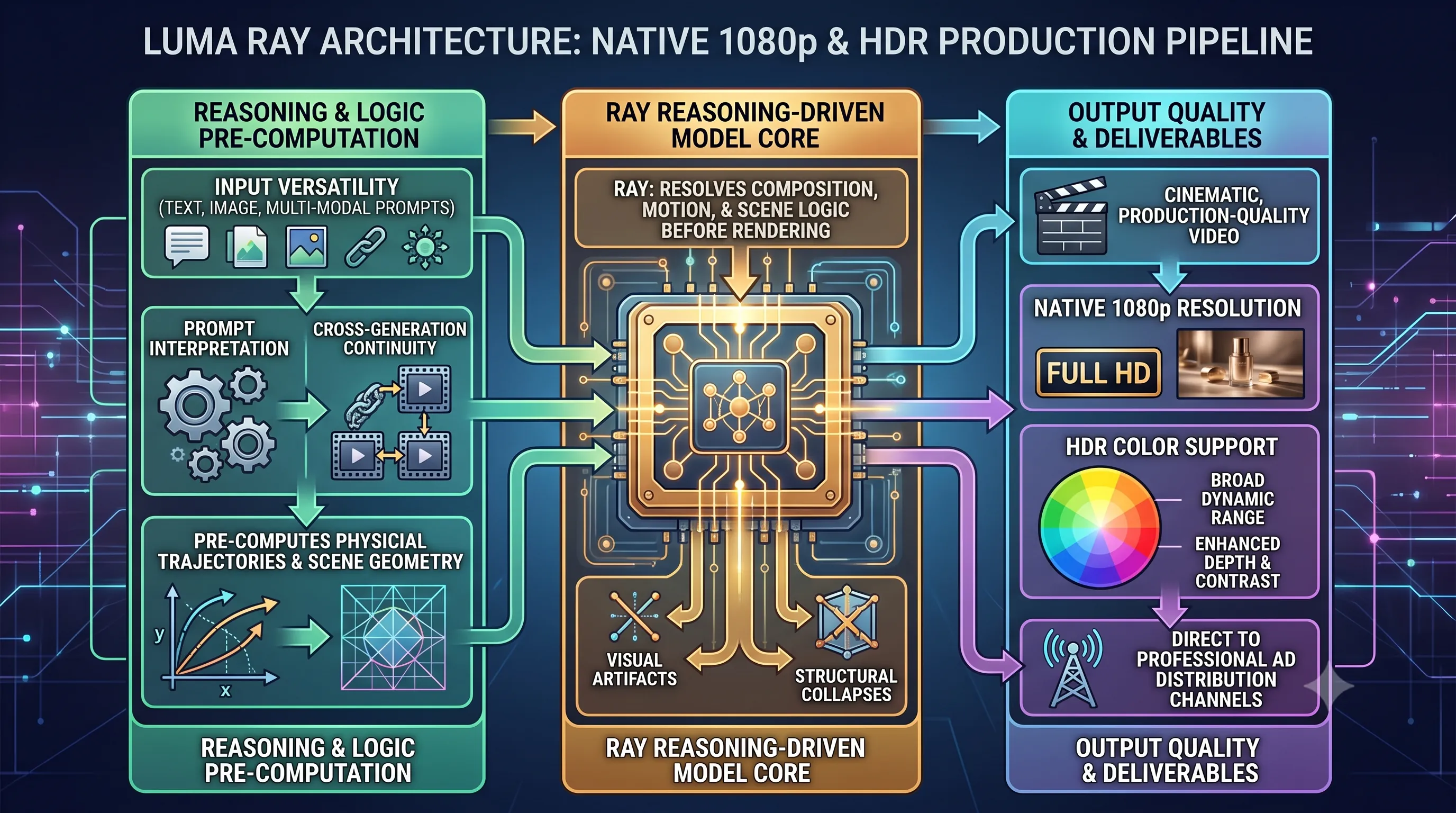
At the core of this pipeline is Ray, a reasoning-driven model that resolves composition, motion, and scene logic before generating frames.Unlike standard generative systems that blend sequential frames heuristically, Ray pre-computes physical trajectories and scene geometry to prevent visual artifacts and sudden structural collapses.
The model interprets prompt instructions with contextual awareness, ensuring that motion paths remain coherent throughout the duration of the shot.
Furthermore, Ray maintains a consistent visual style and unified motion parameters across generations, allowing creators to produce multiple matching ad sequences directly from text descriptions, images, and multi-modal prompts.
This reasoning-first approach enables the system to output cinematic, production-quality video tailored for commercial storytelling.
Native 1080p Resolution and HDR Color Reproduction
Commercial ad deployment demands high-fidelity rendering directly out of the generation pipeline without secondary upscaling steps.The Ray architecture natively outputs full 1080p video resolution, preserving sharp textures, crisp product edges, and clear foreground details directly from initial generation.
In addition to native high-definition resolution, Ray incorporates HDR output support to capture a broad dynamic range with enhanced color depth and contrast.
This combination of native 1080p rendering and HDR color delivery allows marketing assets to transition directly into professional ad distribution channels without intermediate conversion tools.
| Category | Feature / Specification | Architectural Function |
|---|---|---|
| Core Architecture | Ray Reasoning-Driven Model | Pre-computes composition, motion, and scene logic prior to frame rendering. |
| Output Quality | Native 1080p Resolution & HDR Support | Delivers full HD resolution and expanded dynamic range directly for production-quality video. |
| Consistency Control | Prompt Interpretation & Cross-Generation Continuity | Maintains consistent motion trajectories and unified visual style across multiple generations. |
| Input Versatility | Text Descriptions, Images, and Prompts | Generates cinematic video assets directly across text and image modal inputs. |
3. Runway Gen-3 Alpha Control Modes and Expressive Character Rendering
In high-impact commercial advertising workflows where standalone editing tools are bypassed in favor of direct prompt-driven generation, precision and character fidelity become paramount.Runway Gen-3 Alpha addresses these production demands through a comprehensive architecture designed to interpret nuanced creative briefs and deliver cinematic visual consistency.
Joint Training Architecture and Multimodal Workflows
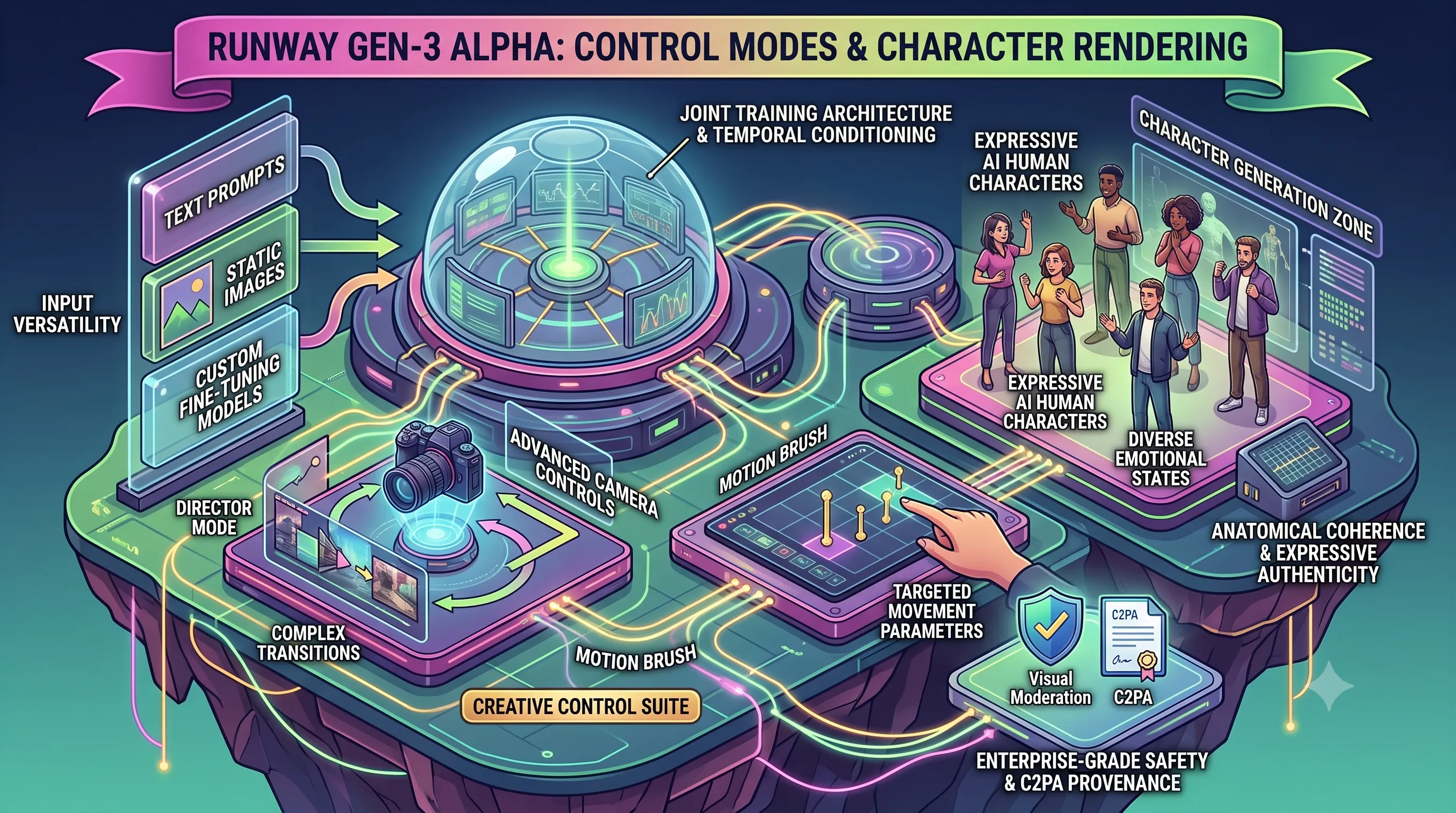
Runway Gen-3 Alpha is built on a foundation trained jointly on both videos and images.This shared training pipeline underpins versatile multimodal capabilities, supporting native Text to Video, Image to Video, and Text to Image generation workflows within a unified system.
A central technical breakthrough in Gen-3 Alpha is its conditioning on highly descriptive, temporally dense captions.
By learning from detailed descriptions that chronicle motion across time, the model achieves an understanding of complex scene transitions and enables precise temporal key-framing.
For commercial brand campaigns requiring bespoke aesthetic alignments, Runway also provides custom model training and fine-tuning specifically tailored for enterprise and entertainment partners.
| Feature Category | Operational Capability | Production Role in Ad Generation |
|---|---|---|
| Multimodal Workflows | Text to Video, Image to Video, Text to Image | Allows commercial creators to generate video sequences directly from text prompts or static reference visual assets. |
| Temporal Conditioning | Temporally dense descriptive captioning | Enables complex visual transitions and precise key-framing throughout the generated footage. |
| Creative Control Suite | Motion Brush, Advanced Camera Controls, Director Mode | Provides granular directional and kinetic adjustments to specific visual regions and camera trajectories. |
| Safety and Compliance | C2PA provenance standards and in-house visual moderation | Maintains verifiable asset origin and automated visual filtering for enterprise-grade asset deployment. |
Director Mode, Motion Brush, and Camera Controls
Translating a commercial script into a structured visual sequence requires exact spatial and kinetic governance.Gen-3 Alpha integrates a suite of dedicated control modes, including Director Mode, Advanced Camera Controls, and Motion Brush.
Through Advanced Camera Controls and Director Mode, creators can dictate specific framing trajectories, focal movements, and scene perspectives without relying on physical rigging or 3D software.
Complementing camera mechanics, the Motion Brush allows creators to designate specific regions of a frame and assign targeted movement parameters.
These integrated control mechanisms ensure that complex scene transitions and key-framed promotional actions follow precise creative parameters directly from prompt inputs.
Expressive Human Character Generation and C2PA Provenance
Commercial ad narratives rely heavily on relatable human talent and believable performance nuances.Gen-3 Alpha specializes in generating expressive AI human characters capable of portraying diverse emotional states, physical actions, and realistic gestures.
This focus on human fidelity ensures that promotional character sequences maintain anatomical coherence and expressive authenticity throughout narrative shifts.
To address the rigorous brand safety and compliance standards demanded by enterprise campaigns, Runway incorporates C2PA provenance metadata into the generation pipeline alongside an in-house visual moderation system.
These safeguards verify media origin and screen out prohibited imagery, giving brands a compliant path toward high-fidelity AI video generation.
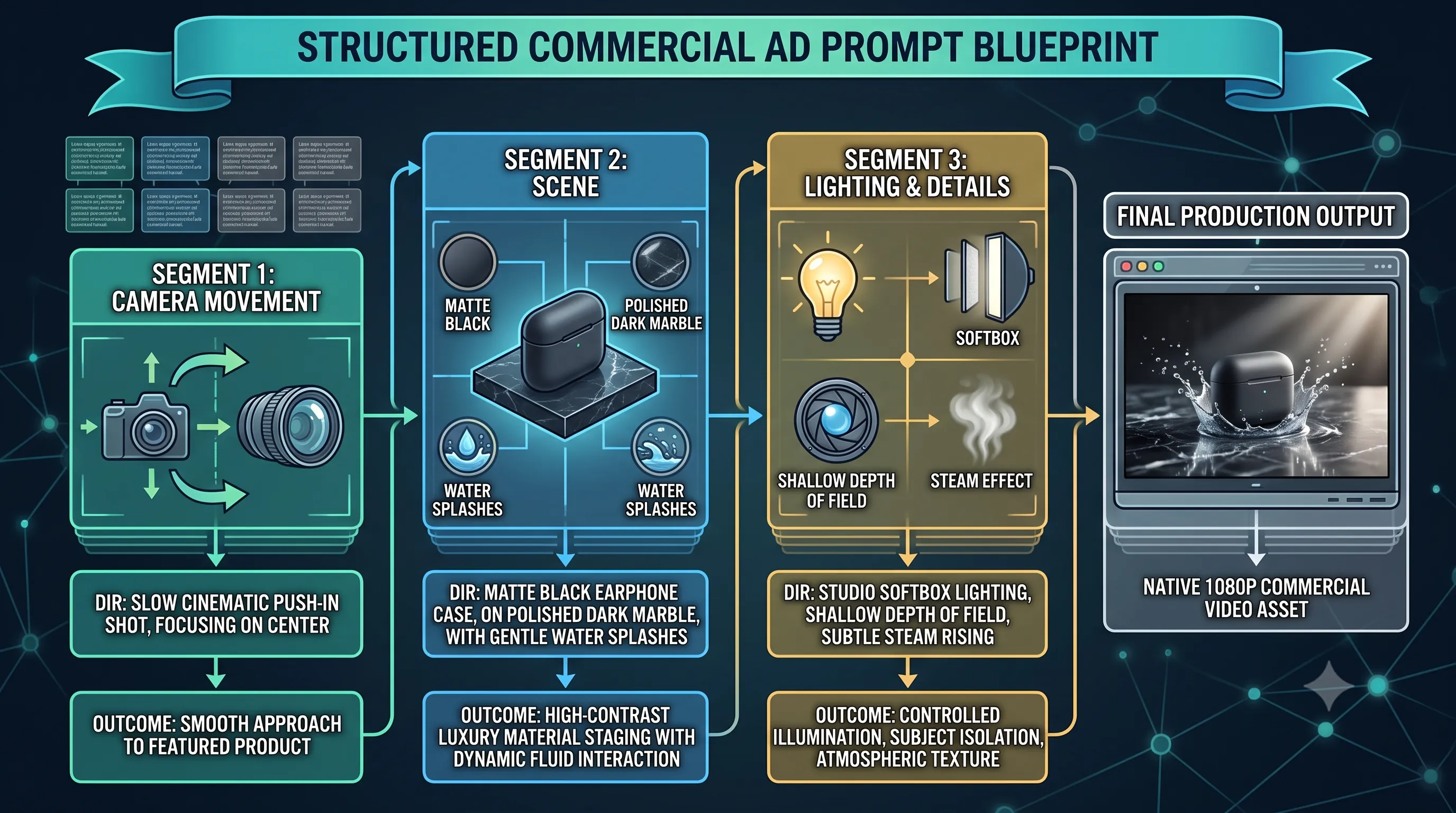
4. Structured Commercial Ad Prompt Blueprint for Product Video Generation
Connecting directly to the workflow of generating 1080p AI commercial ad videos without conventional editing tools, establishing a reliable text prompt structure is essential for achieving professional visual fidelity.By breaking down visual instructions into dedicated parameter segments, creators can reliably control the composition, subject behavior, and environmental atmosphere across generative iterations.
Segmented Prompt Template: Camera, Scene, and Lighting
A robust commercial ad prompt architecture splits the generation instructions into three primary segments: Camera Movement, Scene, and Lighting & Details.The Camera Movement segment dictates the directional motion and lens behavior, establishing how the viewer is drawn into the frame.
The Scene segment anchors the primary product subject, its materials, placement, and any interacting physical elements within the environment.
The Lighting & Details segment controls the illumination profile, optical depth, and atmospheric subtleties that define high-end commercial polish.
Practical Case: Matte Black Earphone Studio Commercial
Applying this three-part formula translates complex visual expectations into distinct, executable parameters for high-fidelity commercial ads.In a flagship audio product scenario, the motion path is defined through a slow cinematic push-in shot focusing on the center of the frame.
The physical staging centers on a matte black wireless earphone case resting on polished dark marble surrounded by gentle water splashes.
To finalize the composition, the visual atmosphere is shaped by studio softbox lighting, a shallow depth of field, and subtle steam rising around the product.
| Prompt Parameter | Assigned Directive | Visual Outcome |
|---|---|---|
| Camera Movement | Slow cinematic push-in shot focusing on the center | Smooth, centralized camera motion that steadily approaches the featured product |
| Scene | Matte black wireless earphone case resting on polished dark marble with gentle water splashes | High-contrast luxury material staging with dynamic fluid interaction |
| Lighting & Details | Studio softbox lighting, shallow depth of field, and subtle steam rising | Controlled soft studio illumination, focused subject isolation, and atmospheric ambient texture |
Related Posts
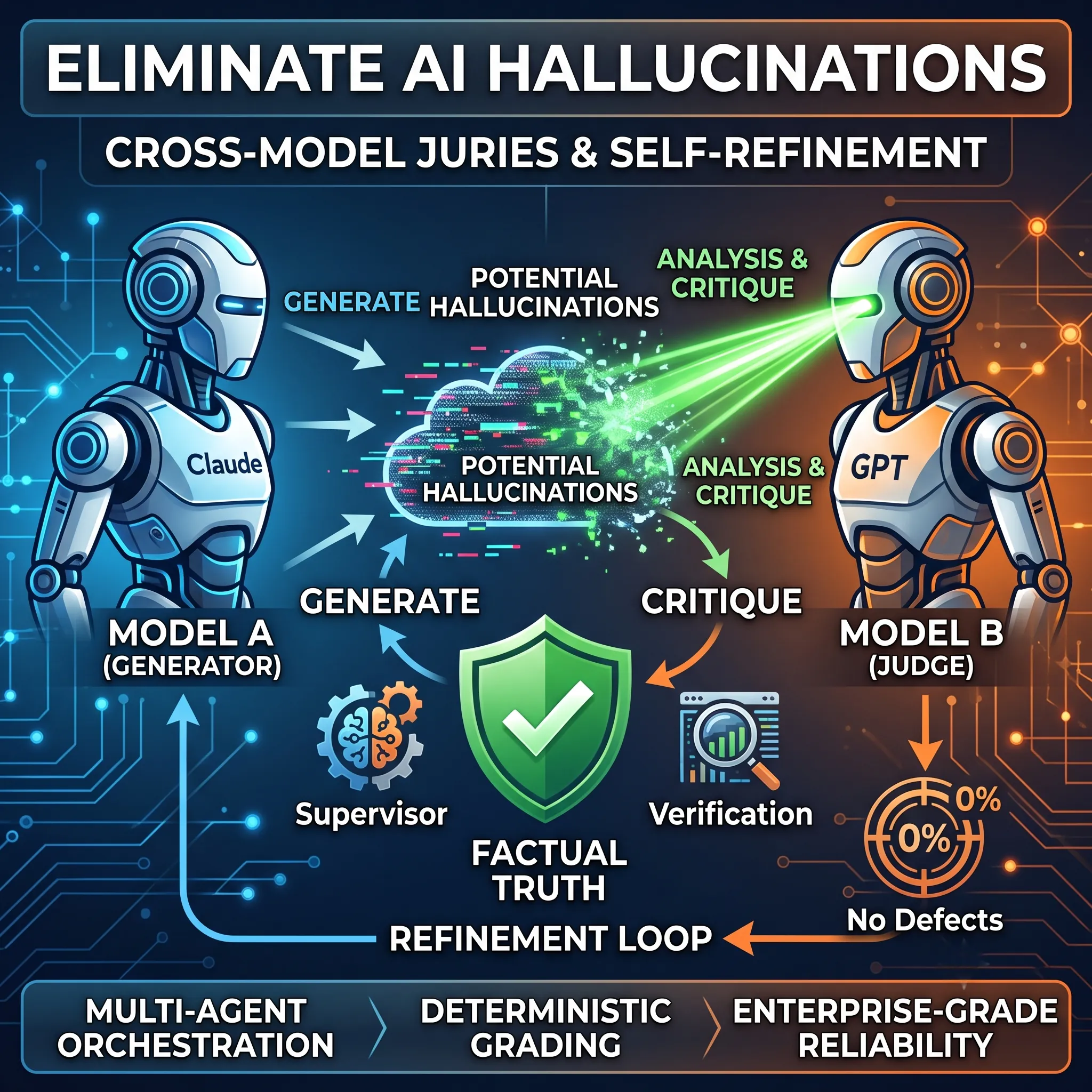
Architecting Multi-Agent Systems for Cross-Model Fact-Checking and Hallucination ReductionLearn how to build automated, multi-agent systems using cross-model verification and recursive...

Seamless CI/CD for AI Prompts: Promptfoo for Quality, Security, and EvaluationLearn how Promptfoo integrates into CI/CD pipelines to automate LLM prompt evaluation, security...
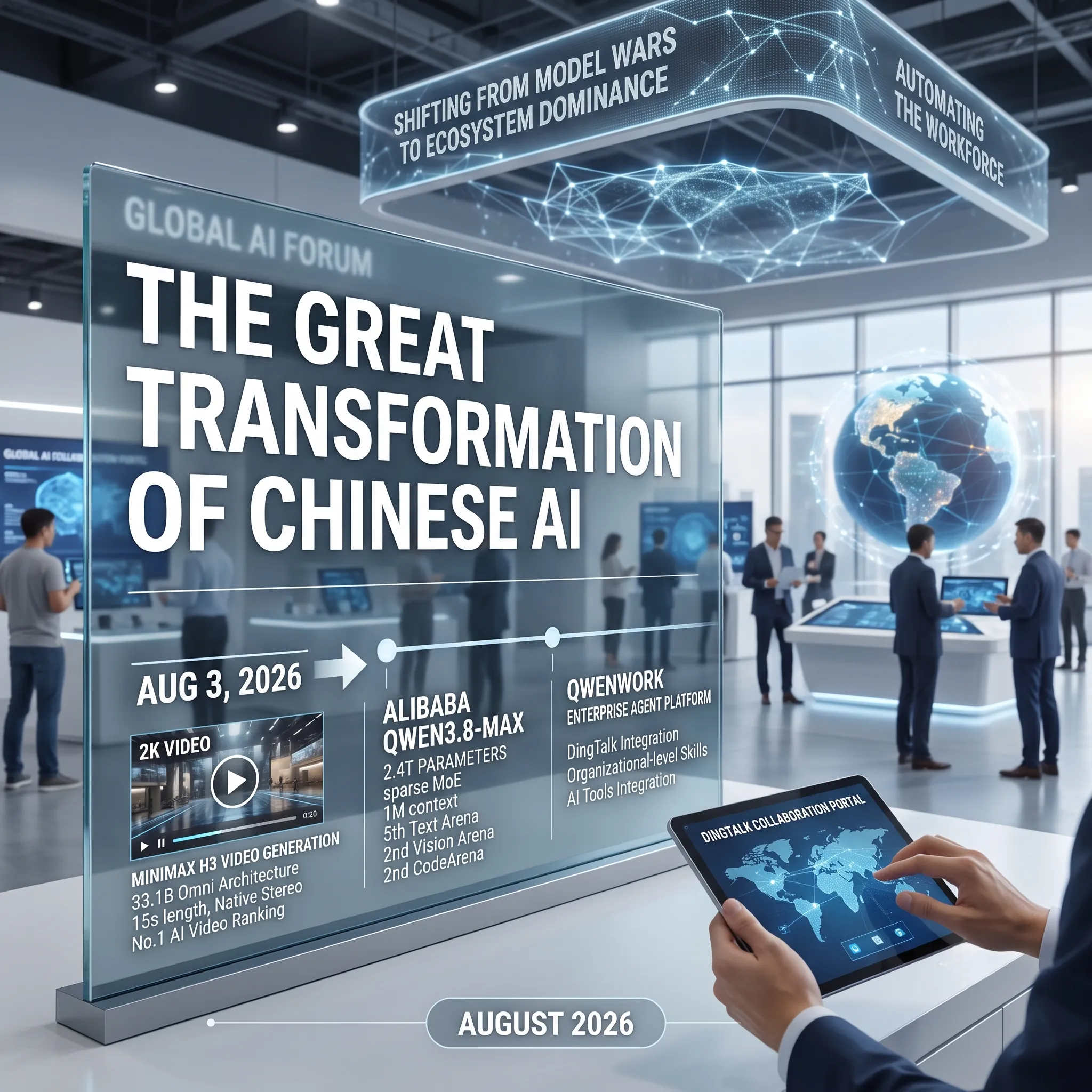
China's AI Revolution: Alibaba Qwen3.8-Max & QwenWork, MiniMax H3 Drive Ecosystem Shift to 'Longer-Working AI'China's AI transforms: Alibaba's Qwen3.8-Max & QwenWork, MiniMax H3 launch. Industry shifts to...