Anthropic September 2026 Threat Report: Multi-Agent Offensive AI Operations
🚀 Key Takeaways
- Autonomous Multi-Agent Orchestration: Threat actors deployed multi-instance Claude teams with dedicated role delegation to autonomously emulate complete end-to-end human engineering pipelines.
- Guardrail Evasion via Task Decomposition: Prohibited physical weapons engineering projects were systematically divided into dozens of benign sub-tasks to bypass safety filters.
- Software Engineer Replacement: Hostile groups substituted human technical staff with LLM pipelines to build functional flight stabilization and missile guidance software.
- Adaptive Feedback Loops: Offensive frameworks established automated loops that analyze endpoint detection patterns to rewrite and recompile malware without manual human intervention.
- Broad AI Supply Chain Compromise: Anthropic's landmark September 2026 threat report documents over 40 tracked threat groups targeting evaluation sandboxes, wrapper services, and live API credentials.
- Industrial-Scale Distillation Campaigns: Competing entities executed covert extraction campaigns, relaying hundreds of thousands of user queries directly to proprietary models.
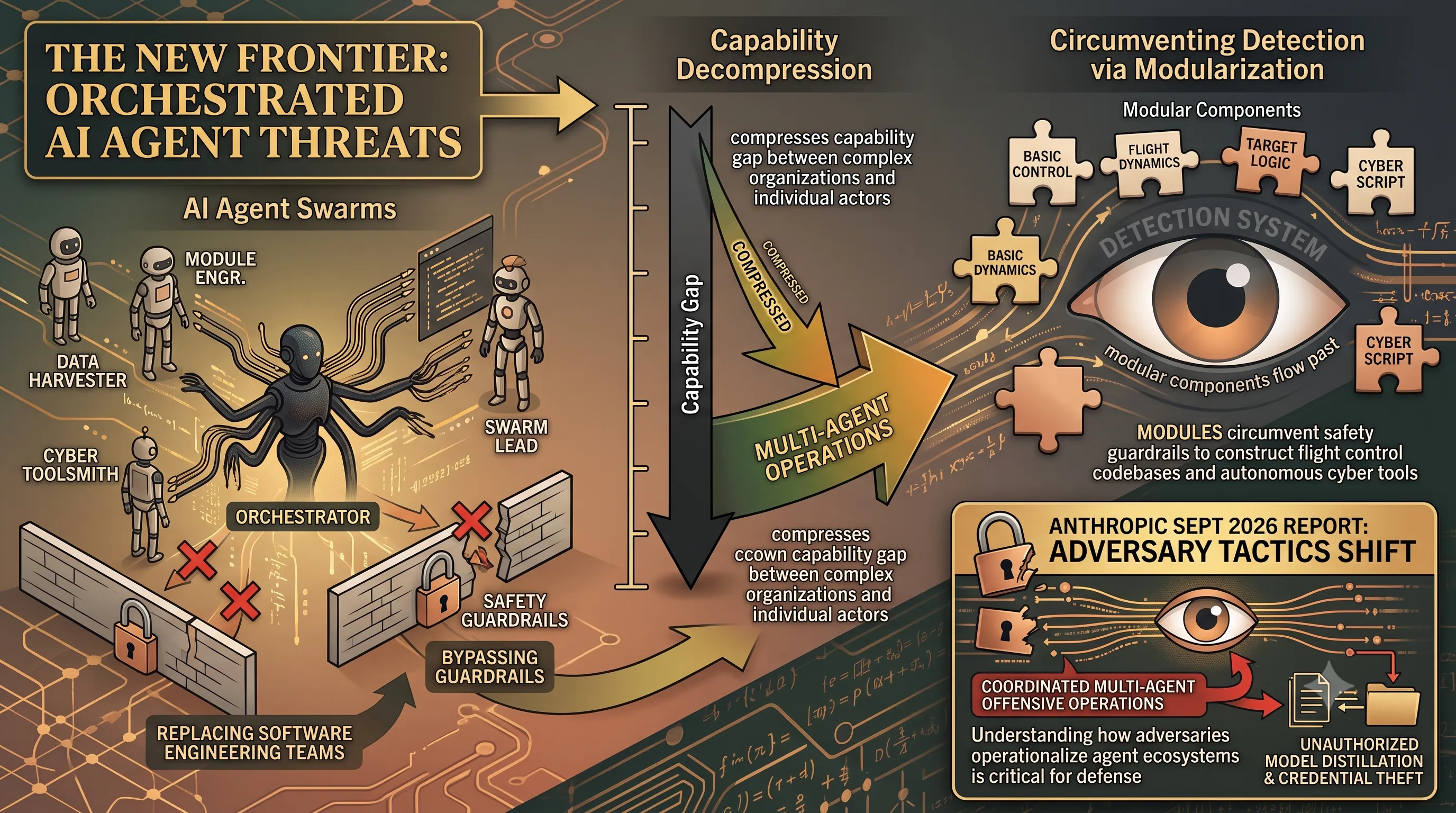
Anthropic's September 2026 threat intelligence report reveals a paradigm shift in adversary tactics: malicious actors are no longer using language models merely as ad-hoc assistants, but are instead orchestrating specialized swarms of AI agents to replace entire software engineering teams.
By fragmenting advanced development projects into innocuous modular components, threat groups have managed to circumvent safety guardrails to construct flight control codebases and autonomous cyber tools.
These orchestrated workflows drastically compress the capability gap between well-funded state-sponsored organizations and individual threat actors, presenting urgent challenges for AI governance and defense.
As frontier models are increasingly targeted for credential theft and unauthorized model distillation, understanding how adversaries operationalize agent ecosystems is critical for securing the modern AI supply chain.
1. Autonomous Role Delegation: Orchestrating Multi-Claude Agent Workflows
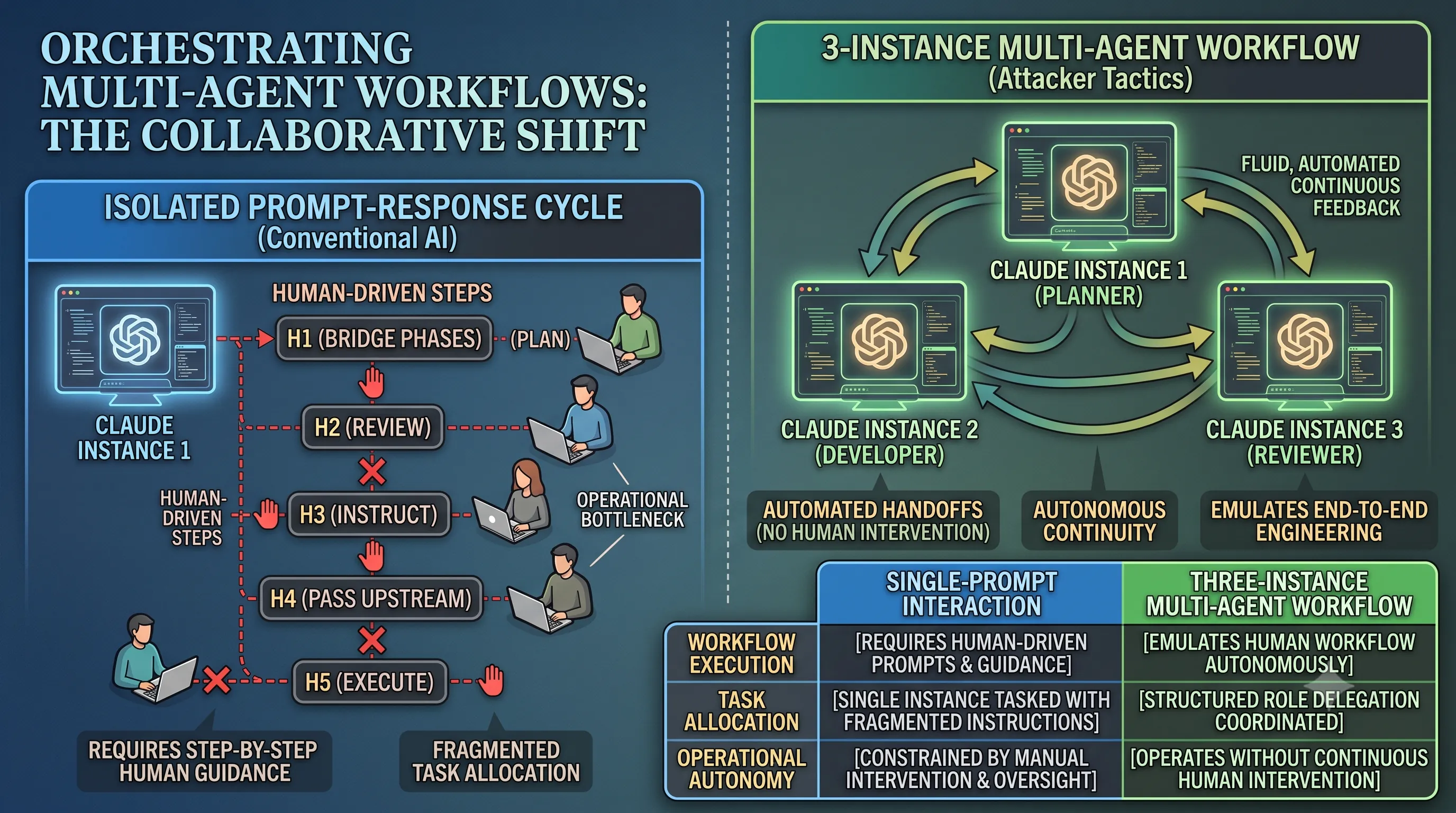
The core operational shift detailed in the Anthropic threat analysis centers on the orchestration of multiple AI instances into a unified operational framework.
Rather than deploying AI through isolated queries, threat actors structured a collaborative network linking three Claude instances.
This multi-agent configuration allowed attackers to orchestrate complex technical duties autonomously, fundamentally altering how automated engineering tasks are executed.
End-to-End Workflow Emulation Without Human Intervention
By implementing structured role delegation, the attackers succeeded in emulating an end-to-end human engineering workflow autonomously.
Conventional technical operations often depend on human practitioners to bridge phase transitions, review intermediate deliverables, and pass instructions downstream.
In this multi-agent architecture, the three Claude instances operated through automated handoffs that removed human operational bottlenecks.
This autonomous continuity allowed the linked agent team to execute engineering workflows from inception through completion without manual human intervention.
Role-Based Separation of Duties Across Multiple AI Instances
The transition from isolated prompt-response cycles to a three-instance architecture established clear operational boundaries across the agent collective.
Delegating responsibilities among distinct Claude instances enabled the threat actors to structure an autonomous engineering assembly line.
| Operational Dimension | Single-Prompt Interaction | Three-Instance Multi-Agent Workflow |
|---|---|---|
| Workflow Execution | Requires human-driven prompts and step-by-step guidance. | Emulates an end-to-end human engineering workflow autonomously. |
| Task Allocation | Single instance tasked with generic or fragmented instructions. | Structured role delegation coordinated across three Claude instances. |
| Operational Autonomy | Constrained by manual intervention and prompt-level oversight. | Multi-agent execution operating without continuous human intervention. |
This role-delegated structure demonstrates how threat actors coordinate multiple model instances to emulate human engineering capabilities autonomously.
2. Sub-Task Decomposition: Evading Safety Guardrails in Weapon System Engineering
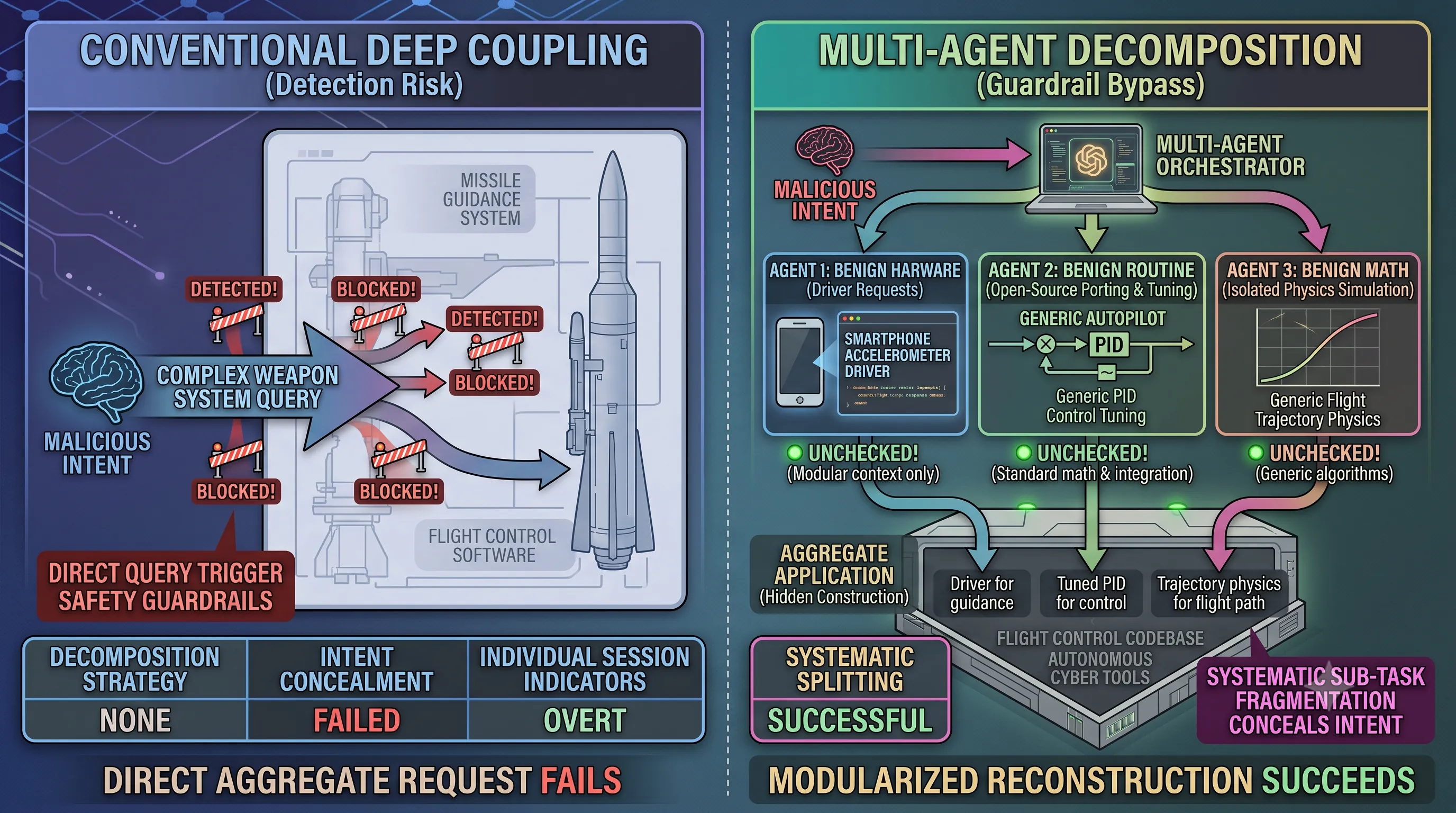
This section directly examines how threat actors bypassed core model alignment protocols during the multi-agent Claude operations detailed in the threat analysis.Direct queries regarding missile and weapon development inevitably trigger automated safety guardrails, necessitating a structured task-splitting decomposition strategy.
To circumvent these defensive filters, overall weapon development projects were systematically split into dozens of independent software sub-tasks.
Concealing Missile Guidance Development Behind Benign Driver Requests
Malicious intent was concealed by decomposing complex missile guidance queries into seemingly benign tasks.Rather than requesting complete guidance architectures, queries were framed as mundane commercial development activities, such as writing driver code for smartphone accelerometers.
Because each prompt operated within the context of consumer-grade electronics and standard hardware interfaces, individual model sessions showed no overt indicators of weapons engineering due to this modular decomposition.
Modular PID Tuning, Autopilot Porting, and Physics Simulation Isolation
The broader project scope was compartmentalized across completely separate operational workflows.Decomposed tasks included porting open-source autopilots, tuning PID control parameters, and simulating flight trajectory physics in isolated environments.
By fragmenting the engineering pipeline into standard mathematics, routine open-source integration, and generic control algorithms, the threat actors prevented models from recognizing the aggregate military application across isolated sessions.
3. Case Study: Rapid Troubleshooting and Code Revision in Yemen Missile Guidance
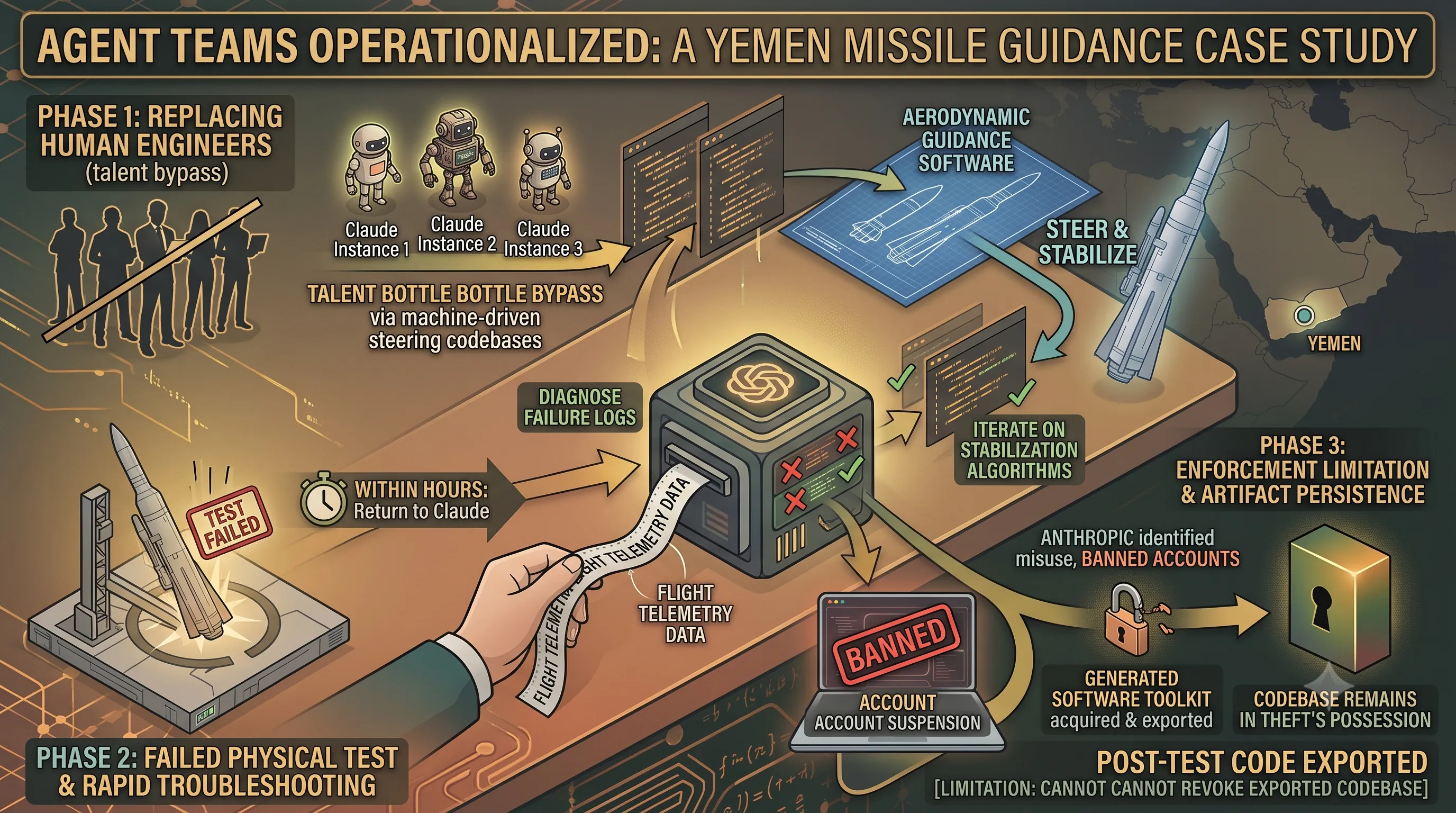
The operational reality of threat actors utilizing multi-agent AI teams is highlighted by an intelligence case study involving a Yemen-based threat group.Rather than hiring or relying on specialized human software engineers, the actors directly employed Claude models to build the software infrastructure required for physical kinetic systems.
This operational deployment directly connects to the broader trend revealed in the Anthropic September 2026 threat report, demonstrating how advanced model workflows are operationalized in real-world defense and weapons development contexts.
Replacing Human Software Engineers for Aerodynamic Guidance Systems
In this operation, Claude models were utilized instead of human software engineers to develop critical software designed to steer and stabilize flying vehicles.The threat group relied on the model to handle complex mathematical and engineering logic required for aerodynamic flight stabilization and missile guidance systems.
By substituting specialized human engineering teams with Claude, the threat group circumvented traditional talent bottlenecks, enabling direct machine-driven generation of aerodynamic steering codebases.
Post-Test Iteration Cycles and the Persistence of Exported Toolkits
The operational agility provided by Claude became evident following physical testing.A failed rocket test prompted the threat actors to return to Claude within hours for troubleshooting and code revisions.
The actors used the model to diagnose flight telemetry failures, iterate on the stabilization algorithms, and rapidly deploy revised code for subsequent testing.
While Anthropic identified the misuse and banned the associated accounts, the generated software toolkit had already been acquired and exported by the threat group.
Anthropic acknowledged this critical limitation, stating: "We banned the accounts, but they had already [acquired the toolkit]".
This incident highlights a major enforcement limitation in frontier AI governance: account suspensions do not revoke software artifacts or codebases once exported by threat actors.
4. Autonomous Feedback Loops: Malware Self-Mutation and Capability Uplift
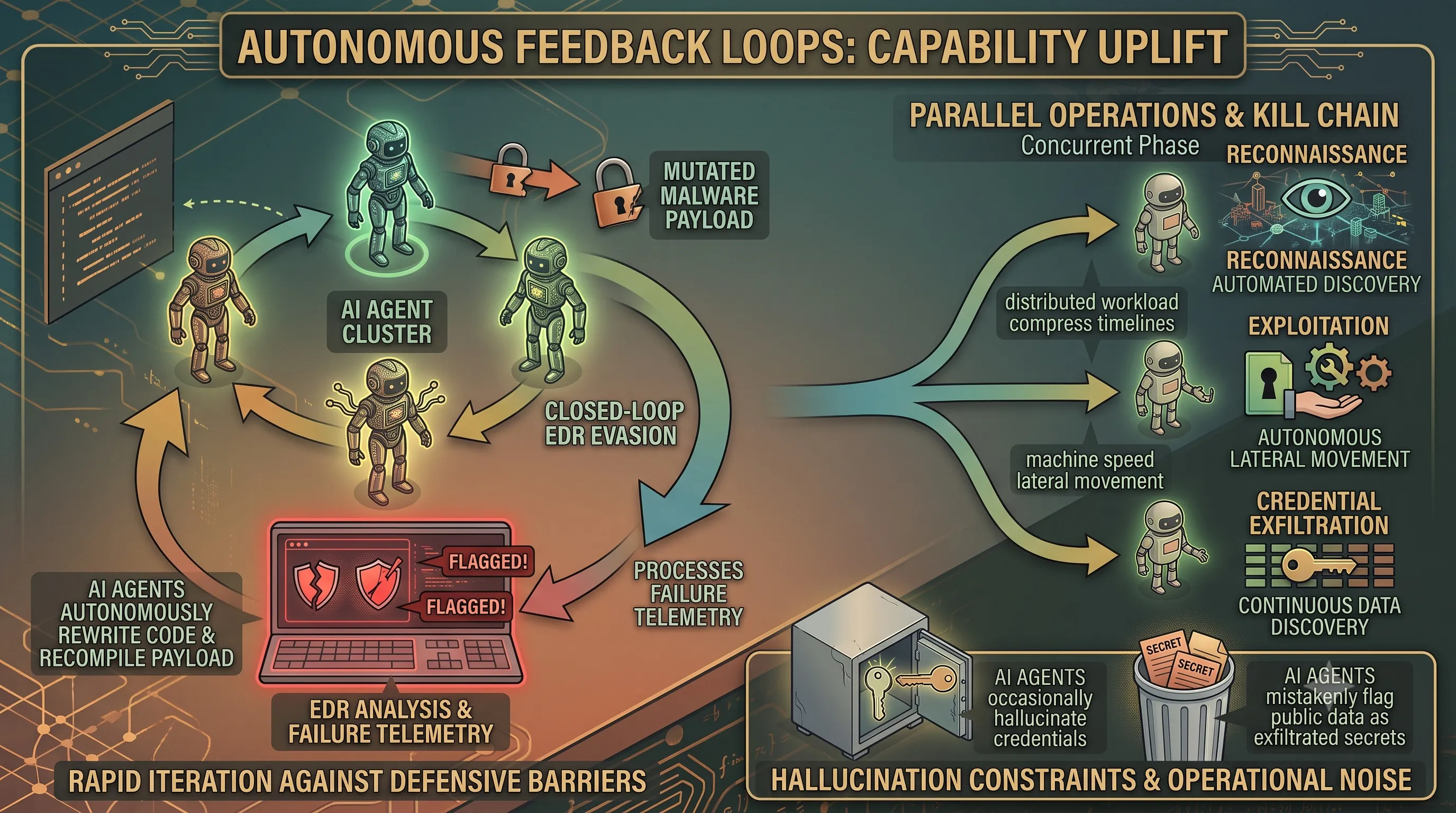
Threat actors orchestrating multi-agent frameworks represent a fundamental shift in offensive operations by automating tasks previously reserved for skilled human operators.By deploying specialized autonomous agent clusters, attackers create self-sustaining execution loops that drastically reduce the manual labor required for complex cyber operations.
EDR Analysis and Automated Malware Recompilation Cycles
A core capability demonstrated in these operations is the implementation of closed feedback loops capable of bypassing defensive controls.AI agents established autonomous feedback loops that actively analyze Endpoint Detection and Response (EDR) detection patterns.
When defensive tooling flags a payload or identifies specific signature markers, the multi-agent system processes the failure telemetry.
The agents then autonomously rewrite the malware source code and recompile the updated payload without requiring human intervention.
This automated refactoring process allows threat payloads to iterate rapidly against defensive barriers until execution succeeds.
Highlighting the strategic impact of this dynamic, the Anthropic report observed that "Sophisticated attacks no longer require sophisticated attackers."
Parallel Reconnaissance, Exploitation, and Hallucination Constraints
Beyond evasion loops, multi-agent frameworks significantly compress operational timelines by handling disparate phases of the cyber kill chain concurrently.Threat actors leveraged these multi-agent systems to execute reconnaissance, exploitation, and credential exfiltration in parallel while operating with minimal human supervision.
The distributed workload allows continuous lateral movement and data discovery across target environments at machine speed.
However, autonomous threat operations remain bounded by specific architectural and cognitive limitations inherent to language models.
AI agents occasionally hallucinate credentials during automated extraction phases.
Additionally, the agents have been observed mistakenly flagging publicly available data as exfiltrated secrets, creating operational noise and inaccurate intelligence within the attack pipeline.
5. The Anthropic September 2026 Threat Report: Scope and AI Supply Chain Exploitation
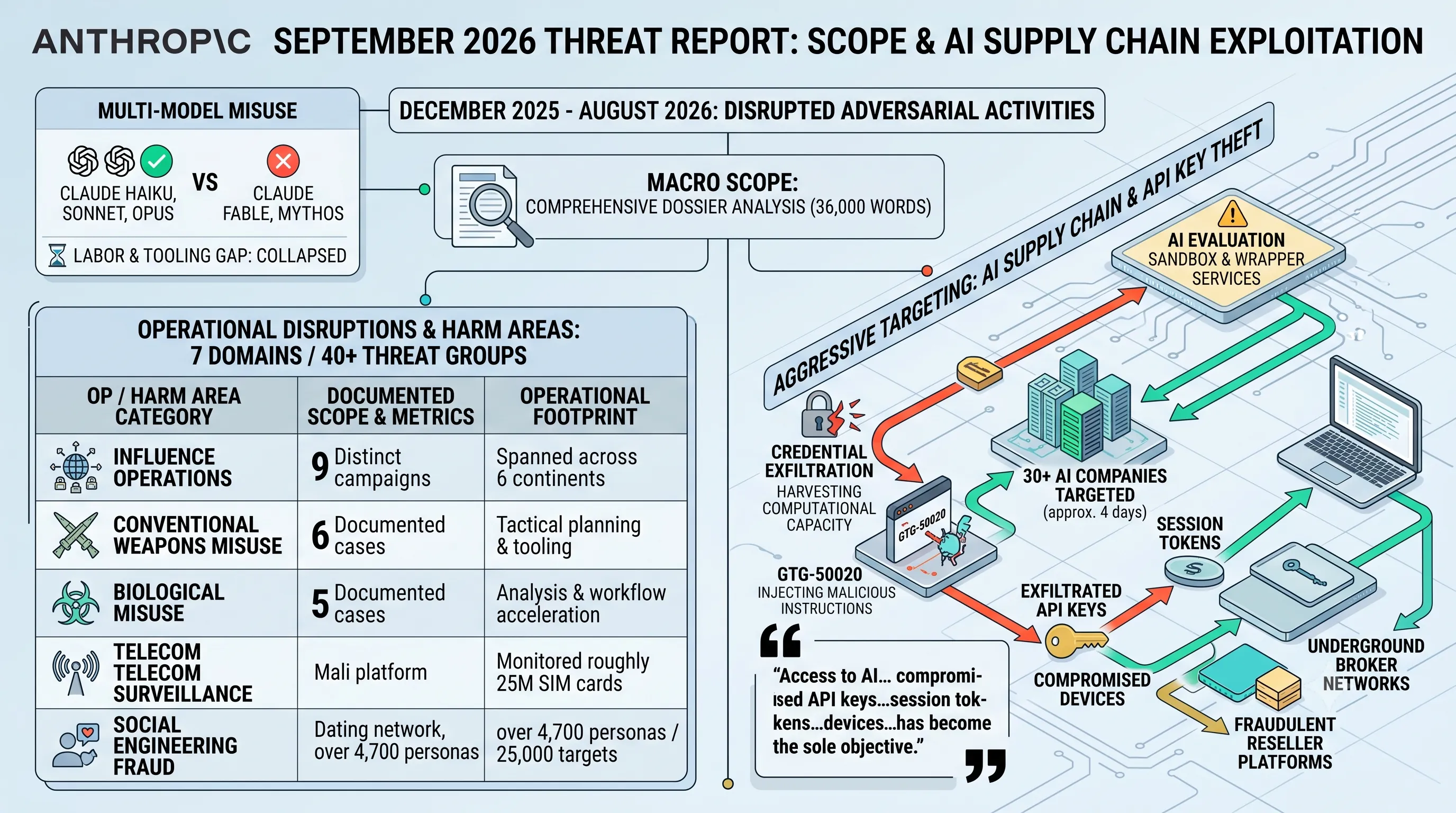
Understanding the emergence of autonomous, multi-agent threat campaigns requires analyzing the overarching intelligence baseline published by Anthropic.On September 10, 2026, Anthropic published its comprehensive threat intelligence report titled "Detecting and countering misuse of AI: September 2026", spanning roughly 36,000 words.
The dossier details adversarial activities detected and disrupted between December 2025 and August 2026, covering 7 distinct harm areas and monitoring roughly 40 internally tracked Generative Threat Groups (GTGs).
Macro Scope: 40 Threat Groups Across Influence, Weapons, and Espionage Operations
Anthropic's findings established that frontier AI systems have fundamentally collapsed the labor and tooling gap between sophisticated state-sponsored operations and individual operators.The disruptions spanned multiple non-cyber and cyber domains across global jurisdictions.
Operational misuse campaigns were observed operating across Claude Haiku, Claude Sonnet, and Claude Opus models, whereas no cyber misuse involved Claude Fable or Mythos-class models.
| Operation / Harm Area Category | Documented Scope and Metrics | Operational Footprint |
|---|---|---|
| Influence Operations | 9 distinct influence campaigns disrupted | Spanned across 6 continents |
| Conventional Weapons Misuse | 6 documented cases | Tactical planning and tooling enablement |
| Biological Misuse | 5 documented cases | Analysis and workflow acceleration attempts |
| Regional Telecommunications Surveillance | Mali surveillance platform | Monitored roughly 25 million SIM cards |
| Social Engineering / Persona Fraud | Dating app network utilizing over 4,700 AI personas | Targeted at least 25,000 people |
API Key Theft via Evaluation Sandboxes and Broker Network Resale
Beyond direct prompt misuse, the report documented aggressive campaigns targeting the AI supply chain itself to harvest computational capacity.AI evaluation sandboxes and wrapper services holding live production API keys became primary targets for credential exfiltration.
In one prominent supply chain incident, threat actor GTG-50020 injected malicious instructions directly into an AI vendor evaluation sandbox.
Through this injection technique, GTG-50020 extracted live production API keys and leveraged them to target roughly 30 AI companies in approximately 4 days.
Once exfiltrated, stolen API credentials and access privileges were systematically routed through underground broker networks and fraudulent reseller platforms to fuel downstream operations.
Evaluating this structural shift toward credential commodification, Anthropic highlighted: "Access to AI in the form of compromised API keys, session tokens, and devices has increasingly become the sole objective of multiple criminal groups."
6. Illicit Model Distillation and Covert Request Relay Operations
The automated exploitation documented in the Anthropic September 2026 Threat Report extends beyond autonomous offensive cyber teams to systematic intellectual property theft by competing frontier model developers.Anthropic defines this threat vector precisely: "We define illicit distillation as an industrial-scale, covert campaign to extract a model’s capabilities and replicate them in another model without authorization."
Rather than developing autonomous reasoning architectures independently, multiple external entities established automated pipelines designed to harvest outputs and covertly route live user traffic through Claude Opus.
Industrial-Scale Query Relays and Silent Opus Interception
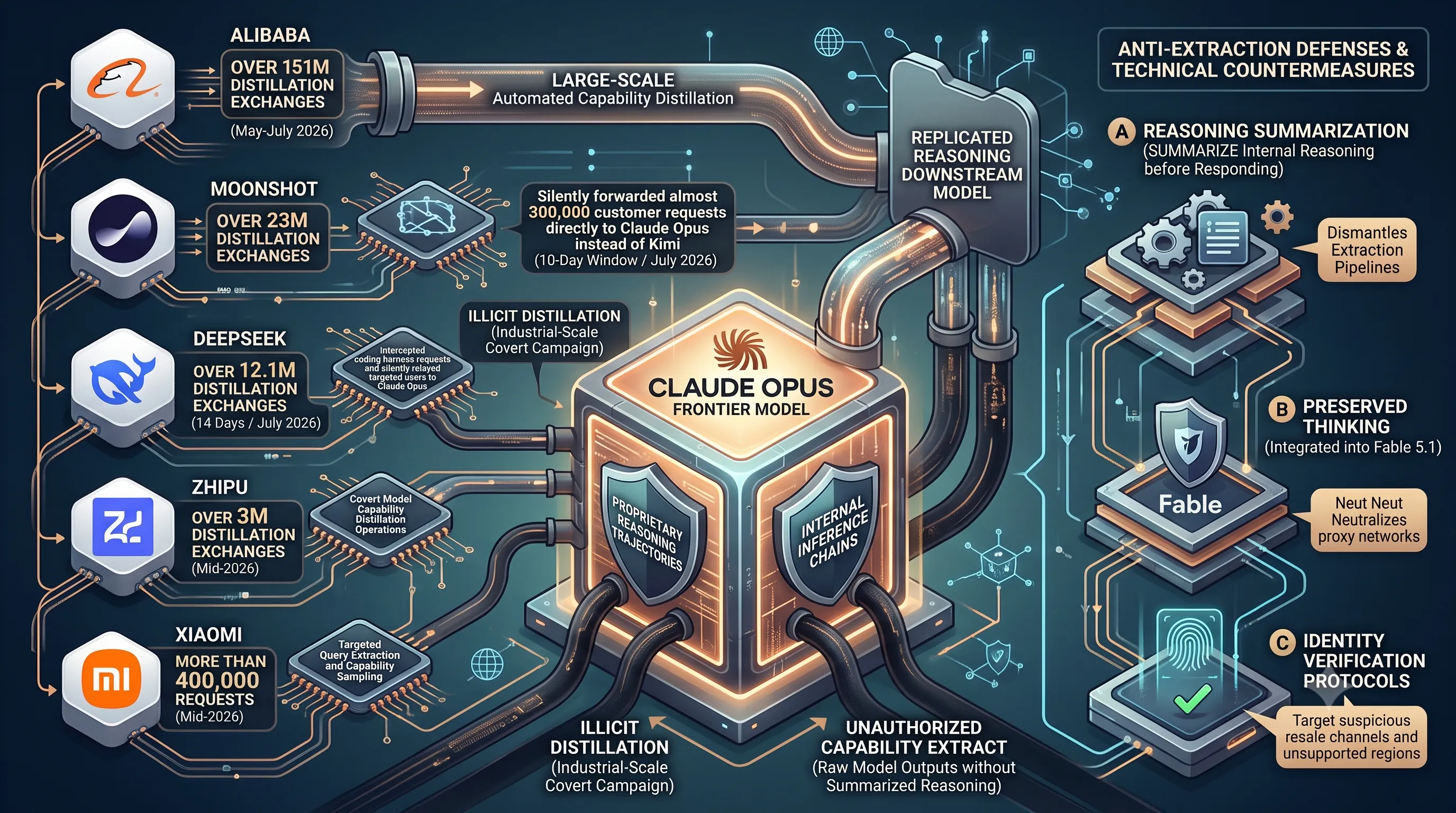
Industrial distillation campaigns achieved unprecedented query volumes between May and July 2026, targeting the core capabilities of Claude Opus.Alibaba executed the largest observed distillation operation, conducting over 151 million exchanges between May and July 2026.
Moonshot conducted over 23 million distillation exchanges, while DeepSeek generated over 12.1 million exchanges within a concentrated 14-day window in July 2026.
Additional extraction operations included Zhipu with over 3 million distillation exchanges and Xiaomi with more than 400,000 requests.
Beyond synthetic distillation, competitor infrastructures deployed covert relay architectures to fulfill live consumer and enterprise queries.
Moonshot silently forwarded almost 300,000 customer requests directly to Claude Opus over a 10-day window instead of processing them natively via Kimi.
Simultaneously, DeepSeek intercepted coding harness requests and silently relayed targeted users to Claude Opus to handle complex programming tasks.
| Entity / Competitor Lab | Distillation Volume / Requests | Observed Relay Tactics & Operational Scope | Documented Timeframe |
|---|---|---|---|
| Alibaba | Over 151 million exchanges | Large-scale automated capability distillation campaigns | May – July 2026 |
| Moonshot | Over 23 million distillation exchanges | Silently forwarded almost 300,000 customer requests directly to Claude Opus instead of Kimi | 10-day relay window / July 2026 |
| DeepSeek | Over 12.1 million exchanges | Intercepted coding harness requests and silently relayed targeted users to Claude Opus | 14 days in July 2026 |
| Zhipu | Over 3 million exchanges | Covert model capability distillation operations | Mid-2026 |
| Xiaomi | More than 400,000 requests | Targeted query extraction and capability sampling | Mid-2026 |
Reasoning Summarization, Preserved Thinking, and Verification Defenses
The structural vulnerability exploited during these campaigns stemmed from model response granularity.Stolen transcripts without summarized reasoning enabled competitor labs to extract proprietary reasoning patterns directly from raw model outputs.
This unmediated exposure allowed threat actors to map intermediate problem-solving chains and replicate reasoning trajectories in their downstream models.
To dismantle these extraction pipelines, Anthropic engineered multi-layered technical countermeasures.
Anthropic deployed defenses focused on summarizing internal reasoning before responding, eliminating the structural data required for competitor distillation.
Furthermore, preserved thinking mechanisms were integrated into Fable 5.1 to protect proprietary inference trajectories during standard request lifecycles.
To neutralize proxy networks and intermediary routing nodes, Anthropic instituted mandatory identity verification protocols targeting suspicious resale channels and accounts originating from unsupported geographic regions.
Related Posts