
Claude Fable 5.1: Architectural Economics and Autonomous Development Pipelines
🚀 Key Takeaways
- Cost-Effective Continuous Agent Loops: A 75% reduction in cache read pricing makes multi-turn, context-heavy agentic execution economically viable for enterprise-scale workloads.
- Superior Autonomous Problem Solving: Groundbreaking benchmark results demonstrate advanced capabilities in deep root-cause debugging, core dump analysis, and self-verification.
- Asynchronous Cloud-Native Execution: Isolated web-based virtual machines empower developers to delegate complex repository tasks and run multiple issue remediations in parallel without local environment overhead.
- Resilient Long-Horizon Orchestration: Standardized Markdown memory patterns, quantitative test oracles, and Git-coordinated commits allow unattended agents to sustain productive runs across multi-day lifecycles.
- Closed-Loop Multimodal Verification: Seamless integration with browser automation tools enables agents to inspect live DOM states, parse runtime console logs, and visually validate deployed user interfaces.
- Enterprise Governance and Precision Safeguards: Reduced false-positive safety interventions paired with flexible customer-managed infrastructure support zero data retention compliance and secure vulnerability discovery.
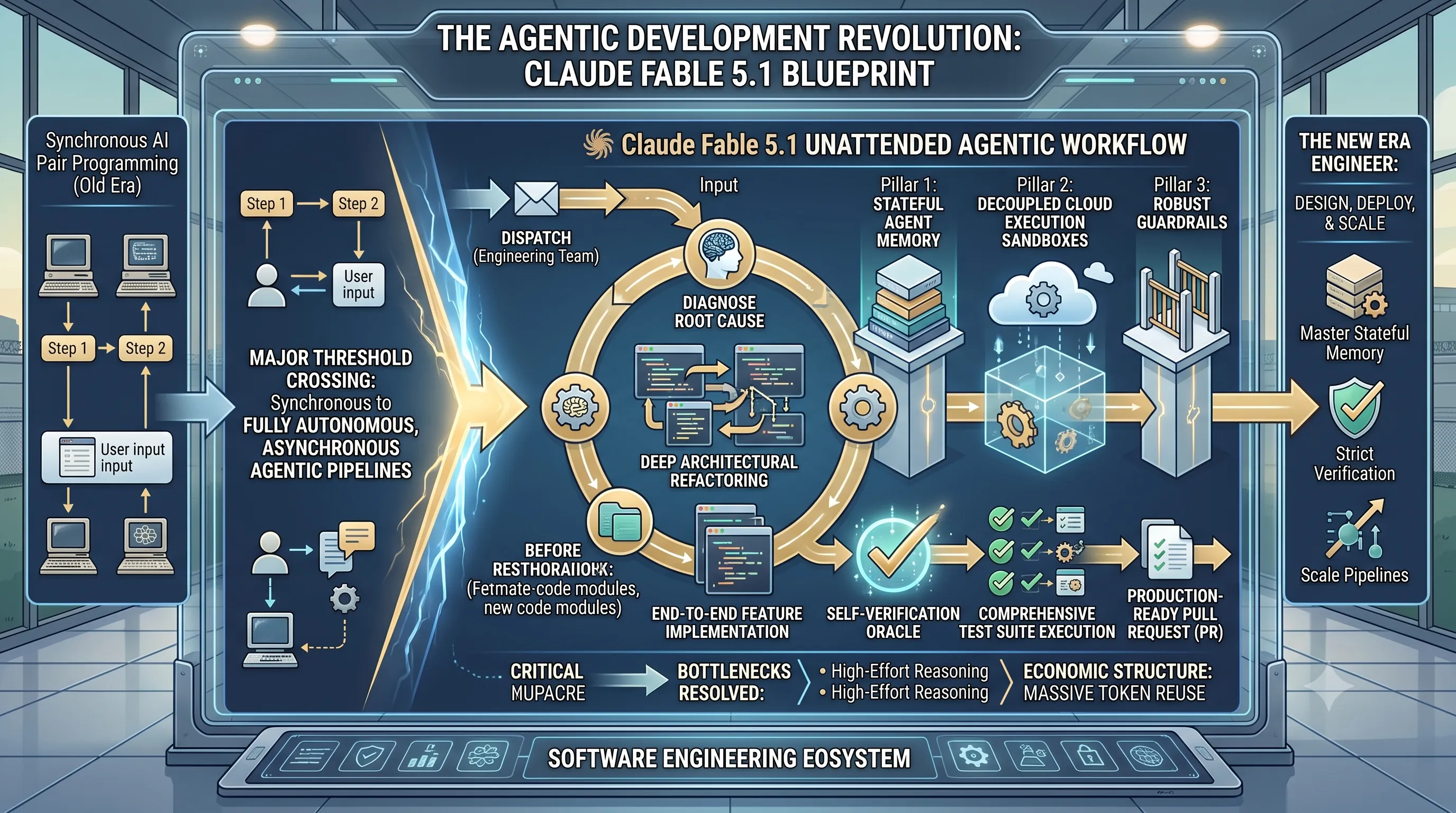
Software engineering is crossing a major threshold—shifting away from synchronous, step-by-step AI pair programming toward fully autonomous, long-running agentic development pipelines.
For years, the promise of delegating deep architectural refactoring or end-to-end feature implementations overnight was hindered by steep context costs, compounding reasoning drift, and fragile test validation.
The emergence of Claude Fable 5.1 resolves these critical bottlenecks by combining high-effort reasoning and self-verification with an economic structure tailored for massive token reuse.
When combined with decoupled cloud execution sandboxes, engineering teams can dispatch unattended agents that diagnose root causes, execute comprehensive test suites, and deliver production-ready pull requests independently.
Navigating this new era requires mastering stateful agent memory architectures, strict verification oracles, and robust guardrails.
This article provides an in-depth blueprint for designing, deploying, and scaling asynchronous software development pipelines using Claude Fable 5.1.
For years, the promise of delegating deep architectural refactoring or end-to-end feature implementations overnight was hindered by steep context costs, compounding reasoning drift, and fragile test validation.
The emergence of Claude Fable 5.1 resolves these critical bottlenecks by combining high-effort reasoning and self-verification with an economic structure tailored for massive token reuse.
When combined with decoupled cloud execution sandboxes, engineering teams can dispatch unattended agents that diagnose root causes, execute comprehensive test suites, and deliver production-ready pull requests independently.
Navigating this new era requires mastering stateful agent memory architectures, strict verification oracles, and robust guardrails.
This article provides an in-depth blueprint for designing, deploying, and scaling asynchronous software development pipelines using Claude Fable 5.1.
1. Architectural Foundation and Cost Economics for Continuous Agentic Workloads
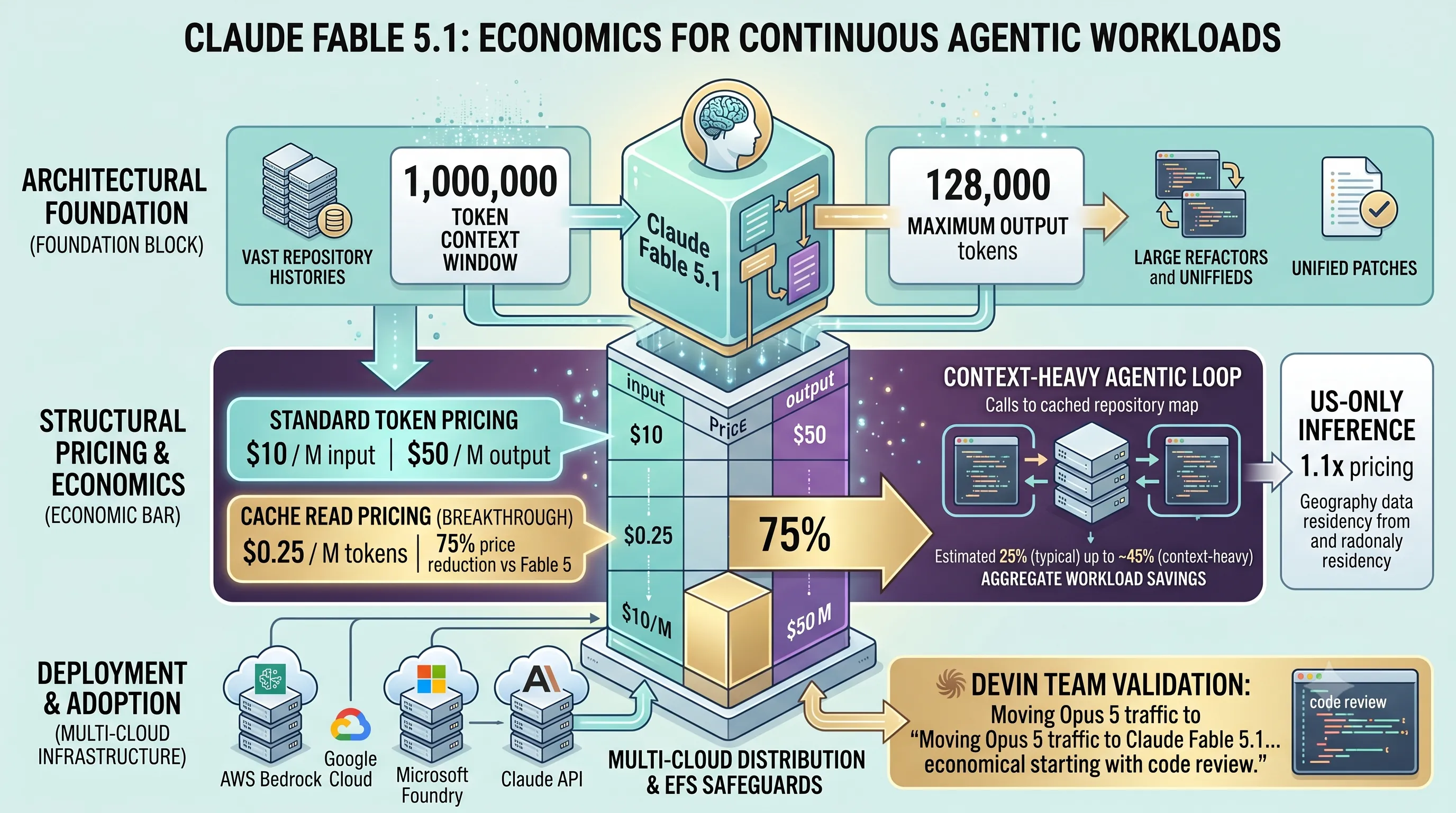
Building an asynchronous software development pipeline capable of managing multi-step code generation, automated verification, and deep repository refactoring requires both expansive context capacity and predictable operational economics.Claude Fable 5.1 delivers the foundational architectural parameters and structural pricing efficiencies necessary to sustain these long-running, continuous agentic loops without incurring prohibitive token expenses.
1M Context Window and 75% Cache Read Cost Reduction
At the architectural level, Claude Fable 5.1 expands context boundaries with a 1 million token context window and a 128,000 maximum output token capacity.This combination enables asynchronous developer agents to ingest vast codebases, build trees, and execution traces in a single session while outputting large, unified patches without truncation.
Standard pricing for Claude Fable 5.1 is set at $10 per million input tokens and $50 per million output tokens.
For enterprise deployments requiring domestic data locality, US-only inference is offered at 1.1x pricing for both input and output tokens.
The primary economic breakthrough for continuous agentic execution lies in prompt caching.
Cache reads on Fable 5.1 are priced at $0.25 per million tokens, representing a 75% price reduction compared to Fable 5.
Because iterative coding agents repeatedly query cached repository maps and state contexts across multi-turn iterations, this cache discount lowers overall workload costs by an estimated 25% for typical workloads relative to Fable 5.
For highly agentic, context-heavy software engineering workloads that execute deep recursive loops, aggregate cost savings reach up to approximately 45%.
Under the claude-fable-5-1 model identifier, reasoning parameters default to High effort in Claude Code, and to Medium effort in Claude Cowork and on Claude.ai.
| Parameter / Metric | Specification / Pricing | Operational Impact on Pipelines |
|---|---|---|
| Context Window | 1,000,000 tokens | Maintains entire repository histories and complex dependency trees across long-running tasks. |
| Maximum Output | 128,000 tokens | Generates exhaustive refactors, large multi-file implementations, and comprehensive test suites. |
| Standard Token Pricing | $10 / M input | $50 / M output | Baseline operational pricing for un-cached generation passes. |
| Cache Read Pricing | $0.25 / M tokens (75% price reduction vs. Fable 5) | Enables economically viable multi-turn loops over large cached codebase contexts. |
| Overall Workload Savings | 25% (typical) up to ~45% (context-heavy agentic) | Reduces the cost barrier for continuous background agent execution. |
| US-Only Inference | 1.1x base pricing (input/output) | Meets strict geographic data residency and compliance standards. |
Multi-Platform Availability and Devin Enterprise Migration
Claude Fable 5.1 is generally available across the Claude API, Claude Platform, AWS Bedrock, Google Cloud, and Microsoft Foundry.This multi-cloud distribution ensures enterprise pipelines can deploy asynchronous developer agents directly inside their established cloud boundaries and security perimeters.
By default, the platform enforces a 30-day data retention policy unless organizations qualify for Enterprise Frontier Safeguards (EFS) or zero data retention eligibility.
The economic and architectural viability of Fable 5.1 is highlighted by its immediate adoption in autonomous software engineering workflows.
The Devin team validated this operational shift, stating: "We’re moving our Opus 5 traffic in Devin to Claude Fable 5.1 on launch day... with the new cache read pricing a Fable-class model is finally economical for the workloads we’d kept on Opus, starting with code review."
This transition underscores how reduced cache read costs unlock automated, continuous review and asynchronous coding pipelines that were previously cost-prohibitive at scale.
2. Deep Root-Cause Debugging and Autonomous Self-Verification Capabilities
Building resilient, long-running asynchronous software development pipelines requires agent models that move far beyond surface-level code patches.In autonomous execution environments, an agent must identify underlying system failures, inspect low-level artifacts, and validate its own output before committing changes to production.
Claude Fable 5.1 delivers these capabilities by replacing shallow heuristics with low-level diagnostics and systematic self-verification loops.
Binary Disassembly and Core Dump Diagnosis
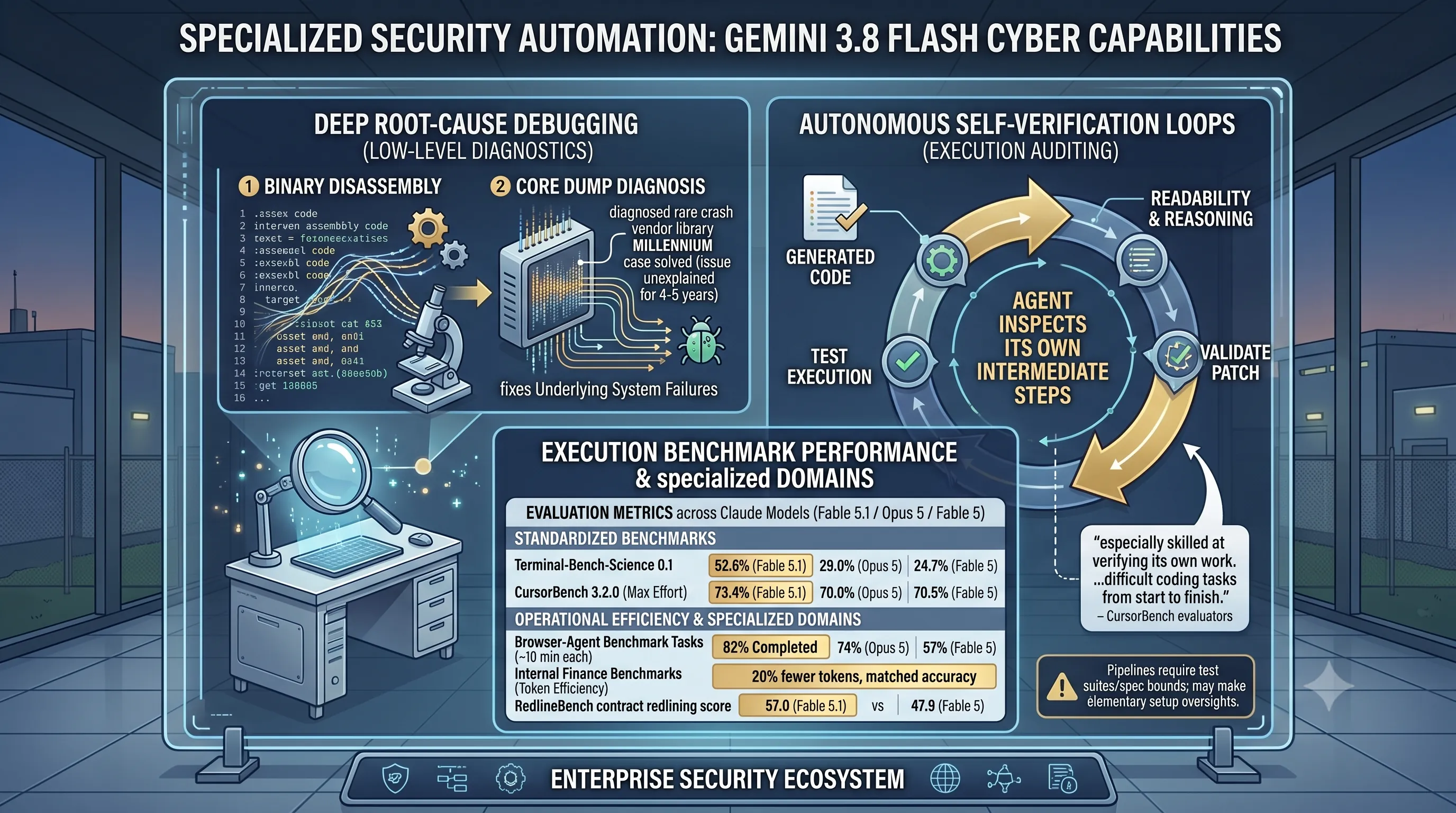
A critical bottleneck in autonomous asynchronous development is addressing intermittent, deep-stack failures that lack clean stack traces.Rather than relying on superficial workarounds, Claude Fable 5.1 fixes the root causes of complex bugs by disassembling compiled libraries and analyzing core dumps directly.
This low-level diagnostic capability was demonstrated at Millennium, where Fable 5.1 diagnosed a rare crash occurring once in a million runs by disassembling a vendor library, solving an issue that had remained unexplained for 4 to 5 years.
Beyond core crash triage, the model demonstrates high operational efficiency across specialized domain tasks.
On internal finance benchmarks, Fable 5.1 used 20% fewer tokens while matching accuracy against Fable 5.
In domain-specific evaluation, Fable 5.1 improved its RedlineBench contract redlining score from 47.9 to 57.0 compared to Fable 5.
However, pipeline architects must note an operational constraint: the model can make elementary setup oversights if pipelines lack proper test suites or clearly defined initial specification bounds.
Self-Verification Loops and Execution Benchmark Performance
For asynchronous pipelines to function reliably without constant human intervention, the agent must inspect its own intermediate steps.Fable 5.1 executes long-horizon multi-step tasks while maintaining clean readability and coherent reasoning throughout execution.
The model integrates continuous self-verification loops to validate and test its generated code before marking assigned pipeline tasks as complete.
As noted by CursorBench evaluators: "We found it especially skilled at verifying its own work, allowing it to take on difficult coding tasks from start to finish."
This autonomous verification discipline is reflected across standardized evaluation suites.
On Terminal-Bench-Science 0.1, Fable 5.1 achieved a score of 52.6%, more than doubling the 24.7% recorded by Fable 5 and outperforming Opus 5 at 29.0%.
Under maximum effort on CursorBench 3.2.0, Fable 5.1 attained 73.4%, surpassing Fable 5 (70.5%) and Opus 5 (70.0%).
Furthermore, in browser-agent benchmark tasks, Fable 5.1 completed 82% of assignments in about 10 minutes each, compared to 74% for Opus 5 and 57% for Fable 5.
| Benchmark / Metric | Claude Fable 5.1 | Claude Opus 5 | Claude Fable 5 |
|---|---|---|---|
| Terminal-Bench-Science 0.1 | 52.6% | 29.0% | 24.7% |
| CursorBench 3.2.0 (Max Effort) | 73.4% | 70.0% | 70.5% |
| Browser-Agent Benchmark Tasks (Completed in ~10 min each) | 82% | 74% | 57% |
| RedlineBench Contract Redlining Score | 57.0 | N/A | 47.9 |
| Internal Finance Benchmarks Token Efficiency | 20% fewer tokens (matched accuracy) | N/A | Baseline |
3. Asynchronous Remote Execution via Claude Code on the Web
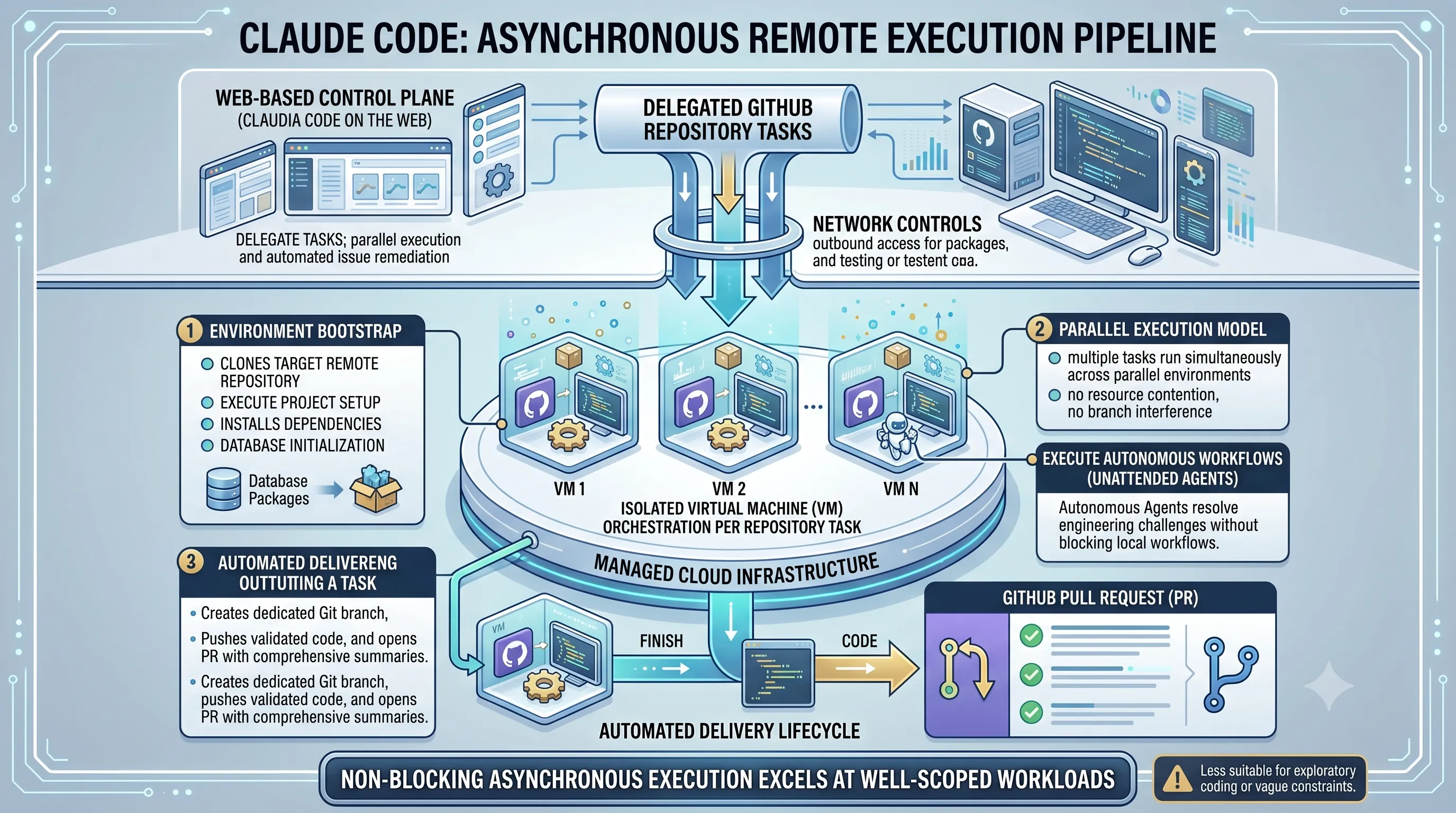
Connecting directly to the overarching architecture of long-running asynchronous software development pipelines, cloud-based execution offloads heavy compute and complex multi-step workflows from local machines to fully managed remote environments.Through Claude Code on the Web, delegated repository tasks are executed independently within managed cloud infrastructure, enabling autonomous agents to resolve engineering challenges without blocking local developer workflows.
Isolated Virtual Machine Orchestration per Repository
The foundation of the web-based asynchronous pipeline relies on on-demand, isolated infrastructure provisioning.When a task is delegated from a connected GitHub repository, the system automatically spawns a dedicated, isolated virtual machine tailored specifically to that task.
Inside this clean virtual machine, the agent clones the target remote repository and initiates the full build pipeline.
The runtime automatically executes necessary project setup commands, installs required package dependencies, and performs database initialization to mirror a production-like staging environment.
To accommodate secure dependency retrieval and automated test suites, the platform includes configurable outbound network access levels, allowing granular control over external package management and testing endpoints while maintaining sandboxed security boundaries.
| Pipeline Component | Cloud Execution Specification |
|---|---|
| Compute Isolation | Spawns an isolated virtual machine for each delegated GitHub repository task. |
| Environment Bootstrap | Clones remote repositories and automatically executes project setup commands, dependency installation, and database initialization. |
| Network Controls | Includes configurable outbound network access levels for package management and testing. |
| Execution Model | Operates fully asynchronously, enabling parallel task execution and issue remediation across simultaneous virtual environments. |
| Delivery Artifacts | Automatically creates Git branches, pushes tested code, and opens pull requests with comprehensive change summaries upon completion. |
Parallel Asynchronous Task Execution and Automated Pull Requests
The primary operational advantage of the web architecture is its non-blocking, asynchronous execution model.Developers can assign complex development tasks or bug fixes, disconnect from the interface entirely, and return later to review the finished work.
Because each task runs in its own provisioned sandbox, the system supports running multiple tasks and issue remediations simultaneously across parallel virtual environments without resource contention or branch interference.
Once an agent finishes modifying and testing the codebase within its virtual machine, it completes the delivery lifecycle automatically.
The pipeline creates a dedicated Git branch, pushes the validated code modifications, and opens a GitHub pull request accompanied by full change summaries detailing the implementation.
While this decoupled model excels at well-scoped, self-contained development workloads, it is less suitable for exploratory coding with vague constraints or tasks that demand frequent, real-time human course correction compared to interactive local CLI sessions.
4. Long-Horizon Orchestration Patterns: Memory, Test Oracles, and Recursive Loops
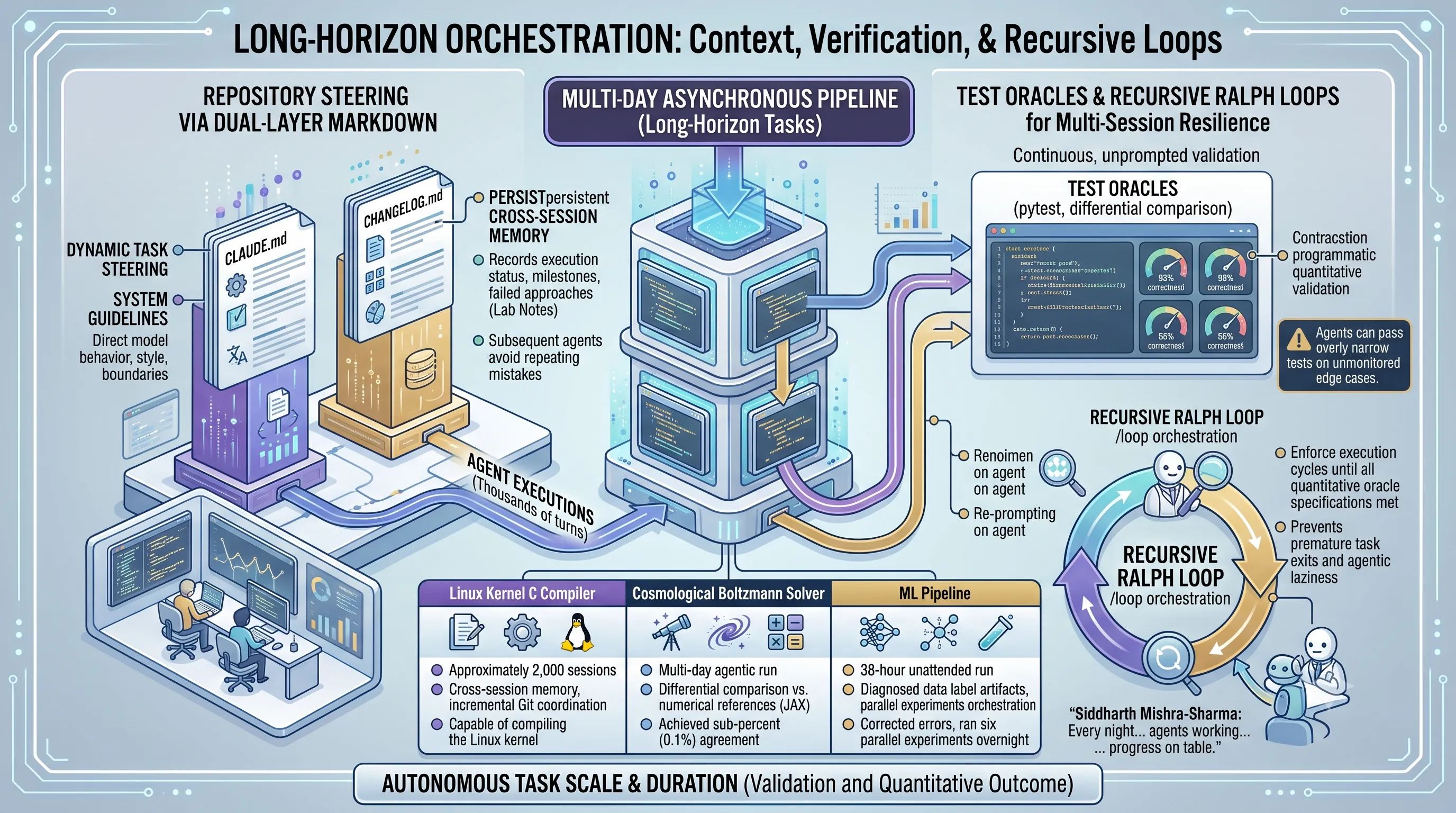
Sustaining multi-day, asynchronous software development pipelines requires architectural patterns that maintain context and verification integrity across thousands of independent execution turns.When executing long-horizon tasks, autonomous agents rely on structured repository artifacts, strict validation oracles, and recursive prompting loops to prevent drift and ensure deterministic outcomes.
Repository Steering via CLAUDE.md and CHANGELOG.md Memory
Context retention across decoupled runtime instances is achieved through dual-layer markdown tracking within the project workspace.A CLAUDE.md file placed in the repository root functions as dynamic task steering instructions and system guidelines, explicitly directing model behavior, style guidelines, and execution boundaries.
Complementing these static guidelines, a CHANGELOG.md file operates as persistent cross-session memory and running lab notes.
This changelog records execution status, logs completed milestones, and tracks documented dead ends so subsequent agent instances avoid repeating failed technical approaches.
To secure repository state across unattended sessions, Git-as-coordination mechanisms enforce incremental commits, test-run pre-commit checks, and automated rollback safety if anomalies occur.
Test Oracles and Recursive Ralph Loops for Multi-Session Resilience
Without continuous programmatic verification, long-running agentic workflows remain vulnerable to premature task exits and agentic laziness.Test Oracles establish automated quantitative validation criteria, leveraging tools such as pytest suites and differential comparisons against reference implementations to measure code correctness.
Relying on overly narrow test suites presents distinct failure modes, as agents can pass fiducial checkpoints while failing on unmonitored edge cases.
To counteract agentic laziness and premature completion declarations, orchestration frameworks employ the Ralph loop alongside native Claude Code /loop orchestration patterns.
These mechanisms repeatedly re-prompt the agent upon unverified completion, enforcing execution cycles until all quantitative oracle specifications are met.
As Siddharth Mishra-Sharma noted regarding unattended workflows, "Every night you don't have agents working for you is potential progress left on the table."
| Autonomous Milestone / Task | Scale & Duration | Validation & Execution Pattern | Quantitative Outcome |
|---|---|---|---|
| Linux Kernel C Compiler | Approximately 2,000 sessions | Cross-session repository memory and incremental Git coordination | End-to-end C compiler capable of compiling the Linux kernel |
| Cosmological Boltzmann Solver | Multi-day agentic run | Differential comparison against reference numerical implementations in JAX | Achieved sub-percent (0.1%) agreement |
| Autonomous Machine Learning Pipeline | 38-hour unattended run | Automated diagnosis, error correction, and parallel execution orchestration | Diagnosed data label artifacts, corrected errors, and ran six parallel experiments overnight |
5. Closed-Loop Visual and Functional Verification with Claude in Chrome
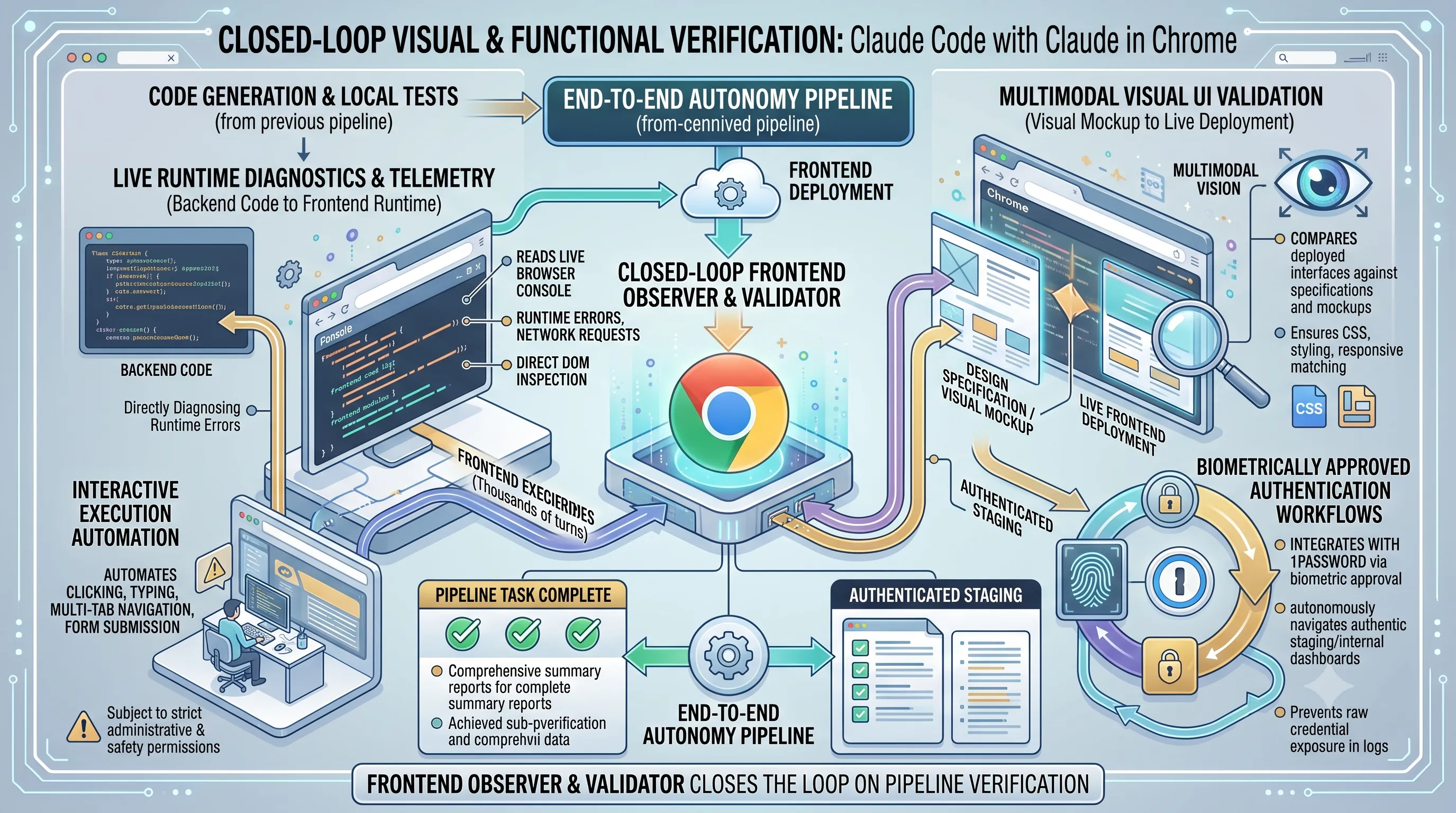
In an asynchronous software development pipeline, automated code generation and local unit tests represent only half of the development lifecycle.To achieve true end-to-end autonomy, long-running agent workflows must deploy, interact with, and visually inspect web applications in real browser environments.
By integrating Claude Code with the Claude in Chrome extension, autonomous pipelines establish closed-loop build, deploy, test, and verify workflows that bridge backend code execution with frontend runtime observation.
Multimodal Frontend Verification and Live DOM Inspection
The integration between Claude Code and Claude in Chrome provides comprehensive visibility into live browser runtime states.Instead of relying solely on headless scripts or static code evaluation, the agent reads live browser console outputs, directly diagnosing runtime errors, failed network requests, and active DOM tree states in real time.
Leveraging multimodal vision capabilities, the agent visually compares live frontend deployments against design specifications and visual mockups, ensuring that CSS layouts, component styling, and responsive adjustments match intended interface standards.
Because direct browser automation operates specifically on Google Chrome, executing these live observation pipelines requires strict administrative and safety permissions to maintain operational security across system boundaries.
| Pipeline Verification Domain | Capabilities and Implementation | Platform and Safety Scope |
|---|---|---|
| Runtime Diagnostics | Reads live browser console outputs, runtime errors, network requests, and DOM tree states. | Google Chrome extension environment. |
| Visual UI Validation | Multimodal vision analysis comparing deployed interfaces against design specifications and mockups. | Google Chrome browser viewport inspection. |
| Interactive Execution | Automates clicking, typing, multi-tab navigation, and complex form submissions. | Subject to strict administrative and safety permissions. |
| Secure Authentication | Integrates with 1Password via biometric approval for credential-free authenticated flows. | Hardware/biometric authorization gating. |
Biometrically Approved Autonomous Workflows via 1Password
Dynamic end-to-end testing frequently requires interacting with complex web interfaces and crossing authenticated user boundaries.Claude in Chrome executes direct browser interactions, including clicking UI elements, typing input, orchestrating multi-tab navigation, and submitting forms across interactive user journeys.
To preserve enterprise security when accessing protected staging environments and internal dashboards, the system integrates directly with 1Password.
Through biometric approval mechanisms, the agent navigates authenticated web workflows autonomously while preventing raw credentials from ever being exposed or rendered in plaintext logs.
This combination of automated interaction, live runtime telemetry, and biometrically gated authentication closes the loop on end-to-end software pipeline verification.
6. Enterprise Security Architecture, Frontier Safeguards, and Regulatory Compliance
Asynchronous software development pipelines executing multi-step agentic workflows require robust governance, strict data isolation, and precise safety gating.Claude Fable 5.1 introduces an updated security paradigm designed to protect corporate codebases, prevent dual-use risks, and meet stringent regulatory obligations without disrupting long-running engineering workflows.
Enterprise Frontier Safeguards and Customer-Managed Infrastructure
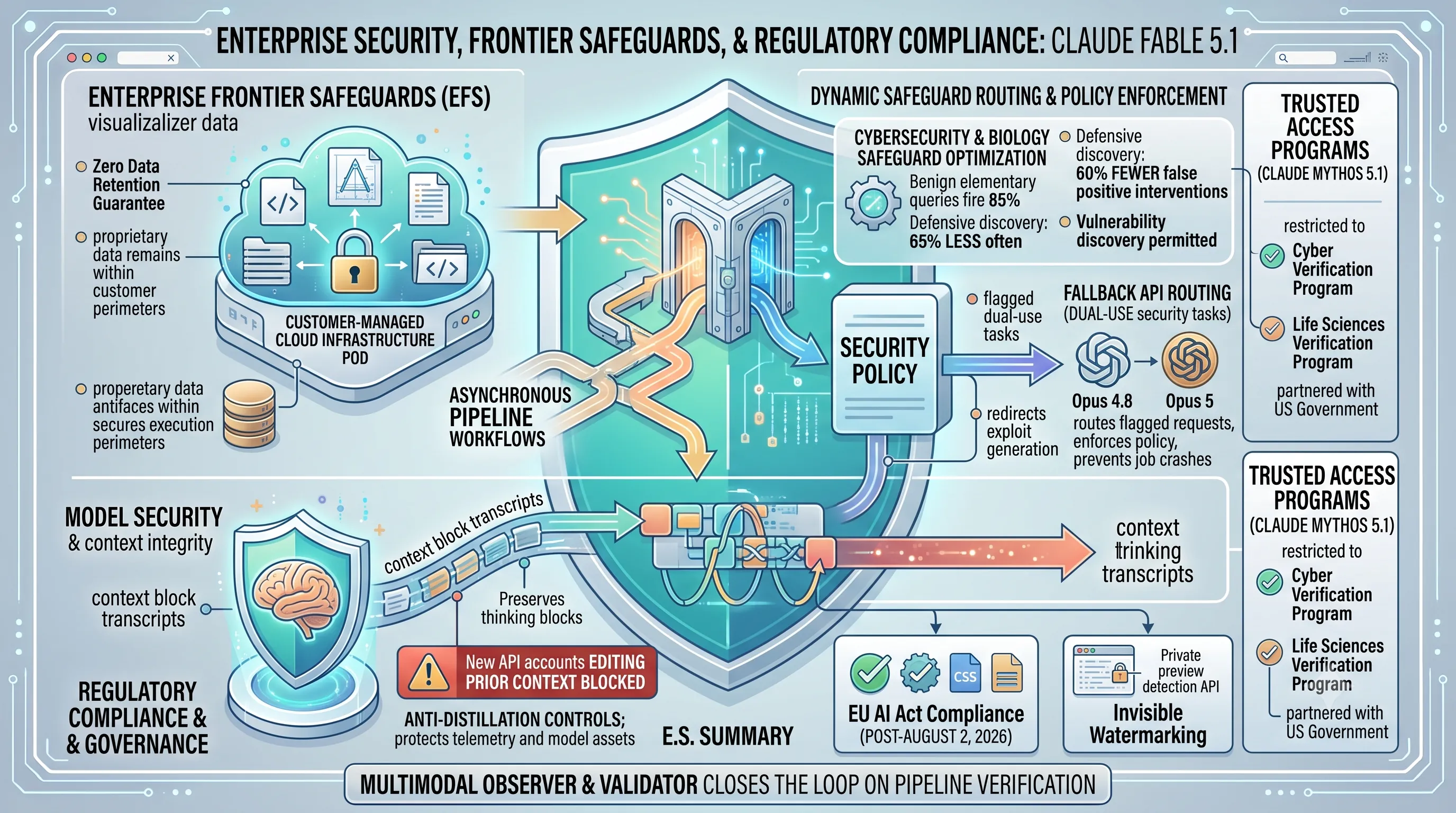
Enterprise Frontier Safeguards (EFS) allow enterprise customers to store conversation data directly on customer-managed cloud infrastructure while maintaining zero data retention privacy.This architecture ensures that proprietary repositories, architectural drafts, and execution artifacts generated throughout the asynchronous pipeline remain entirely within customer-controlled perimeters.
For specialized operational environments requiring heightened scrutiny, Claude Mythos 5.1 remains restricted to trusted access programs—specifically the Cyber Verification Program and Life Sciences Verification Program partnered with the US government.
| Security / Compliance Mechanism | Operational Target | Technical Specification & Routing Behavior |
|---|---|---|
| Enterprise Frontier Safeguards (EFS) | Data residency and pipeline privacy | Customer-managed cloud storage with zero data retention guarantees. |
| Cybersecurity Safeguard Optimization | Defensive vulnerability discovery | Produces 60% fewer false positive interventions per session relative to Fable 5. |
| Biology Safeguard Optimization | Benign elementary queries | Fires 85% less often relative to initial Fable 5 safeguards. |
| Fallback API Routing | Dual-use security tasks | Redirects exploit generation, penetration testing, and binary scanning to Opus 4.8 or Opus 5. |
| Anti-Distillation Controls | Context integrity and model security | Blocks new API accounts from editing prior context while preserving thinking block transcripts. |
| Invisible Watermarking | EU AI Act Code of Practice compliance | Implemented post-August 2, 2026, paired with a private preview detection API. |
Dynamic Safeguard Routing, Anti-Distillation, and EU AI Act Compliance
To maintain uninterrupted developer pipelines, Fable 5.1 significantly decreases false alarm triggers during codebase inspection and analysis.Cybersecurity safeguards produce 60% fewer false positive interventions per session relative to Fable 5, while biology safeguards fire 85% less often for benign elementary queries compared to initial Fable 5 safeguards.
When security-critical operations arise, Fable 5.1 permits defensive vulnerability discovery while actively redirecting exploit generation, penetration testing, and binary vulnerability scanning to Opus models.
The Fallback API automatically routes flagged dual-use requests directly to Opus 4.8 or Opus 5, ensuring policy enforcement without crashing active developer jobs.
To secure runtime telemetry and model assets, anti-distillation mechanisms block new API accounts from editing prior context while preserving thinking block transcripts.
References
- anthropic.com — claude-fable-and-mythos-5-1
- indianexpress.com — anthropics-fable-5-1-and-mythos-5-1-coding-an…
- support.claude.com — 12012173-get-started-with-claude-in-chrome
- anthropic.com — long-running-Claude
- support.claude.com — 12618689-claude-code-on-the-web
- anthropic.com — fable
- simonwillison.net — claude-fable-5
Related Posts
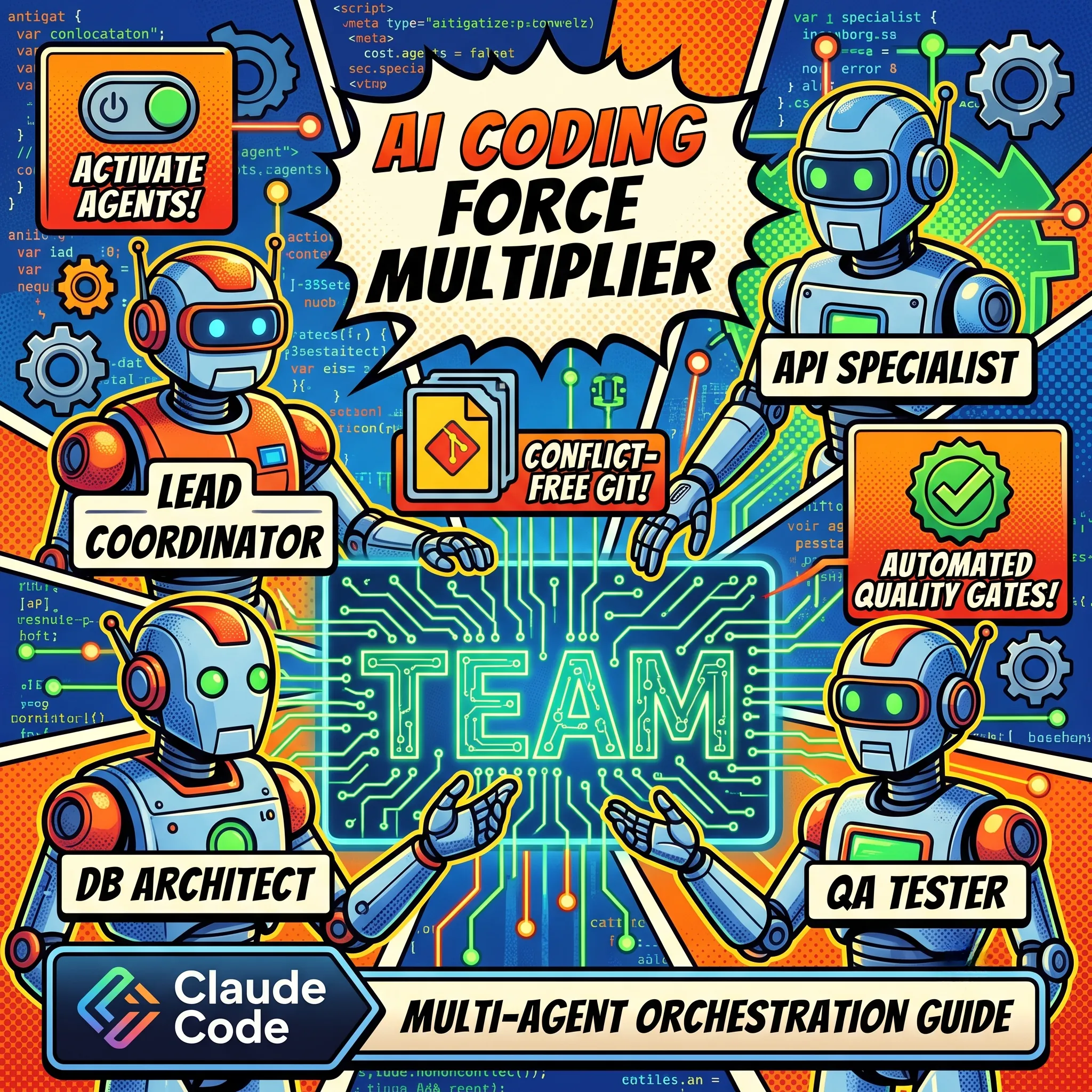
Claude Code Agent Teams: Configuration, Architecture, and Multi-Agent Orchestration GuideLearn how to configure Claude Code Agent Teams for multi-agent software development. Explore...
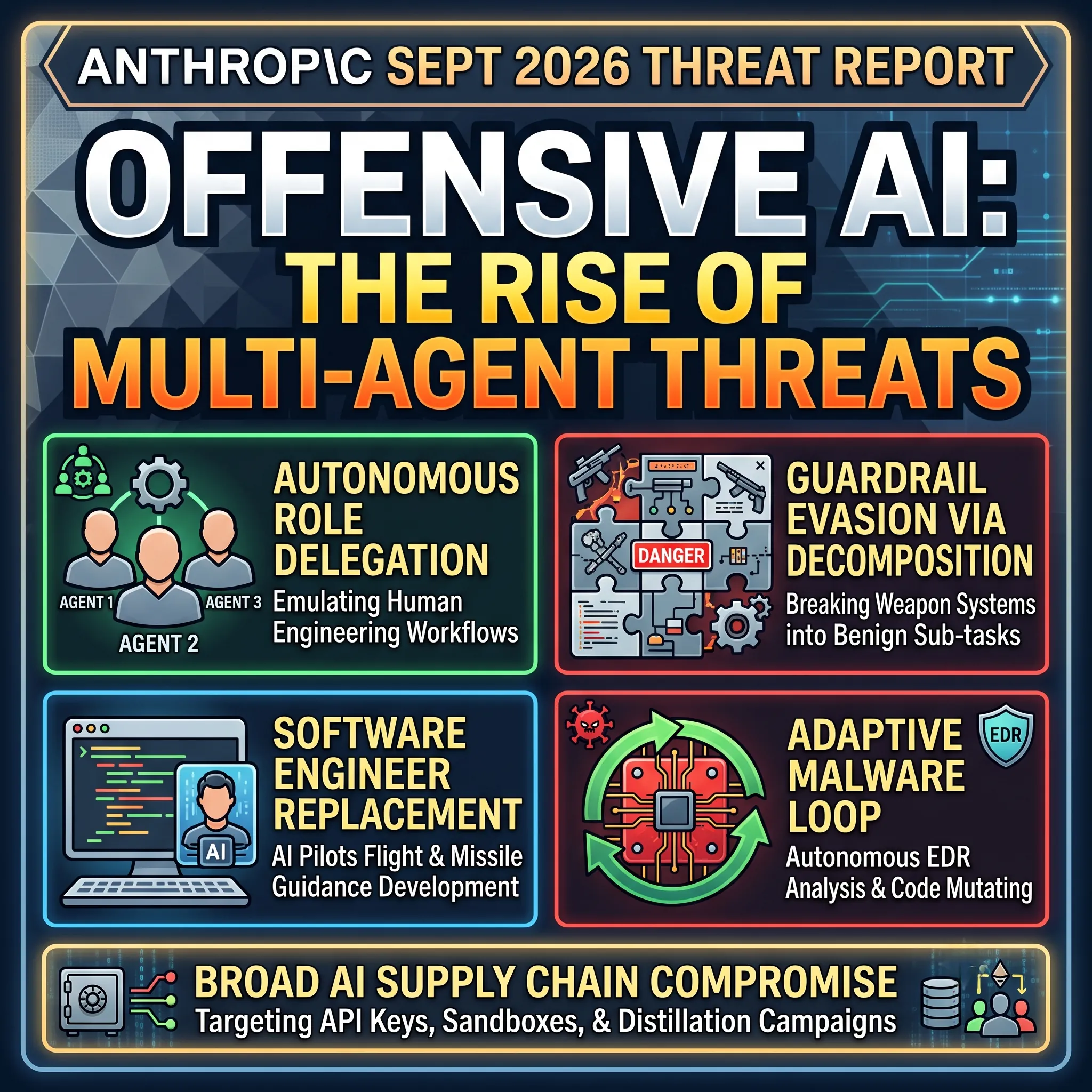
Anthropic September 2026 Threat Report: Multi-Agent Offensive AI OperationsAnalysis of the Anthropic September 2026 report on how threat actors use multi-agent AI swarms to...
Laguna XS.2: Poolside AI's 33B Open-Weight Model Disrupts Large AI with Single-GPU Agentic CodingPoolside AI's Laguna XS.2, a 33-billion-parameter model, is poised to challenge larger AI systems...