
China's AI Revolution: Alibaba Qwen3.8-Max & QwenWork, MiniMax H3 Drive Ecosystem Shift to 'Longer-Working AI'
🚀 Key Takeaways
- Alibaba unveiled its flagship Qwen3.8-Max multimodal model on August 3, 2026, marking a significant advancement in its Qwen series with integrated visual understanding.
- Simultaneously, Alibaba launched QwenWork, an enterprise AI agent platform designed to integrate diverse AI tools and workflows across enterprise environments.
- MiniMax introduced H3 on July 31, 2026, as its pioneering open-source video generation model, capable of producing high-resolution video with native stereo sound.
- These major releases signal a broader strategic shift in China's AI industry, moving competition beyond individual model performance to focus on comprehensive ecosystem building.
- Chinese AI companies are now prioritizing platform expansion and deeper integration of domestic collaboration tools, cloud services, and industrial data for faster commercialization.
- The industry's focus is evolving from creating "smarter AI" to developing "longer-working AI", emphasizing autonomous, professional, and long-duration task capabilities.
- This transformation positions China's AI sector to lead in the automation of actual work and foster robust developer and business ecosystems around powerful AI platforms.
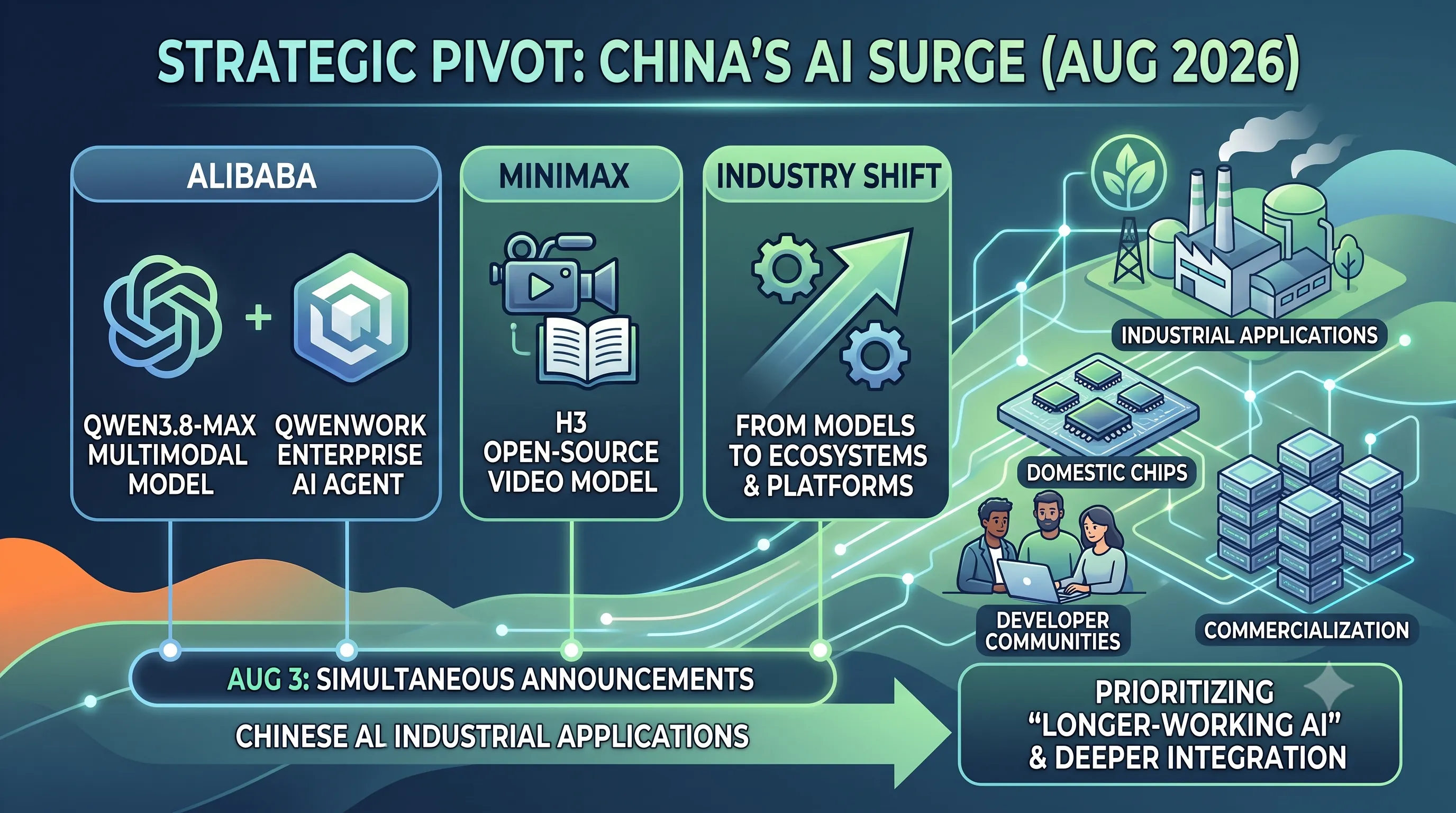
The beginning of August 2026 has witnessed a remarkable surge in China's artificial intelligence sector, marked by significant product launches from tech giants.
Alibaba, a powerhouse in the Chinese digital landscape, officially released its highly anticipated Qwen3.8-Max multimodal model and the innovative QwenWork enterprise AI agent platform.
Concurrently, MiniMax made headlines with the public release of H3, its first open-source video generation model.
These simultaneous announcements, particularly on August 3rd, 2026, are more than just new additions to the market; they underscore a profound strategic pivot within China's AI industry.
The competitive landscape is rapidly shifting away from a singular focus on model parameters or benchmark scores towards the development of integrated ecosystems and comprehensive platforms.
This reorientation emphasizes connecting models, semiconductors, developer communities, and industrial applications into a cohesive system.
This strategic shift aims to accelerate AI's commercialization and deepen its integration into enterprise workflows, prioritizing "longer-working AI" solutions that autonomously handle complex professional tasks.
By leveraging domestic collaboration platforms and industrial data, Chinese enterprises are forging a distinct path, differentiating their approach and potentially redefining the global standard for AI innovation and deployment.
The coming period is set to reveal the full extent of this transformation on the global AI stage.
Alibaba, a powerhouse in the Chinese digital landscape, officially released its highly anticipated Qwen3.8-Max multimodal model and the innovative QwenWork enterprise AI agent platform.
Concurrently, MiniMax made headlines with the public release of H3, its first open-source video generation model.
These simultaneous announcements, particularly on August 3rd, 2026, are more than just new additions to the market; they underscore a profound strategic pivot within China's AI industry.
The competitive landscape is rapidly shifting away from a singular focus on model parameters or benchmark scores towards the development of integrated ecosystems and comprehensive platforms.
This reorientation emphasizes connecting models, semiconductors, developer communities, and industrial applications into a cohesive system.
This strategic shift aims to accelerate AI's commercialization and deepen its integration into enterprise workflows, prioritizing "longer-working AI" solutions that autonomously handle complex professional tasks.
By leveraging domestic collaboration platforms and industrial data, Chinese enterprises are forging a distinct path, differentiating their approach and potentially redefining the global standard for AI innovation and deployment.
The coming period is set to reveal the full extent of this transformation on the global AI stage.
1. Alibaba's Qwen3.8-Max: A New Apex in Multimodal AI
This section provides a deep-dive into Alibaba's flagship Qwen3.8-Max, a pivotal model release that exemplifies the technological leap forward central to the main article's theme, "The Great Transformation of Chinese AI."
Unprecedented Scale and Multimodal Capabilities
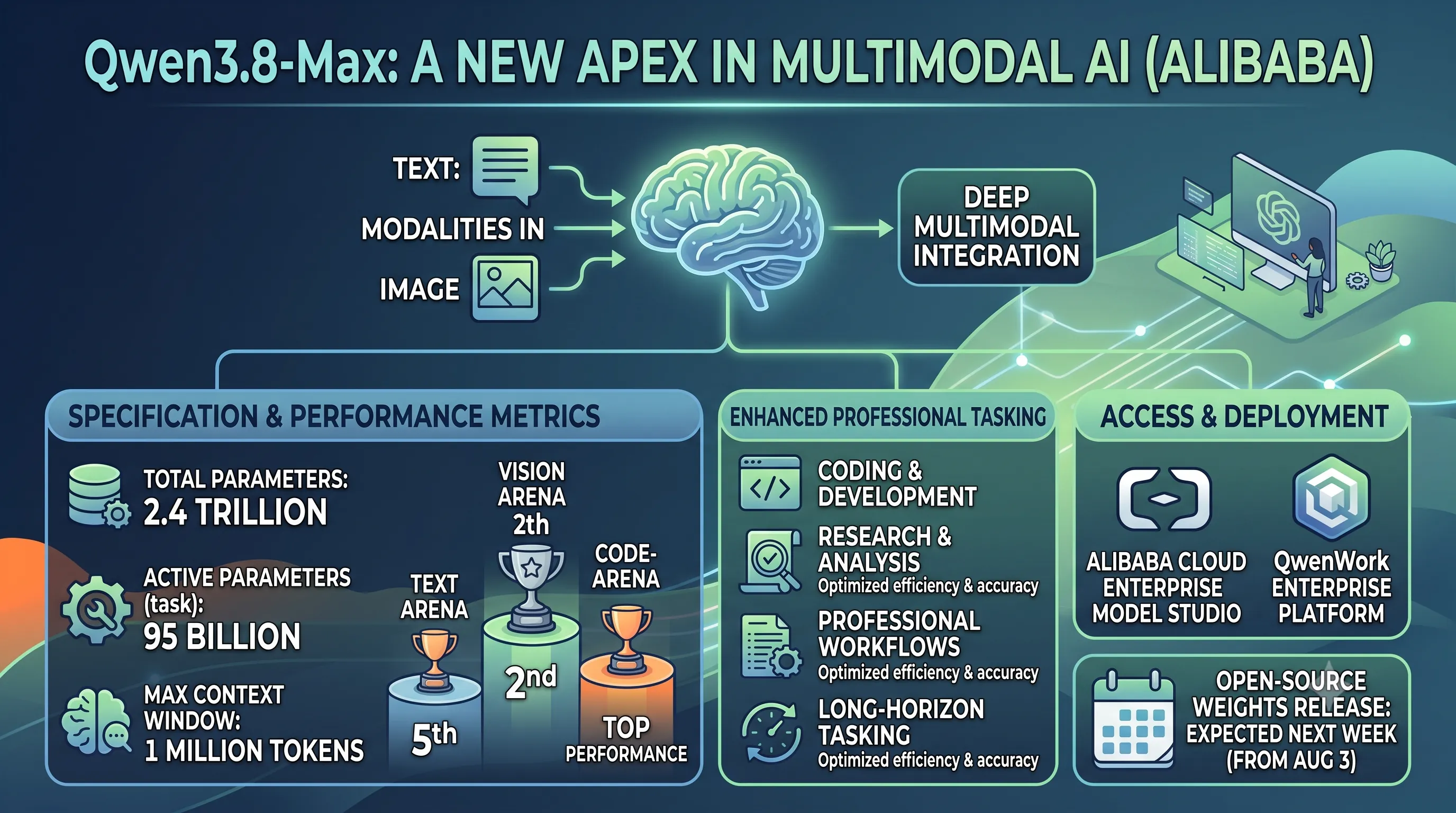
Alibaba officially released Qwen3.8-Max on August 3, 2026, following an initial preview on July 19, 2026, establishing it as the most capable model in the Qwen family to date.The model operates at a monumental scale, featuring a total of 2.4 trillion parameters, making it one of the largest foundation models publicly detailed.
It supports an exceptionally large maximum context window of 1 million tokens, enabling complex, long-form analysis and generation.
Designed from the ground up as a multimodal system, Qwen3.8-Max possesses deeply integrated visual understanding capabilities, allowing it to process and interpret both text and image inputs seamlessly.
Advanced Architecture and Performance Benchmarks
Qwen3.8-Max is built on a sophisticated and efficient architecture, utilizing a sparse Mixture of Experts (MoE) structure.This design is complemented by a mixed attention mechanism, optimizing how the model focuses on different parts of the input data for enhanced accuracy and performance.
Despite its massive total size, the MoE architecture allows the model to run efficiently, engaging only 95 billion active parameters per task.
This combination of scale and efficiency has translated into top-tier benchmark results.
The model has achieved top scores in key evaluations, securing the fifth rank in Text Arena and an even more impressive second rank in Vision Arena, in addition to top performance in CodeArena.
| Specification | Detail |
|---|---|
| Total Parameters | 2.4 trillion |
| Active Parameters per Task | 95 billion |
| Maximum Context Window | 1 million tokens |
| Text Arena Rank | 5th |
| Vision Arena Rank | 2nd |
Enhanced Professional and Long-Horizon Tasking
The architectural and scale advancements in Qwen3.8-Max deliver comprehensive improvements across a wide range of applications, including coding, professional work, research, and long-horizon tasks.The model features specifically enhanced programming and professional task performance capabilities, making it a powerful tool for developers and enterprise users.
Qwen3.8-Max is available globally to developers and businesses through Alibaba Cloud Model Studio and the new QwenWork platform.
In a significant move for the research community, the open-source weights for Qwen3.8-Max are expected to be released next week from the August 3 launch date, further democratizing access to its state-of-the-art capabilities.
2. QwenWork: Alibaba's Enterprise AI Agent Ecosystem
Integrated Enterprise AI Agent Platform
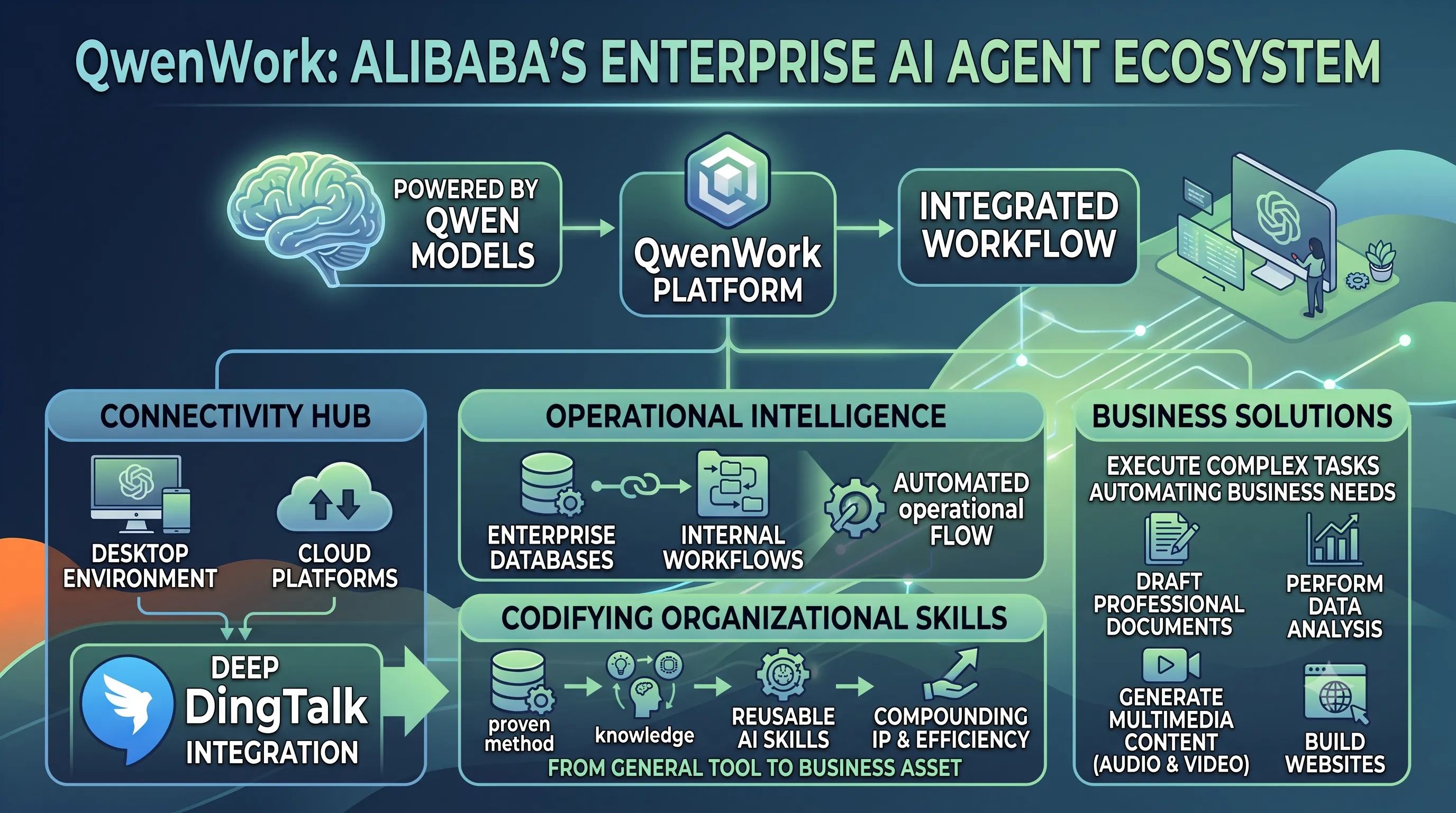
Released simultaneously with the Qwen3.8-Max model on August 3, 2026, QwenWork marks Alibaba's strategic entry into dedicated enterprise AI solutions.It is designed as an enterprise AI agent platform that integrates multiple existing AI tools into a unified system.
QwenWork bridges the gap between different work environments by connecting an organization's desktop, cloud, and collaborative platforms.
A key aspect of its architecture is its deep integration with DingTalk, Alibaba's popular enterprise communication and collaboration tool, ensuring it fits within existing corporate ecosystems.
Transforming Organizational Workflows with AI
The primary goal of QwenWork is to seamlessly link enterprise databases with internal workflows, creating a more intelligent and automated operational flow.A standout feature is its ability to store and reuse collective work experience, which it codifies into what Alibaba calls "organizational-level skills."
This approach represents a deliberate strategy to transform AI from a general-purpose tool into a tangible, appreciating organizational business asset.
By capturing and deploying proven methods and knowledge as reusable AI skills, QwenWork aims to compound an organization's intellectual property and operational efficiency over time.
Leveraging Qwen Models for Business Solutions
The entire QwenWork platform is powered by Alibaba's advanced Qwen models, enabling a wide range of practical business applications.Agents within the ecosystem can execute complex tasks, including drafting professional documents, performing data analysis, and generating multimedia content like audio and video.
Furthermore, the platform's capabilities extend to technical functions such as building websites, demonstrating its versatility in automating both creative and operational business needs.
3. MiniMax H3: Pioneering Open-Source Video Generation
As a critical part of the recent surge in Chinese AI advancements, startup MiniMax has made a significant move into the open-source community with its first video generation model, H3.Unveiling the Omni Architecture
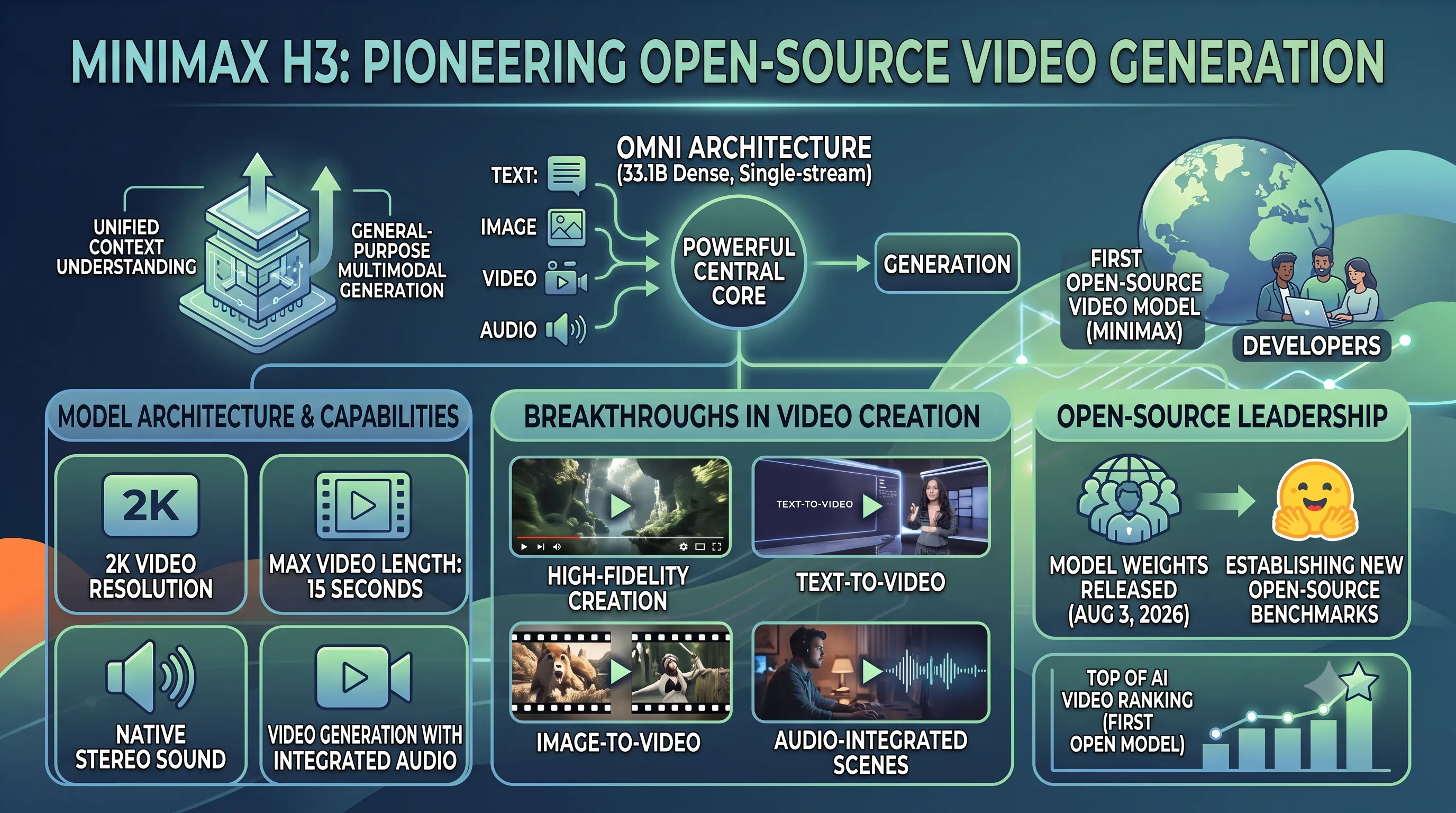
MiniMax officially announced the launch of its H3 model on July 31, 2026.At its core, H3 is built on a formidable 33.1 billion dense, single-stream Omni architecture.
This design underpins its function as a general-purpose multimodal generation model.
A key aspect of this architecture is its advanced ability to understand unified context, seamlessly processing inputs across text, images, video, and audio to inform its generation process.
Breakthroughs in Multimodal Video Generation
The H3 model delivers impressive capabilities in high-fidelity video creation.It is capable of generating video at a crisp 2K resolution, with a maximum length of up to 15 seconds per clip.
Uniquely, the model generates video with native stereo sound, integrating the auditory experience directly into the creation process rather than as a separate step.
| Capability | Specification |
|---|---|
| Model Architecture | 33.1 billion dense, single-stream Omni |
| Video Resolution | 2K |
| Maximum Video Length | 15 seconds |
| Audio Generation | Native Stereo Sound |
Setting New Open-Source Benchmarks
Marking a strategic shift for the company, H3 is MiniMax's first open-source video generation model.Following the announcement, MiniMax publicly released the model weights on August 3, 2026, making them available to the global developer community on Hugging Face.
This release quickly made an impact, as MiniMax H3 became the first open model to top an AI video ranking, establishing a new benchmark for performance and quality in the open-source video generation space.
4. China's AI Industry: Shifting from Model Wars to Ecosystem Dominance
Beyond Benchmarks: The Rise of AI Ecosystems
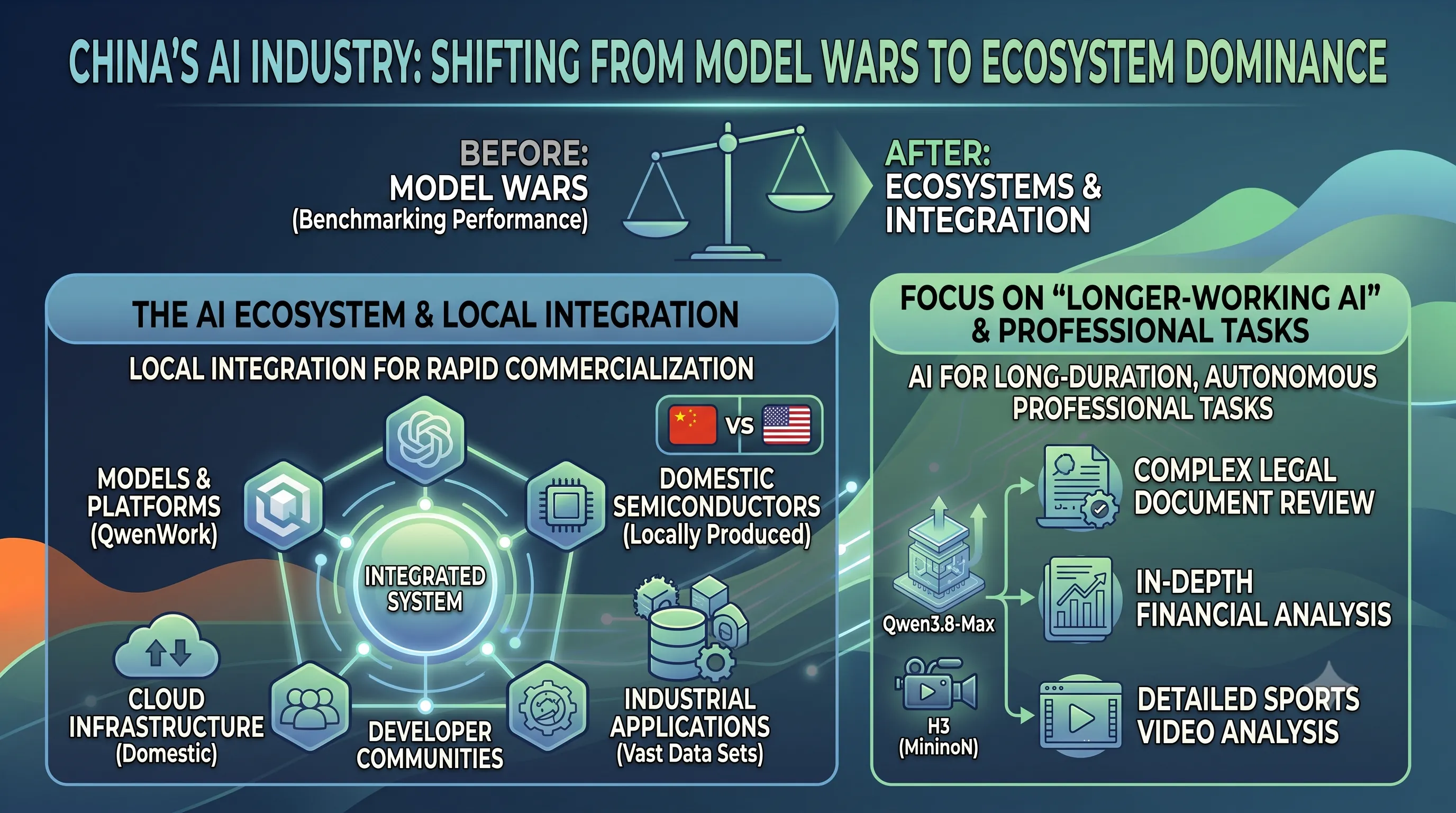
August 3, 2026, is now recorded as a potential turning point for understanding the flow of China's AI industry.The nature of AI competition has fundamentally moved beyond comparing the individual performance metrics of large language models to a broader contest of 'ecosystems'.
This new competitive landscape involves connecting models, platforms, semiconductors, developer communities, and industrial applications into a single, integrated system.
Chinese media widely interpret the recent major announcements from industry leaders as a definitive shift in AI industry strategy.
Instead of focusing on direct model sales, Chinese AI companies are now clearly prioritizing platform expansion and comprehensive ecosystem building.
Local Integration for Rapid Commercialization
A distinct Chinese approach to commercialization has emerged, setting it apart from international competitors.Chinese enterprises are aggressively combining domestic collaboration platforms, cloud infrastructure, locally produced semiconductors, and vast industrial data sets to accelerate the path to market.
This vertically integrated strategy for rapid commercialization differentiates the Chinese methodology from the agent-centric strategies often pursued by US AI companies.
Focus on Longer-Working AI for Professional Tasks
The practical application of this ecosystem strategy is evident in the types of tasks being targeted.Alibaba's examples for its Qwen3.8-Max model showcase a focus on AI that can perform long-duration, autonomous, and highly professional tasks.
Specific use cases highlighted include complex legal document review, in-depth financial analysis, and detailed sports video analysis, demonstrating a push towards specialized, high-value applications that require more than just a powerful standalone model.
5. Evolving Global AI Competition: From Scale to Automation
This section contextualizes the recent major releases from Alibaba and MiniMax within a broader, fundamental shift in the global AI landscape. These new models are not merely incremental upgrades; they represent a strategic response to the changing definition of AI leadership, moving away from theoretical benchmarks towards practical, enterprise-scale automation.From Model Size to Real-World Impact
The initial phase of the generative AI race was a clear contest of scale. In the early days of this technological wave, industry competition was almost exclusively focused on a straightforward question: who could create the largest models? This was a period defined by a relentless pursuit of bigger and bigger architectures, operating under the assumption that size was the primary correlate of capability.Following this initial stage, the metrics for success became more sophisticated, though still largely academic. The competitive landscape evolved to prioritize benchmark scores, where models were pitted against each other on standardized tests. Alongside these scores, inference performance and raw parameter scale became the dominant indicators of a model's prowess. This era solidified the industry’s focus on creating a provably 'smarter AI' based on its performance in isolated, controlled evaluations.
Measuring Success by Automation and Platform Adoption
A significant change is now underway as the global AI market is shifting its focus once again. The industry is moving beyond abstract benchmarks and towards more tangible, economic indicators of value. Today, leading companies are increasingly evaluating competitiveness based on a model's ability to achieve the automation of actual work. The key question is no longer just how well a model scores on a test, but how effectively it can be integrated into and execute complex business processes.In tandem with this shift, another critical metric has emerged: the size and vibrancy of the ecosystem built around a model. Companies are also gauging their competitive standing based on the number of developers and businesses building services on their platform. A thriving ecosystem signals that an AI model is not just a technological artifact but a foundational layer for new products, services, and economic activity.
The Shift Towards 'Longer-Working AI'
Alibaba's recent strategic direction, exemplified by its latest releases, can be directly interpreted through this new competitive lens. The company's approach to AI is being seen as a deliberate move toward creating a 'longer-working AI' rather than simply a 'smarter AI.' This philosophy de-emphasizes winning on pure benchmarks in favor of building models with the stamina and reliability required for sustained, complex, real-world tasks. It represents a pivot from theoretical intelligence to practical endurance and applicability, aligning perfectly with the market's new demand for tangible automation and robust platform adoption.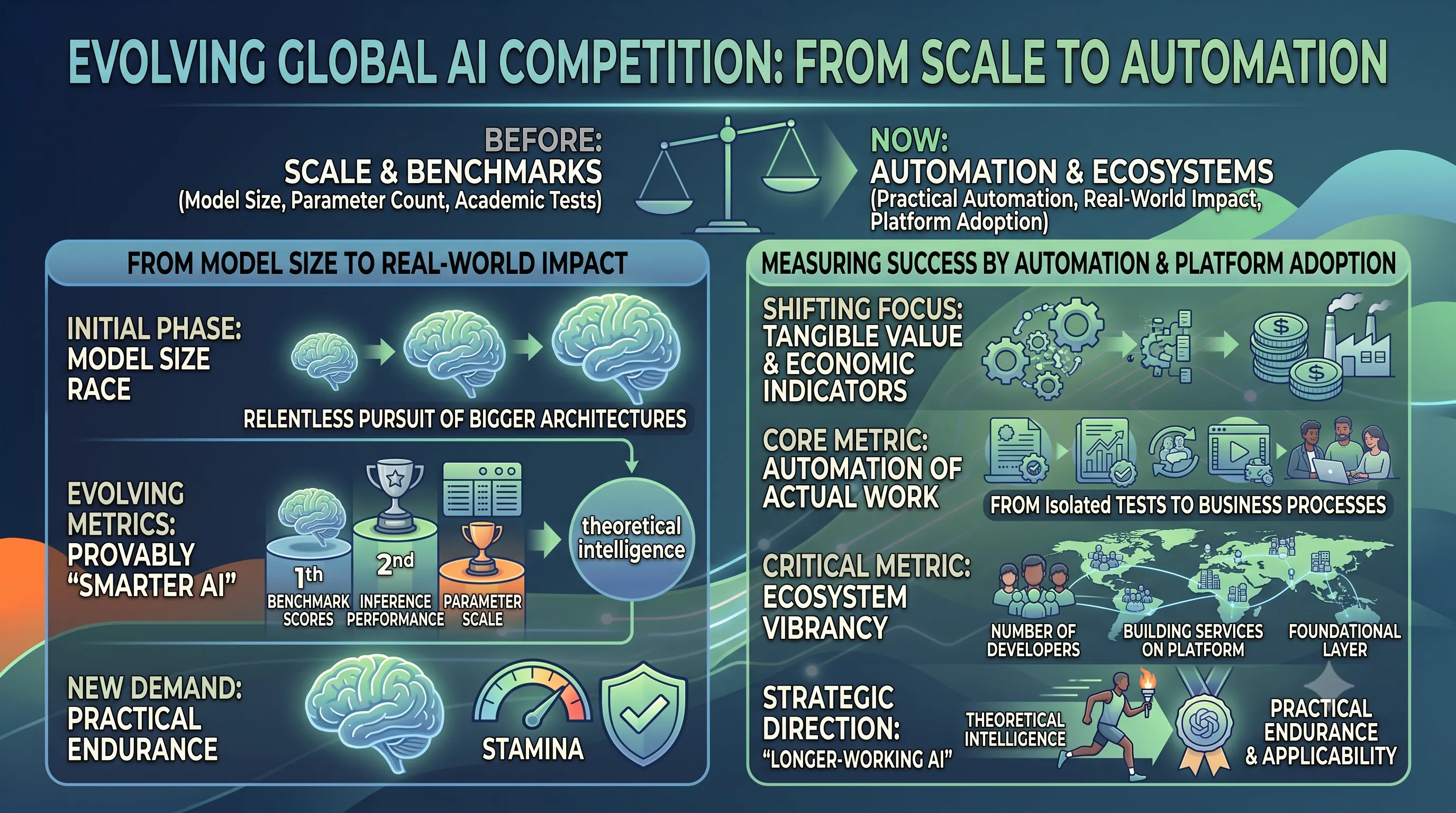
6. Forecasting China's Trillion-Yuan AI Market
This section provides the immense economic backdrop that fuels the intense competition and rapid innovation cycles leading to major model releases from firms like Alibaba and MiniMax.Projected Growth and Economic Impact
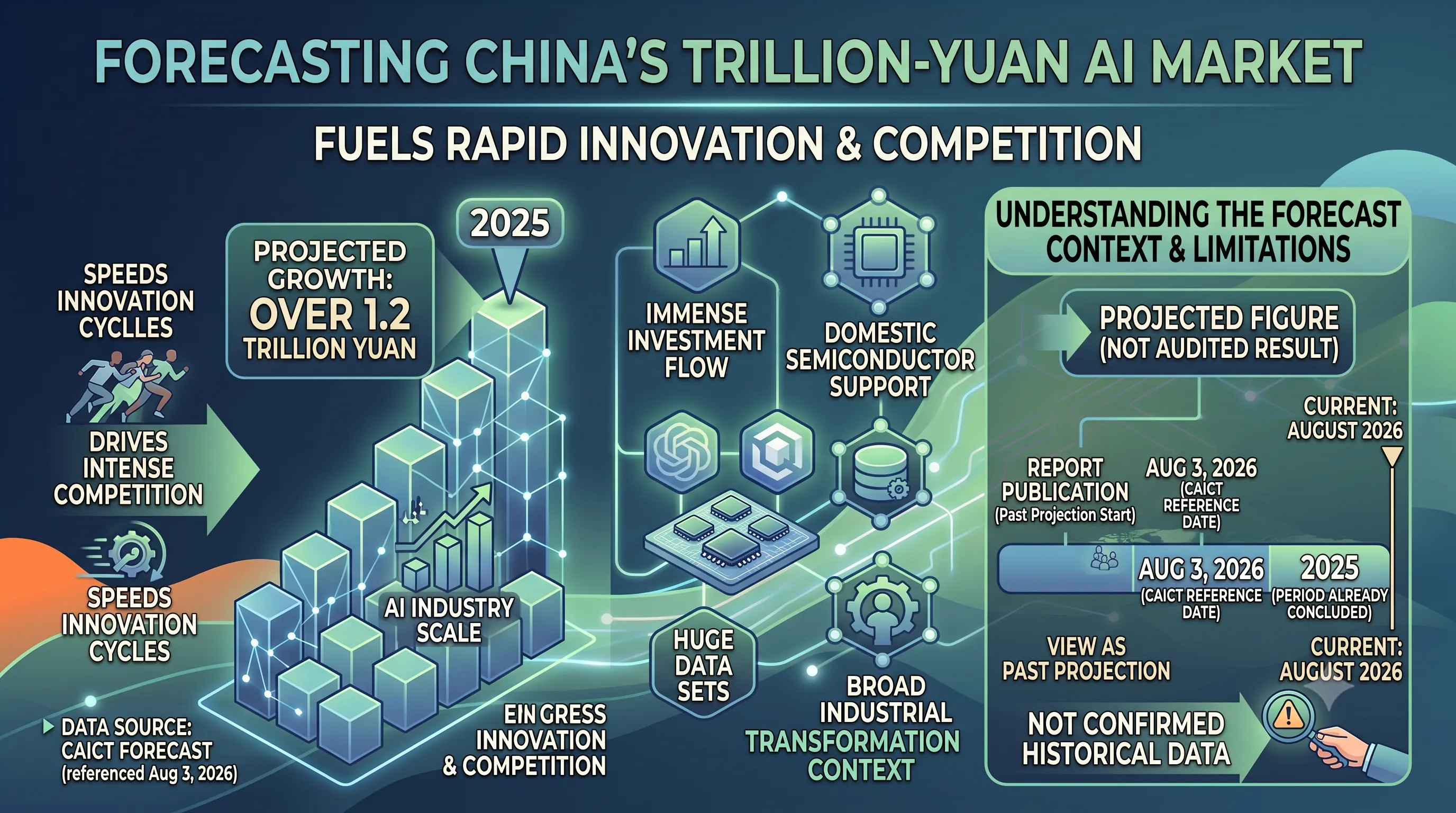
The sheer scale of China's artificial intelligence ambitions was recently put into perspective by the China Information and Communication Research Institute (CAICT).In a statement made on August 3, 2026, the institute referenced a forecast indicating that China's AI industry scale for the year 2025 was projected to exceed 1.2 trillion Yuan.
Understanding the Forecast's Context and Limitations
It is critical to understand that this substantial figure represents a projection, not a confirmed historical result.The 1.2 trillion Yuan number was not an audited performance figure for 2025 announced on August 3, 2026.
Rather, it was a forecast originating from a report published earlier in the year.
As the writing date of this article is in August 2026, this figure should be viewed as a past projection for a period that has already concluded.
7. South Korea's AI Infrastructure: Building the Future
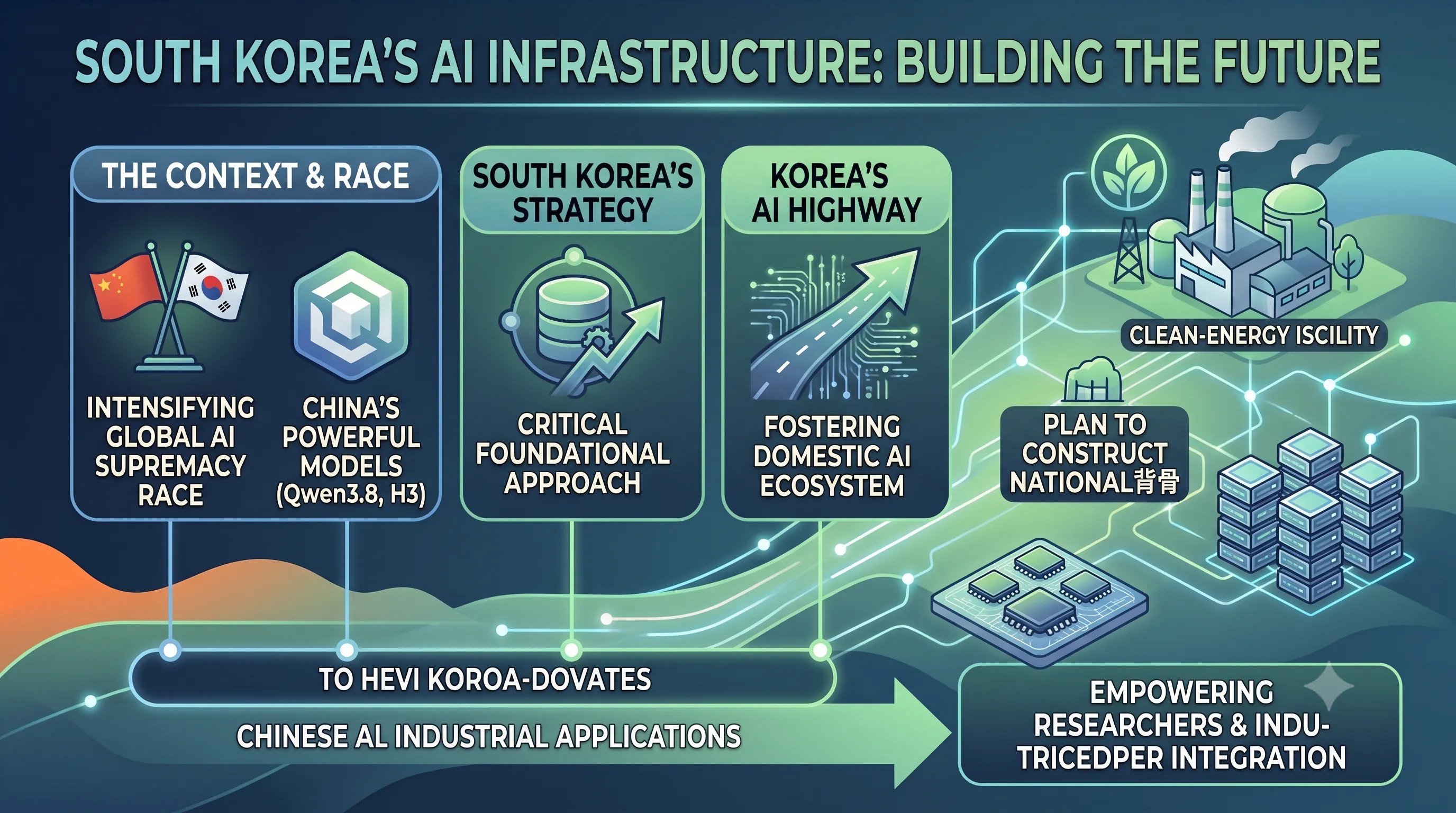
As China unveils increasingly powerful models like Qwen3.8 and H3, the global race for AI supremacy is intensifying, underscoring the critical importance of robust national infrastructure.In this competitive landscape, South Korea's strategic investments provide a compelling parallel, showcasing a foundational approach to fostering a domestic AI ecosystem capable of competing on the world stage.
The Genesis of Korea's AI Highway
South Korea has officially launched its ambitious plan to construct a national computational backbone for artificial intelligence.The groundbreaking ceremony for the Haenam National AI Computing Center (KACC) marked the significant first step in the creation of what the government has termed "Korea's AI highway."
This pivotal event signaled a concrete commitment to empowering the nation's researchers and industries with the massive-scale computing power required to innovate and thrive in the AI era.
Related Posts
Comparative Analysis: GPT-6 Astra and Claude Fable 5.1 for Enterprise AI WorkflowsAn empirical analysis of OpenAI's GPT-6 Astra and Anthropic's Claude Fable 5.1, comparing execution...

Enterprise Managed AI Agents: Security Architecture with VPC-SC and PSCLearn how to secure enterprise Managed AI agents using a three-layer model involving VPC Service...
AI Video Generation for Commercial Production: Prompt Engineering, Luma Ray, and Runway Gen-3 AlphaLearn how to use structured prompt engineering, Luma Ray, and Runway Gen-3 Alpha to create...