
Inside Anthropic's Vision: How AI Will Eradicate Major Diseases in a Decade
🚀 Key Takeaways
- Ten-Year Disease Eradication Horizon: Frontier AI developers project that accelerating computational biology could conquer formidable conditions like cancer, Alzheimer's, and heart disease within the next decade.
- Compressed Pharmaceutical Pipelines: Advanced algorithmic modeling is transforming drug discovery and adaptive trial designs, collapsing research turnaround times from months to mere minutes.
- Expanding Diagnostic Clearances: Regulatory agencies are steadily authorizing AI-enabled medical devices, with radiology leading the charge in triage accuracy and clinical decision support.
- Ambient Clinical Relief: Intelligent scribes and automated electronic health record workflows are dramatically mitigating administrative burdens to address clinician burnout.
- Neurological Restoration Frontiers: Rapid progress in brain-computer interfaces is paving the way to restore fundamental faculties, including sight, speech, and motor function.
The convergence of frontier artificial intelligence and life sciences has brought global healthcare to a historic turning point. As machine intelligence transitions from experimental laboratory software into everyday clinical practice, the baseline assumptions of medical research and patient care are undergoing a profound re-evaluation.
Visionary technologists now argue that centuries of biological discovery could be condensed into a single decade, offering unprecedented therapeutic pathways for historically intractable illnesses. Concurrently, healthcare providers are already experiencing direct operational relief through algorithmic diagnostics, generative research assistance, and ambient workflow automation.
Navigating this rapid transition requires balancing bold clinical optimism with rigorous validation and institutional readiness. Examining the tangible breakthroughs across drug development, medical imaging, administrative mitigation, and neural restoration illuminates how AI is poised to fundamentally reshape human health over the coming decade.
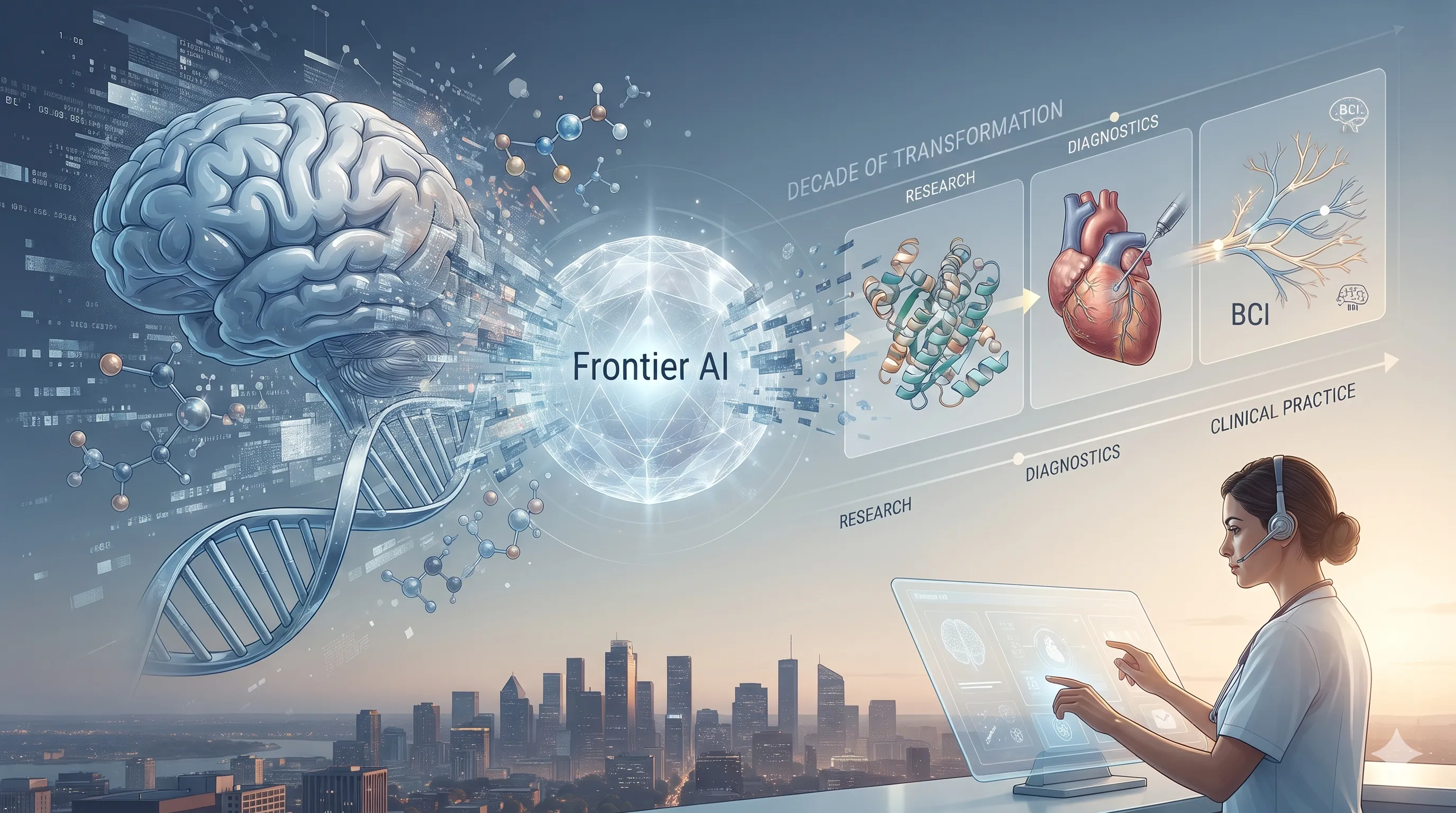
1. A Decade to Defeat Major Disease: Dario Amodei's 10-Year Clinical Horizon
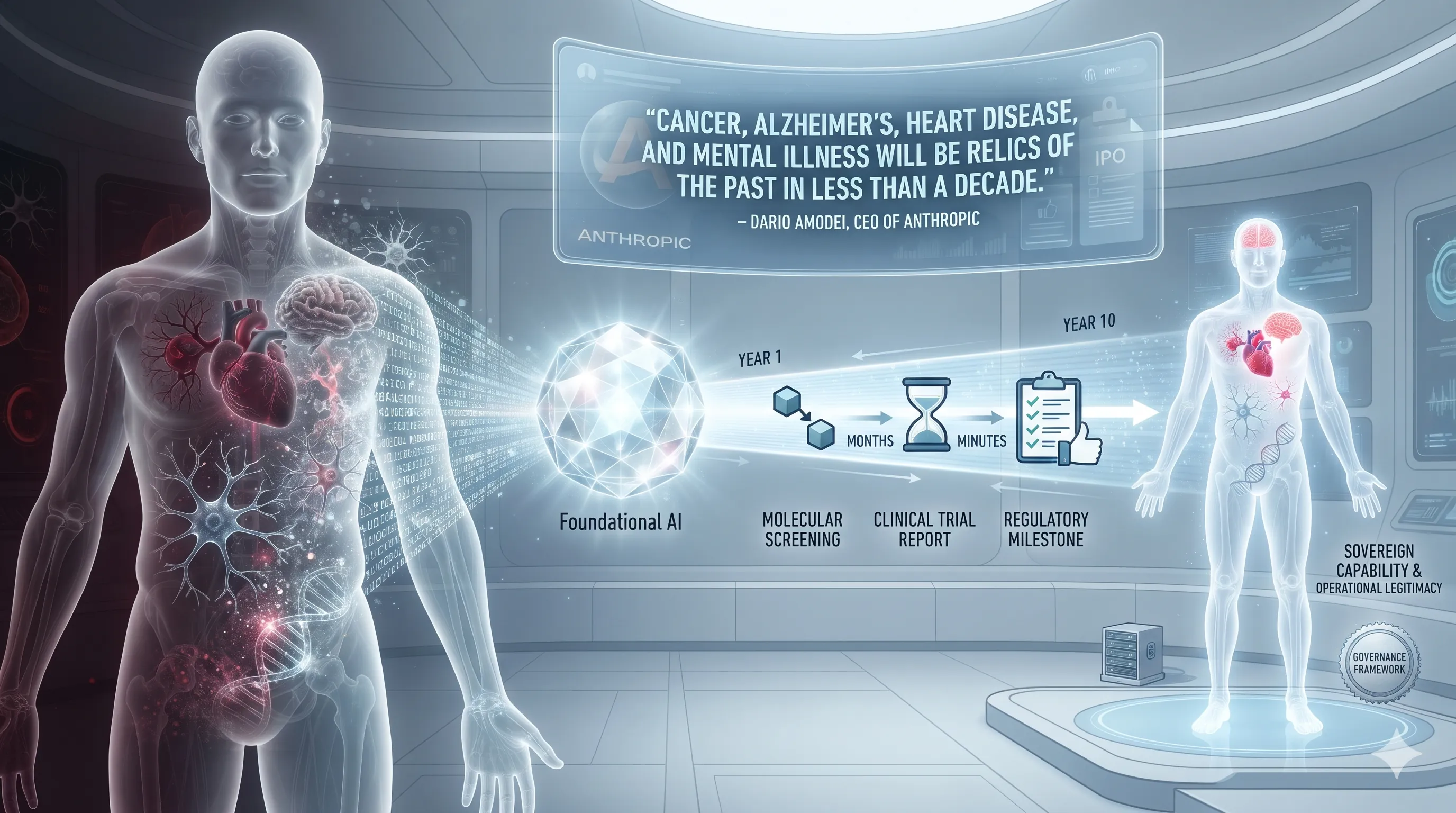
Within the broader analysis of how AI could transform healthcare in the next decade, the most aggressive forecasts outline clinical timelines that compress generations of discovery into a single decade.In an interview released on November 11, 2026, and during an IPO roadshow video, Dario Amodei, CEO of Anthropic, emphasized that artificial intelligence is poised to accelerate medical science into an "era of miracles" capable of resolving ancient human challenges.
Eradicating Chronic and Neurological Afflictions
The core of this projected transformation rests on a definitive clinical milestone: an operational timeline of less than 10 years for major pathologies to become relics of the past.Amodei framed this trajectory around humanity's most persistent and complex health crises, asserting that "cancer, Alzheimer's, heart disease, and mental illness will be relics of the past in less than a decade."
Targeting this specific cluster of afflictions reflects how AI-driven scientific acceleration is expected to dismantle both complex physical diseases and intricate neurological disorders.
By tackling pervasive systemic conditions like heart disease and cancer alongside the degenerative mechanisms of Alzheimer's disease and widespread mental illness, the envisioned 10-year horizon shifts healthcare from incremental disease management to total eradication.
Balancing Rapid Breakthroughs with Operational Legitimacy
Achieving an era of rapid medical breakthroughs introduces critical institutional hurdles that extend beyond research laboratories.Amodei highlighted that transitioning these therapeutic capabilities into real-world medicine requires strict management of technological risks.
Preserving public trust and establishing operational legitimacy are vital safeguards as clinical intelligence scales across healthcare ecosystems.
Without proactive oversight and governance over emerging technological risks, the clinical deployment required to eliminate these severe diseases could face acute barriers to adoption.
2. Compressing Drug Discovery: From Compound Screening to Minute-Level Trial Reporting
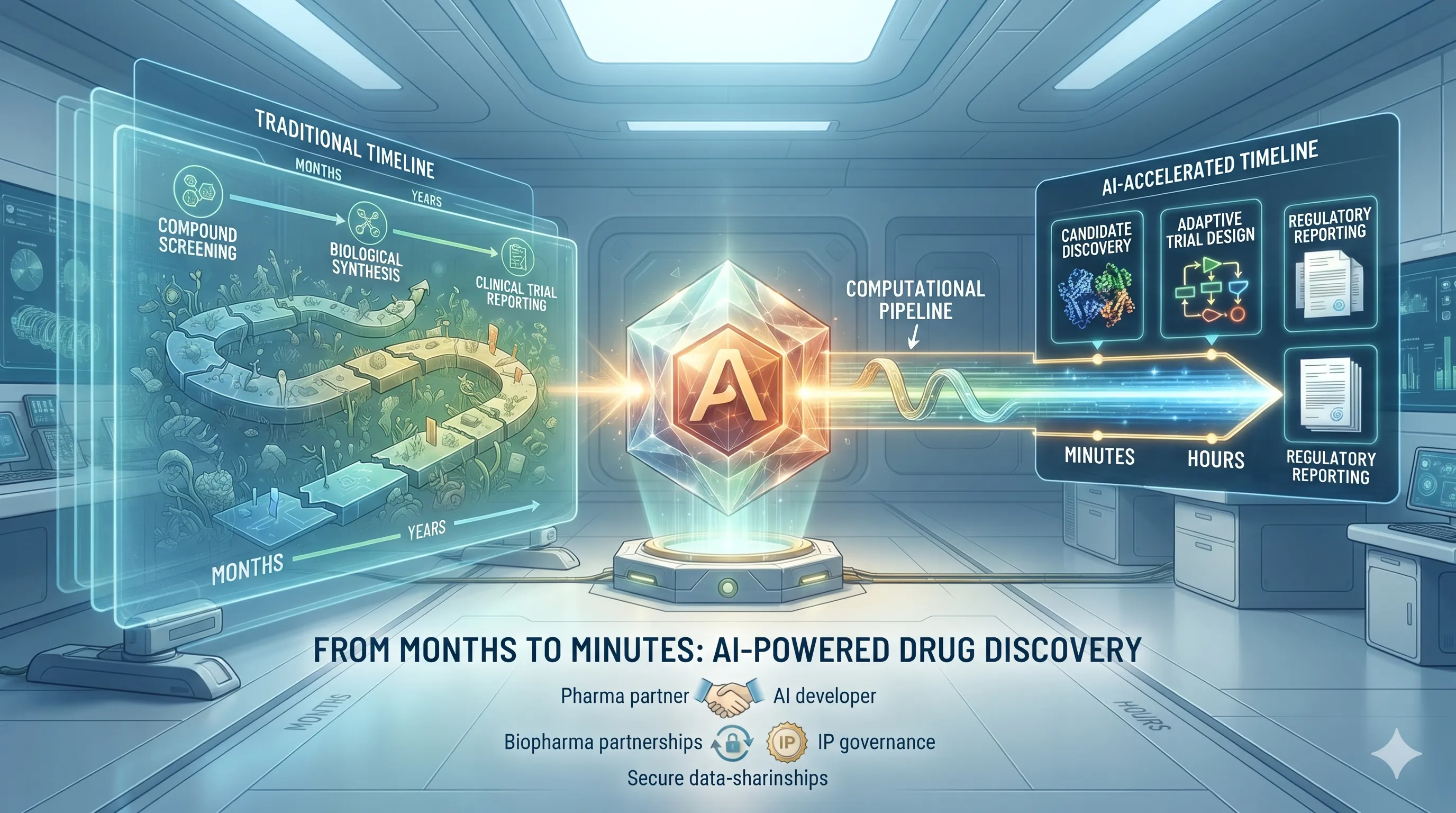
A central dimension of how artificial intelligence could transform healthcare in the next decade lies in condensing the protracted, multi-year timelines that traditionally govern pharmaceutical research and development.By deploying foundational AI architectures across the drug creation lifecycle, researchers are turning foundational laboratory biology and clinical evaluation into highly responsive, computational pipelines.
Accelerating Trial Reporting and Adaptive Study Designs
Foundational artificial intelligence models directly facilitate early-phase pharmaceutical workflows, including candidate compound discovery and high-resolution protein structure analysis.These computational tools evaluate molecular configurations, simulate target interactions, and streamline modern trial design before biological synthesis begins.
Beyond de novo molecular design, the implementation of AI enables comprehensive drug repurposing strategies, mapping existing compounds against novel therapeutic targets to uncover overlooked mechanisms of action.
During the execution of clinical studies, advanced models support adaptive clinical trials and provide outcome prediction frameworks that adjust protocols based on ongoing biomarker and cohort responses.
The administrative and analytical throughput of these studies experiences a profound operational shift, with clinical trial report generation turnaround reduced from months to minutes using AI assistance.
Synthesizing patient telemetry, safety profiles, and statistical endpoints into standardized regulatory-grade documentation in minutes removes one of the most persistent bottlenecks in clinical validation.
Biopharma Partnerships and Intellectual Property Governance
Translating foundational AI from theoretical computation to commercial medicine has driven direct institutional alliances between model developers and life-science entities.Anthropic collaborates with biotechnology and pharmaceutical firms on foundational research, applying deep computational reasoning to biological exploration.
This industry alignment was highlighted in public corporate filings, where an Anthropic founder letter referenced in IPO materials detailed these biopharma collaborations.
Crucially, Anthropic's founder letter presented research-support capabilities without setting guaranteed cure deadlines, maintaining a grounded stance regarding biological discovery and realistic clinical timelines.
Widespread adoption across commercial pharmaceutical ecosystems remains dependent on resolving foundational governance questions.
Broad implementation requires structured data-sharing mechanisms and intellectual property frameworks that safeguard proprietary proprietary compounds while enabling machine learning models to train on competitive molecular datasets.
3. Regulatory Milestones and Algorithmic Decision Support in Radiology
As healthcare systems evaluate how AI could transform healthcare in the next decade, formal regulatory oversight establishes the foundation for integrating algorithmic solutions into patient care.Radiology's Preponderance in FDA Authorizations
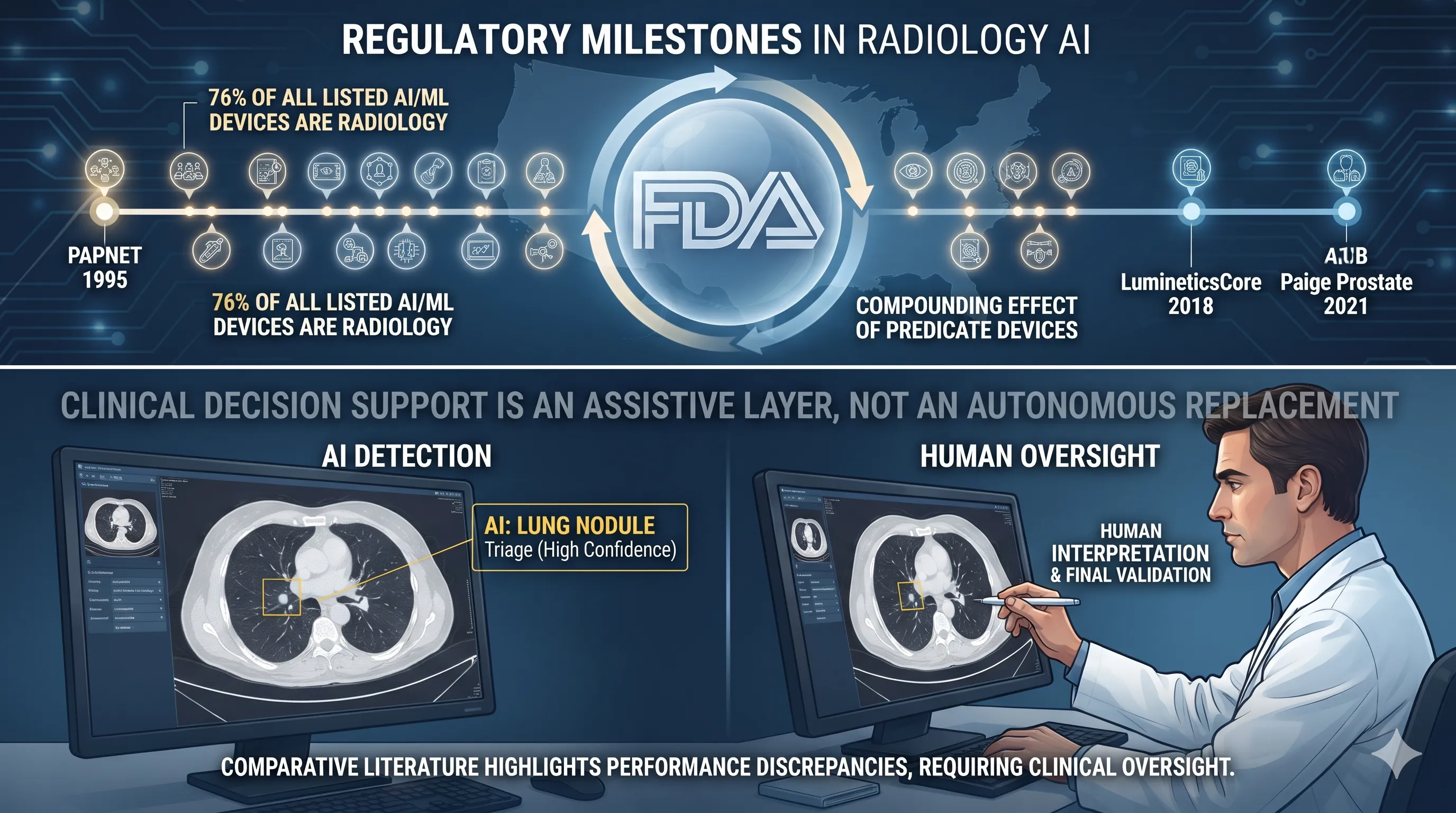
The FDA evaluates and lists marketing-authorized AI-enabled medical devices, providing a structured regulatory pathway for software entering clinical environments.Within this catalog of cleared technologies, radiology serves as the predominant medical specialty for authorized algorithmic tools.
Diagnostic imaging has established itself as the primary proving ground for commercial clinical algorithms, setting regulatory precedents for algorithmic validation in medicine.
Addressing Diagnostic Discrepancies and Triage Workflows
In practical clinical practice, AI diagnostic systems assist clinicians in fracture detection, triage, and patient outcome predictions.These algorithmic tools help prioritize critical imaging studies and support decision-making during high-volume diagnostic reviews.
Despite regulatory authorization, comparative literature highlights performance discrepancies between AI models and human clinicians across varied query sets.
These diagnostic variations emphasize the importance of viewing algorithmic decision support as an assistive layer rather than an autonomous replacement for clinical oversight.
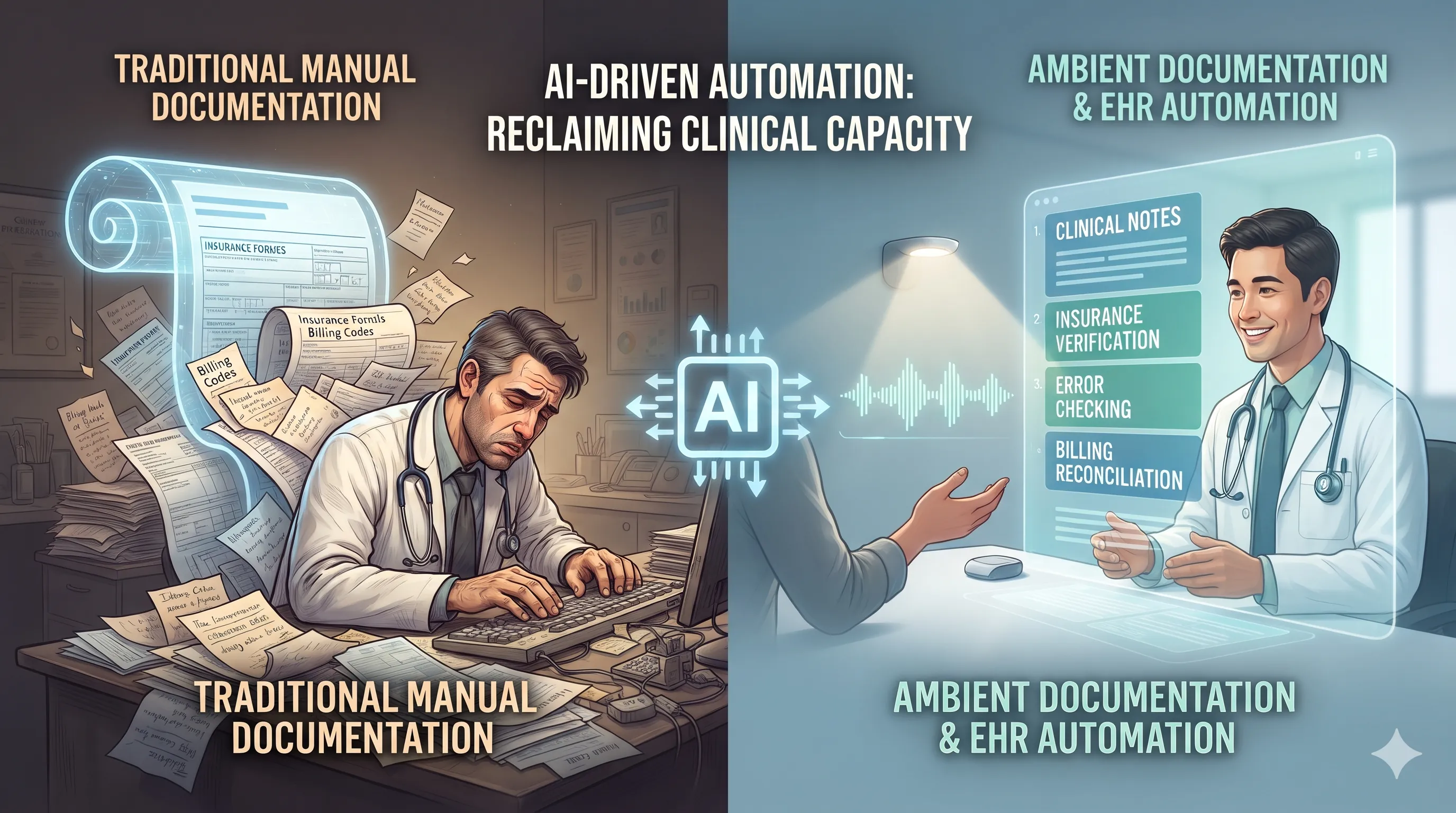
4. Alleviating Administrative Burden: Ambient Documentation and EHR Automation
In evaluating how AI could transform healthcare in the next decade, addressing the heavy burden of manual administration is central to reclaiming clinical capacity and modernizing operations.Ambient Scribes and Clinical Operational Efficiency
Ambient AI scribes are deployed directly within exam spaces to capture spoken clinician-patient interactions and convert them automatically into structured documentation.Beyond bedside dialogue, integrated AI models assist electronic health record (EHR) workflows by handling routine tasks such as automated insurance verification, error checking, and billing reconciliation.
By automating these recurrent clerical demands, healthcare organizations target substantial reductions in physician burnout while curtailing institutional operational overhead.
Mitigating Note Blending and Hospital Integration Obstacles
Despite the operational momentum behind documentation automation, significant friction points remain across deployment environments.A primary operational concern is record clarity, as integrating automated systems can cause potential confusion from blending AI-generated summaries with human-authored clinical notes in patient charts.
Furthermore, enterprise implementation challenges persist regarding the readiness of existing hospital IT infrastructure and the necessity of rigorous clinical validation before full workflow adoption.
5. Neurological Restoration: Brain-Computer Interfaces and the Recovery of Human Faculties
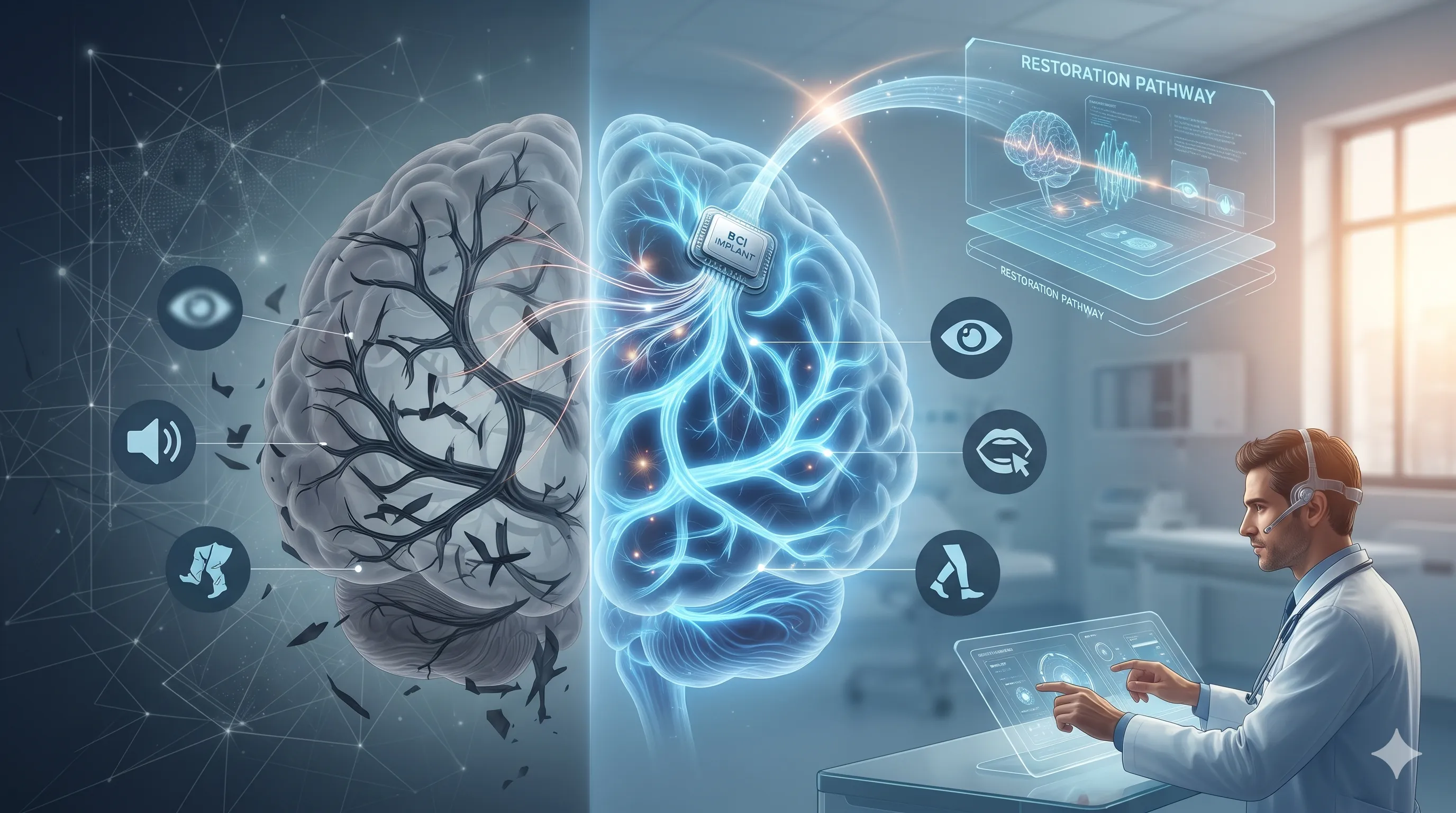
As artificial intelligence advances healthcare capabilities over the next decade, brain-computer interfaces represent a vital shift toward the direct recovery of lost physiological capabilities.Restoring Vision, Speech, and Locomotion
Brain-computer interface technologies aim to restore vision in blind individuals, offering a transformative therapeutic avenue for severe sensory impairment.Beyond sensory processing, contemporary BCI systems target the broader recovery of foundational human faculties, specifically addressing speech, locomotion, and visual perception.
By establishing direct communication channels between neural tissue and computational processors, these systems seek to bypass physiological trauma and reinstate essential functional autonomy.
Assessing Implementation Realities for Neural Implants
Industry attention surrounding neural interfaces highlights aggressive development roadmaps alongside ongoing clinical questions.Highlighting this perspective, Bill Ackman via Fireside Alpha stated that Neuralink and other brain-computer interfaces will allow the blind to see again within "not too many years".
Despite this momentum, an exact regulatory and clinical milestone remains flexible, as the timeline is characterized informally as achievable within "not too many years".
Related Posts

Generative AI may have assisted with research or drafting for this article. Topic selection, fact-checking, final wording, and publication remain the responsibility of DragonStone74. AI use disclosure