
Olympus Scales Cloud-Native Endoscopy AI via OLYSENSE and Odin Vision Acquisition
🚀 Key Takeaways
- Cloud-Native Endoscopy AI: Olympus transitioned clinical decision support from expensive on-premise GPU workstations to a scalable Software-as-a-Service (SaaS) architecture via the OLYSENSE platform.
- Hardware-Efficient Edge Integration: Healthcare facilities connect existing endoscopy video towers through a dedicated gateway unit, enabling real-time cloud inference without capital-intensive hardware overhauls.
- Strategic MedTech Software Pivot: Building upon the strategic acquisition of Odin Vision, Olympus accelerated its divestment from non-core optical units to focus on cloud-based procedural intelligence.
- Multi-Indication Clinical Application Suite: The intelligent ecosystem addresses critical upper and lower gastrointestinal pathologies, spanning colorectal polyp detection, esophageal dysplasia assessment, and inflammatory bowel disease scoring.
- Bifurcated Regulatory Clearances: Following dual CE Mark and FDA authorizations, commercial deployments provide broader diagnostic characterization in Europe alongside focused detection clearance in the United States.
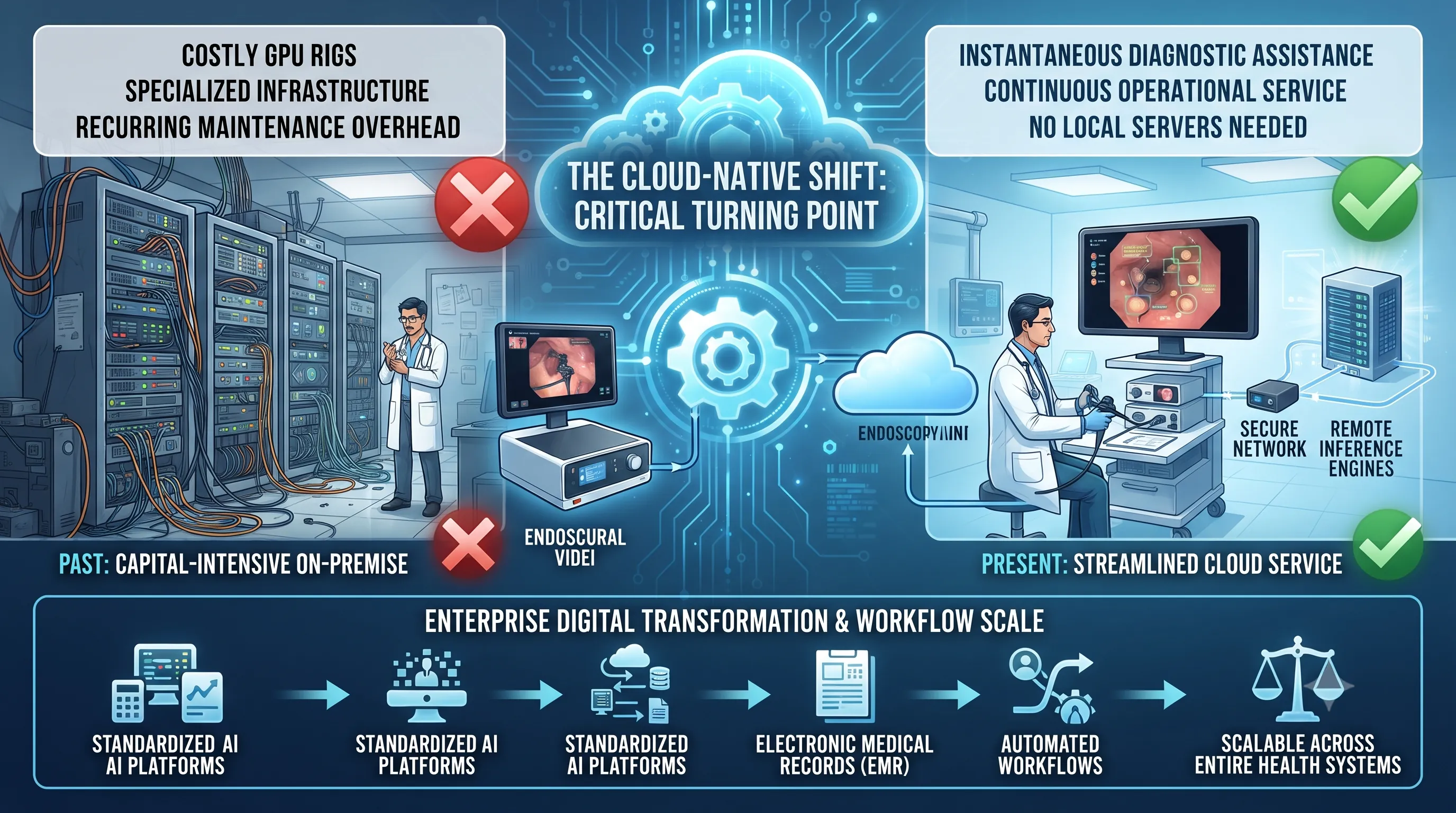
For years, adopting real-time artificial intelligence inside procedural suites required healthcare systems to purchase costly on-premise GPU rigs, build specialized rack infrastructure, and absorb recurring maintenance overhead.
That capital-intensive bottleneck is rapidly dissolving as medical technology leaders decouple advanced diagnostic software from dedicated physical computing hardware.
By transitioning endoscopic intelligence to a secure cloud-native architecture, hospitals can now access state-of-the-art computational support as a continuous operational service.
Procedural video feeds route through a streamlined interface unit directly to remote inference engines, giving clinicians instantaneous diagnostic assistance without requiring individual procedure rooms to house enterprise-grade servers.
This shift marks a critical turning point in enterprise hospital digital transformation.
As standardized AI platforms integrate procedural documentation directly into broader electronic medical records, clinical teams gain standardized assessment tools and automated workflows that scale across entire health systems seamlessly.
1. Strategic Transformation: How Olympus Built Its Medical AI SaaS Foundation Through Odin Vision
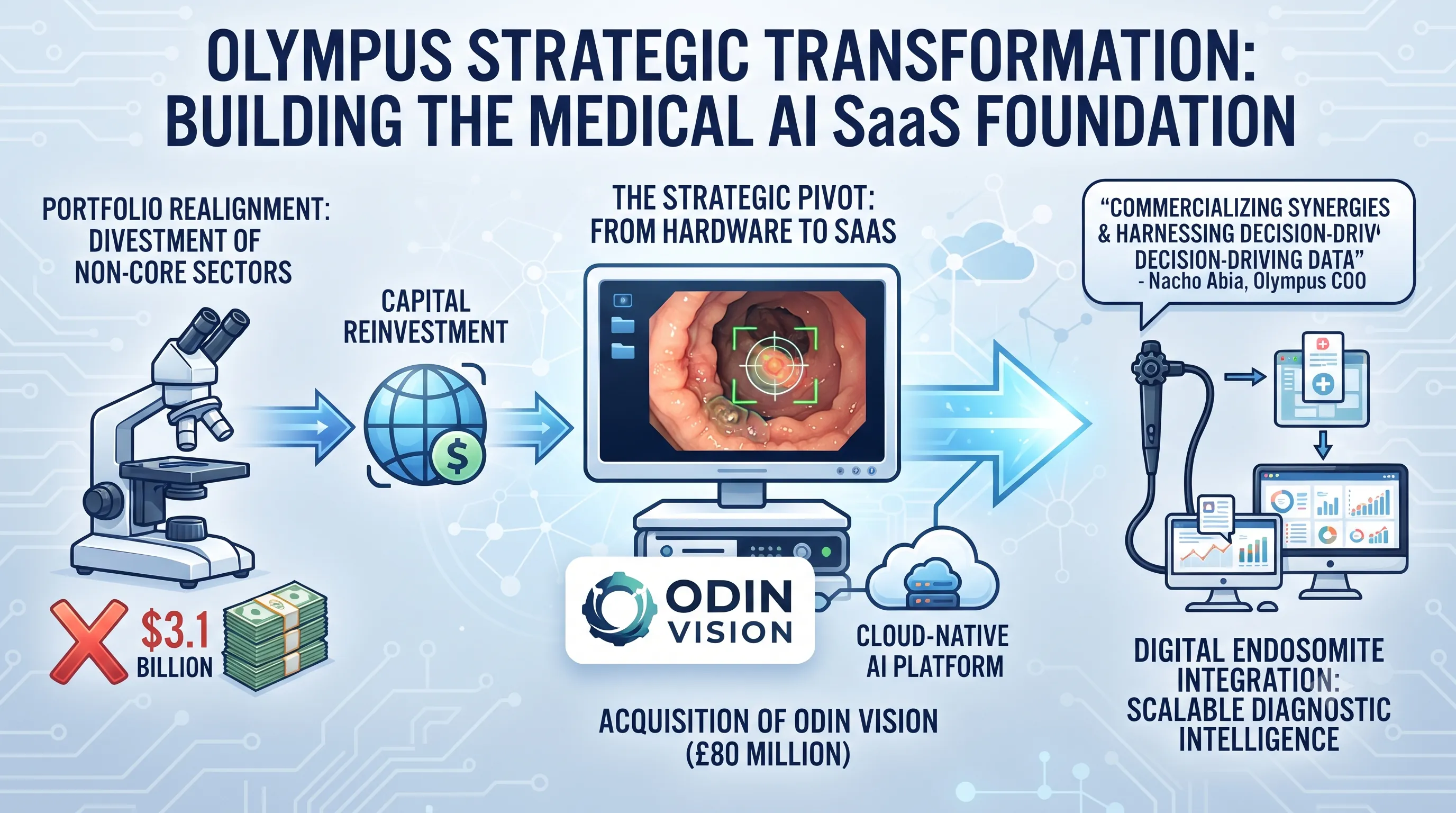
The shift toward a software-first medical AI model—delivering algorithmic precision without forcing clinical facilities to maintain costly on-premise GPU stacks—demanded a complete structural pivot by Olympus.To facilitate an agile cloud-native paradigm across clinical workflows, the organization restructured its enterprise assets, channeling capital away from legacy hardware lines toward scalable medical technology and specialized software platforms.
Portfolio Realignment: Funding MedTech via Non-Core Divestment
Olympus initiated a comprehensive corporate realignment by executing the strategic roadmap it originally announced in 2019 to exit non-core sectors and concentrate on endoscopic and therapeutic solutions.A foundational milestone in this realignment was the agreement to sell its microscope unit to a private equity firm for $3.1 billion.
This multi-billion-dollar divestment provided the corporate focus and financial flexibility required to pivot from traditional industrial instruments strictly into advanced medical technology.
By shedding non-core manufacturing operations, Olympus cleared the operational runway to invest heavily in modern algorithmic capabilities, setting the foundation for scalable, cloud-enabled medical AI delivery.
| Initiative / Entity | Financial Valuation | Strategic Function |
|---|---|---|
| Microscope Unit Divestment | $3.1 billion | Sold to a private equity firm to exit non-core sectors and sharpen enterprise focus on medical technology. |
| Odin Vision Acquisition | Up to £66 million ($80 million) | Upfront and milestone-based payments to secure cloud-based AI lesion detection platforms. |
| Digital Endosuite Integration | Core Enterprise Roadmap | Directly incorporated cloud AI software to identify precancerous lesions and provide decision-driving data. |
The Odin Vision Buyout and Digital Endosuite Integration
The concrete transition into software-centric intelligence crystallized through the acquisition of Odin Vision, an artificial intelligence endoscopy startup founded in 2019 by researchers from University College London.Under the terms of the transaction, Olympus acquired Odin Vision for up to £66 million ($80 million) through a combination of upfront and milestone-based payments.
Odin Vision had earned clinical distinction by developing cloud-based AI systems engineered specifically to detect cancerous and precancerous lesions in real time during colonoscopies and gastroscopies.
Instead of sequestering these algorithms inside proprietary, heavy on-site processing units, Olympus integrated Odin Vision's software portfolio directly into its overarching digital endosuite roadmap.
This acquisition accelerated the execution of the 2019 MedTech strategy, establishing a clear pathway for recurring cloud software deployments in screening suites.
Emphasizing the commercial and clinical impact of the acquisition, Nacho Abia, Chief Operating Officer at Olympus, stated that incorporating Odin Vision's AI technology portfolio creates synergies to commercialize valuable endoscopy software tools and help care teams harness decision-driving data.
Through this acquisition and portfolio integration, Olympus established the operational baseline necessary to scale medical AI applications via cloud delivery models, redefining how diagnostic intelligence reaches clinical practitioners.
2. Bypassing On-Premise GPUs: OLYSENSE Hub and Cloud-Based Real-Time Inference Architecture
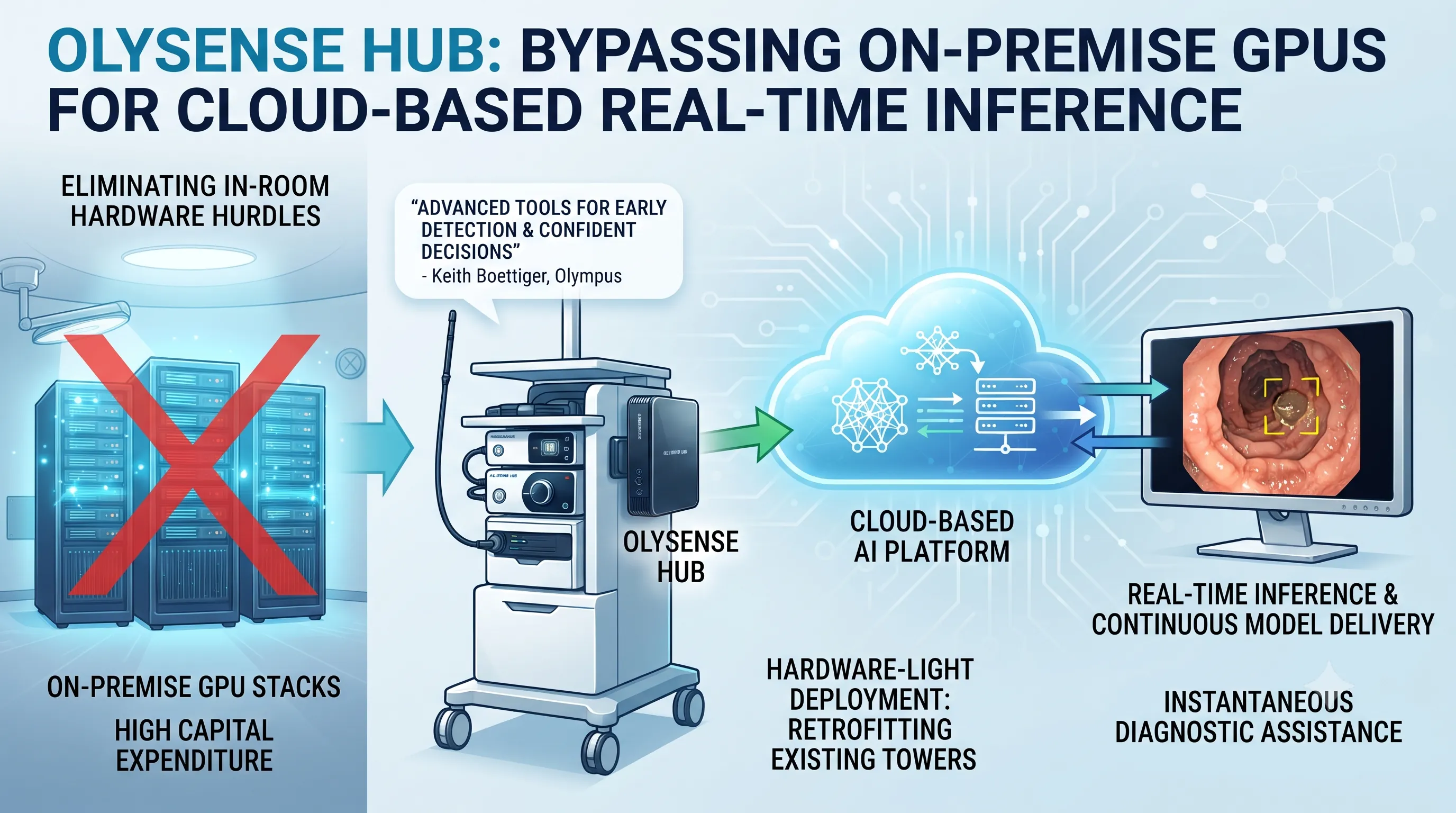
The operational foundation of Olympus's shift toward medical AI Software-as-a-Service (SaaS) centers on eliminating the steep financial and logistical hurdles of dedicated, in-room computing hardware.Rather than demanding expensive on-premise GPU replacements or retrofitting every procedure suite with localized compute clusters, the OLYSENSE CAD/AI platform shifts computational processing directly to the cloud.
This architectural approach directly supports the transition from high-cost local infrastructure to an agile, cloud-managed software model for procedural endoscopy.
Hardware-Light Deployment: Retrofitting Endoscopy Towers via OLYSENSE Hub
The OLYSENSE CAD/AI suite serves as a cloud-based collection of artificial intelligence applications establishing the baseline for Olympus's intelligent endoscopy ecosystem.Clinical environments can access this cloud architecture without overhauling existing tower imaging equipment.
Deployment is achieved by connecting a dedicated OLYSENSE Hub hardware unit directly to existing endoscopy towers, bypassing the capital expenditure of on-premise GPU installations.
Once attached, the platform provides seamless data connectivity across multiple endoscopy units.
It directly integrates clinical findings into broader hospital workflows, allowing endoscopy centers to expand their diagnostic capabilities without disrupting existing room layouts.
Keith Boettiger, Head of the Gastrointestinal Solutions Division at Olympus, stated that OLYSENSE aims to give clinicians advanced tools to assess challenging lesions early and make confident decisions.
Cloud-Native Pipeline: Real-Time Latency and Continuous Model Delivery
To facilitate immediate clinical utility during examinations, the OLYSENSE Hub transmits procedural imaging data securely to cloud infrastructure for real-time inference.This pipeline routes live imaging signals to remote computational resources, returning algorithmic insights back to the clinical environment in real time.
Distributing artificial intelligence through cloud software fundamentally transforms model lifecycle management.
Delivering AI via the cloud enables continuous algorithmic updates without requiring localized hardware upgrades, ensuring facilities maintain access to the latest diagnostic iterations.
This structure also ensures broader access to diagnostic assistance across diverse clinical settings.
Professor Cesare Hassan of Humanitas University noted that cloud-based endoscopy solutions enable real-time decision support, standardized assessments, and broader access to advanced care.
3. Algorithmic Precision in the GI Tract: The CADDIE, CADU, and SMARTIBD Clinical AI Portfolio
The shift toward medical AI SaaS—delivering algorithmic precision without requiring costly on-premises GPU infrastructure—is realized through specialized, cloud-native clinical applications.By moving intensive computational inference to the cloud, the clinical application suite targets diagnostic accuracy across both upper and lower gastrointestinal tracts to mitigate subjective observer variability.
Lower GI Diagnostic Assistance: Colorectal Polyp Detection with CADDIE
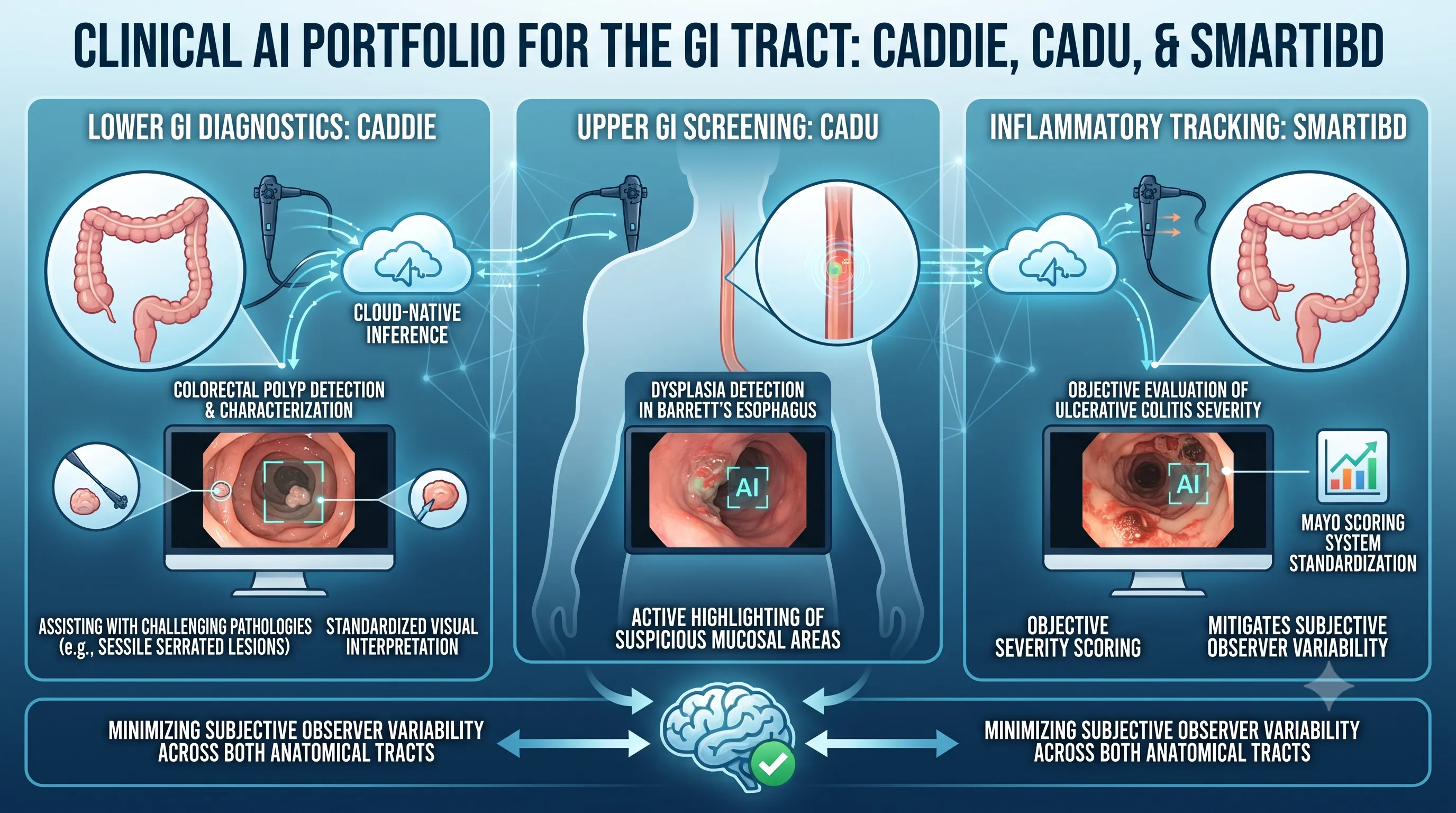
Addressing diagnostic variance in lower gastrointestinal procedures, CADDIE operates as a cloud-based AI colonoscopy application.The software analyzes incoming video frames to assist examining physicians in detecting and characterizing colorectal polyps in real time.
Beyond standard mucosal anomalies, CADDIE's frame-by-frame computational analysis is specifically designed to assist with challenging pathologies, including large polyps and sessile serrated lesions.
By standardizing visual interpretation during colonoscopic evaluations, the application targets heightened diagnostic consistency in lower GI diagnostics.
Upper GI and Inflammatory Tracking: CADU Dysplasia Screening and SMARTIBD Scoring
The cloud-based clinical portfolio extends specialized algorithmic support to upper GI surveillance and chronic inflammatory disease monitoring.For upper gastrointestinal endoscopy, CADU serves as a cloud-based AI application designed to assist endoscopists in detecting dysplasia in patients presenting with Barrett's Esophagus.
The CADU software assists clinical decision-making by actively highlighting suspicious mucosal areas directly in endoscopic images.
In the domain of chronic inflammatory bowel disease, SMARTIBD functions as a dedicated cloud-based AI application that delivers objective evaluations of ulcerative colitis severity.
Rather than relying solely on disparate visual interpretations, SMARTIBD standardizes patient assessments using the validated MAYO scoring system.
Together across both anatomical tracts, this application suite systematically minimizes subjective observer variability.
| Clinical AI Application | Anatomical Indication | Clinical Target | Functional Task |
|---|---|---|---|
| CADDIE | Lower gastrointestinal tract (Colonoscopy) | Colorectal polyps, including large polyps and sessile serrated lesions | Analyzes video frames to assist physicians in detecting and characterizing polyps. |
| CADU | Upper gastrointestinal tract | Dysplasia in patients with Barrett's Esophagus | Highlights suspicious areas in endoscopic images to assist dysplasia detection. |
| SMARTIBD | Lower gastrointestinal tract | Ulcerative colitis disease severity | Provides objective clinical evaluations utilizing the MAYO scoring system. |
4. Regulatory Approvals and Market Realities: EU-MDR CE Marks vs. US FDA 510(k) Scope
The clinical realization of moving away from expensive on-premise GPU hardware toward medical AI SaaS fundamentally depends on regulatory compliance, as software delivery scopes are defined by regional clearance boundaries.While cloud and software distribution simplifies access, healthcare facilities encounter distinct operational profiles depending on the specific clearances granted by governing bodies.
July 2024 Milestones: European CE Mark vs. FDA 510(k) Authorization
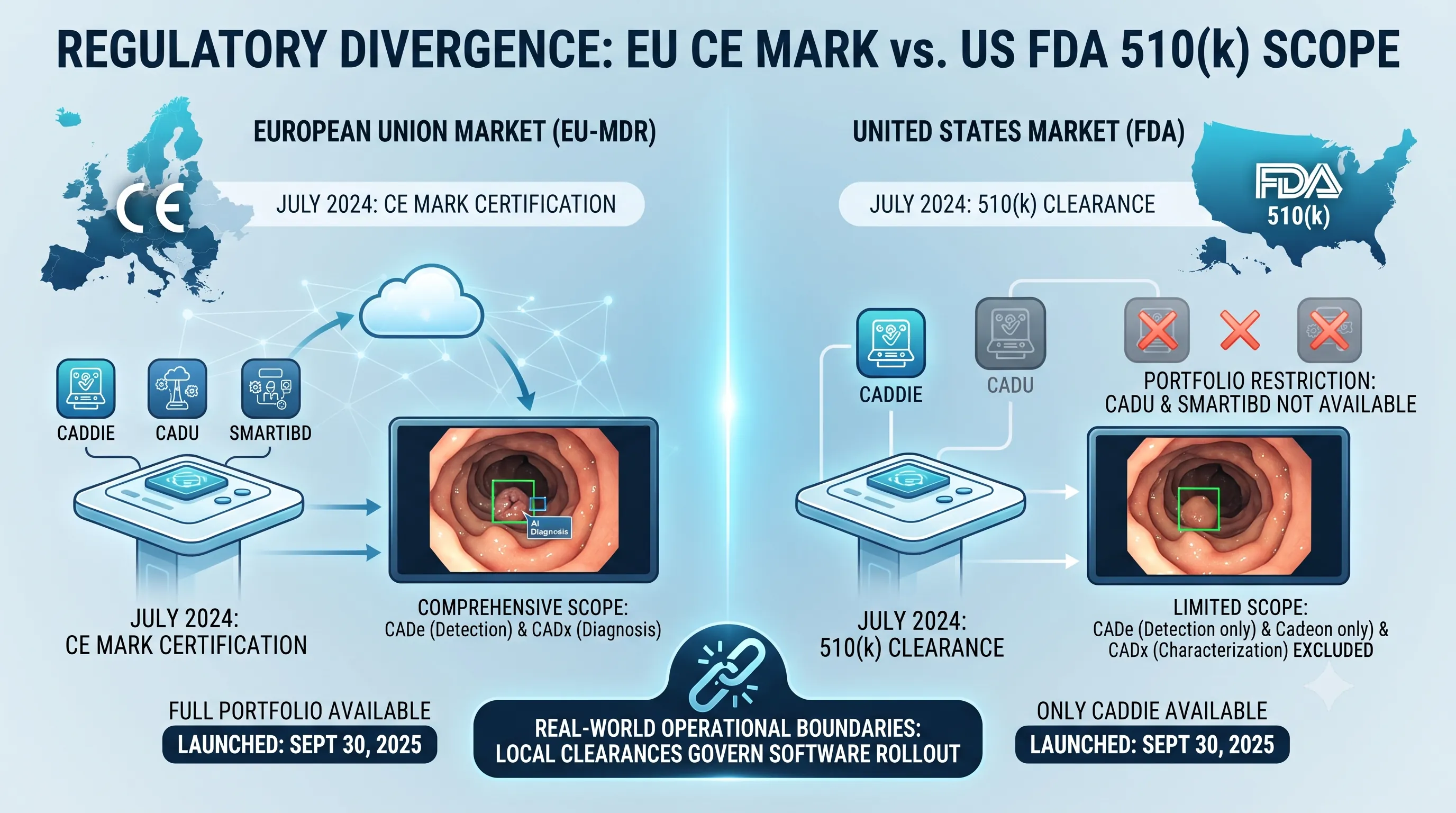
In July 2024, regulatory authorizations established the foundation for regional deployment across both European and American clinical settings.In Europe, CADDIE, CADU, and SMARTIBD achieved CE Mark certification under the European Union Medical Device Regulation (EU-MDR).
That same month, in July 2024, the CADDIE computer-aided detection system secured FDA 510(k) clearance in the United States.
With these regulatory milestones established, Olympus commercially launched the OLYSENSE CAD/AI portfolio in European and United States markets on September 30, 2025.
Regional Feature Divergence: European CADx Capabilities vs. US CADe Limitations
Although the underlying delivery mechanism supports centralized deployment, the authorized scope of clinical intervention differs significantly between jurisdictions.In the European market, CADDIE covers both computer-aided detection (CADe) and computer-aided diagnosis (CADx) for suspected colorectal polyps.
Conversely, in the United States, CADDIE is authorized exclusively for polyp detection (CADe).
Consequently, CADDIE polyp characterization (CADx) features are excluded from the United States commercial release.
In addition to the exclusion of CADx functionality, the CADU and SMARTIBD applications are not commercially available in the United States.
| Region | Regulatory Pathway & Timing | Authorized Applications | Colorectal Clearance Scope | Commercial Availability Status |
|---|---|---|---|---|
| Europe | CE Mark under EU-MDR (July 2024) | CADDIE, CADU, SMARTIBD | CADe (Detection) and CADx (Diagnosis / Characterization) | Commercially launched on September 30, 2025 (All three applications available) |
| United States | FDA 510(k) Clearance (July 2024) | CADDIE only | CADe (Detection only; CADx Characterization excluded) | Commercially launched on September 30, 2025 (CADU and SMARTIBD not commercially available) |
5. Enterprise Digital Health Integration: Connecting Real-Time Endoscopy Feeds to HIS and EMR
The transition toward a scalable medical AI SaaS model—relieving healthcare institutions from deploying capital-intensive on-premise GPU clusters in every operating room—requires a robust digital integration backbone.For intelligent software services to deliver real-time value, procedure data must stream effortlessly from endoscopic video towers into central hospital records without manual transcription bottlenecks.
Olympus addresses this enterprise challenge by deploying an integrated digital infrastructure that connects hardware capture directly to core hospital information architectures.
Bridging Procedure Suites and EMRs: Automated Documentation and nCare Video Capture
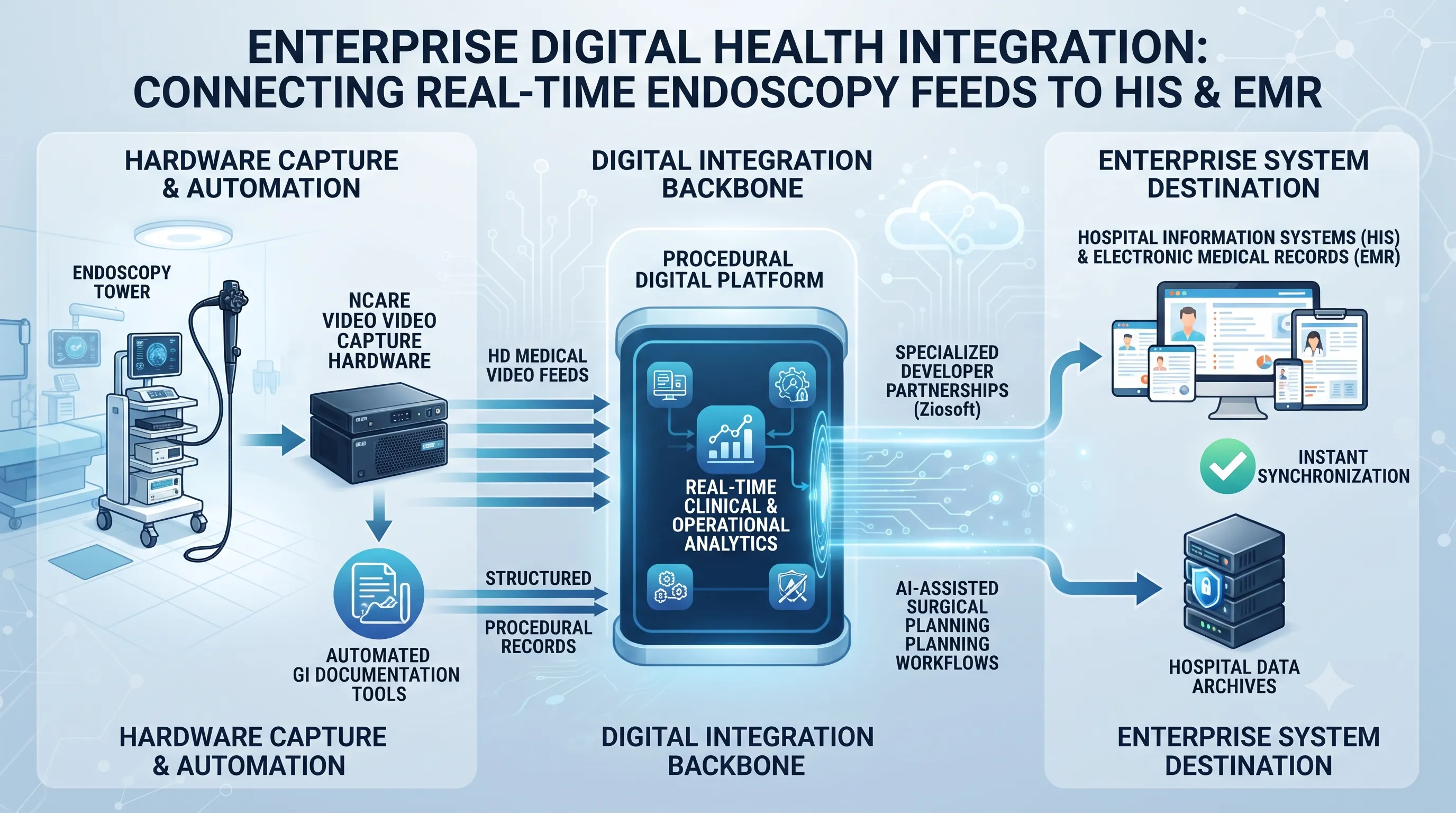
Manual data entry during endoscopic interventions introduces administrative overhead and increases the risk of omissions.Olympus digital integration tools eliminate this friction by automating gastrointestinal documentation and transmitting structured procedural records directly into hospital Hospital Information Systems (HIS) and Electronic Medical Record (EMR) systems.
This direct pathway ensures that endoscopic exam findings, metadata, and operational reports are synchronized instantly with patient charts.
At the hardware capture layer, Olympus deploys nCare digital recording hardware.
The nCare appliance captures full-HD medical video feeds simultaneously across multiple procedural devices operating within the suite.
By aggregating synchronized full-HD feeds from disparate equipment, the hardware feeds high-fidelity recordings directly into central hospital data archives.
This standardized ingestion layer guarantees that visual clinical evidence is preserved and made immediately accessible across the enterprise network.
Surgical Analytics Platforms and Third-Party AI Partnerships
Beyond basic archiving, Olympus has established a dedicated digital platform engineered to collect and analyze medical device, clinical, and procedural data in real time.This platform forms the structural data conduit that allows cloud-ready software services to consume operational telemetry and clinical imaging streams as procedures unfold.
To translate this operational data into advanced procedural assistance, Olympus collaborates directly with specialized imaging software developers, including Ziosoft.
Through these strategic ecosystem partnerships, the platform delivers AI-driven clinical decision-support and surgical planning tools into clinical workflows.
By unbundling heavy computation into dedicated software partnerships and platform integration, healthcare systems access sophisticated surgical planning tools without maintaining bespoke high-performance computing hardware in each suite.
| Infrastructure Component | Primary Technical Function | Destination / Integration Target |
|---|---|---|
| Automated GI Documentation Tools | Automates gastrointestinal procedure documentation and workflow reporting. | Hospital HIS and EMR systems |
| nCare Recording Hardware | Captures full-HD medical video feeds simultaneously across multiple procedural devices. | Hospital data archives |
| Procedural Digital Platform | Collects and analyzes medical device, clinical, and procedural data in real time. | Real-time clinical and operational analytics |
| Specialized Developer Partnerships (Ziosoft) | Delivers specialized imaging algorithms for clinical decision-support and surgical planning. | AI-assisted surgical planning workflows |
Related Posts
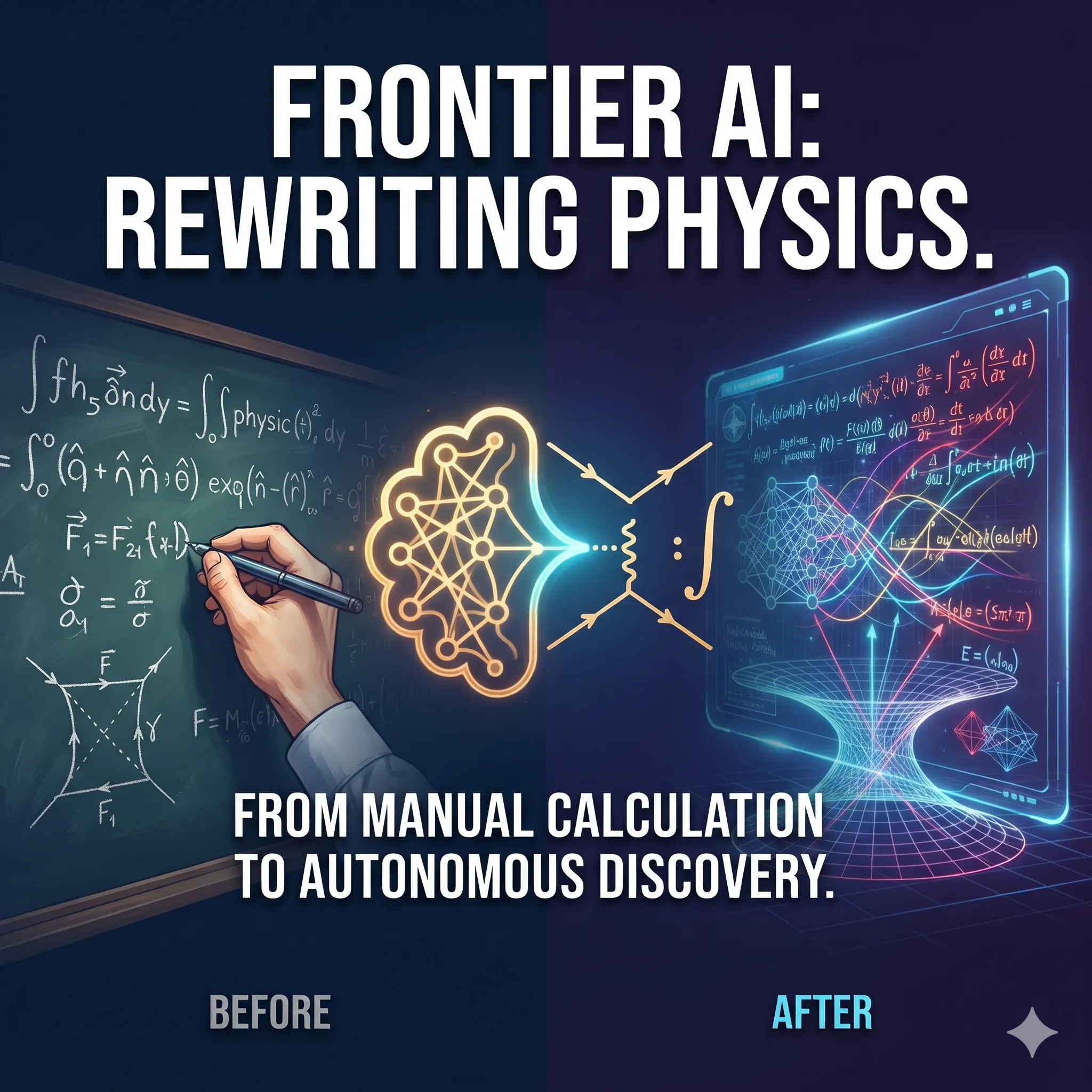
How Frontier AI Models Are Rewriting Theoretical PhysicsExplore how frontier AI models and autonomous agents are transforming theoretical physics,...
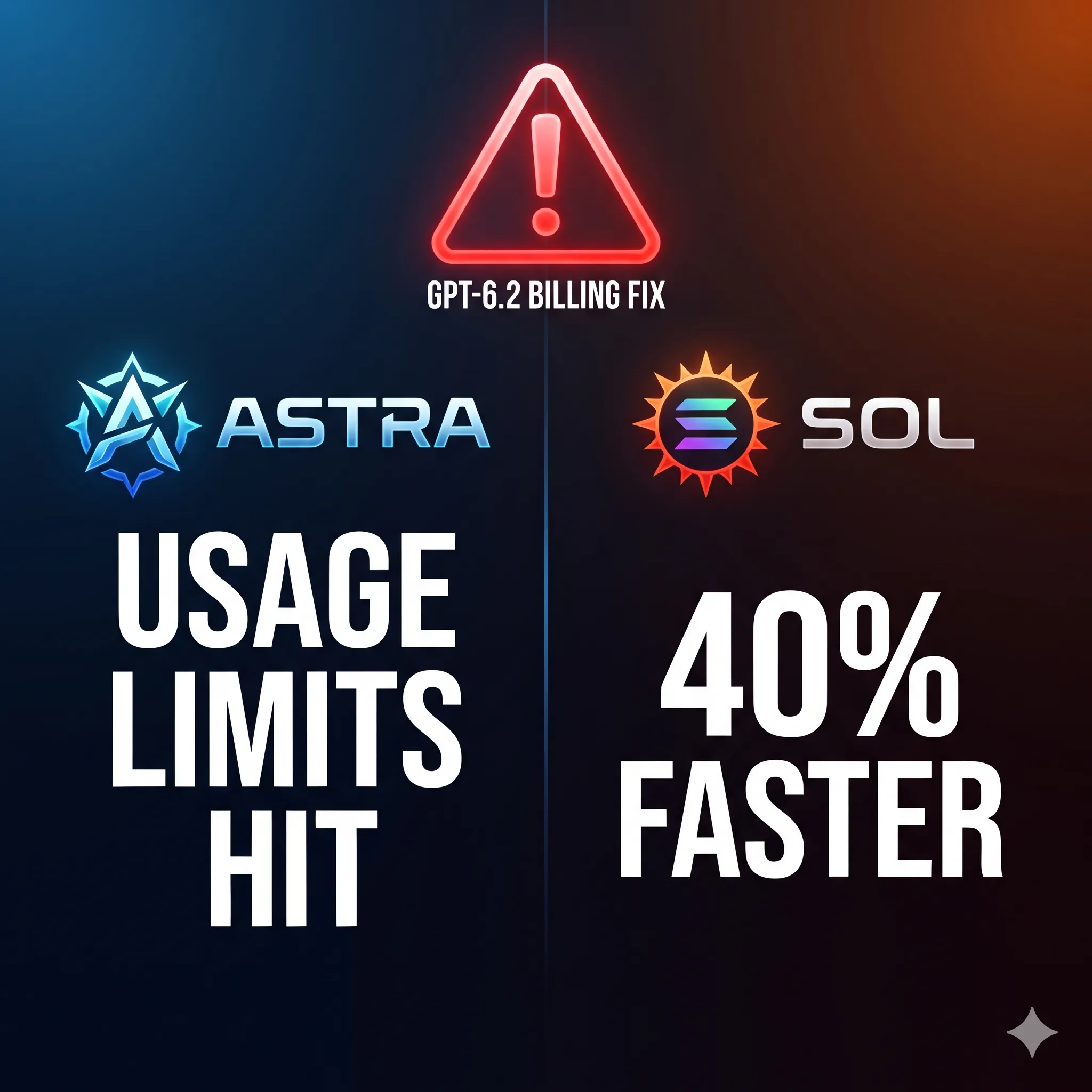
OpenAI GPT-6.2 Billing Fix: Astra Hits Limits 40% FasterOpenAI fixes a GPT-6.2 launch billing bug, causing Astra limits to hit 40% faster and Sol 25%...
How GPT-6 Achieves Intrinsic Protein Design Without Specialized AIDiscover how GPT-6 models achieve intrinsic protein design and de novo minibinder generation using...
Generative AI may have assisted with research or drafting for this article. Topic selection, fact-checking, final wording, and publication remain the responsibility of DragonStone74. AI use disclosure