
AI Trial Simulations and Digital Twins in Biopharmaceutical Clinical Development
🚀 Key Takeaways
- Crushing Financial Attrition: Traditional clinical development absorbs massive global capital while stagnating at a stubborn 12% regulatory success rate that frequently triggers catastrophic valuation collapses upon Phase 3 failure.
- Predictive In Silico Forecasting: Advanced AI trial simulations can assess patient-level biological responses in weeks rather than multi-year cycles, identifying physiological failure points before launching prospective human cohorts.
- Computational Control Arms: Digital twin cohorts synthesize real-world data and mechanistic modeling to mirror patient physiology, dramatically decreasing sample size requirements while maintaining statistical power.
- Formalized Regulatory Standards: Health authorities, including the FDA and EMA, have established structured risk-based credibility frameworks and joint principles to govern external synthetic controls in pivotal decisions.
- The Shifting Ethics of Placebos: Exposing critically ill or pediatric populations to inert control arms or high-probability trial failures is becoming ethically indefensible as validated computational comparators achieve statistical equivalency.
- Methodological Data Discipline: Successful synthetic comparators demand rigorous Bayesian dynamic borrowing, transparent data provenance, and mechanistic calibration to avoid historical bias and demographic blind spots.
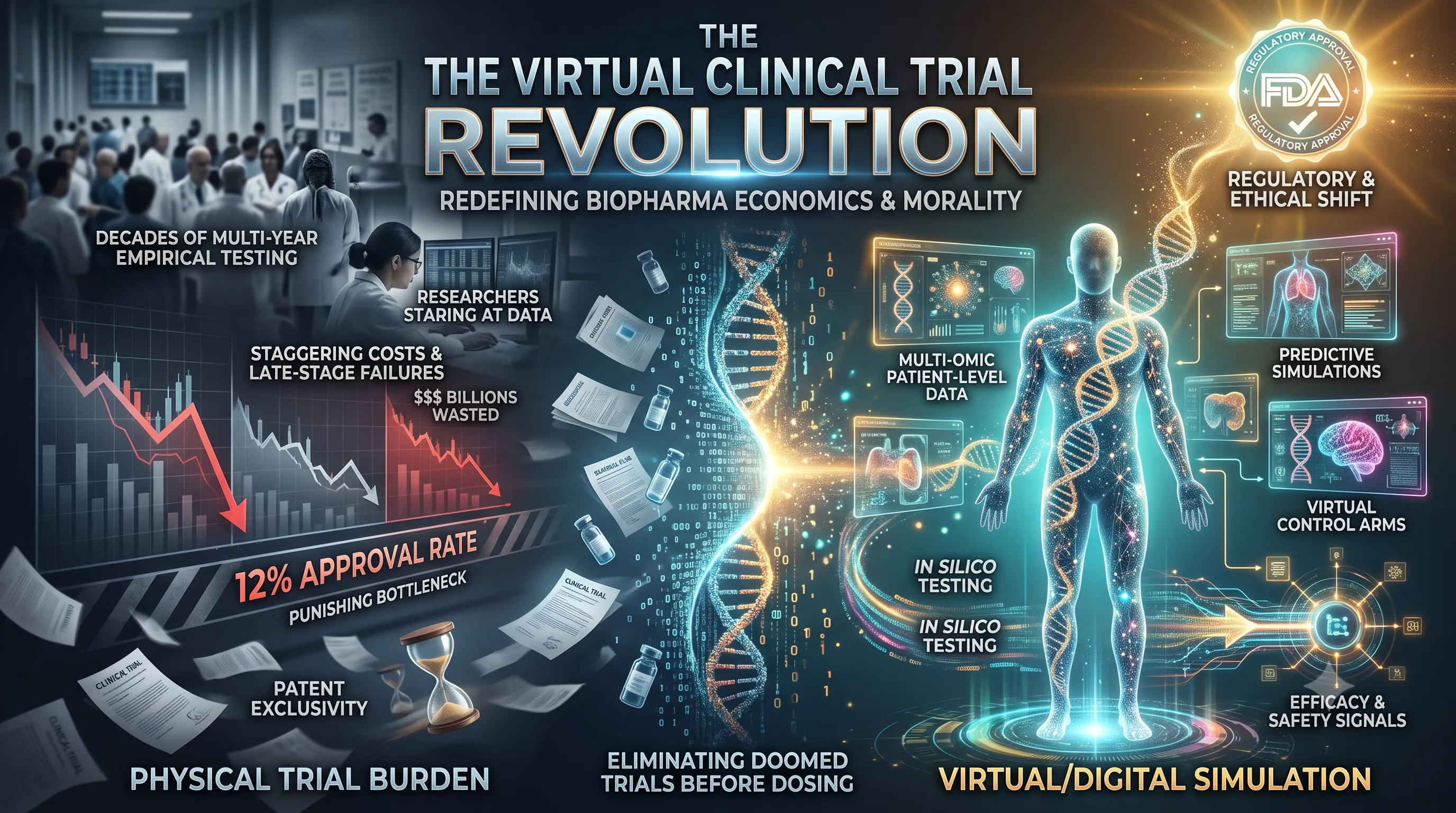
For decades, the global biopharmaceutical sector has accepted a punishing status quo, pouring hundreds of billions of dollars into human clinical testing while remaining paralyzed by an approval rate that rarely surpasses 12 percent.
When late-stage trial failures erase tens of billions in enterprise value overnight, they expose the fundamental inefficiency of relying strictly on slow, multi-year empirical testing to discover biological misalignments.
While early drug discovery accelerated rapidly through generative design, clinical development remained an agonizing bottleneck where capital, patent exclusivity windows, and human patience routinely burned out.
That paradigm is now colliding with an unprecedented computational turning point.
By constructing individualized digital twins and running comprehensive predictive simulations on patient-level multi-omic data, researchers are uncovering efficacy and safety signals in a fraction of the time required by standard human trials.
Rather than merely striving to execute clinical studies faster, the biopharma industry is beginning to deploy virtual control arms and in silico modeling to eliminate doomed trials before the first patient is even dosed.
Beyond the sheer economics of capital preservation, this transition is inciting a profound ethical and regulatory realignment across global medicine.
As regulatory bodies establish formal verification frameworks for artificial intelligence, the bioethics community faces an unavoidable dilemma: whether continuing to expose vulnerable human subjects to placebos remains justifiable when statistically sound virtual alternatives exist.
The emergence of virtual clinical trials is no longer simply a technological novelty, but an imperative structural shift redefining the economics and morality of life sciences.
1. The High Cost of Clinical Attrition: Economic Realities of the 12% Approval Bottleneck
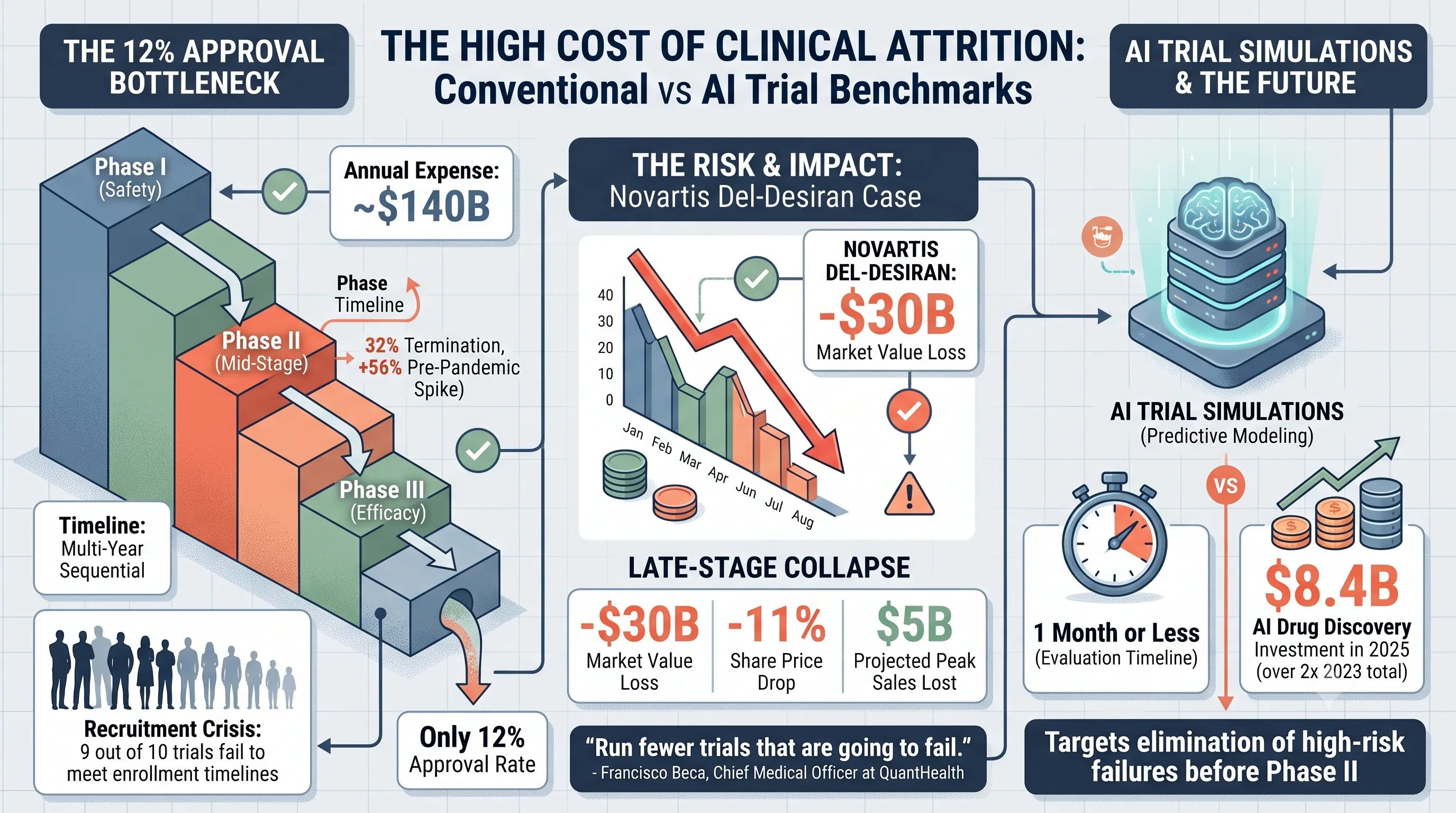
The global biopharmaceutical industry spends approximately $140 billion annually on human clinical testing.Despite this enormous resource commitment, only about 12% of candidate drugs gain regulatory approval, representing a success rate that has remained stagnant for decades.
Standard human trials proceed sequentially through Phase 1 safety, Phase 2 mid-stage, and Phase 3 efficacy testing over multiple years.
These protracted trial timelines compress patent exclusivity windows and substantially increase capital at risk.
Although investment in AI drug discovery reached $8.4 billion in 2025—more than double the total recorded in 2023—capital allocation remains heavily concentrated in upstream molecule design rather than addressing clinical efficacy demonstration in human trials.
Consequently, pharmaceutical enterprises are only beginning to modernize trial design, with Alex Devereson, a McKinsey partner, noting that pharma companies are "dipping their toes" into AI trial modeling.
Financial Collapse in Late-Stage Attrition: The Del-Desiran Case
The economic penalty of clinical attrition compounds dramatically in late-stage development when multi-year investments unravel abruptly.A stark example of this vulnerability occurred when a late-stage clinical trial failure for Novartis' muscular dystrophy drug del-desiran resulted in a $30 billion loss in market value and an 11% drop in share price.
Prior to the trial's termination, the chief executive officer of Novartis had estimated projected peak annual sales for del-desiran at $5 billion.
The evaporation of billions in equity demonstrates the critical flaw of advancing high-risk candidates through sequential human testing without predictive efficacy validation.
Reflecting on this systemic challenge, Francisco Beca, chief medical officer at QuantHealth, observed: "We shouldn't only ask how to run trials faster. We should ask how to run fewer trials that are going to fail."
Phase II Termination Spikes and the Recruitment Bottleneck
Mid-stage developmental attrition has worsened significantly across the pharmaceutical landscape.According to data reported by clinical analytics firm Phesi, 32% of Phase II trials in the first half of 2024 were terminated early.
This failure rate represents a 56% increase compared to pre-pandemic baselines, signaling severe operational and clinical hurdles during mid-stage development.
Compounding these mid-stage terminations is widespread patient accrual failure, with approximately 9 out of 10 clinical trials globally failing to recruit sufficient participants within targeted timeframes.
While conventional clinical phases demand years of execution burdened by participant shortfalls, certain AI trial simulations evaluate candidate response in one month or less, presenting an alternative to sequential attrition.
| Metric Category | Conventional Clinical Trial Benchmark | AI Simulation & Modern Sector Benchmark |
|---|---|---|
| Annual Industry Expenditure | Approximately $140 billion spent globally on human clinical testing | $8.4 billion invested in AI drug discovery in 2025 (over 2x 2023 total) |
| Regulatory Approval Rate | Stagnant at approximately 12% across decades of conventional development | Focused on eliminating high-risk failures prior to trial initiation |
| Evaluation Timeline | Sequential multi-year progression across Phase 1, Phase 2, and Phase 3 | Candidate response evaluated in one month or less via AI trial simulations |
| Mid-Stage (Phase II) Attrition | 32% early termination rate in H1 2024 (a 56% increase from pre-pandemic levels) | Targets prevention of unviable trials before Phase II commitment |
| Patient Enrollment Reliability | Approximately 9 out of 10 trials globally fail to meet recruitment timelines | Mitigates recruitment dependency through computational response modeling |
| Late-Stage Attrition Impact | Novartis del-desiran: $30B market value loss, 11% stock drop, $5B peak sales lost | Aims to protect patent exclusivity windows and reduce capital at risk |
2. Predictive In Silico Trial Simulations: Benchmarking Accuracy and Mechanistic Vulnerabilities
The structural inability of classical drug development to escape the rigid 12% approval rate bottleneck routinely evaporates hundreds of billions of dollars across failed late-stage programs.Predictive in silico simulations seek to dismantle this attrition crisis by evaluating algorithmic models against prospective clinical outcomes before expensive phase-level execution begins.
Patient-Level DNA Simulation and Track Record Benchmarks
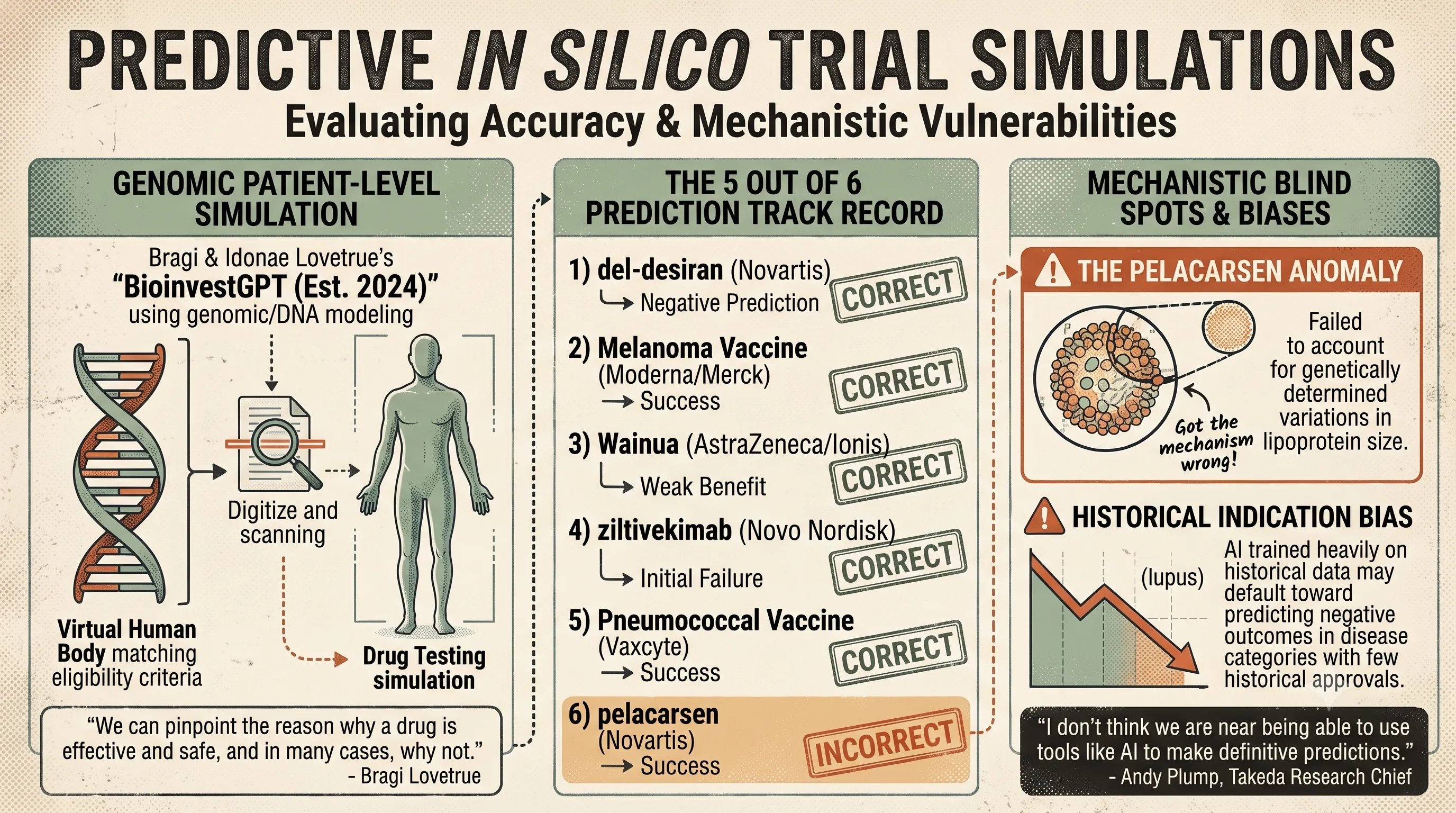
Founded in 2024 by Bragi Lovetrue and Idonae Lovetrue, BioinvestGPT approaches trial simulation through high-dimensional genomic modeling.BioinvestGPT utilizes DNA sequencing data to construct a virtual human body matching trial eligibility criteria, then runs simulations of the candidate drug.
Highlighting the granular nature of these simulations, co-founder Bragi Lovetrue stated, "We can pinpoint the reason why a drug is effective and safe, and in many cases, why not."
Before official trial readouts were released, BioinvestGPT correctly predicted 5 out of 6 clinical trial outcomes evaluated across diverse therapeutic categories.
Running alongside these genomic architectures, QuantHealth models patient-level treatment responses using real-world data alongside AI, publishing simulations for ulcerative colitis and cholesterol treatments.
The predictive accuracy of BioinvestGPT across evaluated clinical programs is detailed below:
| Drug Candidate | Developer / Sponsor | Simulated Pre-Release Prediction | Model Accuracy |
|---|---|---|---|
| del-desiran | Trial sponsor evaluated | Negative result | Correct |
| Melanoma vaccine | Moderna and Merck | Trial success | Correct |
| Wainua | AstraZeneca and Ionis | Weak clinical benefit | Correct |
| ziltivekimab | Novo Nordisk | Initial failure | Correct |
| Pneumococcal vaccine | Vaxcyte | Trial success | Correct |
| pelacarsen | Novartis | Trial success | Incorrect |
Mechanistic Blind Spots: The Pelacarsen Anomaly and Historical Indication Bias
Despite high predictive hit rates, mechanistic blind spots remain a major barrier to replacing clinical cohorts with computational twin models.Predictive AI incorrectly forecast success for Novartis' pelacarsen, which subsequently failed in late-stage trials to reduce heart attack or stroke risks.
This divergence occurred because the underlying computational model failed to account for genetically determined variations in lipoprotein size.
Reflecting on the breakdown, Bragi Lovetrue acknowledged that "we got the mechanism wrong" by failing to account for genetically determined variations in lipoprotein size.
Beyond mechanistic gaps, systematic training biases distort in silico trial reliability.
AI algorithms trained heavily on historical data may default toward predicting negative outcomes in disease categories with few historical approvals, such as lupus.
Due to these vulnerabilities, major pharmaceutical stakeholders urge caution regarding premature reliance on simulated endpoints.
Andy Plump, Takeda research chief, summarized this fundamental industry skepticism: "I don't think we are near being able to use tools like AI to make definitive predictions."
3. Digital Twins in Clinical Practice: Minimizing Control Arm Enrollment and Expanding Representation
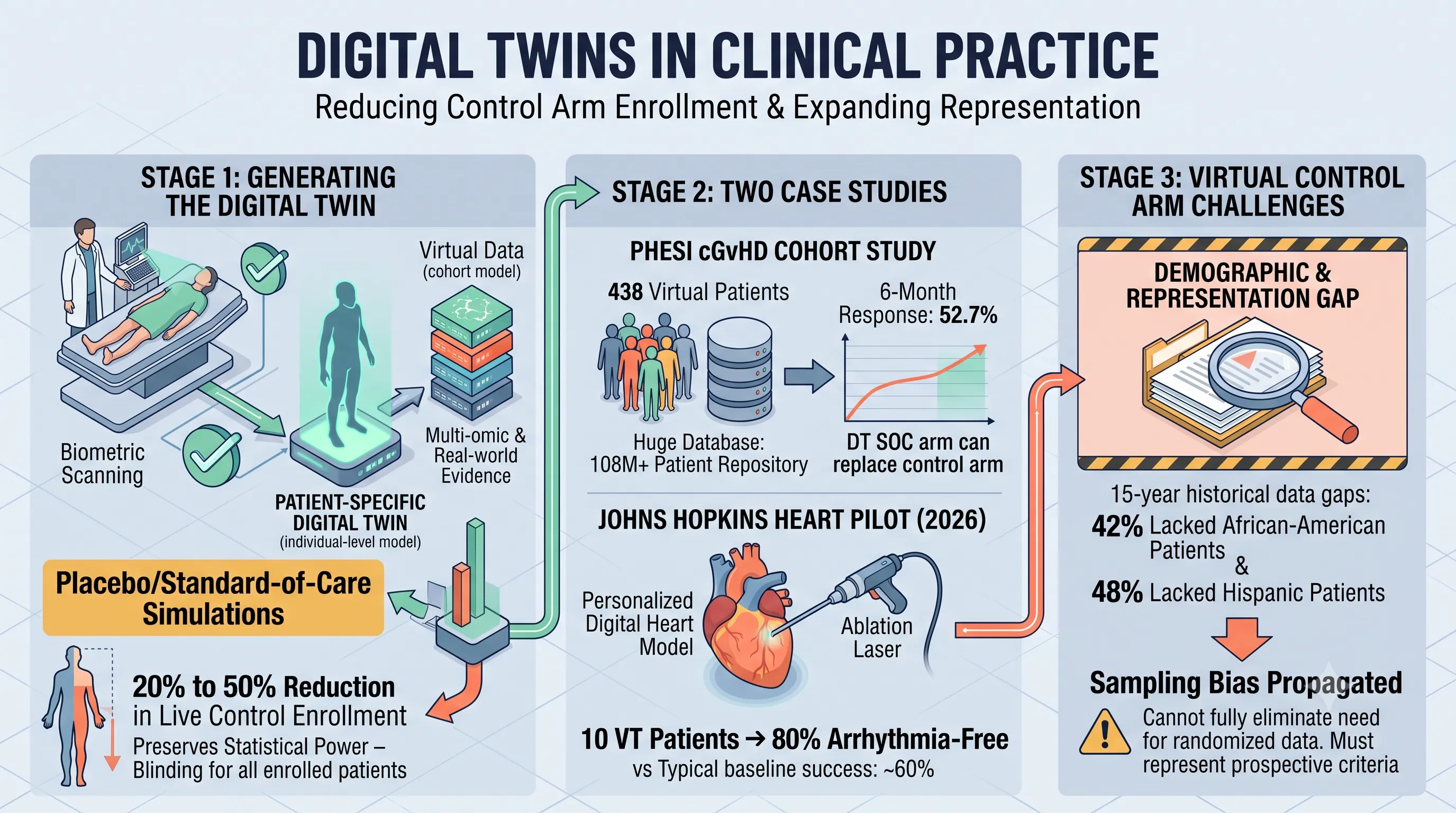
To curb the multibillion-dollar capital drain driven by a historical 12% trial approval bottleneck, clinical development programs are restructuring trial architecture around computational modeling.Digital twins serve as computational models tailored to individual patient physiology that dynamically simulate response to standard-of-care or placebo interventions.
By deploying these predictive constructs, sponsors can form virtual control arms at the individual level—generating a synthetic counterpart for each enrolled participant—or at the cohort level, synthesized directly from aggregated historical or real-world evidence.
Precision Digital Cohorts: Phesi's cGvHD and Johns Hopkins Heart Models
Operational deployments demonstrate that computational cohorts can replicate standard clinical responses without subjecting excess patients to standard-of-care or placebo arms.In chronic graft-versus-host disease (cGvHD), Phesi constructed a digital twin cohort for standard-of-care prednisone using 2,042 virtual patients across 32 cohorts extracted from an integrated repository of over 108 million patients.
Within this initiative, the calibrated cGvHD digital twin standard-of-care arm drew upon 438 virtual patients across 8 real-world cohorts.
This synthetic cohort yielded a predicted 6-month objective response rate of 52.7%, illustrating accurate predictive alignment with observed therapeutic outcomes.
As Li et al. concluded regarding this framework, "it is feasible to construct a DT cohort using existing clinical trial data; a DT SOC arm can potentially replace a control arm."
Beyond retrospective historical aggregation, prospective patient-specific modeling has shown direct clinical efficacy.
A Johns Hopkins trial utilized personalized digital heart models to guide ablation therapy in 10 ventricular tachycardia patients under an FDA-approved pilot in 2026.
The computational heart models mapped individual electrophysiological substrates to direct targeted tissue ablation.
Over a one-year follow-up period, the Johns Hopkins digital heart pilot yielded an 80% arrhythmia-free rate (8 out of 10 patients), outperforming the approximately 60% typical clinical success seen in conventional ablation procedures.
| Deployment / Trial Initiative | Modeling Architecture | Cohort Scale / Data Source | Reported / Predicted Outcome | Comparative Baseline / Impact |
|---|---|---|---|---|
| Phesi cGvHD Standard-of-Care Model | Cohort-level digital twin synthesis | 438 virtual patients (from 8 cohorts; drawn from 2,042 virtual patients across 32 cohorts in a 108M+ patient repository) | Predicted 6-month objective response rate of 52.7% | Validated feasibility of replacing live control arms with real-world-derived virtual cohorts |
| Johns Hopkins Ventricular Tachycardia Pilot (2026) | Individual-level personalized physiological digital heart models | 10 prospective ventricular tachycardia patients | 80% arrhythmia-free rate over one year (8 of 10 patients) | Exceeded approximately 60% typical clinical success rate in standard ablation therapy |
| Active Digital Twin Trial Platforms | Individual- and cohort-level simulation engines | Trial-specific enrolled patient baselines | Maintained statistical power with reduced control enrollment | Downsized live randomized control group enrollment by 20% to 50% |
Statistical Power Preservation and Historical Demographic Gaps
Integrating computational models directly addresses recruitment costs while maintaining rigorous evidentiary standards.Digital twin modeling platforms report that virtual patients can reduce required live randomized control enrollment by 20% to 50% without loss of statistical power.
As Walsh et al. of Unlearn highlighted, digital twins "offer patient-level predictions that enhance trial precision, [permitting] reduction in enrollment needs."
To prevent operational bias and preserve scientific integrity during trial execution, a recommended blinding protection is generating digital twins for all enrolled patients across both experimental and control arms.
Despite these procedural efficiencies, virtual control methodologies face significant structural constraints.
Digital twin models represent approximations of human physiology and cannot fully eliminate the need for randomized data for calibration.
Critical discrepancies arise if underlying datasets lack demographic diversity or fail to match strict prospective trial eligibility criteria.
These gaps are rooted in existing clinical literature: historical oncology trial data indicated that 42% of trials lacked African-American participants and 48% lacked Hispanic participants over a 15-year span.
If computational control architectures draw from non-representative historical baselines, synthetic predictions risk propagating systematic sampling biases into regulatory evaluations.
4. Regulatory Evolution: FDA and EMA Frameworks for External Controls and AI Credibility
Addressing the systemic capital evaporation and breaking through the persistent 12% clinical approval rate bottleneck requires bridging computational innovation with rigid regulatory compliance.The integration of synthetic cohorts and virtual trials cannot succeed without meeting stringent evidentiary benchmarks set by global health authorities.
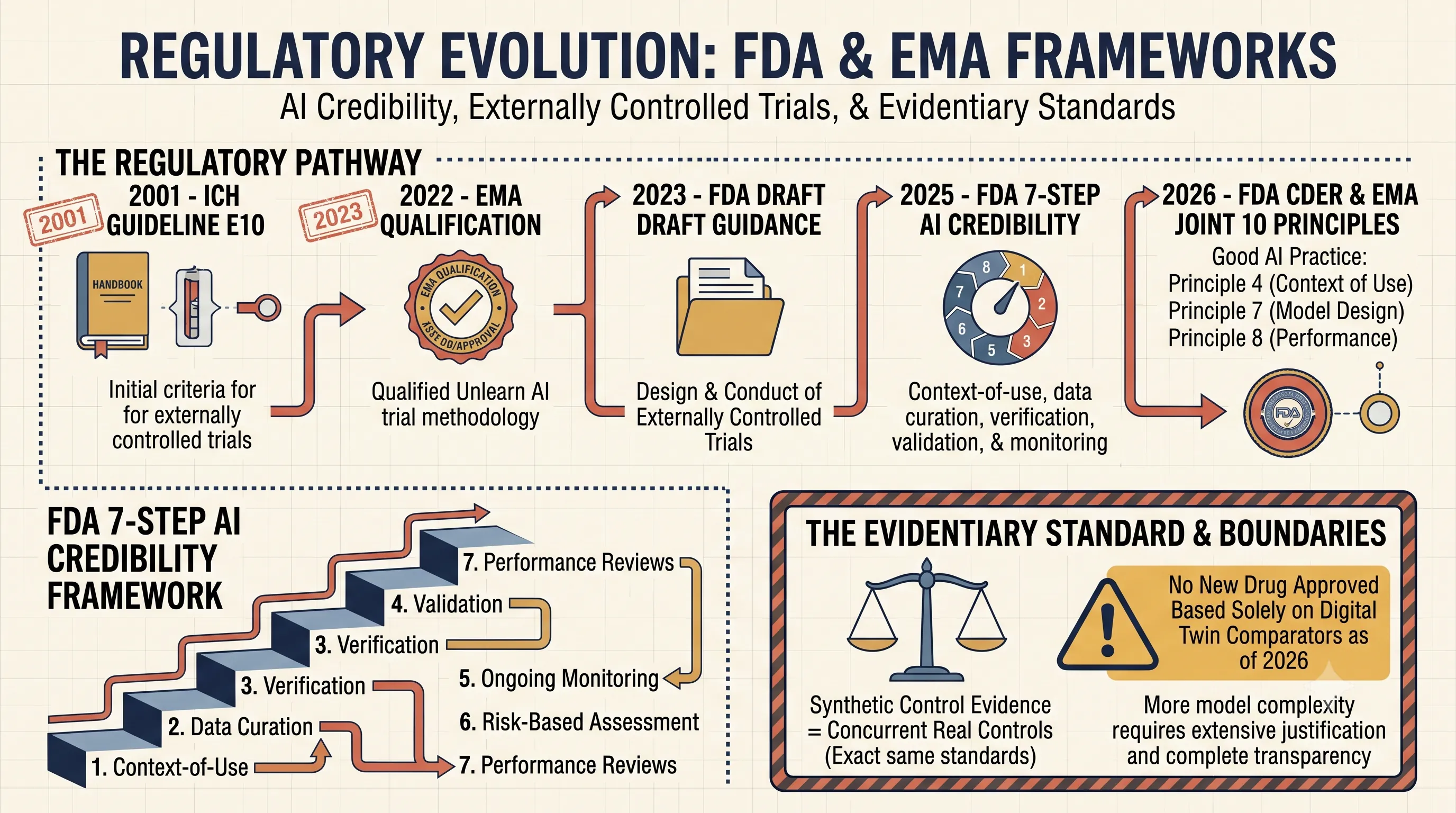
The regulatory foundation for non-concurrent controls began with the ICH Guideline E10, which established foundational criteria for externally controlled trials in 2001.
Building on this foundation, an academic review identified 22 regulatory submissions to the FDA utilizing external or synthetic controls up to mid-2020, predominantly concentrated in oncology and rare diseases.
To formalize requirements for non-traditional trial arms, the FDA released draft guidance on Considerations for the Design and Conduct of Externally Controlled Trials in February 2023.
The Seven-Step Credibility Framework and FDA/EMA Guiding Principles
Regulatory expectations shifted toward computational rigor when the FDA issued draft guidance outlining a seven-step risk-based AI credibility framework for drug and biological products in January 2025.This 2025 AI draft guidance mandates clear context-of-use definitions, data curation, verification, validation, and ongoing monitoring for all regulatory AI tools.
Harmonization across international borders advanced further when FDA CDER and EMA jointly published ten Guiding Principles of Good AI Practice in January 2026.
Under this joint framework, Principle 4 emphasizes a predefined context of use to anchor computational scope.
Concurrently, Principles 7 and 8 mandate robust model design alongside rigorous, risk-based performance assessments throughout the clinical development lifecycle.
| Regulatory Milestone | Issuing Authority / Scope | Key Technical Requirements and Principles |
|---|---|---|
| ICH Guideline E10 (2001) | ICH / International Harmonization | Established initial criteria and foundational standards for externally controlled clinical trials. |
| EMA Qualification Opinion (2022) | EMA / Unlearn Methodology | Formal qualification procedure granting regulatory qualification opinion for specific AI trial methodology. |
| Externally Controlled Trials Draft Guidance (February 2023) | FDA | Considerations for the design, conduct, and methodological rigor of external control arms in regulatory submissions. |
| Risk-Based AI Credibility Framework (January 2025) | FDA | Seven-step framework mandating context-of-use definitions, data curation, verification, validation, and ongoing monitoring for drug and biological products. |
| Ten Guiding Principles of Good AI Practice (January 2026) | FDA CDER and EMA Joint Initiative | Predefined context of use (Principle 4) paired with robust model design (Principle 7) and risk-based performance assessments (Principle 8). |
Evidentiary Parity and Current Qualification Limits for Digital Twin Comparators
European regulators have likewise addressed machine learning trial architectures through dedicated qualification pathways.The EMA established a formal qualification procedure for certain AI trial methodologies, granting a formal qualification opinion to Unlearn in 2022.
Despite these methodological milestones, evidentiary barriers remain absolute.
Regulators require synthetic control evidence to meet the exact same evidentiary standard as concurrent real controls.
Furthermore, as model complexity increases, regulatory acceptance becomes less likely without extensive justification and complete transparency.
Because of these uncompromising evidentiary standards, no new drug has received regulatory approval based solely on a digital twin comparator arm as of 2026.
5. The Ethical Reassessment: Challenging Live Placebo Assignment in the Virtual Era
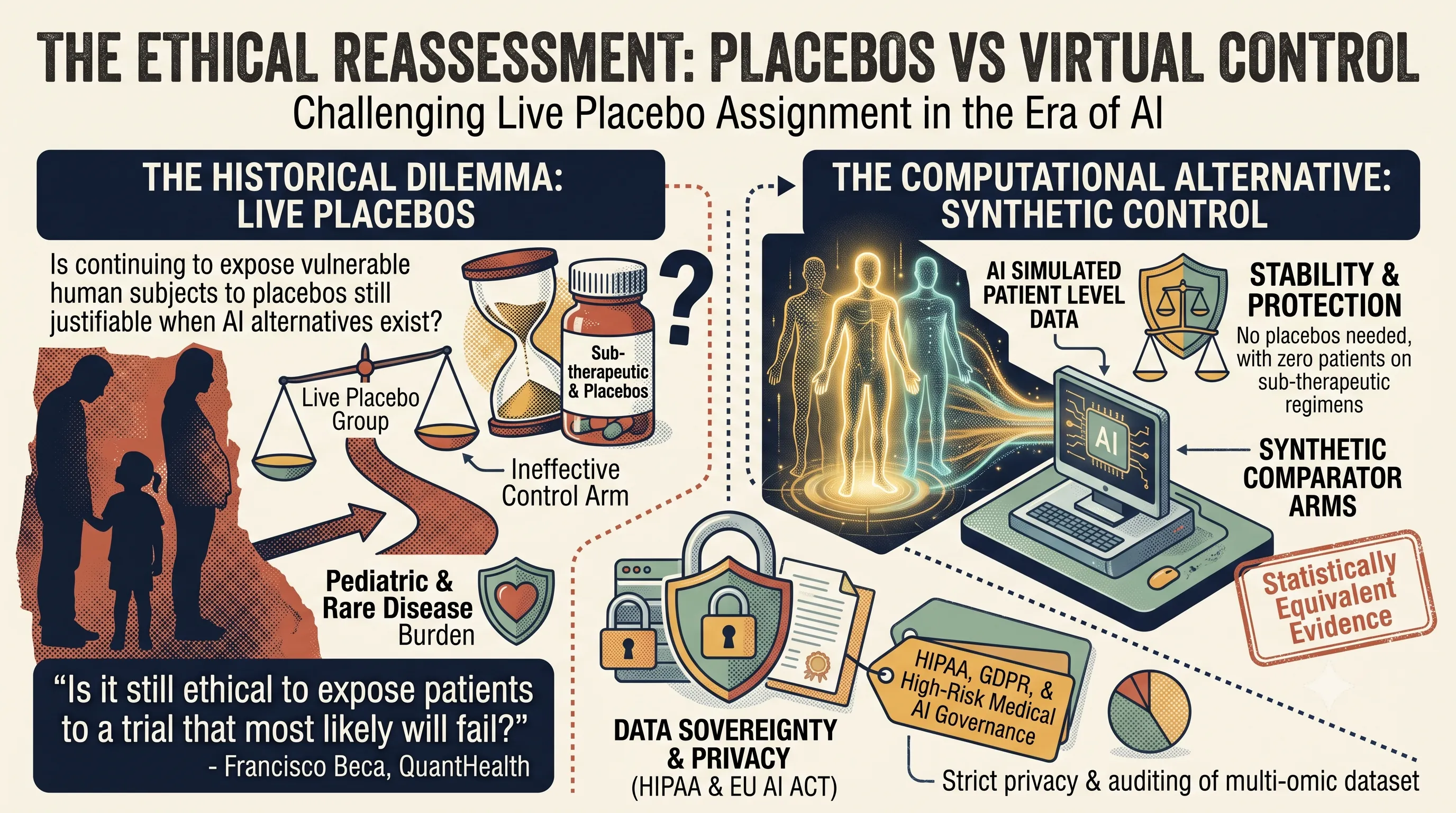
Overcoming the systemic bottlenecks of drug development and the persistent 12% historical approval rate ceiling requires addressing not only financial capital waste but also the profound moral dilemmas embedded in conventional trial architecture.As virtual clinical trials and digital twin methodologies mature to stem attrition across development pipelines, the practice of assigning human subjects to non-therapeutic placebo or ineffective control arms faces fundamental ethical questioning.
The standard justification of methodological rigor is increasingly challenged by computational alternatives capable of emulating comparative cohorts.
As noted in trial ethics commentary, "if synthetic control arms AI can provide statistically equivalent evidence to a live placebo comparator, continuing to expose patients to placebo is not methodological rigor – it requires positive justification."
Francisco Beca of QuantHealth captured this shifting imperative directly: "Is it still ethical in 2026 to expose patients to a trial that most likely will fail? With the advancement of this (AI) technology, come 2027, 2028, or 2029, probably the answer is going to be that it no longer is."
Pediatric and Rare Disease Ethics: Moving Beyond Ineffective Controls
Patient willingness to enroll is severely reduced when randomized study designs mandate a high probability of assignment to a placebo or an ineffective standard-of-care arm.This enrollment reluctance compounds recruitment delays, inflating study overhead and stalling therapeutic candidates before statistical power can be verified.
The ethical burden is most acute in vulnerable populations where alternatives are nonexistent or disease progression is rapid.
Pediatric and rare disease trials benefit ethically from virtual patient modeling by limiting child participant exposure to unproven or placebo arms.
By deploying synthetic comparator frameworks derived from historical and simulated patient data, clinical protocols can minimize the number of pediatric subjects placed on sub-therapeutic regimens while preserving analytical validity.
Data Sovereignty, HIPAA, and EU AI Act Governance
While virtual comparators alleviate human exposure risks, their deployment introduces rigorous regulatory and technical compliance requirements.Data privacy regulations, such as HIPAA and the EU AI Act, impose strict governance over high-risk medical AI and sensitive multi-omic patient data used in simulation models.
Deploying digital twin architectures requires ingesting high-dimensional multi-omic datasets, triggering complex compliance scrutiny under data sovereignty and algorithmic safety mandates.
Sponsors utilizing AI systems categorized under high-risk medical frameworks must navigate transparent documentation, audit trails, and strict patient confidentiality standards before synthetic control arms can gain regulatory standing alongside conventional control data.
6. Methodological Foundations: Synthetic Control Arm Design and Biophysical Modeling
Bridging the economic bottlenecks that sustain the historical 12% clinical approval rate requires replacing speculative development cycles with formalized computational frameworks.Rather than serving as unstructured shortcuts, synthetic control arms establish mathematically rigorous benchmarks designed to stabilize trial design and reduce unnecessary exposure.
Propensity Scoring and Bayesian Dynamic Borrowing in Comparator Design
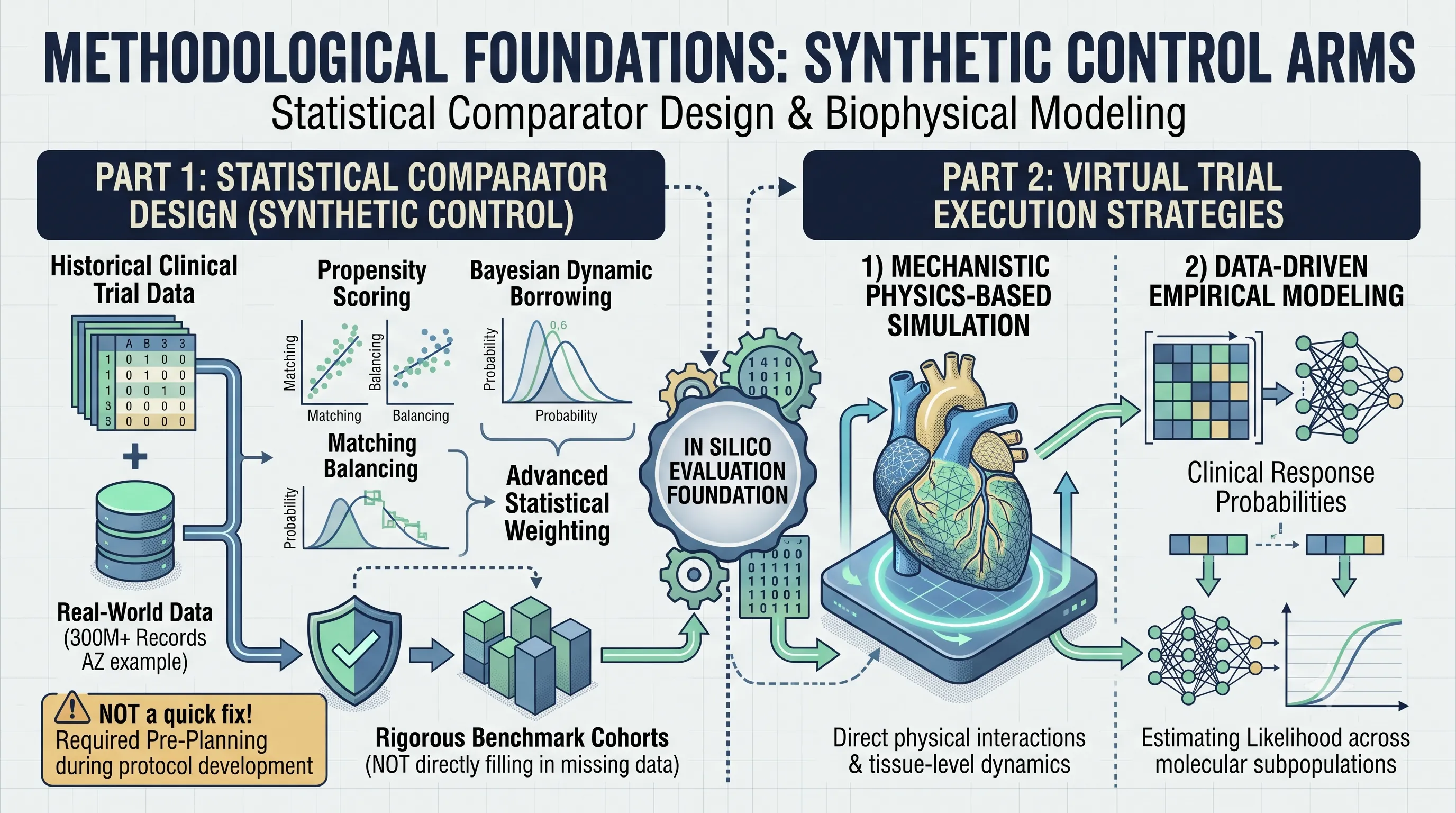
Modern synthetic control architectures rely on precise statistical methodologies to emulate randomized settings without enrolling redundant control participants.Core methodologies driving these designs include propensity scoring, Bayesian dynamic borrowing, and advanced statistical weighting techniques.
These algorithmic mechanisms balance baseline covariates, adjusting for confounding factors across disparate datasets.
To address tightly constrained, molecularly defined populations, synthetic control arms aggregate both homogeneous and heterogeneous historical clinical trial data alongside real-world data assets.
Assembling datasets of sufficient depth is essential for statistical validation; AstraZeneca reports incorporating over 300 million patient records across its digital trial initiatives to power baseline comparator models.
Regulatory and methodological integrity dictates that synthetic control arms do not directly fill in missing trial data within active cohorts.
Instead, their explicit function is to serve as structured comparator cohorts evaluated alongside experimental groups.
Achieving statistical validity requires rigorous pre-planning during protocol development, meaning synthetic controls cannot serve as swift unvalidated fixes for poor study design.
Mechanistic Biomechanics vs. Data-Driven Empirical Modeling
The technical execution of virtual trials branches into two fundamental modeling strategies, each serving distinct analytical objectives across trial pipelines.The first strategy centers on mechanistic physics-based simulations, which reconstruct direct physical interactions such as organ biomechanics.
These biophysical models apply structural and biological rules to simulate physiological function and tissue-level dynamics under experimental conditions.
The second strategy consists of data-driven statistical or machine learning models configured to calculate clinical response probabilities.
Rather than explicitly mapping anatomical forces, empirical response models process deep historical matrices to identify patterns and estimate the likelihood of therapeutic outcomes across molecular subpopulations.
Integrating mechanistic physics-based simulations with data-driven clinical response probabilities creates a structured foundation for in silico evaluations, ensuring trials remain grounded in validated empirical baselines.
Related Posts

How Hugging Face SimReady Central Delivers Simulation-Ready 3D AssetsDiscover how Hugging Face SimReady Central provides an open OpenUSD repository of physical AI and...

How Nemotron 3.5 Parse Accelerates Vision-Language Document ExtractionDiscover how NVIDIA's Nemotron 3.5 Parse boosts inference speed and document extraction efficiency...

Microsoft Ignite 2026: Copilot Work OS and Agent 365 GovernanceDiscover how Microsoft Ignite 2026 redefines enterprise AI with Copilot as the Work OS, centralized...
Generative AI may have assisted with research or drafting for this article. Topic selection, fact-checking, final wording, and publication remain the responsibility of DragonStone74. AI use disclosure