
OpenBao 2.7 Adds External Keys, Quantum TLS, and PostgreSQL Scaling
🚀 Key Takeaways
- PostgreSQL Horizontal Read Scaling: Standby instances can now process read requests directly, bringing relational backend performance in line with Raft-based clusters.
- External HSM and Cloud Key Management: Sensitive root cryptographic operations can be delegated to hardware appliances and cloud KMS providers via a modular plugin architecture.
- Post-Quantum Cryptographic Readiness: Native integration of ML-DSA and ML-KEM across listeners and secret engines prepares enterprises for impending post-quantum compliance timelines.
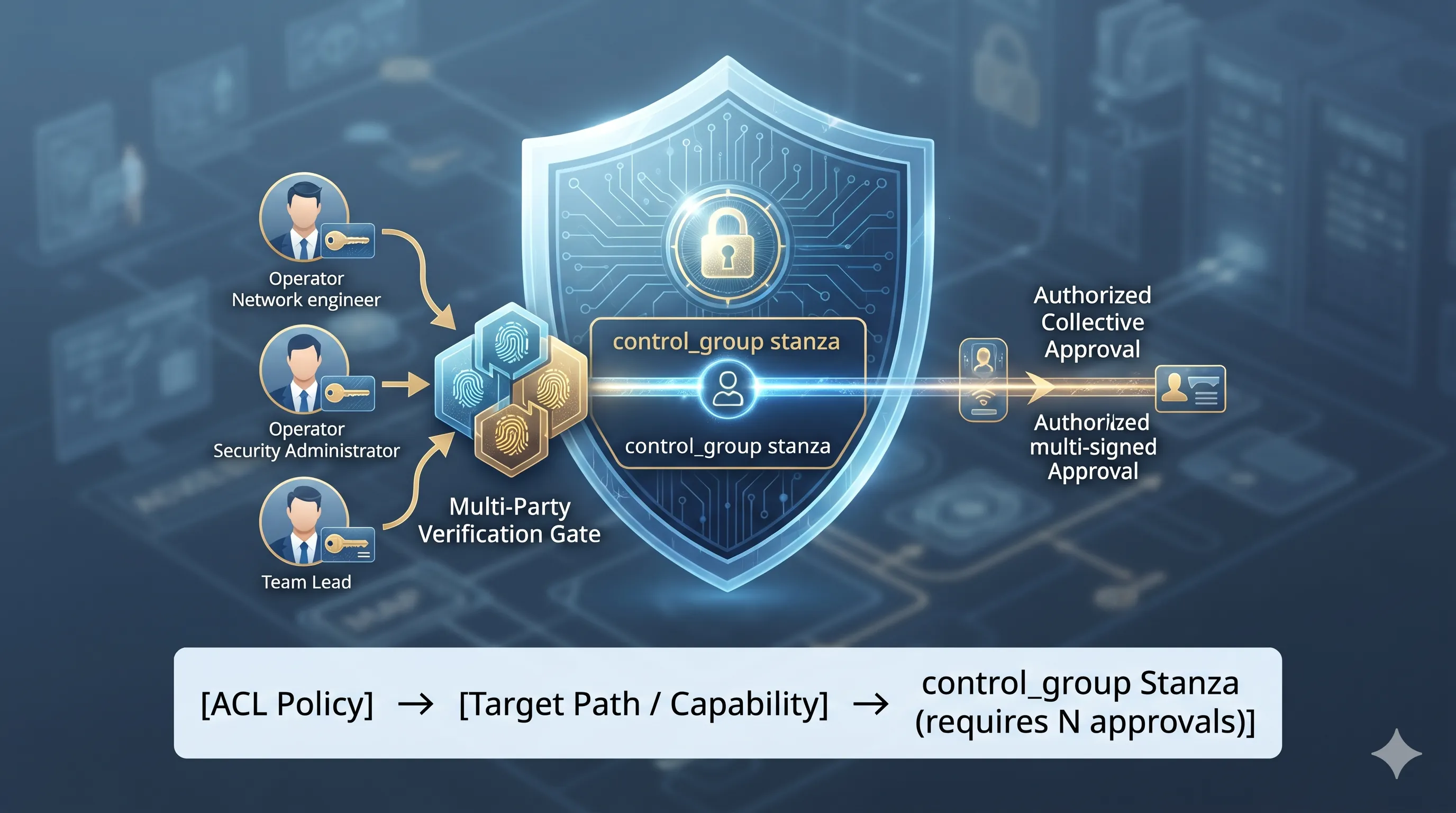
- Multi-Party Access Governance: Flexible control group stanzas require secondary peer authorization for high-risk operations to prevent single-operator privilege abuse.
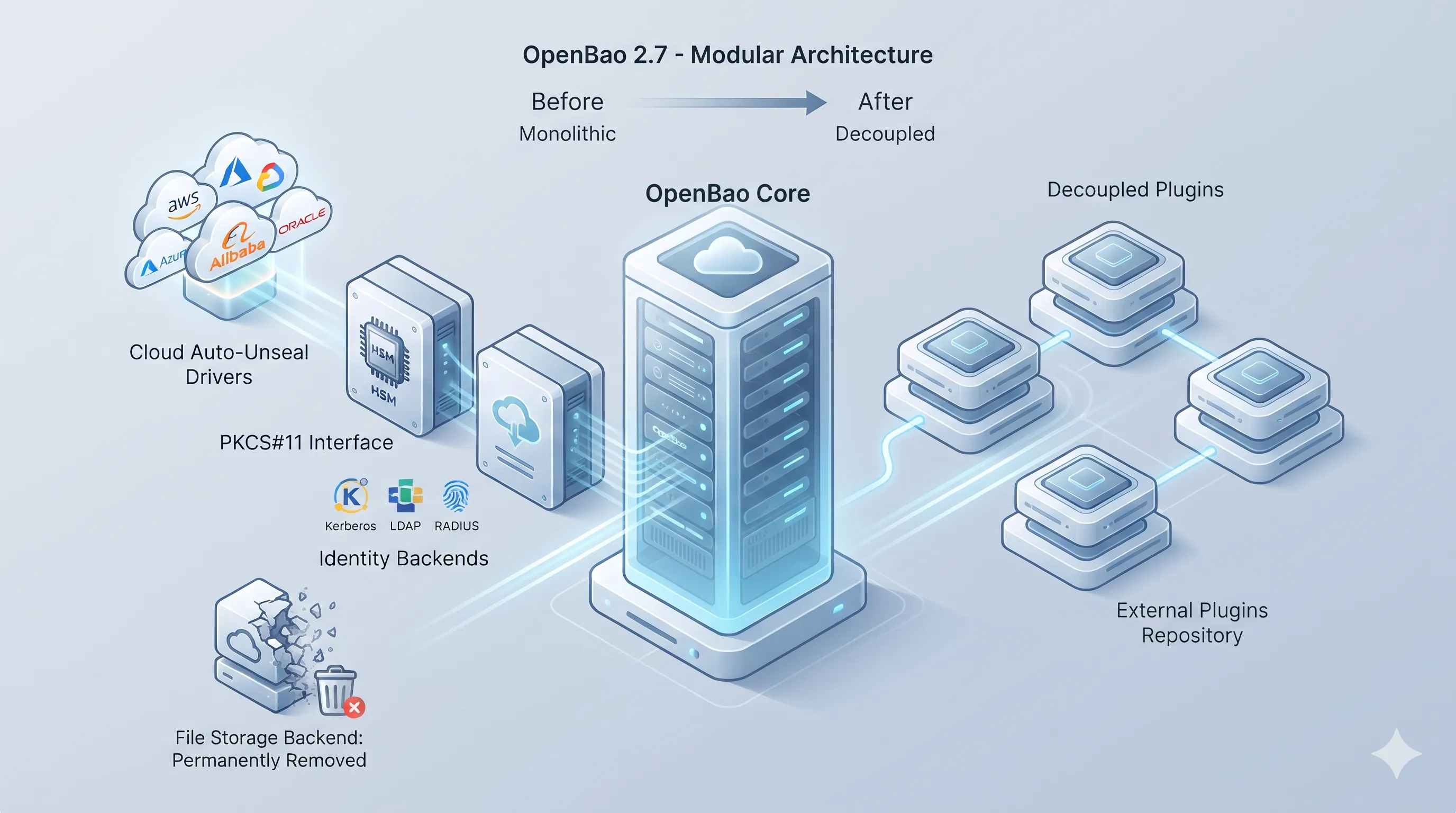
- Architectural Decoupling: Cloud-native auto-unseal providers and select identity backends have transitioned into standalone plugins, retiring monolithic dependencies and insecure file storage.
- Neutral Open-Source Governance: Developed under the Linux Foundation’s OpenSSF with MPL 2.0 licensing, the platform maintains active commercial backing and Vault API compatibility.
The enterprise secrets management landscape continues to adjust following HashiCorp’s shift away from open-source licensing, establishing OpenBao as an essential community-driven alternative under the Linux Foundation’s Open Source Security Foundation.
As security teams evaluate their operational autonomy, the platform’s version 2.7 release introduces foundational capabilities designed to meet stringent infrastructure compliance standards without compromising flexibility.
Central to this update is an emphasis on long-term cryptographic resilience and architectural control.
By bridging external hardware modules directly into identity workflows and deploying post-quantum cryptographic primitives to transport layers, the platform establishes early defenses against emerging quantum threats and sovereign regulatory shifts.
Simultaneously, performance optimizations for relational database backends and granular multi-operator approval policies address real-world scaling demands within complex enterprise clusters.
These improvements demonstrate a clear shift toward an extensible, modular architecture capable of serving high-throughput environments while preserving standard open-source governance.
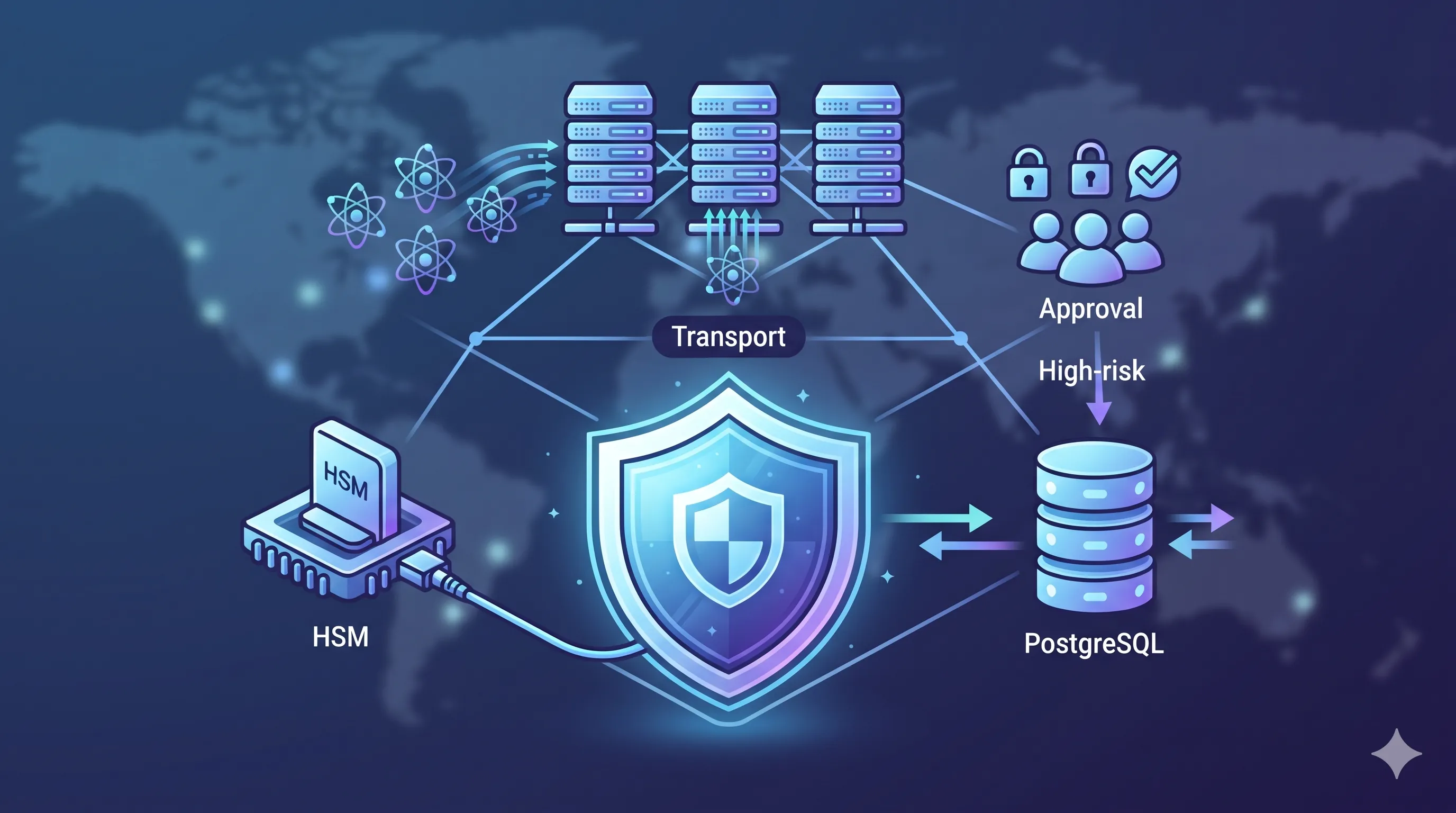
1. OpenBao 2.7 Core Architecture and Horizontal Read Scaling
As the open-source community accelerates adoption of the HashiCorp Vault fork, OpenBao v2.7 introduces critical infrastructure updates underpinning the broader release focus on external key management and quantum-ready transport encryption.Project lead Alex Scheel announced the release, stating that OpenBao v2.7 adds "PostgreSQL horizontal scalability, External HSM and KMS-Backed Keys support, and Post-Quantum Cryptography".
Scheel noted that the release arrived after a shorter development cycle than the previous release and included "many substantial features and several major security patches".
These core architectural refinements lay the operational groundwork required to handle demanding enterprise workloads across decoupled database topologies.
PostgreSQL Read Scalability and Standby Serving
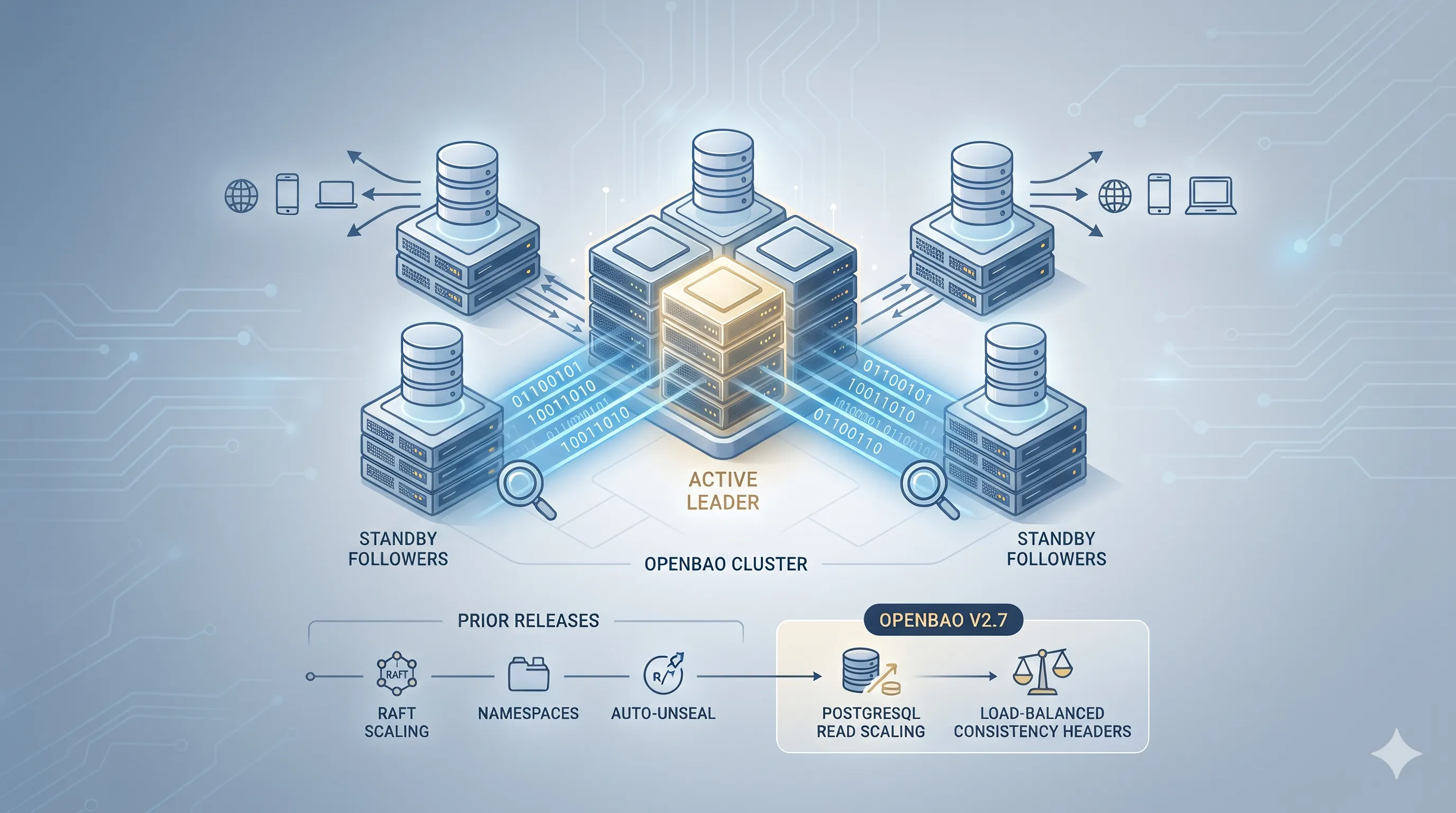
A central milestone of OpenBao version 2.7 is the addition of read scaling for PostgreSQL-backed deployments.Historically, external relational storage engines faced throughput bottlenecks because secondary cluster nodes could not process telemetry or client secrets queries locally.
With OpenBao 2.7, standby instances operating against a PostgreSQL backend can actively serve read requests.
This mechanism mirrors the throughput dynamics previously reserved for integrated Raft-based setups, allowing teams using relational enterprise storage to scale read workloads across multiple nodes without redirecting all traffic to the active leader.
Consistency Headers Across Load-Balanced Clusters
Distributing client operations across active and standby instances creates potential read-after-write replication lag when requests transit through network balancers.To resolve this, OpenBao 2.7 introduces new headers intended to keep requests consistent across load-balanced OpenBao nodes.
These consistency headers allow downstream applications and proxies to track cluster state transitions across independent nodes.
By leveraging these headers, load balancers can guarantee that subsequent read requests reflect the latest state mutations executed by the active primary instance.
Foundation Features from Raft to Multi-Tenant Namespaces
The architecture in version 2.7 builds directly upon foundational clustering and security capabilities introduced in prior development iterations.Earlier releases established multi-tenant isolation via namespaces, allowing disparate organizational units to maintain isolated policies, secret engines, and authentication backends within a unified cluster instance.
Furthermore, OpenBao previously established plugin-based auto-unseal integrations, decoupling cryptographic barrier unsealing from hard-coded vendor dependencies.
Coupled with the read scalability previously established for its integrated Raft backend, the addition of PostgreSQL standby serving completes horizontal scaling parity across the platform's primary storage options.
| Architectural Capability | Release Version Context | Core Functionality |
|---|---|---|
| PostgreSQL Read Scaling | OpenBao v2.7 | Enables standby instances to serve reads similarly to Raft-based setups. |
| Load-Balanced Consistency Headers | OpenBao v2.7 | Introduces new headers intended to keep requests consistent across load-balanced nodes. |
| Integrated Raft Read Scalability | Prior Releases | Provides native horizontal read scalability across cluster followers. |
| Multi-Tenant Isolation | Prior Releases | Delivers administrative boundary separation via namespaces. |
| Plugin-Based Auto-Unseal | Prior Releases | Provides modular barrier unsealing through dedicated plugin integrations. |
2. Delegated Hardware Security: External HSM and KMS Key Management
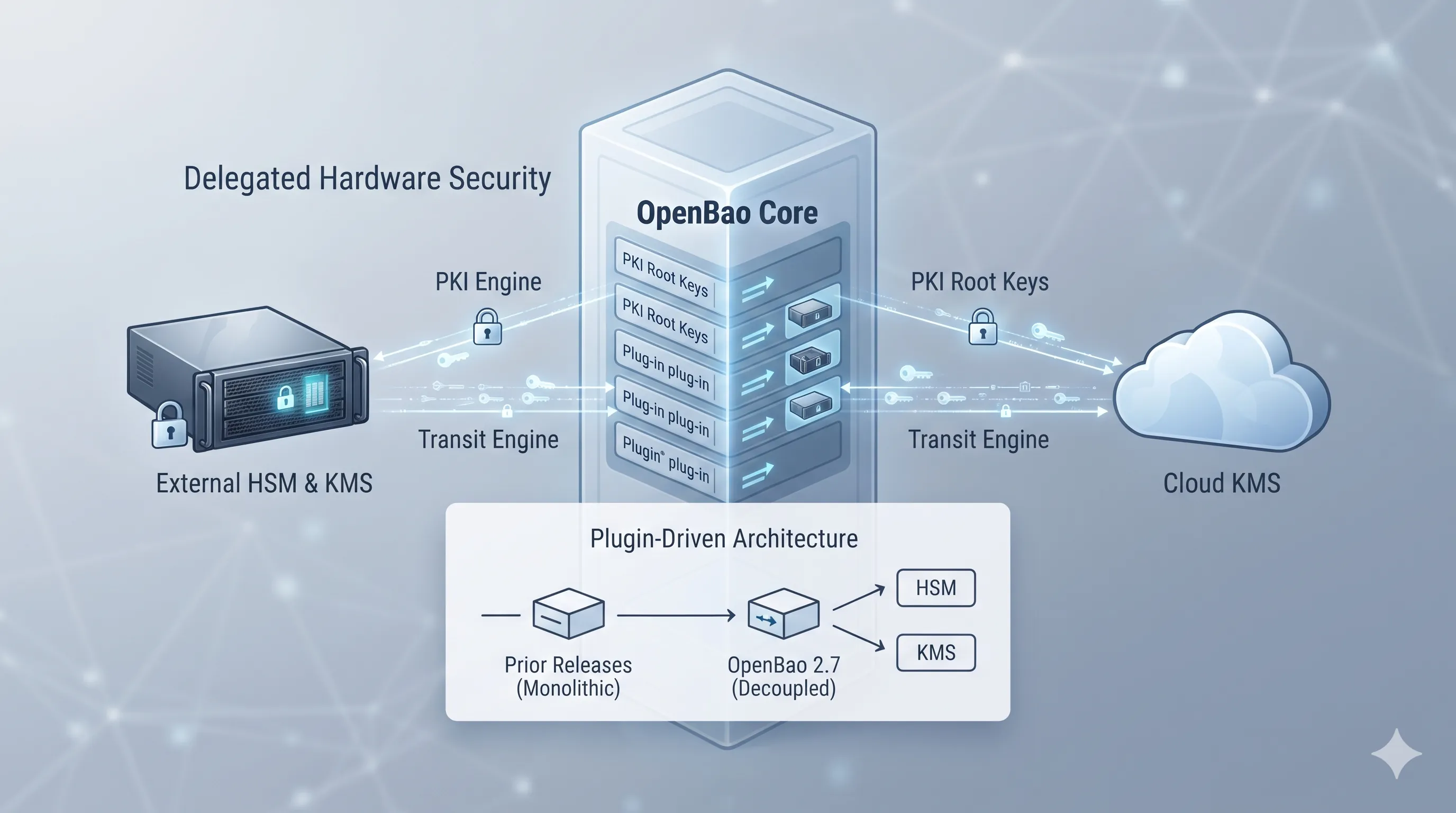
As part of the wider milestone where the open-source vault fork OpenBao adds external keys and quantum-ready TLS, the platform introduces external hardware integration directly into its core workflows.This functionality enables cryptographic engines to offload sensitive operations to dedicated security appliances without ever exposing plaintext key material inside OpenBao itself.
Delegating PKI Root Keys to External HSMs
The integration of external keys allows the Public Key Infrastructure (PKI) secrets engine to delegate sensitive key material handling directly to external Hardware Security Module (HSM) or Key Management Service (KMS) platforms.Rather than generating and storing private keys directly inside OpenBao storage, operators can maintain critical root certification authority keys under external hardware control.
Industry analyst Luca Berton reported that these external keys allow operators to "run your PKI root backed by an HSM."
This approach ensures that the highest-tier signing keys for internal certificate issuance remain protected by physical tamper-resistant boundaries while OpenBao orchestrates the certificate lifecycle.
Transit Secrets Engine Hardware Offloading
Beyond certificate authority duties, the Transit secrets engine utilizes this architecture to delegate cryptographic operations to external KMS and HSM deployments.Operators utilizing OpenBao for cryptography-as-a-service can perform transit encryption, decryption, and key management tasks without storing raw keys inside OpenBao.
Sensitive key material handling is completely offloaded to the external hardware device, mitigating the risk of raw key exposure from memory or persistence layers during transit operations.
Plugin-Driven Architecture vs. Vault Enterprise Managed Keys
Support for external keys in OpenBao is delivered entirely via third-party plugins.This mechanism builds directly upon OpenBao's earlier auto-unseal plugin infrastructure, standardizing how external security systems interact with the platform.
As Luca Berton highlighted, this plugin-based model provides key material management and hardware-backed assurance comparable to Vault Enterprise managed keys.
By leveraging modular plugins to interact with external KMS and HSM backends, open-source operators gain the ability to maintain rigorous hardware control over enterprise keys without relying on proprietary enterprise vault distributions.
3. Quantum-Ready TLS and Cryptographic Migration Pathways
As part of the broader evolution in Vault Fork OpenBao Adds External Keys and Quantum-Ready TLS, the platform expands its cryptographic scope to address emerging post-quantum security requirements.This section details how the integration of new cryptographic primitives provides organizations with practical migration pathways while identifying the operational limits of post-quantum defenses.
Implementing ML-KEM and ML-DSA in TLS Listeners and PKI
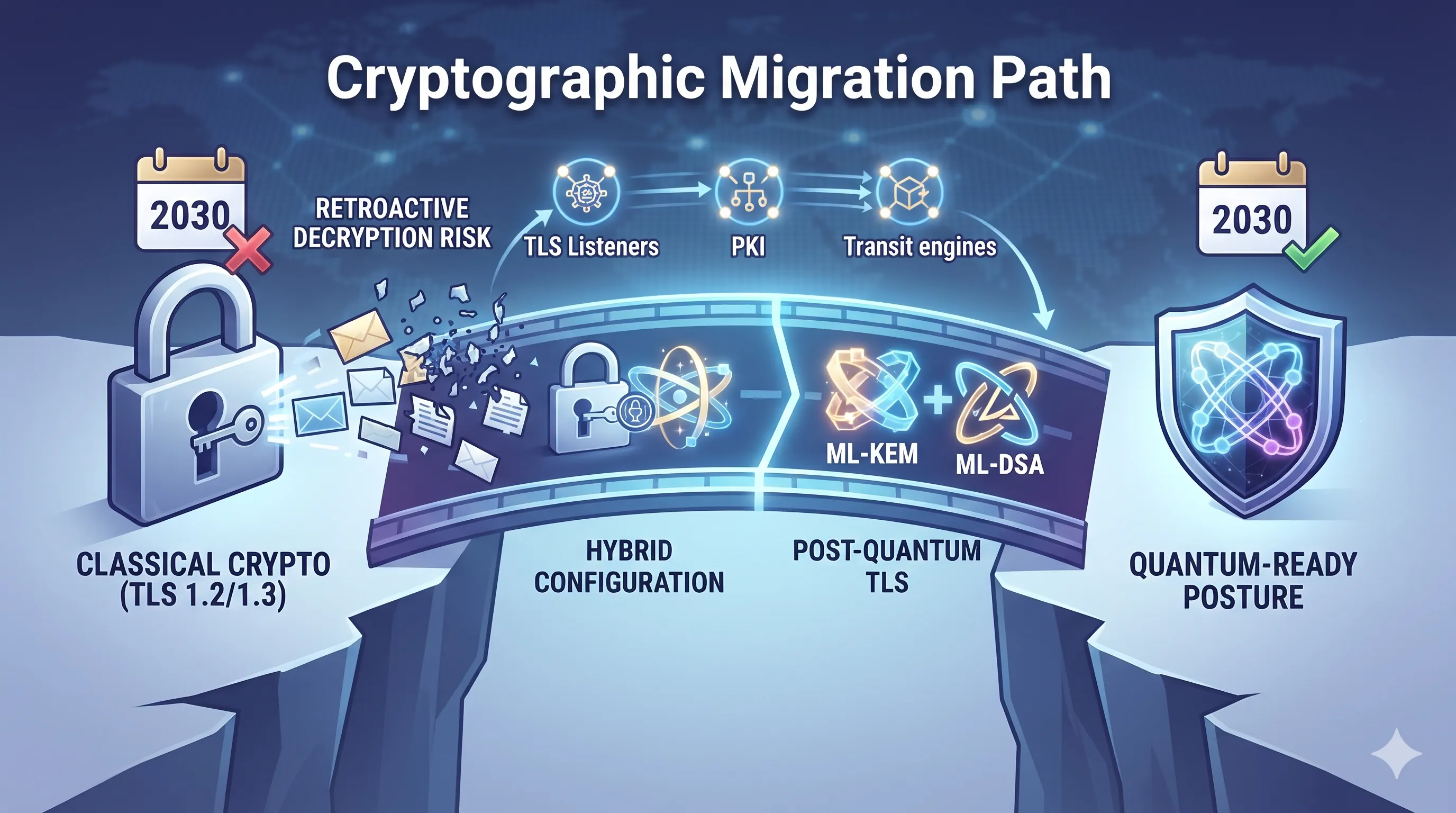
OpenBao integrates the ML-DSA (Module-Lattice-Based Digital Signature Algorithm) and ML-KEM (Module-Lattice-Based Key-Encapsulation Mechanism) algorithms directly into its operational subsystems.These algorithms are enabled across TLS listeners, certificate authentication backends, the PKI secrets engine, and the Transit secrets engine.
Through these additions, administrators can deploy post-quantum digital signatures along with post-quantum key exchange mechanisms to secure operational control planes.
The integration establishes a functional migration pathway, enabling engineering teams to test hybrid configurations and full post-quantum TLS cipher suites within their cryptographic environments.
Preparing Infrastructure for 2030 Government Mandates
The addition of post-quantum cryptographic primitives is aimed at helping organizations prepare for future regulatory environments.Luca Berton cited government cryptographic transition milestones anticipated around 2030 as a primary driver for adopting quantum-resistant standards.
OpenBao allows security teams to prototype post-quantum key exchange and digital signing workflows in advance, positioning infrastructure components to meet these 2030 compliance benchmarks.
Deployment Caveats and Retroactive Decryption Risks
Implementing quantum-ready algorithms in OpenBao does not eliminate broader cryptographic vulnerabilities across an enterprise footprint.PQC support inside OpenBao does not automatically render an entire deployment quantum-safe on its own, as external clients, certificate authorities, and adjacent infrastructure must also support the algorithms to achieve end-to-end protection.
If legacy clients or intermediary proxies cannot negotiate ML-KEM or ML-DSA, the transport channels remain dependent on classical cryptography.
Additionally, organizations face exposure from harvest-now-decrypt-later strategies, as encrypted traffic recorded today remains at risk of retroactive decryption by future quantum systems.
4. Multi-Party Authorization via ACL Policy Control Groups
While OpenBao expands core infrastructure defenses with external key integrations and quantum-ready TLS, platform governance is simultaneously strengthened by eliminating single points of operational failure.To prevent a solitary operator from triggering catastrophic modifications or high-risk tasks, OpenBao adds control groups that implement multi-party review and approval workflows for high-risk operations.
The control_group ACL Policy Stanza
OpenBao introduces a new control_group stanza directly within OpenBao ACL policies.This policy-level integration allows operators to bind approval mandates directly to target paths and capabilities within access control definitions.
By declaring the control_group stanza in standard policy syntax, access rules ensure that authorization checks evaluate collective requirements rather than granting unilateral execution based on identity tokens alone.
Multi-Party Review and Approval Workflows for Sensitive Paths
Under this mechanism, sensitive API operations mandate multi-party verification before execution can proceed.The framework requires a second party to authorize requests targeting specified sensitive paths so no single authenticated identity can execute them alone.
By enforcing multi-party review and approval workflows at the path level, OpenBao ensures collaborative verification is upheld across critical administrative procedures and privileged secrets workflows.
5. Modular Architecture: Plugin Decoupling and Backend Removals
As OpenBao advances its core security posture alongside quantum-ready TLS and external key management, version 2.7 introduces a major structural reorganization designed to streamline the core binary.By decoupling vendor-specific integrations and enterprise authentication drivers into an externalized plugin architecture, the project reduces core surface area while pruning backends that fail to meet production resiliency standards.
Decoupling Cloud Auto-Unseal and PKCS#11 into External Plugins
OpenBao 2.7 fundamentally alters how hardware security modules and cloud unsealing integrate with the system core.The PKCS#11 plugin has been completely externalized from the primary codebase.
In tandem with this decoupling, the maintainers discontinued the standalone HSM distribution binary, unifying the deployment pipeline around the core binary coupled with external plugins.
Furthermore, vendor-specific auto-unseal drivers that were historically compiled directly into the binary have been extracted.
Built-in auto-unseal mechanisms for Alibaba Cloud, AWS, Azure, Google Cloud, and Oracle Cloud have all been converted into external plugins.
This shift allows the core engine to remain cloud-agnostic while enabling independent updates and maintenance cycles for each respective cloud unseal provider.
Relocating LDAP, Kerberos, and RADIUS to the Plugin Ecosystem
Enterprise identity integrations have undergone a corresponding transition toward modularization.In version 2.7, the Kerberos, LDAP, and RADIUS authentication mechanisms have been officially relocated outside of the core tree.
These identity providers, along with the LDAP secrets engine, now reside inside the dedicated openbao-plugins repository.
Operators relying on traditional enterprise directory services or network access protocols must now consume them as independent plugin assets rather than expecting native, compiled-in endpoints within the OpenBao server daemon.
| Component / Mechanism | Functional Category | Version 2.7 Status | New Target / Disposition |
|---|---|---|---|
| PKCS#11 | Cryptographic / HSM Interface | Externalized | Discontinued standalone HSM binary; runs as external plugin |
| Alibaba Cloud Auto-Unseal | Cloud Unseal Driver | Decoupled | External plugin |
| AWS Auto-Unseal | Cloud Unseal Driver | Decoupled | External plugin |
| Azure Auto-Unseal | Cloud Unseal Driver | Decoupled | External plugin |
| Google Cloud Auto-Unseal | Cloud Unseal Driver | Decoupled | External plugin |
| Oracle Cloud Auto-Unseal | Cloud Unseal Driver | Decoupled | External plugin |
| Kerberos | Authentication Engine | Relocated | openbao-plugins repository |
| LDAP | Authentication Engine & Secrets Engine | Relocated | openbao-plugins repository |
| RADIUS | Authentication Engine | Relocated | openbao-plugins repository |
| File Storage Backend | Storage Subsystem | Permanently Removed | Deprecated and deleted from codebase |
Permanent Retirement of the File Storage Backend
Alongside plugin extractions, OpenBao 2.7 enforces critical breaking changes within its storage subsystem layer.The legacy file storage backend has been permanently removed from the platform.
This engine was removed because it inherently lacked support for high availability configurations and could not provide robust transactional guarantees.
Production deployments are mandated to utilize storage backends capable of delivering proper consistency and clustering capabilities.
6. OpenSSF Governance, Enterprise Support, and Migration Realities
As OpenBao advances secret management with capabilities such as external key integrations and quantum-ready TLS, organizational adoption heavily depends on its underlying governance structure, enterprise-grade backing, and practical transition paths away from proprietary models.OpenSSF Stewardship and MPL 2.0 Licensing
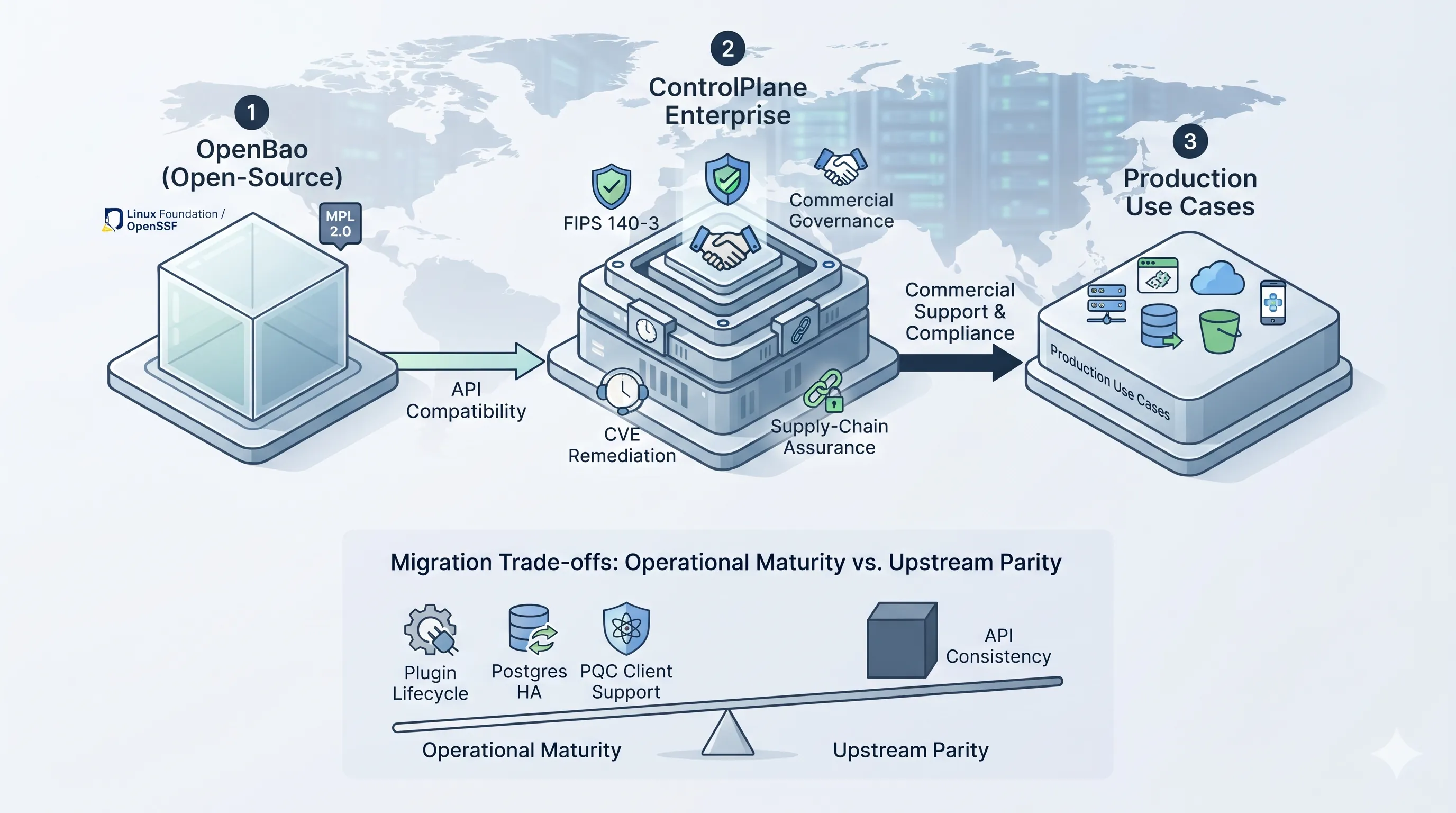
The project originated directly from the 2023 relicensing of HashiCorp Vault, which transitioned from the Mozilla Public License (MPL) to the Business Source License (BSL 1.1).In response to this licensing shift, OpenBao established its home under the Linux Foundation's Open Source Security Foundation (OpenSSF).
Under OpenSSF stewardship, OpenBao is developed under the OSI-approved MPL 2.0 license, providing a community-governed and open-source alternative.
Throughout this transition, OpenBao retains API compatibility with HashiCorp Vault across many production use cases, enabling existing operational workflows to interact with the platform without widespread interface rewrites.
ControlPlane Enterprise and Commercial Support Offerings
To serve organizations requiring commercial guarantees, ControlPlane launched ControlPlane Enterprise for OpenBao in March 2026.This commercial enterprise distribution targets rigorous regulatory and operational environments by providing dedicated FIPS 140-3 compliance support.
In addition to cryptographic standards validation, the distribution delivers 24/7 technical support and formal CVE remediation pipelines.
ControlPlane Enterprise also incorporates full supply-chain assurance to safeguard deployment integrity across enterprise environments.
Migration Trade-offs: Operational Maturity vs. Upstream Parity
While API parity simplifies initial cutovers, prospective migration teams must actively manage notable operational maturity trade-offs.Adopting OpenBao requires internal operational ownership over administrative routines that diverge from managed upstream setups.
Specifically, engineering teams must oversee plugin lifecycle administration to maintain secure integrations.
Teams must also architect and maintain their own PostgreSQL high availability setup for backend persistence.
Furthermore, implementing post-quantum cryptography requires direct management of PQC client support across consuming services.
| Platform / Distribution | Licensing Model | Governance & Stewardship | Operational & Enterprise Requirements |
|---|---|---|---|
| OpenBao (Open-Source) | OSI-approved MPL 2.0 | Linux Foundation / Open Source Security Foundation (OpenSSF) | Requires internal management of plugin lifecycles, PostgreSQL high availability setup, and PQC client support; retains API compatibility for many production use cases. |
| ControlPlane Enterprise | Commercial enterprise distribution | Commercial vendor governance (ControlPlane, launched March 2026) | Provides FIPS 140-3 compliance support, 24/7 technical support, CVE remediation, and supply-chain assurance. |
| HashiCorp Vault | Business Source License (BSL 1.1) following 2023 relicensing | HashiCorp proprietary governance | Original upstream implementation; shares API compatibility with OpenBao for many production use cases. |
Related Posts

Generative AI may have assisted with research or drafting for this article. Topic selection, fact-checking, final wording, and publication remain the responsibility of DragonStone74. AI use disclosure