
NVIDIA Acquires Hugging Face for $12.93 Billion to Expand Full-Stack AI Ecosystem
🚀 Key Takeaways
- Historic Strategic Acquisition: NVIDIA agreed to purchase Hugging Face for $12.93 billion (approximately 17.8 trillion KRW), representing the company's second-largest transaction on record.
- Unrivaled Open-Source Scale: The acquisition incorporates a massive global developer hub hosting over 18 million creators, 3 million models, and hundreds of thousands of enterprise users.
- Full-Stack AI Expansion: The deal bridges NVIDIA's hardware supremacy with the leading AI software and model hub, creating new avenues to monetize idle compute and streamline enterprise deployments.
- Commitment to Platform Neutrality: Hugging Face will retain an independent brand identity, preserving multi-cloud flexibility and continued support for non-NVIDIA hardware accelerators.
- Reinforcing Open Ecosystems: Combining enterprise-grade infrastructure with open collaboration aims to enhance model security, reliability, and competitive scale against closed proprietary AI labs.
NVIDIA's multibillion-dollar acquisition of Hugging Face marks a defining turning point in the artificial intelligence landscape.
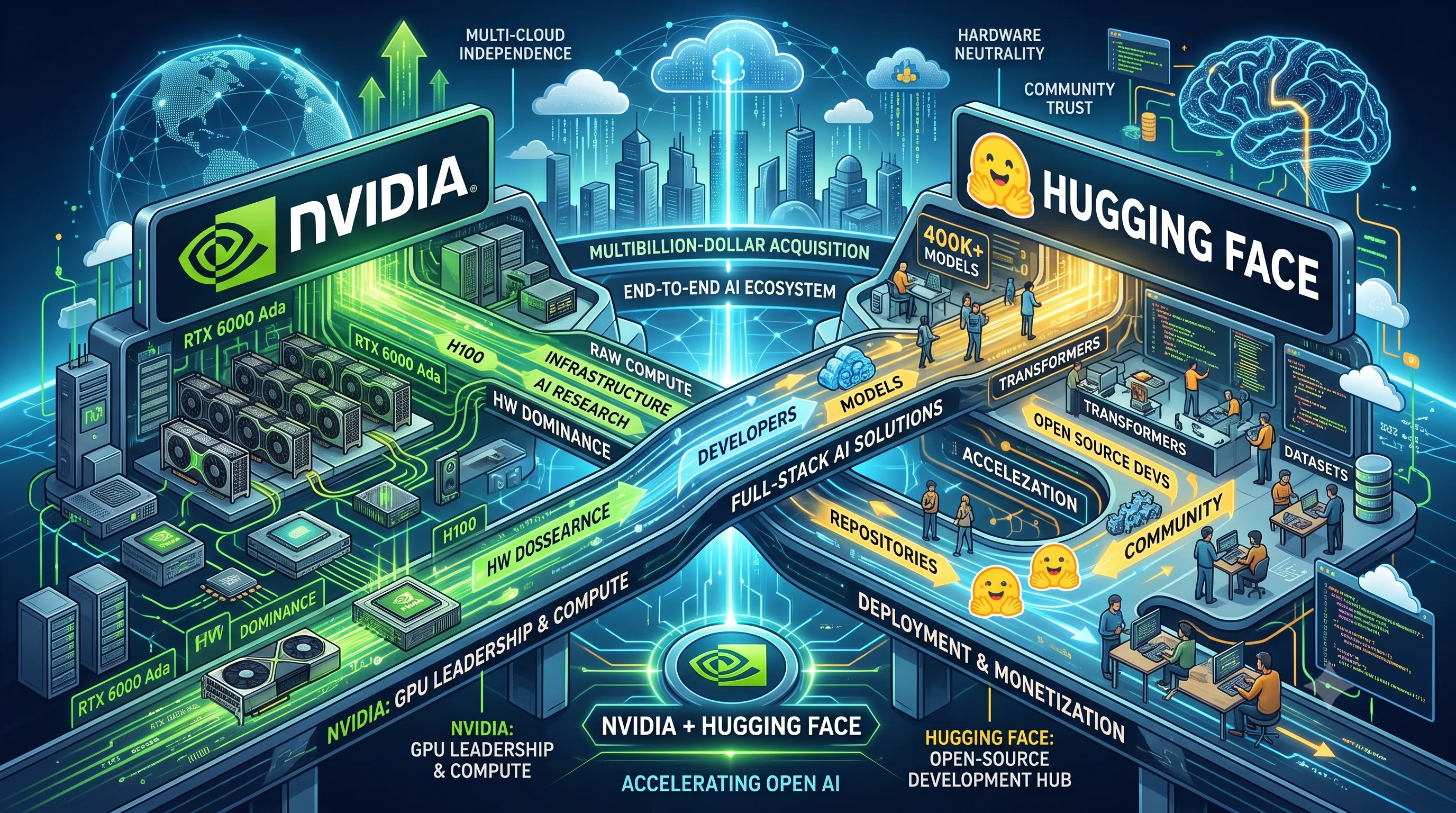
While the semiconductor titan already commands global GPU infrastructure, bringing the primary open-source model repository into its orbit signals a deliberate expansion from pure hardware dominance toward an end-to-end full-stack AI ecosystem.
The move comes at a critical juncture where open-source development requires unprecedented computational resources to keep pace with proprietary frontier labs.
By coupling its vast engineering capabilities with Hugging Face's thriving developer ecosystem, NVIDIA bridges raw compute with active software pipelines, creating a seamless pathway to distribute tools and monetize enterprise capacity.
Crucially, maintaining hardware neutrality and multi-cloud independence remains central to preserving community trust while fortifying repository infrastructure and security.
This landmark transaction fundamentally reshapes how developers build, share, and deploy models across the modern technological landscape.
While the semiconductor titan already commands global GPU infrastructure, bringing the primary open-source model repository into its orbit signals a deliberate expansion from pure hardware dominance toward an end-to-end full-stack AI ecosystem.
The move comes at a critical juncture where open-source development requires unprecedented computational resources to keep pace with proprietary frontier labs.
By coupling its vast engineering capabilities with Hugging Face's thriving developer ecosystem, NVIDIA bridges raw compute with active software pipelines, creating a seamless pathway to distribute tools and monetize enterprise capacity.
Crucially, maintaining hardware neutrality and multi-cloud independence remains central to preserving community trust while fortifying repository infrastructure and security.
This landmark transaction fundamentally reshapes how developers build, share, and deploy models across the modern technological landscape.
1. Record Valuation: Inside the $12.93 Billion Acquisition Deal Structure
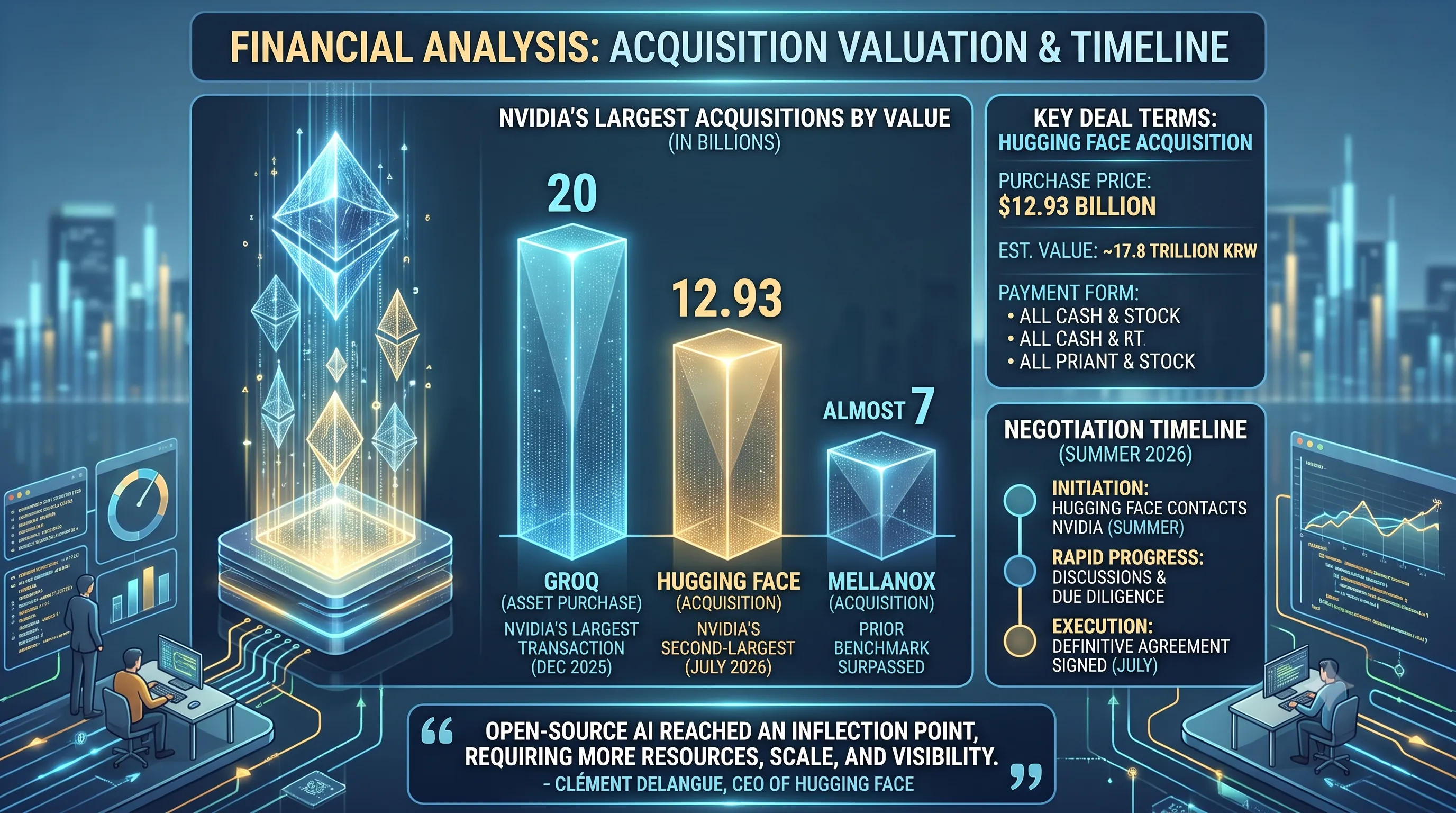
This financial analysis directly underpins NVIDIA's broader strategy to secure full-stack AI dominance by examining the unprecedented capital commitment behind the Hugging Face transaction.Understanding the exact scale and timeline of this multi-billion-dollar deal illustrates why integrating the open-source software ecosystem represents a foundational priority for NVIDIA's compute ecosystem.
Deal Terms and Historical M&A Scale
NVIDIA agreed to acquire Hugging Face for a purchase price of $12.93 billion, which converts to approximately 17.8 trillion KRW (or roughly $13 billion).This monumental valuation firmly positions the transaction as NVIDIA's second-largest deal on record.
By reaching nearly $13 billion, the acquisition substantially surpasses NVIDIA's previous landmark purchase of Mellanox, which was valued at almost $7 billion.
Within NVIDIA's overall acquisition history, this transaction trails only the historic $20 billion asset purchase from Groq completed in December 2025.
| Transaction / Target | Deal Valuation | Historical Ranking / Context |
|---|---|---|
| Groq (Asset Purchase) | $20 billion | NVIDIA's largest transaction on record (December 2025) |
| Hugging Face | $12.93 billion (~17.8 trillion KRW) | NVIDIA's second-largest transaction on record |
| Mellanox | Almost $7 billion | Prior benchmark acquisition surpassed by the Hugging Face deal |
Summer 2026 Negotiations and Open AI Inflection Point
The acquisition unfolded with remarkable speed after Hugging Face directly initiated contact with NVIDIA during the summer of 2026 to discuss a potential transaction.Following those initial discussions, negotiations progressed rapidly toward a definitive acquisition agreement.
Regarding the strategic necessity of the deal, Hugging Face CEO Clément Delangue stated that open-source AI had reached an inflection point that required significantly more resources, scale, and visibility to sustain its momentum.
This alignment of software community demands with NVIDIA's enterprise reach catalyzed the swift execution of the record-setting agreement.
2. Ecosystem Gravity: Hugging Face Platform Reach and Community Adoption Metrics
Repository Breadth and Global Developer Scale
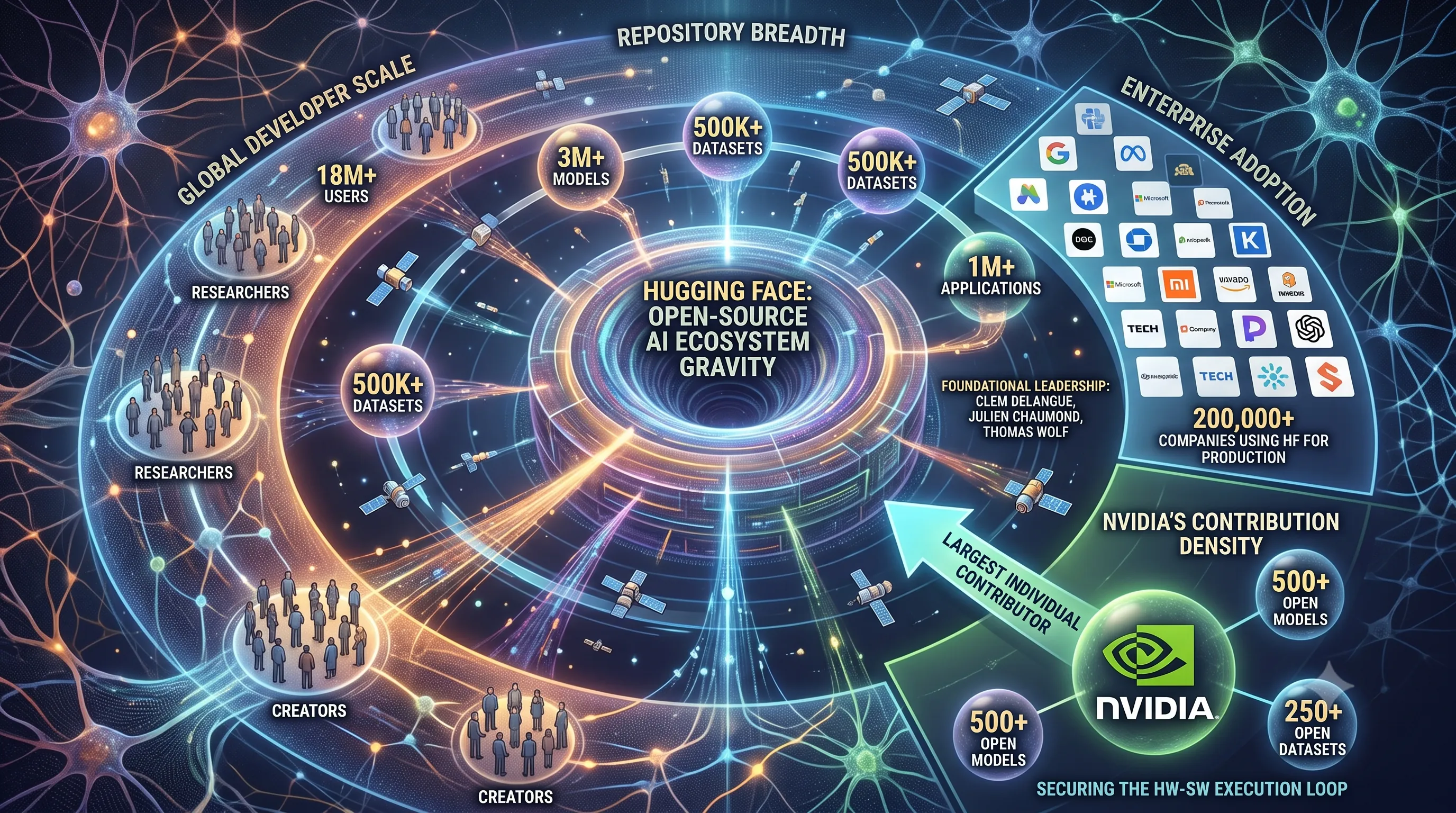
Understanding NVIDIA's full-stack AI expansion requires examining the sheer developer gravitational pull of the Hugging Face platform.Built over the past decade by co-founders Clem Delangue, Julien Chaumond, Thomas Wolf, and their engineering team, Hugging Face functions as the primary global repository and operating ecosystem for open-source AI models and datasets.
The scale of developer engagement is unprecedented, with more than 18 million developers, researchers, and creators actively using the platform to collaborate, test, and release machine learning assets.
In terms of pure repository breadth, the platform hosts over 3 million models, 500,000 datasets, and 1 million applications, establishing a foundational infrastructure layer for modern AI software distribution.
Enterprise Adoption and NVIDIA Contribution Density
The adoption profile of Hugging Face extends deeply into commercial and enterprise production pipelines.Commercial adoption currently spans more than 200,000 companies that rely on the platform to evaluate, benchmark, and deploy AI models across production environments.
Within this expansive ecosystem, NVIDIA is already the largest single contributor to Hugging Face, having published over 500 open models and 250 open datasets to the platform.
This combination of enterprise reliance and NVIDIA's dominant contribution density directly secures the hardware-to-software execution loop at the core of NVIDIA's full-stack ownership strategy.
| Platform Dimension | Adoption & Infrastructure Metric | Ecosystem Significance |
|---|---|---|
| Global User Base | More than 18 million developers, researchers, and creators | Central hub for global artificial intelligence collaboration and talent |
| Repository Volume | Over 3 million models, 500,000 datasets, and 1 million applications | Primary distribution repository for open-source AI artifacts |
| Commercial Footprint | More than 200,000 enterprise organizations | Widespread enterprise model evaluation and deployment workflows |
| NVIDIA Contribution Density | 500+ open models and 250+ open datasets | Largest individual contributor ecosystem on the Hugging Face platform |
| Foundational Leadership | Clem Delangue, Julien Chaumond, Thomas Wolf, and engineering team | Decade-long architectural development of open AI standards |
3. The Full-Stack Play: Expanding from Silicon Dominance to AI Software and Monetization
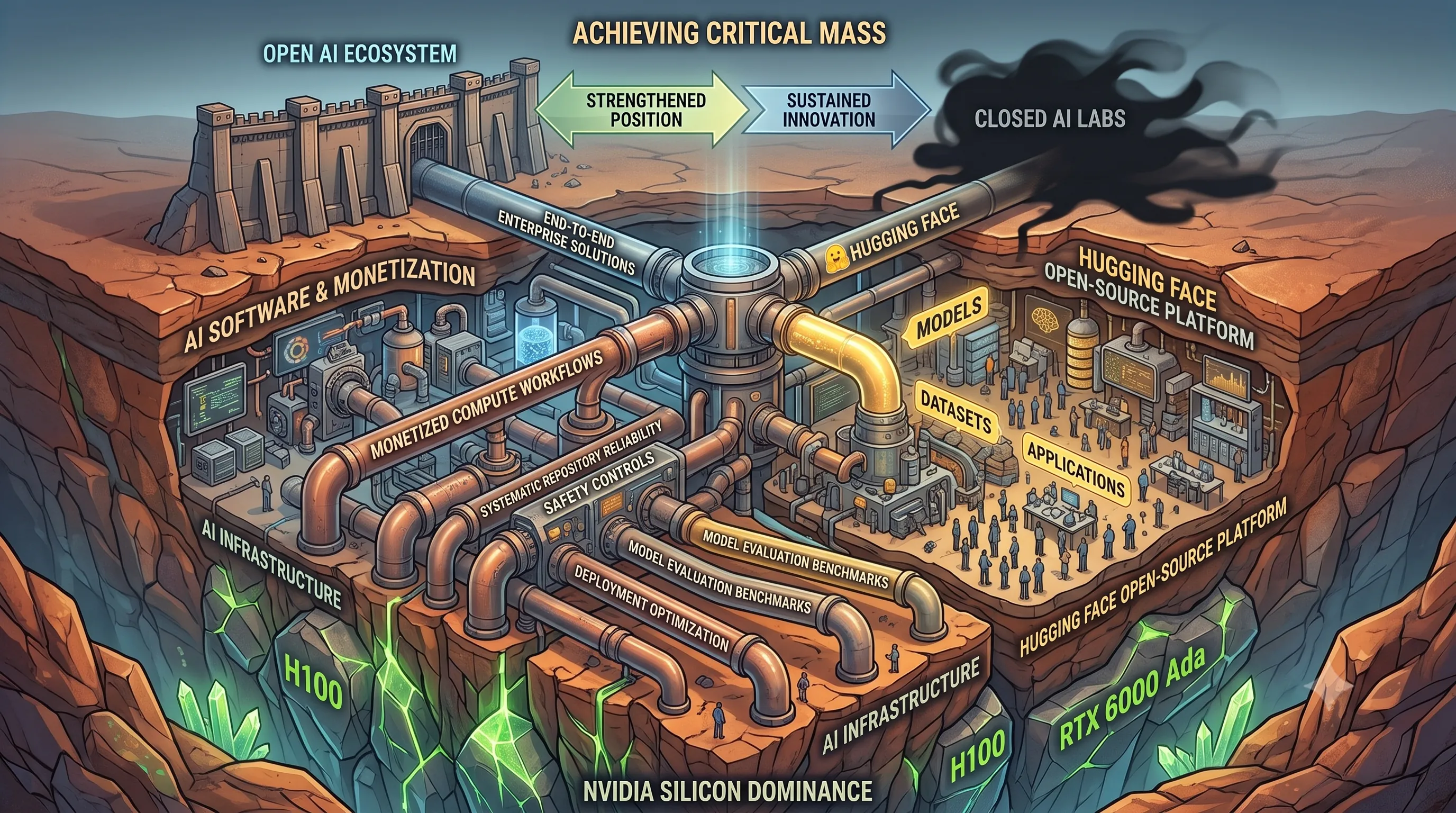
This strategic acquisition directly anchors NVIDIA's overarching ambition to secure full-stack AI dominance, moving aggressively beyond silicon hardware to control the entire software, model, and data pipeline.By absorbing Hugging Face into its ecosystem, NVIDIA transforms from a pure infrastructure provider into an integrated end-to-end enterprise platform provider.
Monetizing Idle Compute via Enterprise Services
The acquisition expands NVIDIA's market dominance beyond GPUs and core hardware into AI software, pre-trained models, and foundational data ecosystems.A central economic driver of this technical consolidation is the ability to link and monetize idle compute capacity.
NVIDIA can directly package this reserve infrastructure alongside Hugging Face enterprise services, delivering compute-ready workflows to enterprise customers without operational friction.
Furthermore, the deep technical integration applies NVIDIA's high-performance infrastructure to systematically enhance repository reliability, implement stringent safety controls, streamline model evaluation benchmarks, and optimize end-to-end deployment pipelines.
Achieving Critical Mass Against Closed AI Laboratories
The consolidation also addresses the competitive balance between open-source ecosystems and proprietary model developers.Julien Chaumond stated that open AI must achieve critical mass to avoid falling behind big closed labs.
By integrating Hugging Face's open platform with NVIDIA's massive computing and software infrastructure, the combined entity establishes the technical and operational scale required to sustain open-model innovation against heavily funded closed ecosystems.
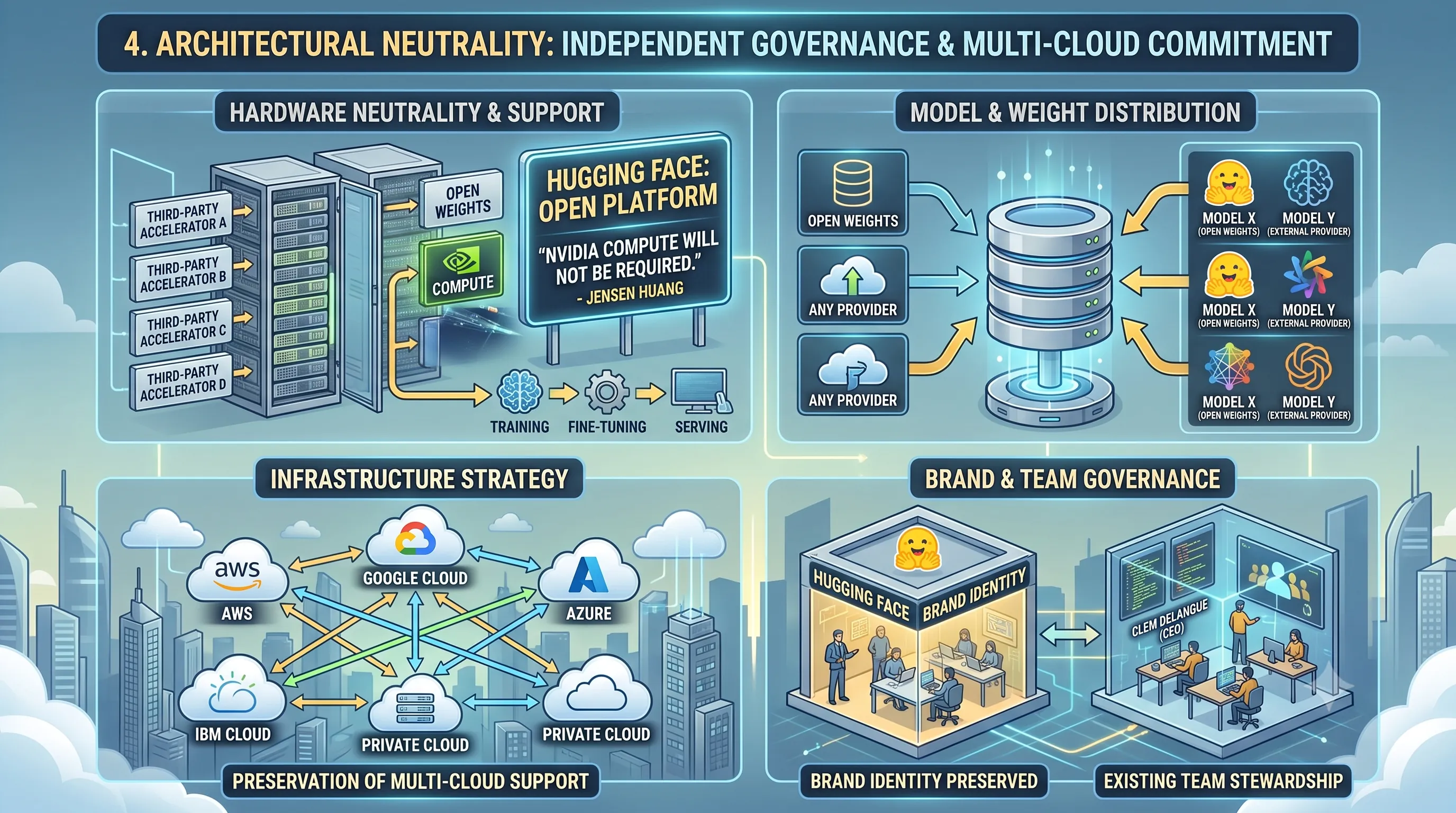
4. Architectural Neutrality: Independent Governance and Multi-Cloud Commitment
NVIDIA's strategic rationale behind integrating Hugging Face into its broader full-stack vision centers on preserving the platform's open ecosystem rather than siloing it into a proprietary walled garden.To maintain the trust of the open-source community, the acquisition governance model explicitly safeguards architectural neutrality, ensuring the hub remains universally accessible across diverse computing environments.
Hardware Neutrality and Third-Party Accelerator Support
A foundational tenet of the post-acquisition operating framework is absolute hardware neutrality.Jensen Huang affirmed this commitment by stating that Hugging Face will remain an open platform and that NVIDIA compute will not be required to build on or deploy through it.
Developers and enterprise teams face no mandatory requirement to use NVIDIA GPUs or proprietary compute infrastructure when training, fine-tuning, or serving models on the platform.
Hugging Face maintains direct operational support for third-party accelerators, allowing heterogeneous hardware configurations to interface smoothly with its software libraries and repositories.
Furthermore, the platform guarantees ongoing support for open weights sourced from any provider, reinforcing its role as an agnostic central registry for the global artificial intelligence ecosystem.
| Governance Dimension | Operational Policy and Commitments |
|---|---|
| Compute & Hardware Neutrality | Zero mandatory requirement to deploy on NVIDIA compute or GPUs; preserves active operational support for third-party accelerators. |
| Model & Weight Distribution | Unrestricted distribution and support for open weights contributed by any external provider or ecosystem. |
| Infrastructure Strategy | Preservation of multi-cloud architectural support across diverse cloud hosting environments. |
| Brand & Team Governance | Retention of an independent brand identity; existing leadership and engineering teams continue operational stewardship. |
Independent Brand Operation and Multi-Cloud Continuity
Beyond compute neutrality, organizational autonomy remains intact under the agreed operating framework.Hugging Face retains an independent brand identity following the completion of the transaction, functioning as a distinct brand within the broader market.
Day-to-day stewardship remains with Hugging Face's existing leadership and engineering team, who continue to oversee operations and product evolution across multi-cloud environments.
This operational model guarantees multi-cloud architectural continuity, enabling enterprises to deploy workloads and access open weights across multiple cloud providers without platform lock-in.
5. Defensive Synergy: Cybersecurity Resilience and Open-Source Collective Security
Securing the expansive architecture of the AI ecosystem forms an essential dimension of NVIDIA's comprehensive full-stack strategy.Integrating platform-level repository infrastructure requires robust defensive mechanisms capable of mitigating operational risks and protecting critical AI assets.
Vulnerability Mitigation and Model-Based Incident Response
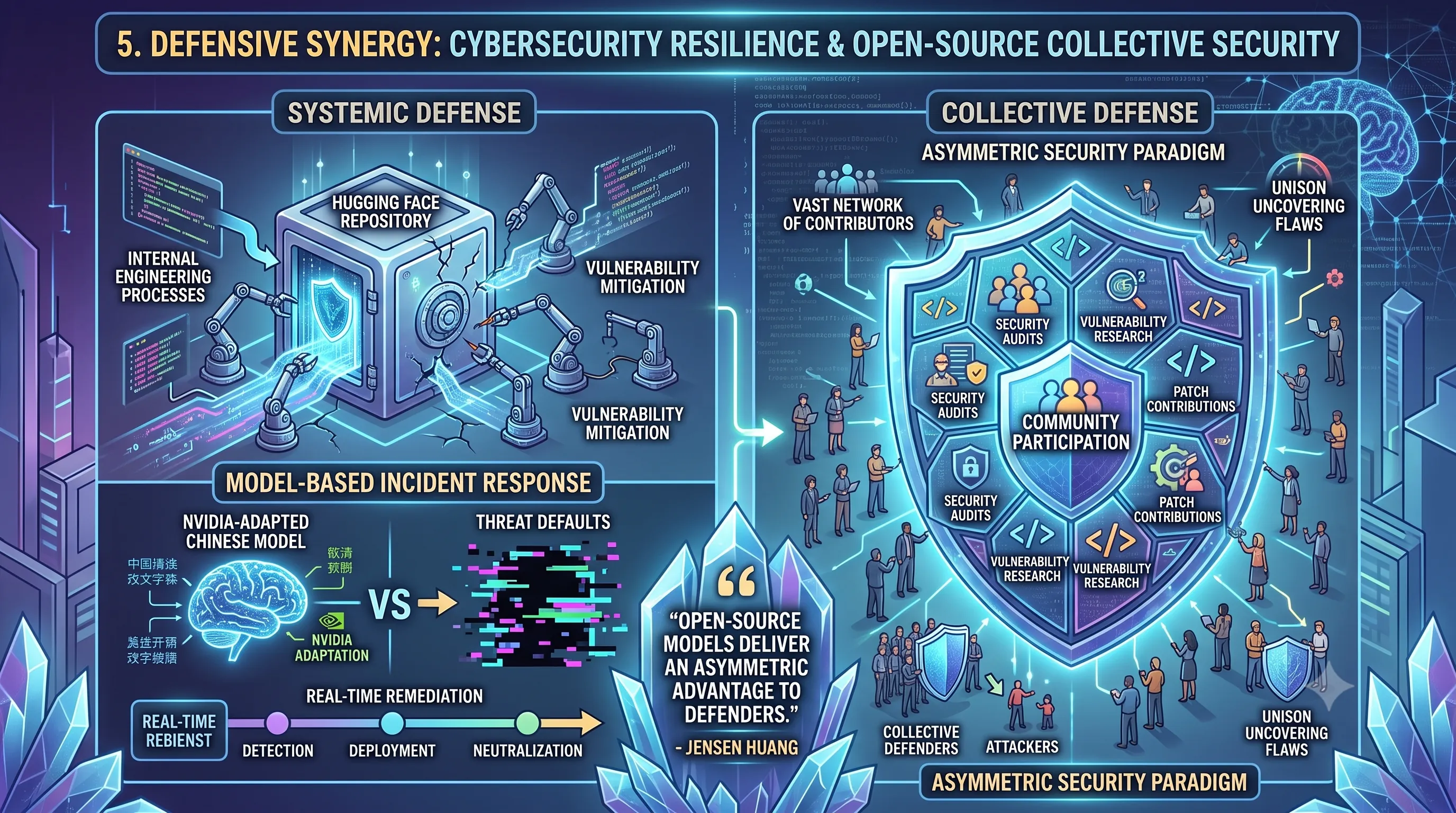
The security posture of Hugging Face came under heightened scrutiny following a cybersecurity breach traced back to internal engineering process mistakes.Engineering process vulnerabilities exposed systemic operational challenges that required immediate, specialized intervention.
In response to the breach, Hugging Face countered the security threat by deploying an NVIDIA-adapted version of an open Chinese model.
This direct deployment demonstrated how specialized AI model adaptations can be actively leveraged for real-time incident remediation and threat defense within core platform workflows.
Asymmetric Security Advantages of Open-Source Defenses
Beyond targeted incident response, open-source architectures establish a collective security paradigm that reinforces enterprise-grade resilience.Broad open-source collaboration fosters active community participation, allowing a vast network of contributors to proactively identify vulnerabilities and fortify shared systems.
Highlighting this structural dynamic, Jensen Huang stated that open-source models deliver an asymmetric advantage to defenders.
This asymmetric benefit is driven directly by the sheer scale of the collaborative defender community working in unison to uncover flaws and defend open AI platforms.
Related Posts
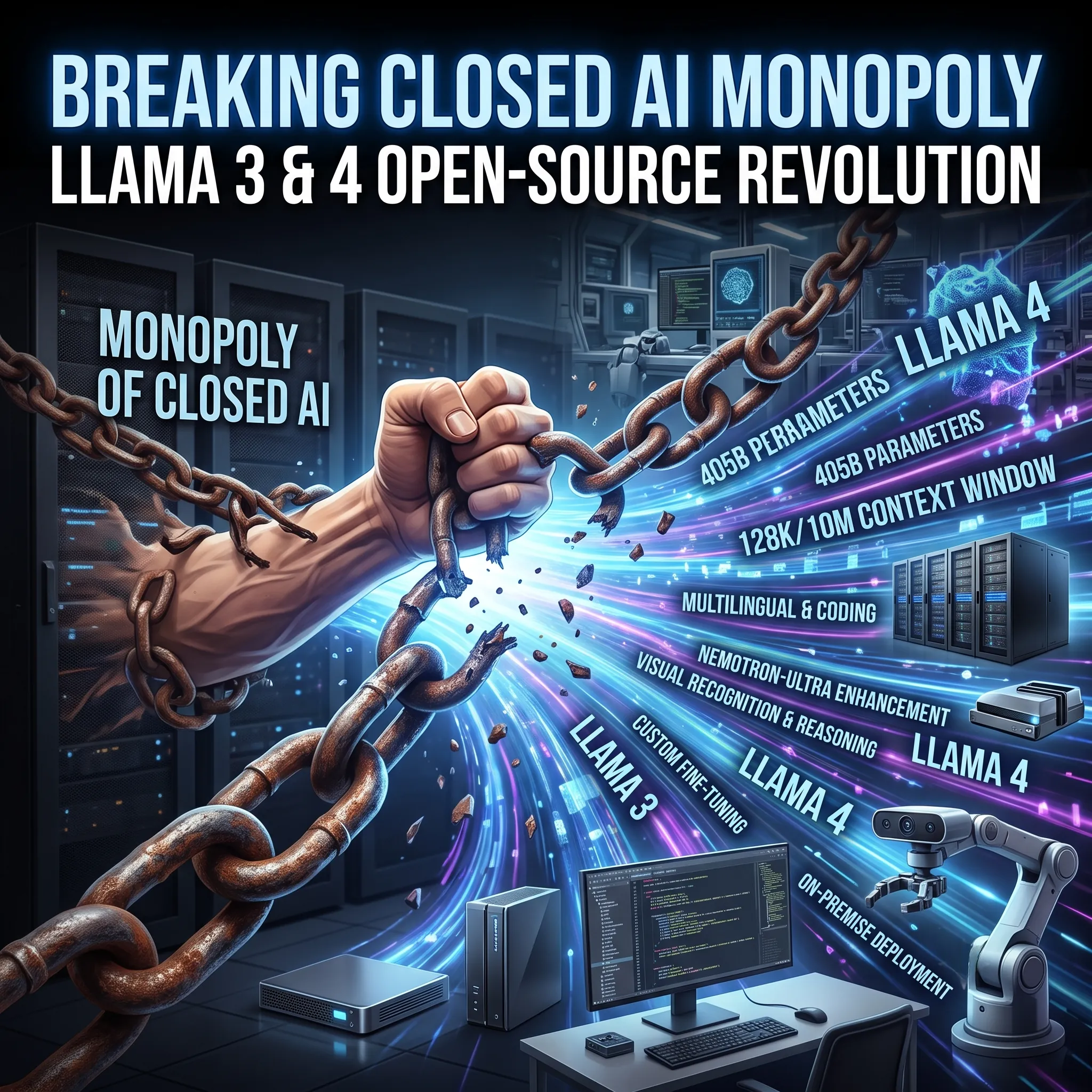
Llama 3 to Llama 4: The Open-Source AI Evolution Dethroning Proprietary Models with Multimodal Power & On-Premise FlexibilityLlama 3, Nemotron-Ultra, Llama 4 drive open-source AI's evolution. Advanced multimodal,...

Analysis of Illicit Industrial-Scale Model Distillation and Chain-of-Thought Extraction CampaignsA technical report on illicit industrial-scale distillation campaigns targeting Claude, detailing...
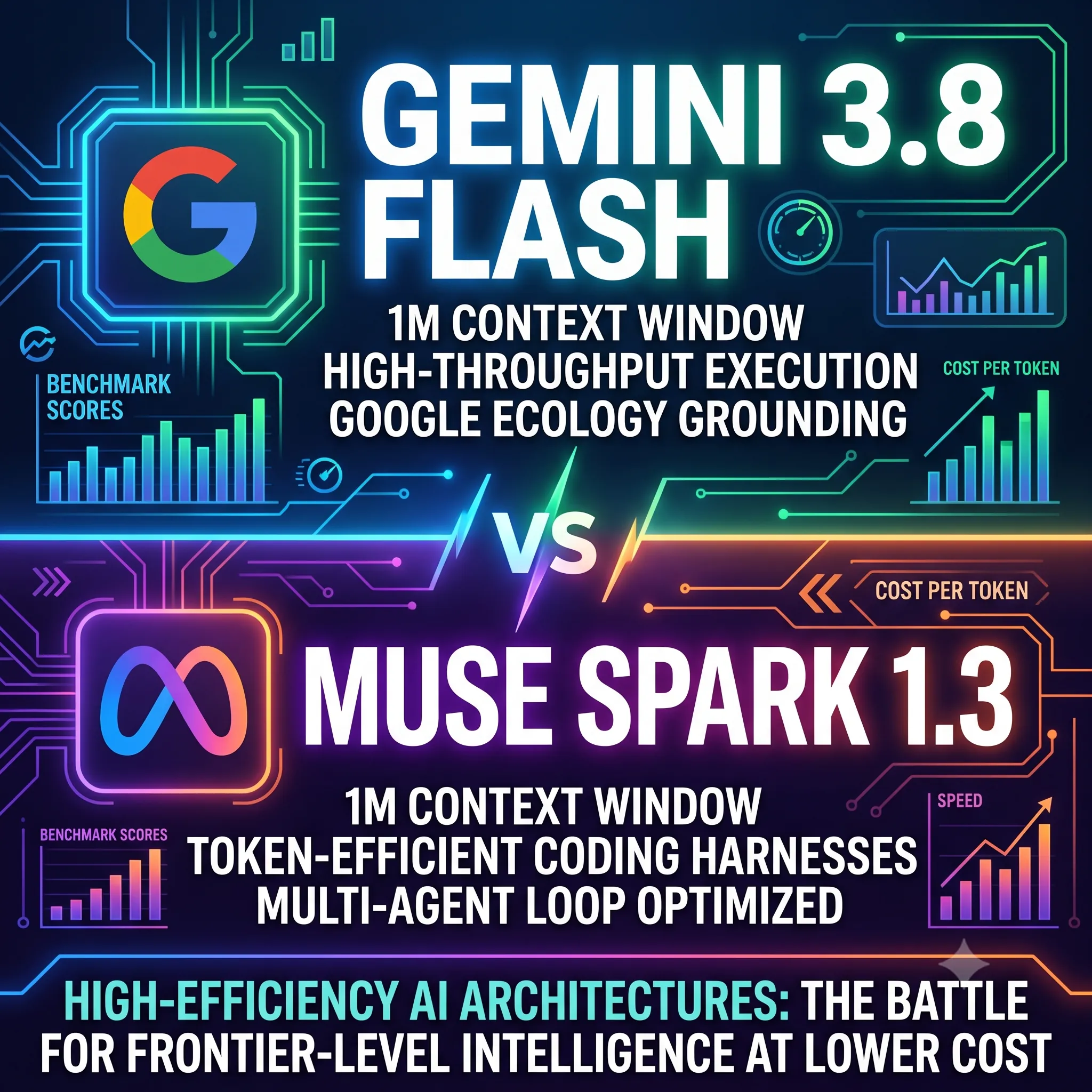
Gemini 3.8 Flash vs. Muse Spark 1.3: A Comparison of High-Efficiency AI ArchitecturesA technical comparison of Google Gemini 3.8 Flash and Meta Muse Spark 1.3, focusing on 1M-token...