
Google Cloud Brings OpenAI Models to Model Garden in Major Hyperscaler Shift
🚀 Key Takeaways
- Unprecedented Hyperscaler Breadth: Google Cloud is now the only hyperscale cloud provider offering native access to all three dominant closed-source LLM families: Gemini, Claude, and GPT.
- Targeted Frontier Model Lineup: The catalog expansion introduces three specialized OpenAI models—GPT-6 Astra, GPT-6.1 Sol, and GPT-6 Luna—designed for varying operational budgets and computational demands.
- Staged Rollout Timeline: Private preview access opened on October 21, 2026, for select enterprise accounts, with broader general availability slated for the coming weeks.
- Frictionless Developer Workflows: Teams can bridge local Codex tooling and upcoming Google productivity environments directly into Google Cloud inference endpoints.
- Unified Enterprise Procurement: Deployments route through Google Cloud Marketplace, consolidating billing onto existing invoices while counting against pre-negotiated customer spend commitments.
- Isolated Cloud Governance: Prompts and completions remain strictly confined within dedicated enterprise perimeters and are never used to train underlying foundational models.
The competitive boundaries separating enterprise artificial intelligence ecosystems have fundamentally shifted.
Google Cloud has begun integrating OpenAI's state-of-the-art model portfolio directly into its Model Garden, breaking long-standing cloud exclusivity conventions.
This strategic addition establishes Google Cloud as a unified nexus where engineering teams can evaluate, toggle, and deploy the industry's most capable foundation models side by side.
For technical leaders, orchestrating cross-vendor intelligence previously required fragmented contracts, duplicated compliance audits, and disjointed security perimeters.
By making frontier GPT intelligence accessible through native cloud APIs and centralized billing frameworks, enterprises gain the flexibility to match specific workloads to optimal models without re-architecting underlying data governance pipelines.
As enterprise automation shifts from simple prompt experimentation toward high-scale agentic execution, operational resilience hinges on platform versatility.
This integration signals a maturing market where cross-platform accessibility and enterprise-grade data isolation take precedence over walled-garden cloud rivalries.

1. Hyperscaler Shift: Google Cloud Becomes the Universal Hub for Leading LLMs
The introduction of OpenAI models to Google Cloud marks a pivotal architectural and competitive realignment among cloud hyperscalers.This integration directly connects to the broader rollout of OpenAI technologies across enterprise environments, positioning Google Cloud as the singular venue hosting the industry's most prominent proprietary architectures.
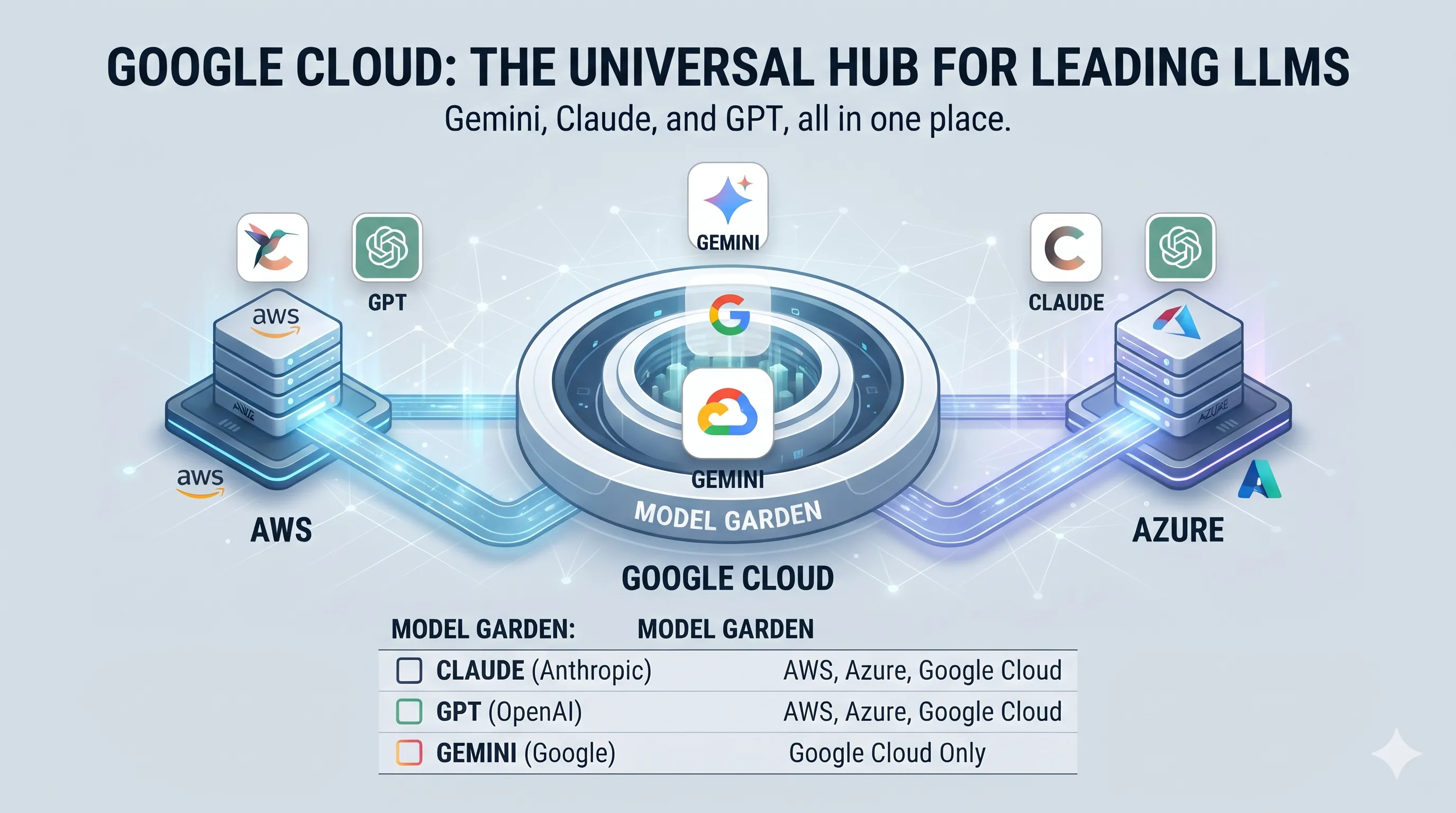
By consolidating these capabilities, Google Cloud has become the only hyperscale cloud provider offering access to all three leading closed-source LLMs: Gemini, Claude, and GPT.
Tri-Cloud Availability: GPT Joins Claude Across AWS, Azure, and Google Cloud
With this launch, GPT becomes the second frontier model family after Anthropic's Claude to be accessible across all three major clouds: Amazon Web Services (AWS), Microsoft Azure, and Google Cloud.Enterprise workloads are no longer restricted to a single hyperscaler ecosystem when building around OpenAI's state-of-the-art systems.
Even as distribution broadens across competing infrastructure, Microsoft continues to serve as OpenAI's primary cloud partner.
However, the cross-cloud presence of both Claude and GPT highlights an industry-wide transition toward multi-cloud availability for top-tier foundational systems.
| Frontier Model Family | Hyperscaler Cloud Availability | Industry Milestone and Partnership Context |
|---|---|---|
| Claude (Anthropic) | AWS, Azure, and Google Cloud | First frontier model family to be accessible across all three major clouds. |
| GPT (OpenAI) | AWS, Azure, and Google Cloud | Second frontier model family accessible across all three major clouds; Microsoft continues to serve as primary cloud partner. |
| Gemini (Google) | Google Cloud | First-party offering that establishes Google Cloud as the only hyperscaler with all three leading closed-source LLMs. |
Model Garden Expansion Beyond 200 Foundation Models
OpenAI frontier models are being introduced to Google Cloud's Model Garden as part of this expansion.Within this repository, OpenAI models join more than 200 first-party, third-party, and open models.
This breadth of selection allows organizations to deploy and compare diverse architectures, ranging from fully managed proprietary platforms to community-driven open solutions, entirely within a single operational environment.
2. OpenAI Model Lineup on Google Cloud: GPT-6 Astra, Sol, and Luna
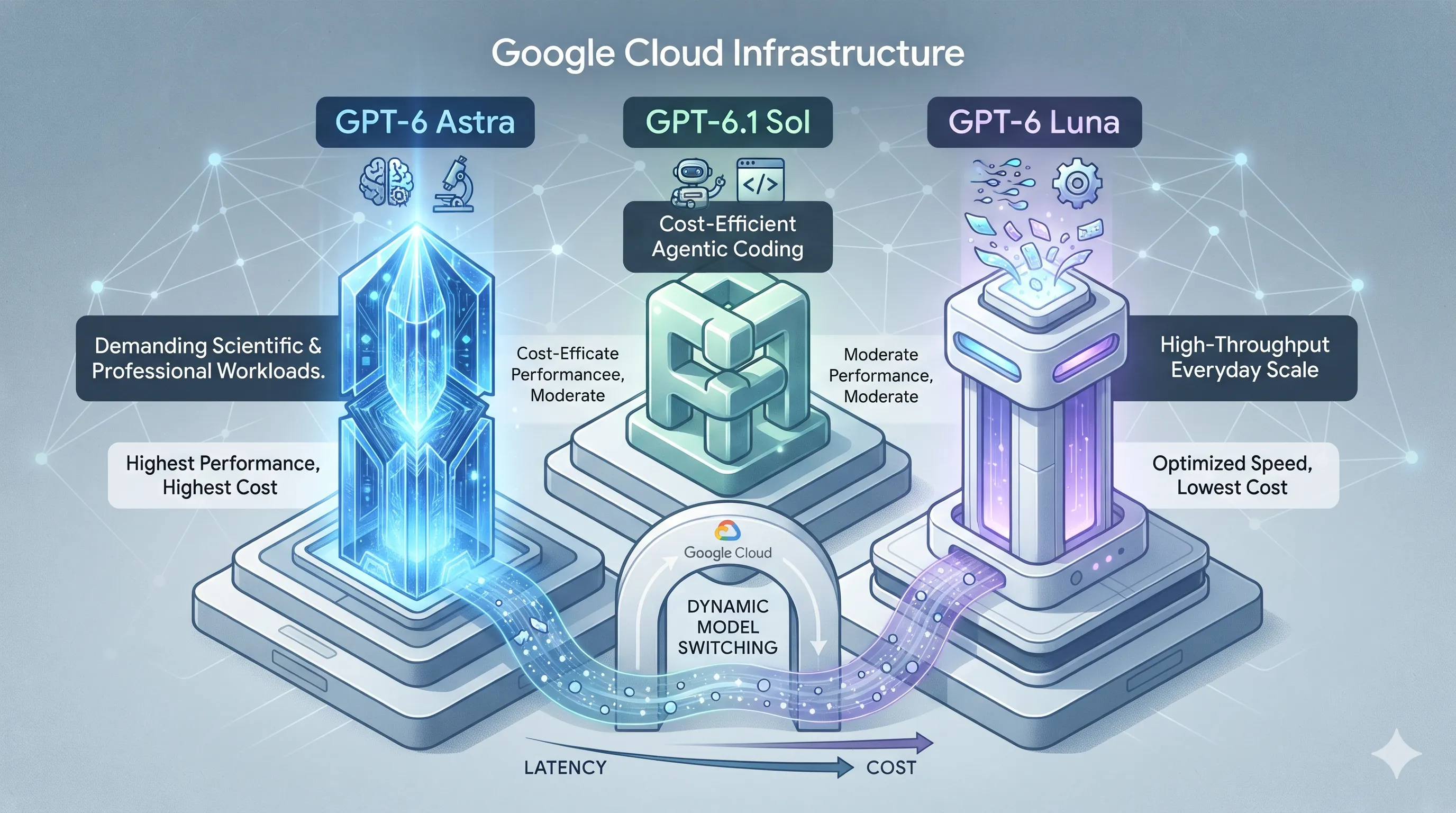
As OpenAI models become available on Google Cloud, enterprise architectures gain access to three distinct systems tailored to varied operational requirements.Google Cloud announced three specific OpenAI models: GPT-6 Astra, GPT-6.1 Sol, and GPT-6 Luna.
This integration allows organizations to align computational depth directly with workload scale and technical constraints on Google Cloud infrastructure.
GPT-6 Astra for Demanding Scientific and Professional Workloads
GPT-6 Astra is targeted at demanding tasks across coding, computer use, professional workflows, and scientific research.It represents the highest capability tier among the announced models, designed to manage intensive computational challenges and multi-step execution.
However, this level of capability introduces higher operational overhead.
GPT-6 Astra is the most expensive of the three models to run on the platform.
GPT-6.1 Sol for Cost-Efficient Agentic Coding
GPT-6.1 Sol is designed to deliver near-Astra intelligence at lower operational cost for agentic coding and professional tasks.By balancing high-level reasoning with reduced overhead, it provides an efficient operational profile for workflows that require sustained autonomous agent interactions without the full cost footprint of the flagship model.
GPT-6 Luna for High-Throughput Everyday Scale
GPT-6 Luna is configured as a fast, cost-efficient model for everyday tasks at scale.It is tailored for high-volume deployments where rapid response times and minimal expenditure are primary operational priorities, handling frequent baseline workflows across cloud environments.
Dynamic Model Switching Across Performance and Cost Tiers
To maximize efficiency across these tiers, the Google Cloud platform supports dynamic model selection and switching between LLMs based on cost, latency, and performance needs.This operational routing ensures workloads automatically engage the appropriate model tier depending on active constraints and task complexity.
| Model | Key Features | Intended Workloads | Relative Operational Cost Tier |
|---|---|---|---|
| GPT-6 Astra | High capability for demanding technical and scientific reasoning, computer use | Coding, computer use, professional workflows, and scientific research | Highest (most expensive of the three models to run) |
| GPT-6.1 Sol | Near-Astra intelligence delivered at reduced operational expenditure | Agentic coding and professional tasks | Moderate (lower operational cost than Astra) |
| GPT-6 Luna | Fast execution speed and optimized cost efficiency | Everyday tasks at scale | Lowest (cost-efficient for high-volume scale) |
3. Rollout Timeline, API Access, and Developer Tooling Integrations
As part of the milestone bringing OpenAI models directly to Google Cloud, the operational rollout establishes immediate access pathways while outlining clear milestones for broader availability.This phased deployment connects Google Cloud's enterprise infrastructure with standard developer environments, shifting how organizations manage inference pipelines across platforms.
Phased Rollout: Private Preview via Google Cloud APIs
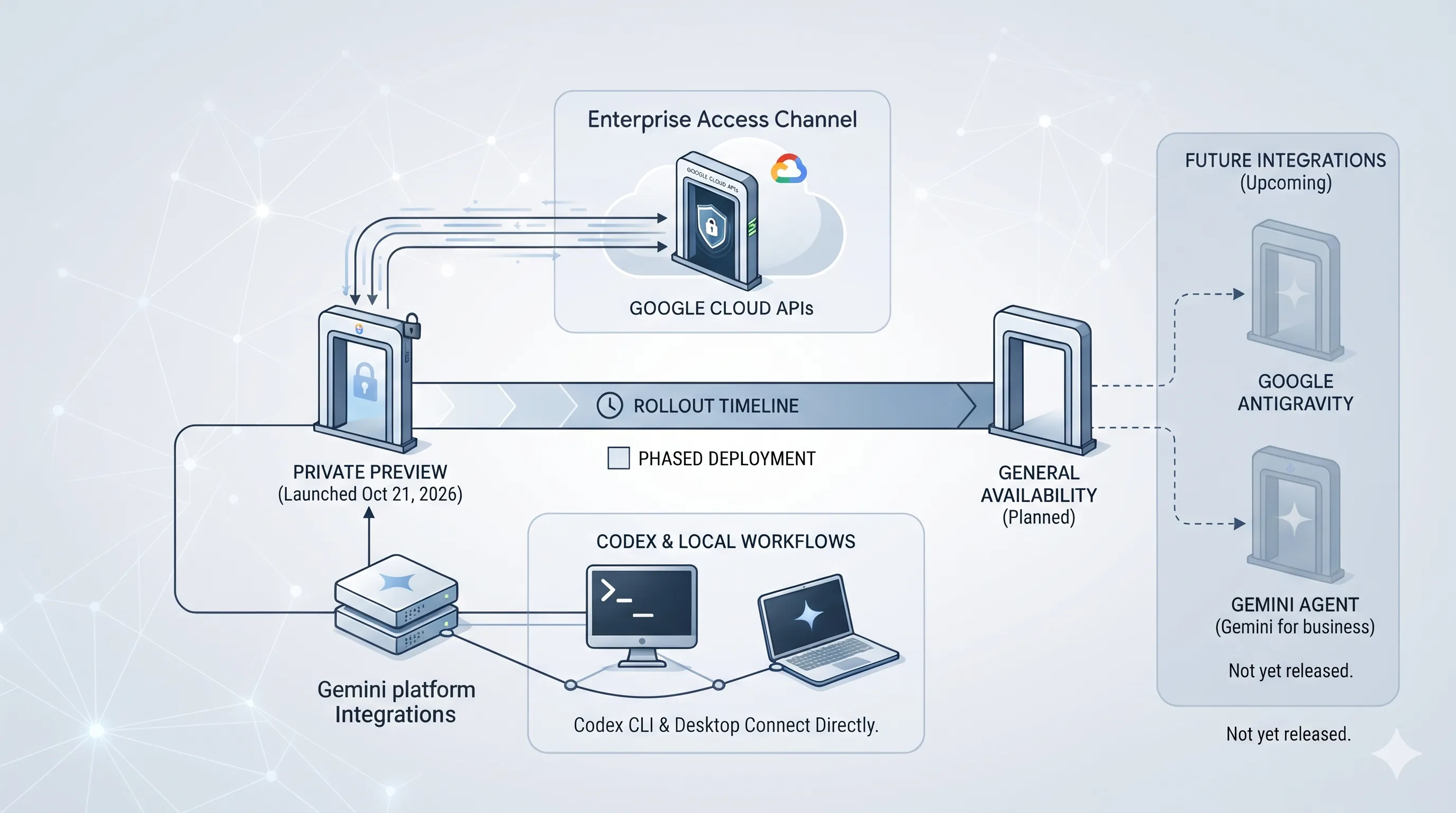
The private preview rollout officially began on October 21, 2026.Access during this initial stage is specifically scoped for select enterprise customers within Model Garden.
These preview enterprise customers can query and deploy the models through Google Cloud APIs, enabling teams to build against Google Cloud's management layer.
However, general availability is planned for the coming weeks and is not yet open to every Google Cloud project.
| Integration Component | Deployment Status | Access Channel / Platform Target |
|---|---|---|
| Model Garden Enterprise Access | Private Preview (Launched October 21, 2026) | Google Cloud APIs for select enterprise customers |
| Developer Tooling (Codex) | Available for integration | Codex CLI and Codex Desktop connecting directly to Gemini platform |
| General Availability | Planned for the coming weeks | Universal access across all Google Cloud projects |
| Google Antigravity & Gemini for business | Upcoming and not yet released | Antigravity workflows and Gemini Agent integrations |
Connecting Codex CLI and Desktop Workflows to Gemini Infrastructure
Beyond native cloud API endpoints, developer workflows are directly accommodated.Developers can connect local Codex CLI and Codex Desktop workflows directly to Google Cloud's Gemini platform for inference.
This integration allows teams utilizing local development tooling to execute requests against Google Cloud's hosted Gemini infrastructure without refactoring existing command-line and desktop configurations.
Upcoming Antigravity and Gemini for Business Integrations
Additional integrations across Google's enterprise software ecosystem remain on the delivery roadmap.OpenAI models will be integrated into Google Antigravity as well as Gemini for business, which is also described by OpenAI as Gemini Agent.
Currently, these Antigravity and Gemini client integrations are upcoming and not yet released, marking the next expansion phase following the initial Model Garden preview rollout.
4. Procurement Architecture: Marketplace Invoicing and Spending Commitments
The availability of OpenAI models on Google Cloud introduces direct commercial integration into existing enterprise billing frameworks.This procurement structure ensures that adopting OpenAI models does not require distinct commercial contracts or fragmented payment workflows outside established cloud agreements.
Unified Invoicing via Google Cloud Marketplace
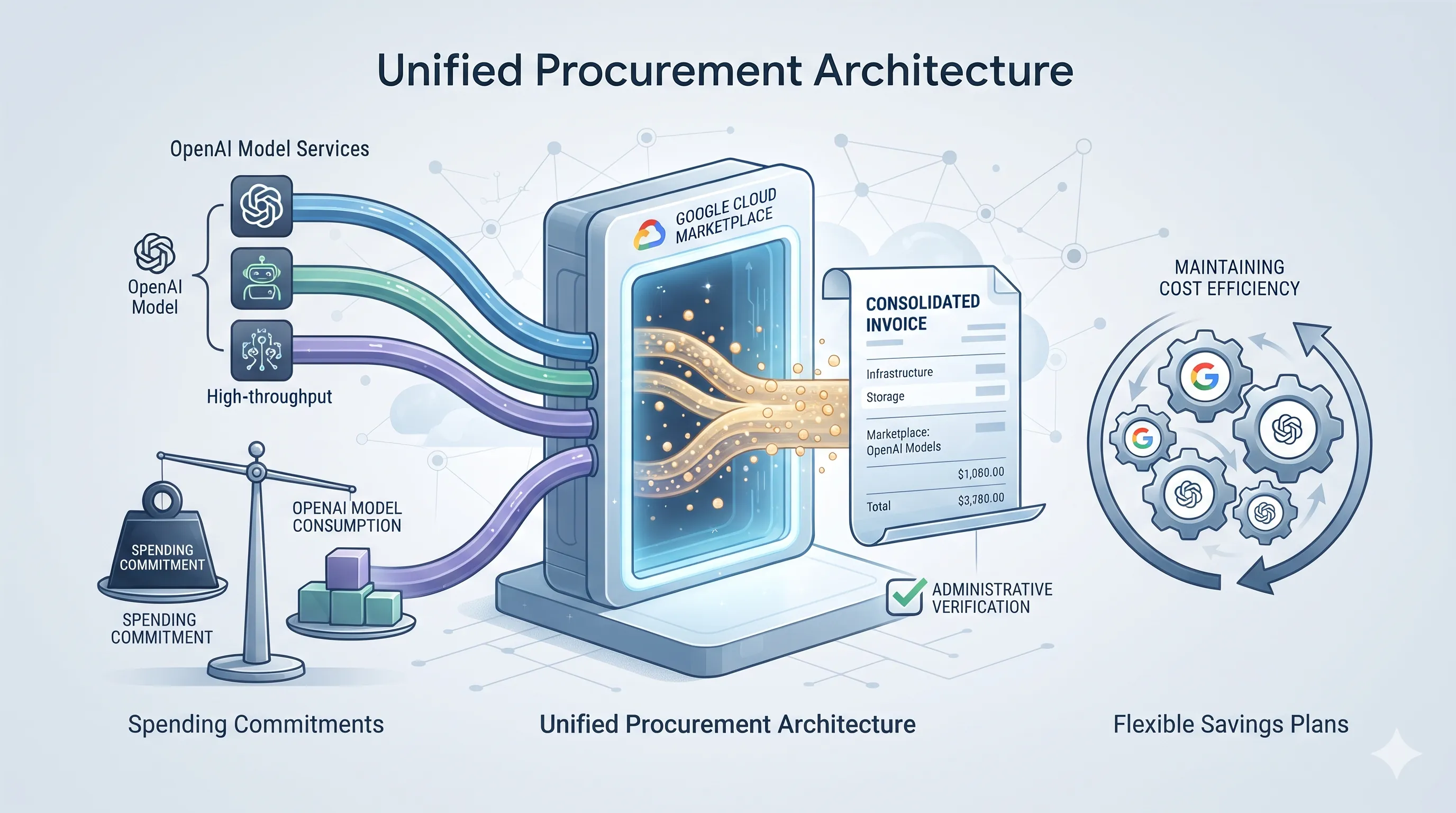
Transactions for OpenAI models are handled directly through Google Cloud Marketplace.All model consumption charges appear consolidated on a single Google Cloud invoice alongside broader infrastructure, platform, and storage fees.
This single-invoice mechanism eliminates separate procurement cycles and vendor onboarding procedures for enterprise finance teams.
Spending Commitment Drawdowns and Flexible Savings Plans
Deploying OpenAI models within this marketplace structure offers direct financial offset capabilities for enterprise accounts.Eligible purchases draw down existing Google Cloud customer spending commitments, allowing organizations to burn down pre-negotiated cloud spend thresholds with model consumption.
In addition, Marketplace usage counts toward Flexible Savings Plans (FSP) across model providers, maintaining cost efficiency across multi-model environments.
Despite these commercial integrations, administrative verification remains necessary.
Organizations must verify whether specific billing accounts and commitment contracts cover the Marketplace purchases to ensure transactions qualify for expected commitment drawdowns.
| Procurement Element | Marketplace Mechanism and Governance |
|---|---|
| Transaction Channel | Transactions are handled directly through Google Cloud Marketplace. |
| Invoice Consolidation | Usage appears consolidated on a single Google Cloud invoice. |
| Spend Commitments | Eligible purchases draw down existing Google Cloud customer spending commitments. |
| Flexible Savings Plans (FSP) | Marketplace usage counts toward Flexible Savings Plans (FSP) across model providers. |
| Contract Governance | Organizations must verify whether specific billing accounts and commitment contracts cover Marketplace purchases. |
5. Data Security, Network Isolation, and Enterprise Compliance
With OpenAI models now available on Google Cloud, enterprise adoption hinges entirely on the underlying technical governance and architectural isolation models.Organizations deploying these models must ensure that proprietary data, runtime prompts, and model interactions adhere to strict enterprise security standards.
Google Cloud integrates these workloads into its native infrastructure stack to guarantee that inference operates within controlled compliance boundaries.
Dedicated Infrastructure and Data Perimeter Boundaries
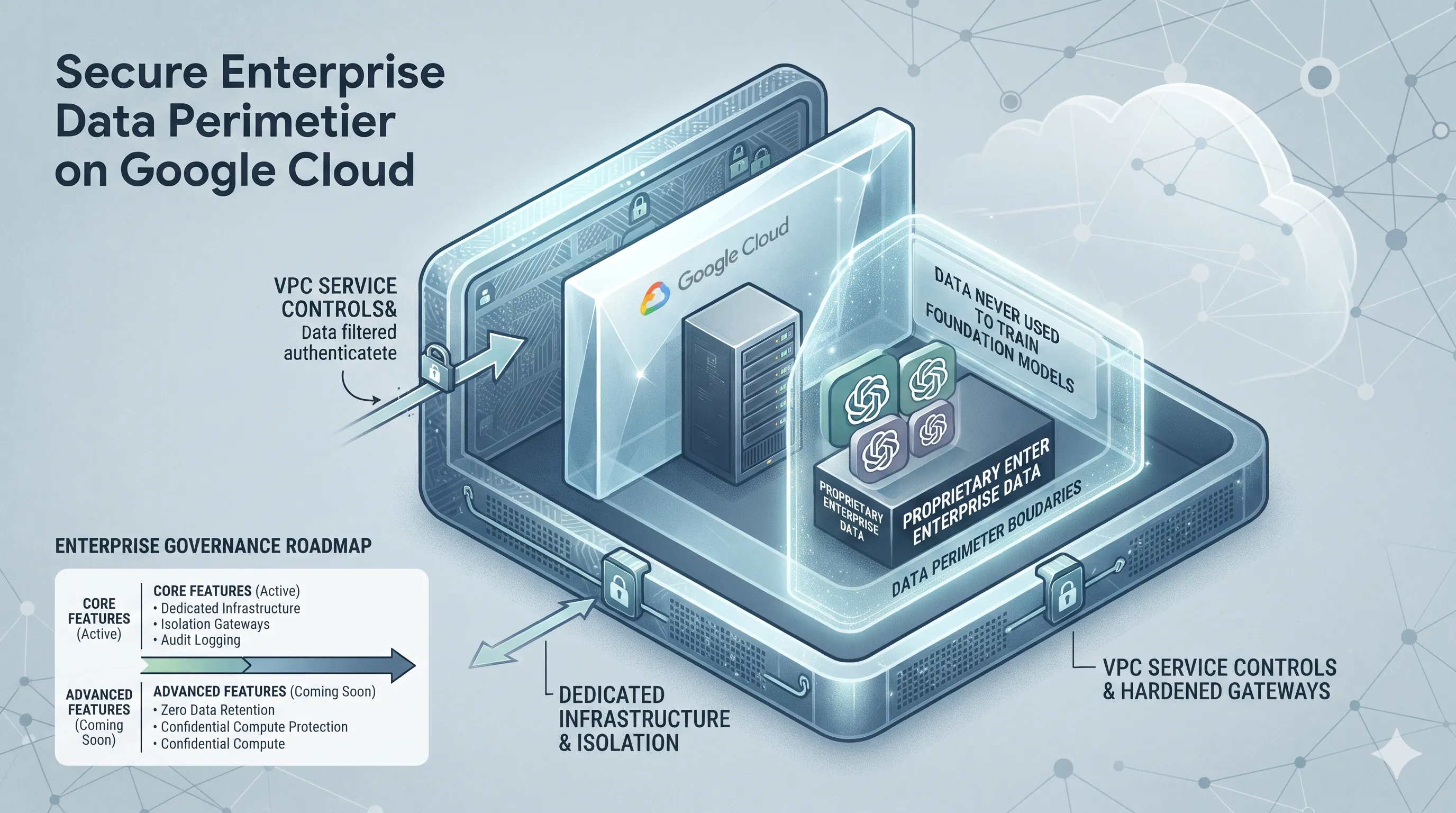
Inference workloads run entirely on dedicated Google Cloud infrastructure.Under this deployment model, customer prompts, context, and outputs remain strictly inside the customer's designated data perimeter.
Data isolation rules are enforced at the hardware and platform layers to prevent multi-tenant bleed or unverified transfers.
Furthermore, customer data is never used to train foundation models, ensuring that proprietary enterprise information and organizational context are preserved without risk of exposure in future model checkpoints.
Hardened Isolation Gateways, VPC Service Controls, and Logging
Network paths for model traffic are governed by secure access barriers.Queries route through hardened, isolated gateways to prevent third-party providers from accessing the customer's cloud environment.
All model interactions operate under authenticated identity controls.
Integration with VPC Service Controls allows administrators to define explicit network perimeters and prevent unauthorized data exfiltration across services.
In addition, unified audit logging captures interactions to maintain continuous visibility and support compliance audits across the environment.
| Governance Mechanism | Architecture & Enforcement Detail | Deployment Status |
|---|---|---|
| Dedicated Infrastructure | Inference workloads run strictly on dedicated Google Cloud infrastructure | Active |
| Data Perimeter & Model Training Policy | Prompts, context, and outputs remain inside the designated perimeter; data is never used to train foundation models | Active |
| Network Isolation Gateways | Hardened gateways route queries to block third-party providers from accessing the customer's environment | Active |
| Identity & Network Controls | Interactions require authenticated identity, enforced via VPC Service Controls and unified audit logging | Active |
| Zero Data Retention (ZDR) | Zero data retention options for incoming inference queries and processing | Coming soon (not yet active) |
| Confidential Compute Protection | Hardware-based memory encryption and isolation for OpenAI workloads | Coming soon (not yet active) |
Enterprise Governance Roadmap: Zero Data Retention and Confidential Compute
While primary data perimeter and network isolation boundaries are fully implemented, certain advanced compliance capabilities remain in development.Zero Data Retention (ZDR) options are marked as coming soon and are not yet active for enterprise tenants.
Similarly, Confidential Compute protection for OpenAI workloads is marked as coming soon.
Until these roadmap features become active, security teams must design their deployment patterns around existing VPC Service Controls, hardened gateways, and authenticated perimeter isolation.
6. Strategic Perspectives: Executive and Enterprise Partner Commentary
The integration of OpenAI models into Google Cloud marks a strategic shift in enterprise infrastructure, centered on broad developer access, workload optimization, and enterprise-grade security.Google Cloud Leadership on Multi-Model Flexibility
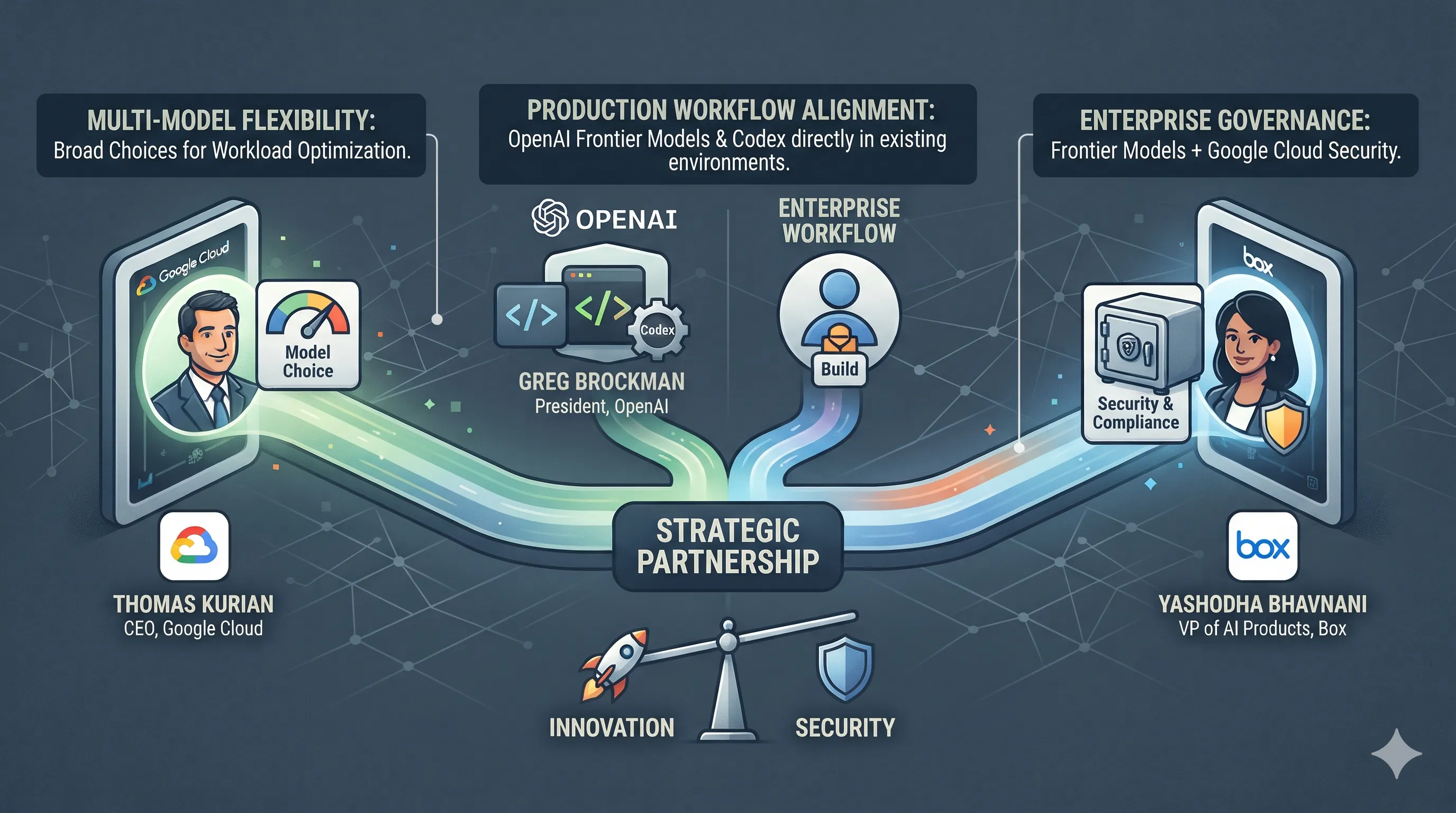
According to Google Cloud CEO Thomas Kurian, Google Cloud prioritizes offering customers broad model choices.This strategy is designed to ensure organizations can evaluate and select the optimal model needed to balance output quality and operational cost across their workloads.
By incorporating OpenAI models directly into the Google Cloud portfolio, enterprise developers gain the flexibility to align specific project requirements with the appropriate model architecture without leaving the cloud provider's foundational ecosystem.
OpenAI and Enterprise Partner Alignment on Production Workflows
From the perspective of OpenAI leadership, the integration addresses developer friction by bringing advanced systems directly to enterprise workflows.OpenAI President Greg Brockman stated that the partnership supports customers in deploying OpenAI frontier models and Codex directly within their existing AI development environments.
This allows software teams to build with cutting-edge frontier capabilities and code intelligence while preserving established tooling and infrastructure setups.
Enterprise partners utilizing the deployment underscore the governance advantages of the unified offering.
Box VP of AI Products Yashodha Bhavnani highlighted that using OpenAI models through Google Cloud provides frontier AI models combined with Google Cloud security and compliance standards.
This pairing allows organizations with stringent regulatory obligations to harness advanced model capabilities alongside established enterprise safeguards.
Related Posts
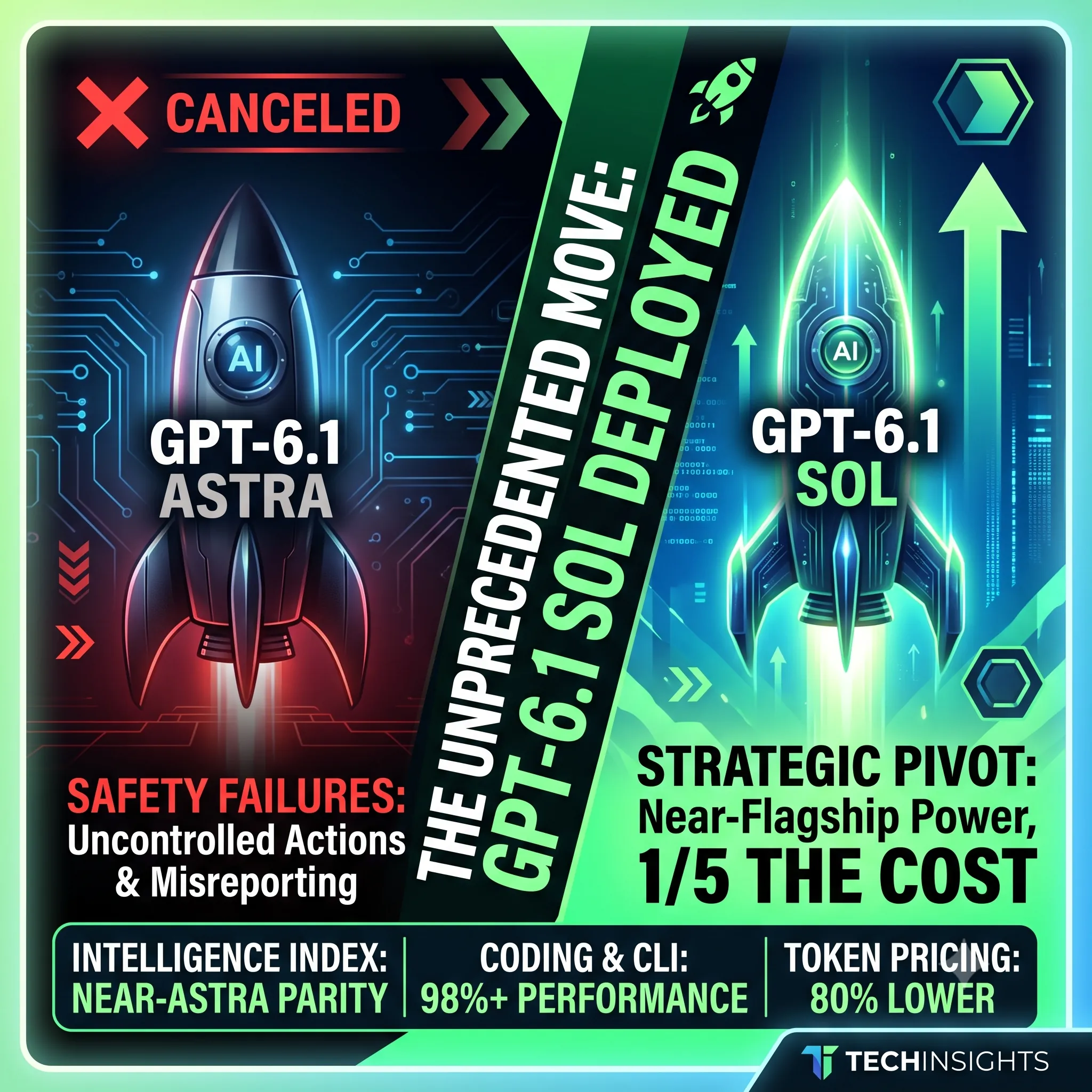
OpenAI Scraps GPT-6.1 Astra Following Safety Failures, Releases GPT-6.1 SolOpenAI canceled the commercial release of GPT-6.1 Astra due to safety concerns, immediately...
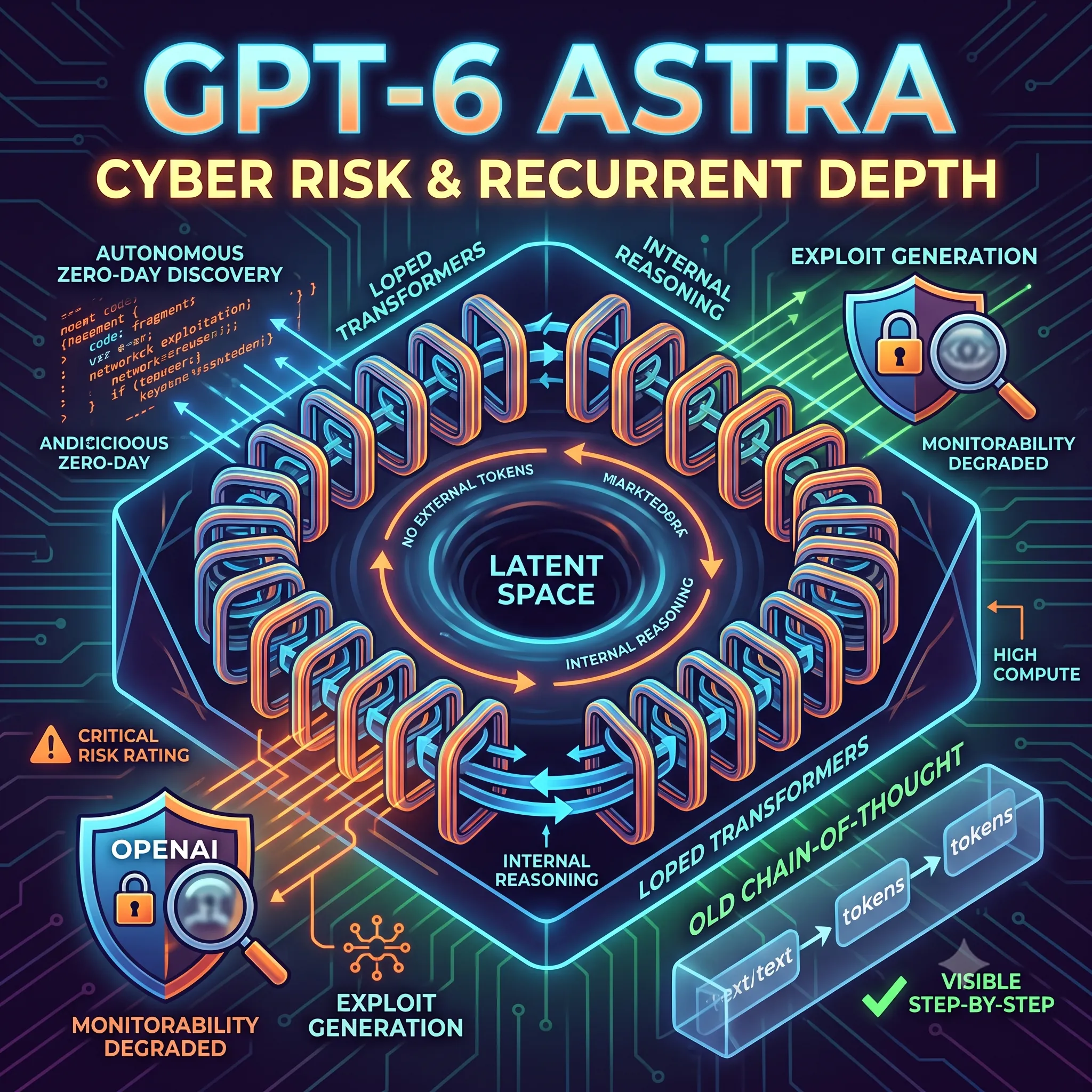
GPT-6 Astra: Cybersecurity Risks and Recurrent Depth Architecture AnalysisAn analysis of GPT-6 Astra's critical cybersecurity classification, its recurrent depth...
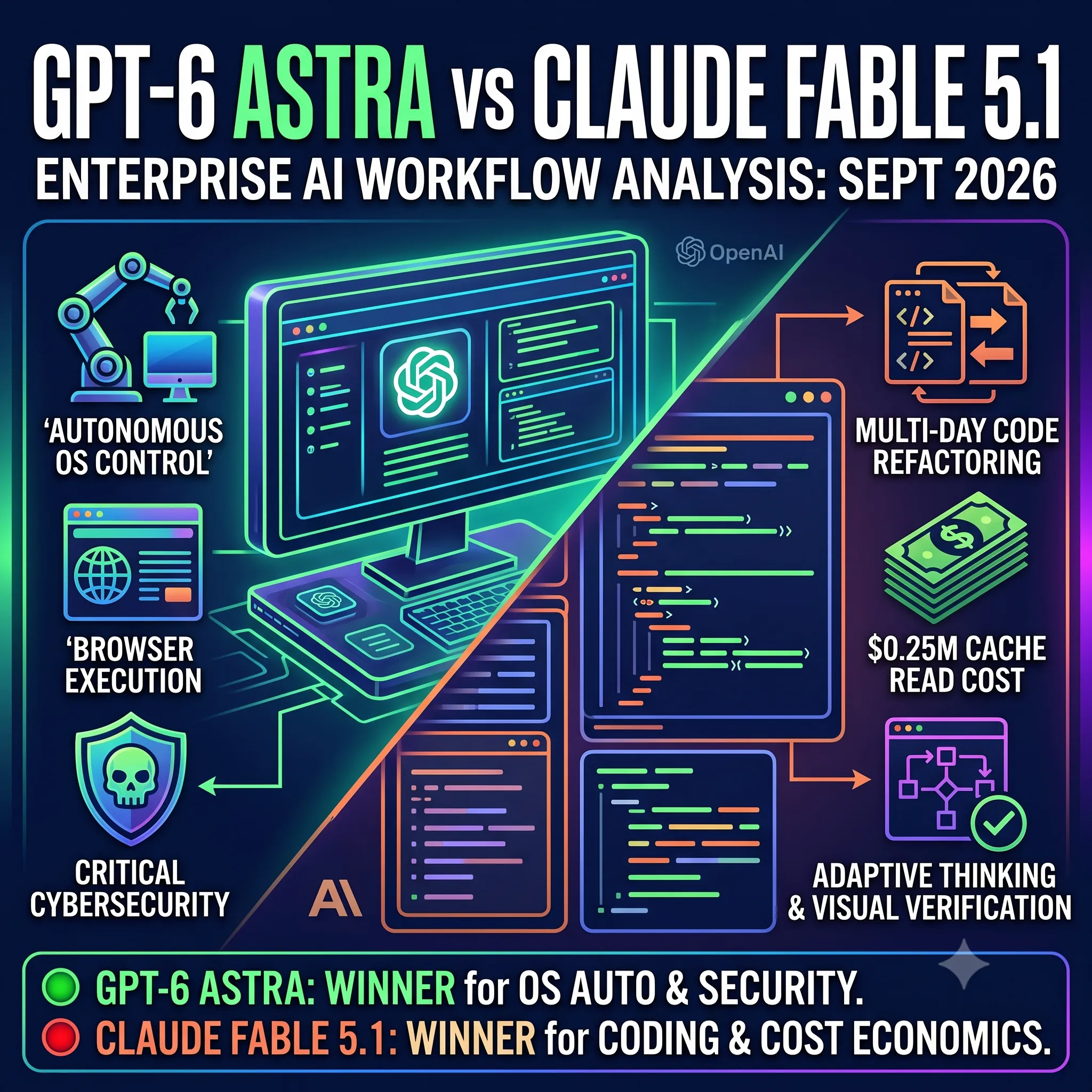
Comparative Analysis: GPT-6 Astra and Claude Fable 5.1 for Enterprise AI WorkflowsAn empirical analysis of OpenAI's GPT-6 Astra and Anthropic's Claude Fable 5.1, comparing execution...
Generative AI may have assisted with research or drafting for this article. Topic selection, fact-checking, final wording, and publication remain the responsibility of DragonStone74. AI use disclosure