
EU AI Act Fully Applicable: Navigating Prohibitions, High-Risk Compliance & Europe's AI Future
🚀 Key Takeaways
- The EU AI Act, the world's first comprehensive AI legal framework, becomes generally applicable today, August 2nd, 2026.
- It establishes a risk-based approach to foster trustworthy AI, categorizing systems by their potential harm.
- The Act strictly prohibits AI systems that pose unacceptable threats to fundamental rights and safety, such as harmful manipulation or social scoring.
- High-risk AI systems, including those in critical infrastructure or employment, face stringent obligations before market placement from late 2027.
- Specific transparency rules require disclosure when interacting with AI and clear labelling of AI-generated content.
- The new AI Office and Member State authorities are now responsible for the Act's implementation, supervision, and enforcement.
- The EU is investing €10 billion to build large-scale AI computing infrastructure and establish AI Factories, boosting industrial capacity.
Today, August 2nd, 2026, marks a pivotal moment for artificial intelligence globally, as the landmark EU AI Act becomes generally applicable across the European Union.
This regulation, the world's first comprehensive legal framework for AI, ushers in a new era of governance aimed at ensuring these transformative technologies are developed and deployed responsibly.
The Act establishes a risk-based approach to manage the diverse challenges posed by AI, from outright prohibitions on systems deemed unacceptable to strict obligations for high-risk applications.
Its implementation seeks to foster trustworthy AI that respects fundamental rights and safety, while simultaneously positioning Europe as a leader in the global AI landscape through strategic investments in computing infrastructure and "AI Factories."
As businesses and innovators adapt to these new rules, the EU AI Act underscores a profound commitment to balancing innovation with ethical considerations.
It sets a precedent for how societies can harness the power of AI safely and for the benefit of all, strengthening both consumer confidence and Europe's industrial capacity in the digital age.
This regulation, the world's first comprehensive legal framework for AI, ushers in a new era of governance aimed at ensuring these transformative technologies are developed and deployed responsibly.
The Act establishes a risk-based approach to manage the diverse challenges posed by AI, from outright prohibitions on systems deemed unacceptable to strict obligations for high-risk applications.
Its implementation seeks to foster trustworthy AI that respects fundamental rights and safety, while simultaneously positioning Europe as a leader in the global AI landscape through strategic investments in computing infrastructure and "AI Factories."
As businesses and innovators adapt to these new rules, the EU AI Act underscores a profound commitment to balancing innovation with ethical considerations.
It sets a precedent for how societies can harness the power of AI safely and for the benefit of all, strengthening both consumer confidence and Europe's industrial capacity in the digital age.

1. Understanding the EU AI Act: A Global Benchmark for Trustworthy AI
This section provides the foundational context for the main article's focus on the EU AI Act's provisions taking effect and the associated infrastructure investments.By explaining the Act's core purpose, its designation as the world's first comprehensive AI law, and its place within a wider European strategy, we can better understand the significance of the specific legal milestones and investment initiatives discussed later.
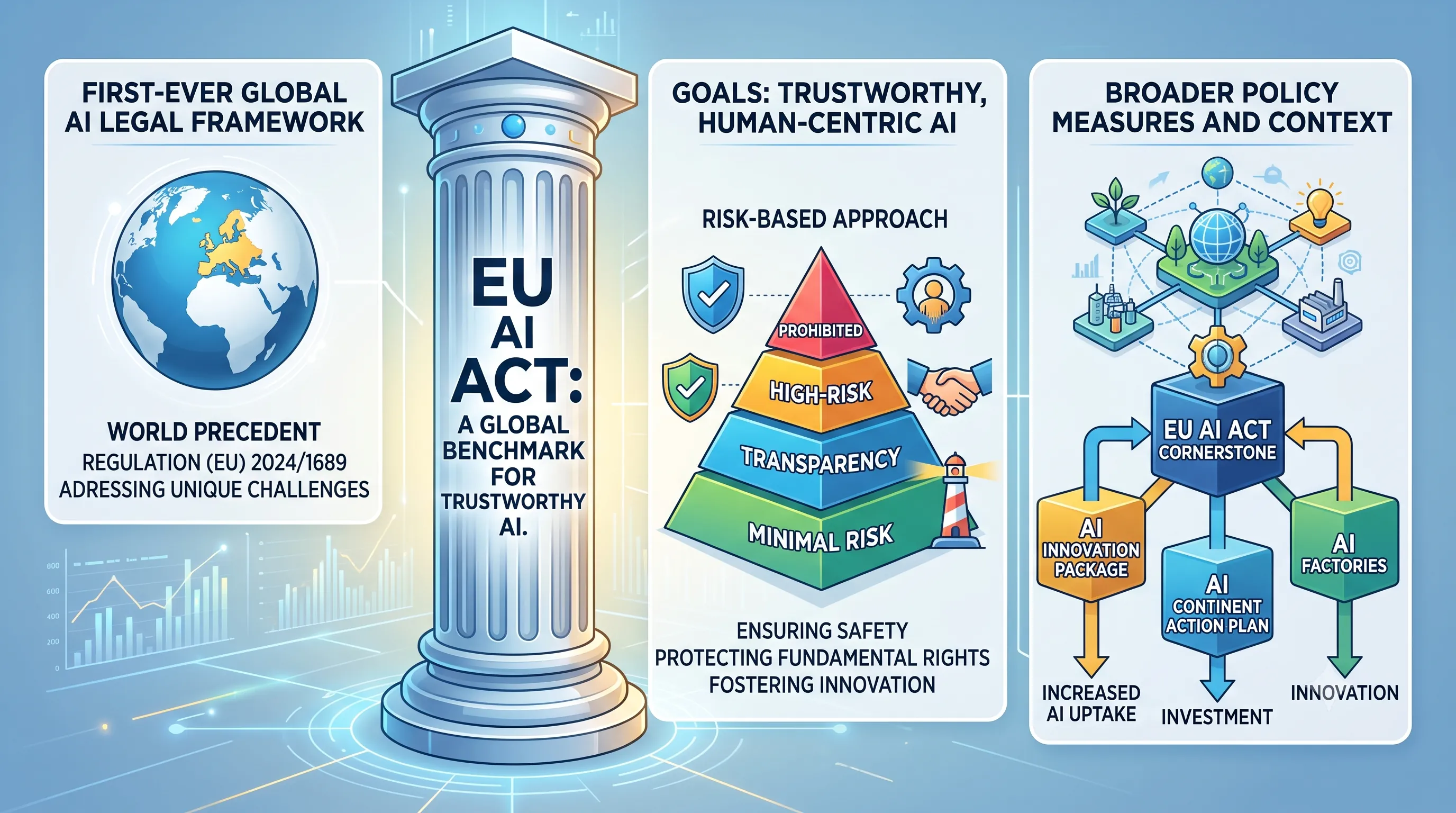
First-Ever Global AI Legal Framework
The European Union has established a global precedent with its AI Act, officially designated as Regulation (EU) 2024/1689.This regulation stands as the first-ever comprehensive legal framework on artificial intelligence anywhere in the world.
It was developed in recognition that existing legislation was insufficient to address the unique challenges and specific risks posed by the rapid advancement of AI technologies.
The Act aims to position Europe as a global leader not just in innovation, but in the responsible governance of AI.
Goals: Trustworthy, Human-Centric AI
The primary objective of the AI Act is to foster the development and deployment of trustworthy, human-centric AI across the European Union.The framework is designed to ensure that Europeans can trust the AI-powered products and services they encounter.
To achieve this, the regulation implements a set of risk-based rules that apply to both developers and deployers of AI systems.
This approach directly addresses potential AI risks to ensure the safety and protection of fundamental rights for all citizens.
Broader Policy Measures and Context
The AI Act does not operate in isolation; it is a cornerstone of a much broader package of policy measures designed to support the development of trustworthy AI.This comprehensive strategy includes initiatives like the AI Continent Action Plan, the AI Innovation Package, and the establishment of AI Factories.
Together, these measures work to create a cohesive ecosystem that not only ensures safety and upholds fundamental rights but also actively strengthens AI uptake, investment, and innovation across all EU member states.
2. EU AI Act: Key Dates for Application and Compliance
This section provides the critical timeline for the EU AI Act's phased implementation, directly supporting the main article's theme of "EU AI Act's major provisions taking effect and large-scale infrastructure investment."Understanding these specific application dates is essential, as they are the legal triggers that necessitate the compliance efforts and large-scale infrastructure investments discussed throughout the broader piece.
General Applicability and Initial Milestones
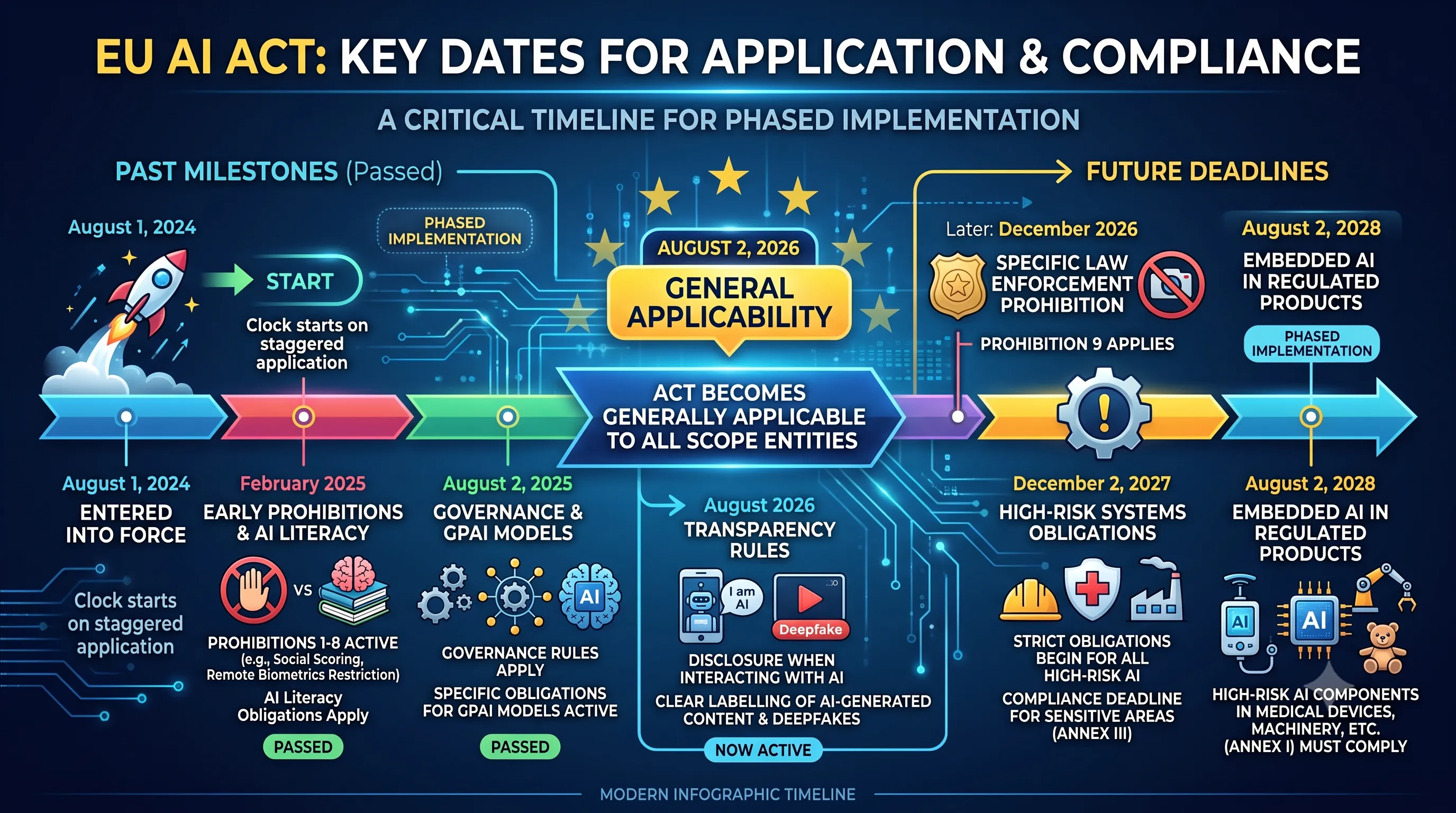
The EU AI Act's journey from text to law involved several key stages.The regulation officially entered into force on 2024-08-01, starting the clock on its staggered application schedule.
As of today, 2026-08-02, the AI Act has now become generally applicable, marking a major milestone for all entities within its scope.
Prior to this, several significant deadlines have already passed.
The first set of rules, covering prohibited AI practices and obligations related to AI literacy, became applicable early on, from 2025-02-02.
This was followed by the application of governance rules and specific obligations for General-Purpose AI (GPAI) models, which took effect on 2025-08-02.
Transition Periods for High-Risk Systems
Providers of high-risk AI systems are granted longer transition periods to ensure their products and services meet the Act's stringent requirements.The general enforcement of strict obligations for all high-risk AI systems will begin on 2027-12-02.
For systems identified as high-risk due to their use in sensitive areas, as listed in Annex III of the Act, the compliance deadline has been set for 2027-12-02.
A more extended transition period is provided for high-risk AI systems that are components embedded into products already regulated under existing EU law, such as medical devices or machinery (listed in Annex I).
These systems must be compliant by 2028-08-02.
Key Prohibitions and Transparency Rule Dates
The Act's prohibitions on certain unacceptable AI practices were among the first provisions to become effective.Prohibitions 1 through 8, which cover practices like social scoring by public authorities and real-time remote biometric identification in publicly accessible spaces (with limited exceptions), came into effect in February 2025.
However, Prohibition 9, which addresses specific law enforcement uses, will come into effect later, in December 2026.
In a more recent development, the transparency rules mandated by the AI Act became effective in August 2026, requiring providers to be clear when individuals are interacting with AI systems like chatbots or when deepfakes are being used.
| Effective Date | Applicable Provision or Obligation | Status (as of 2026-08-02) |
|---|---|---|
| 2025-02-02 | Prohibited AI Practices (1-8) & AI Literacy Obligations | Past (Applicable) |
| 2025-08-02 | Governance Rules & GPAI Model Obligations | Past (Applicable) |
| 2026-08-02 | General Applicability of the AI Act | Today (Applicable) |
| August 2026 | Transparency Rules | Current (Applicable) |
| December 2026 | Prohibition 9 | Future |
| 2027-12-02 | Strict Obligations for High-Risk AI Systems | Future |
| 2027-12-02 | Rules for High-Risk Systems (Annex III - Sensitive Areas) | Future |
| 2028-08-02 | Rules for High-Risk AI Embedded in Regulated Products (Annex I) | Future |
3. Banned AI: Prohibited Practices Under the EU AI Act
This section provides a detailed breakdown of the AI systems and practices that are now explicitly illegal under the EU AI Act.It directly connects to the article's main topic, "EU AI Act's major provisions taking effect and large-scale infrastructure investment," by defining the "unacceptable risk" category of AI, which is the most stringent of the new regulations now in effect.
Understanding these prohibitions is fundamental for any organization, as non-compliance carries severe penalties and shapes the guardrails within which all new AI infrastructure and applications must be developed and deployed.
Defining Unacceptable AI Risks
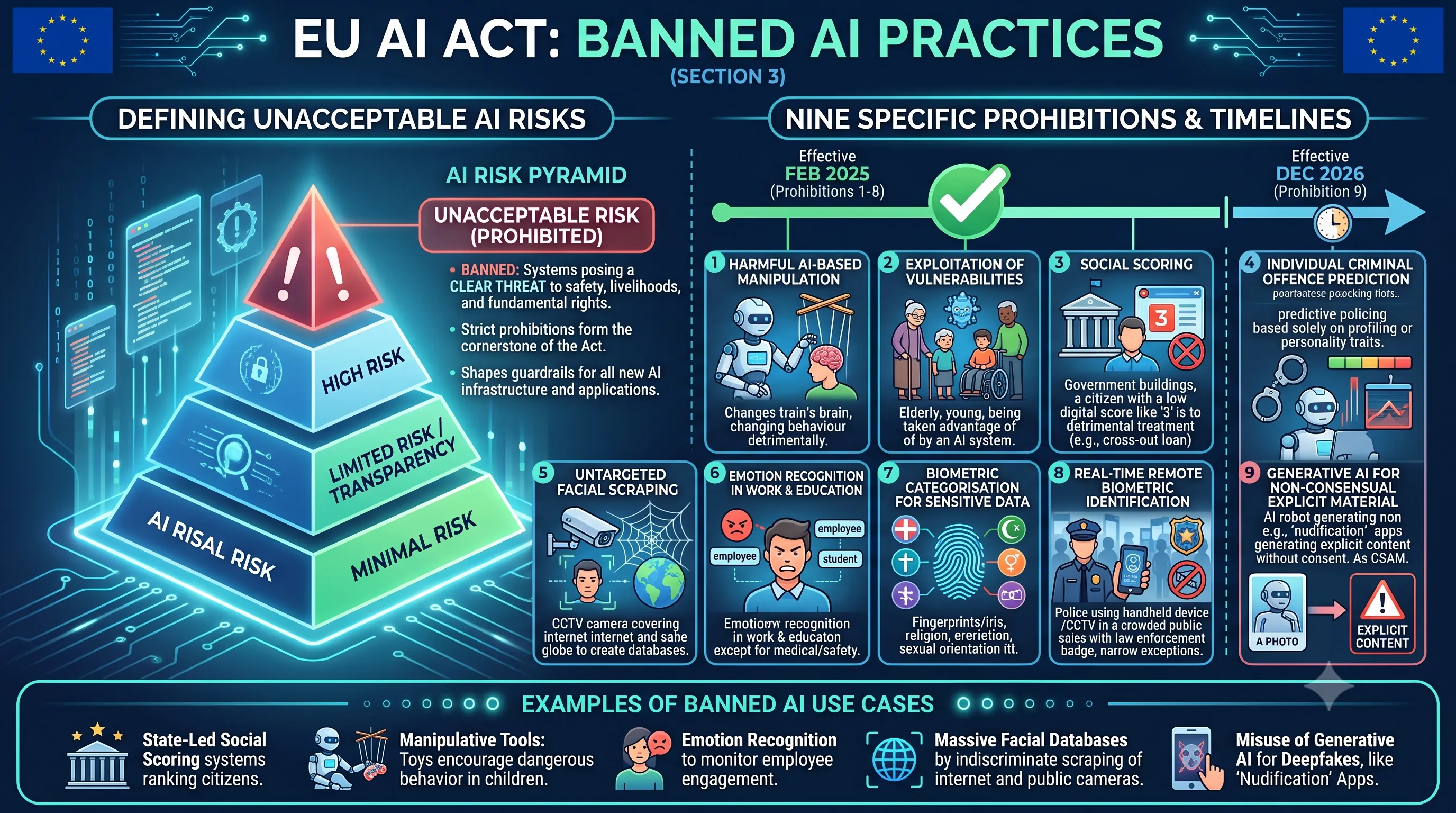
The EU AI Act establishes a risk-based framework, defining four distinct levels of risk for artificial intelligence systems.At the very top of this pyramid are systems deemed to have an "unacceptable risk".
The legislation takes an uncompromising stance on this category, banning all AI systems that are determined to pose a clear threat to the safety, livelihoods, and fundamental rights of people.
These prohibitions form the cornerstone of the Act's effort to protect EU citizens from the most dangerous potential applications of AI technology.
Nine Specific Prohibitions and Their Timelines
The Act does not leave the definition of "unacceptable risk" to interpretation; instead, it explicitly outlaws nine specific AI practices.A significant milestone was reached in February 2025, when the first eight of these prohibitions became legally effective across the EU.
The ninth prohibition, which addresses the creation of non-consensual explicit material, was introduced as part of the AI Omnibus package and has a later enforcement date, coming into effect in December 2026.
The nine prohibited practices are:
1. Harmful AI-based manipulation and deception that can alter a person's behavior to their detriment.
2. Harmful AI-based exploitation of the vulnerabilities of a specific group of persons due to their age, physical or mental disability.
3. Social scoring by public authorities or on their behalf, leading to detrimental treatment.
4. Individual criminal offence risk assessment or prediction based solely on profiling or personality traits.
5. Untargeted scraping of facial images from the internet or CCTV footage to create facial recognition databases.
6. Emotion recognition in the workplace and educational institutions, except for medical or safety reasons.
7. Biometric categorisation to deduce sensitive or protected characteristics like political opinions, religious beliefs, or sexual orientation.
8. Real-time remote biometric identification by law enforcement in publicly accessible spaces, with very narrow exceptions.
9. AI systems generating non-consensual sexually explicit or intimate content, or child sexual abuse material (CSAM), such as AI "nudification" applications.
Examples of Banned AI Use Cases
The practical implications of these prohibitions are extensive.For instance, government-led social scoring systems that rank citizens based on their behavior, leading to disadvantages, are now illegal.
AI tools designed for harmful manipulation, such as toys that encourage dangerous behavior in children or systems that exploit the vulnerabilities of people with disabilities, are also banned.
In professional and academic settings, the use of AI for emotion recognition to monitor employee engagement or student attentiveness is strictly forbidden.
Furthermore, the practice of building massive facial recognition databases by indiscriminately scraping images from the internet and public cameras is prohibited.
Finally, the forthcoming ban effective in December 2026 will specifically target the misuse of generative AI to create non-consensual deepfakes, such as so-called 'nudification' apps that generate sexually explicit content without the subject's consent.
4. Managing High-Risk AI: Stringent Obligations and Use Cases
As key provisions of the EU AI Act take effect, the associated investments in compliance and infrastructure are most intensely focused on systems classified as 'high-risk'.This category is central to the regulation's purpose, as it encompasses AI applications that could seriously impact citizen health, safety, or fundamental rights, and are therefore subject to the most rigorous compliance framework.
Identifying High-Risk AI Applications
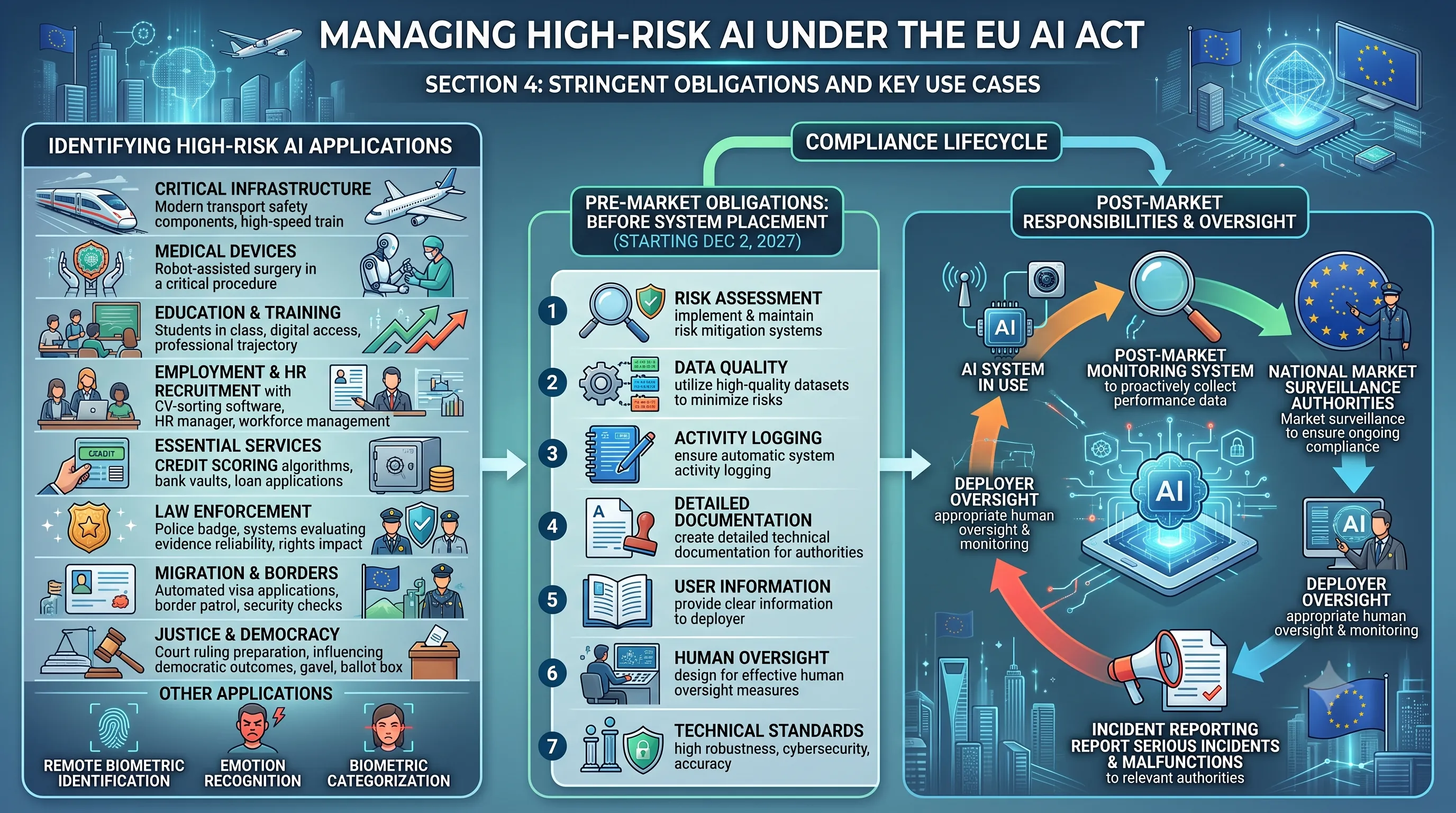
The AI Act defines high-risk systems as those whose use can pose significant threats to individual well-being and fundamental rights.This classification is not based on the technology itself, but on its specific application and the potential consequences of its failure or misuse.
The regulation identifies numerous specific use cases across critical sectors that fall under this designation.
| Domain | Example High-Risk Use Case |
|---|---|
| Critical Infrastructure | AI-powered safety components within transport systems. |
| Medical Devices | AI applications used in critical procedures like robot-assisted surgery. |
| Education & Vocational Training | AI solutions that determine an individual's access to educational institutions or their professional trajectory. |
| Employment & Worker Management | Tools for recruitment, such as CV-sorting software, and systems for managing workers or enabling access to self-employment. |
| Essential Services | AI used for critical assessments, such as credit scoring algorithms that can deny citizens access to loans. |
| Law Enforcement | Systems that may interfere with fundamental rights, such as AI used to evaluate the reliability of evidence. |
| Migration, Asylum & Border Control | AI used in the management of migration, including automated systems for examining visa applications. |
| Justice & Democratic Processes | AI solutions designed to assist in preparing court rulings or influencing democratic outcomes. |
Pre-Market Placement Obligations
Starting from December 2, 2027, providers of high-risk AI systems will be required to meet a comprehensive set of strict obligations before their products can be placed on the market or put into service.These requirements are designed to build trust and ensure safety throughout the system's lifecycle.
Key obligations include:
- Risk Assessment: Implementing and maintaining adequate risk assessment and mitigation systems.
- Data Quality: Utilizing high-quality datasets to train models, specifically to minimize risks and prevent discriminatory outcomes.
- Activity Logging: Ensuring that the system's activity is automatically logged to provide traceability of its results.
- Detailed Documentation: Creating and maintaining detailed technical documentation that allows authorities to assess the system's compliance with the law.
- User Information: Providing clear and adequate information to the deployer (user) of the system.
- Human Oversight: Designing the system to allow for appropriate and effective human oversight measures.
- Technical Standards: Achieving high levels of robustness, cybersecurity, and accuracy.
Post-Market Responsibilities and Oversight
Compliance does not end once a high-risk system is deployed.The AI Act establishes a framework for continuous monitoring and surveillance to manage risks that may emerge over time.
Once a system is on the market, national authorities are responsible for market surveillance to ensure ongoing compliance.
Providers have a legal duty to establish and maintain a post-market monitoring system to proactively collect and analyze performance data.
Furthermore, deployers are responsible for ensuring appropriate human oversight and monitoring during the system's operational use.
In the event of a problem, both providers and deployers are obligated to report any serious incidents and system malfunctions to the relevant authorities.
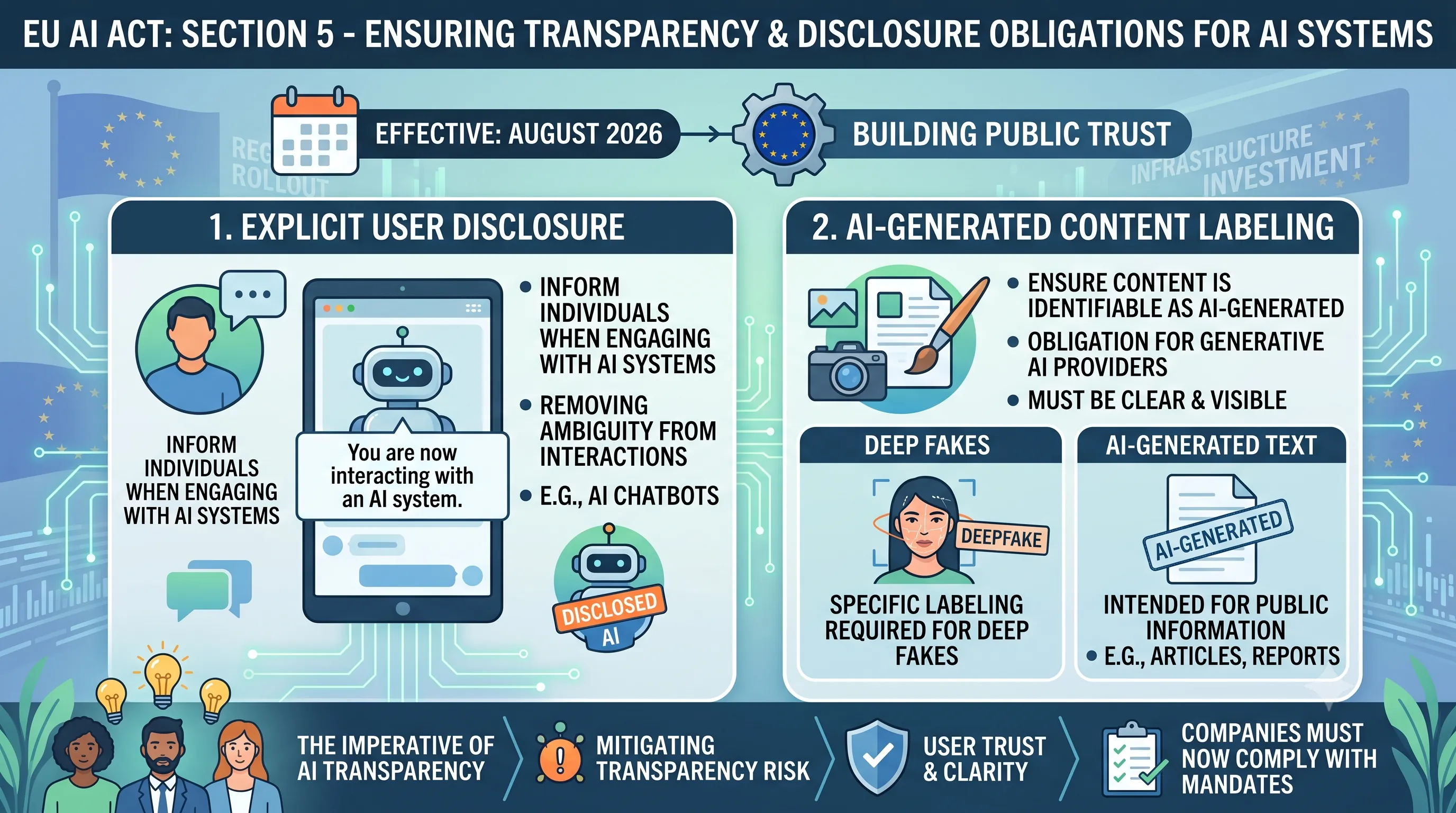
5. Ensuring Transparency: Disclosure Obligations for AI Systems
This section directly examines one of the most significant provisions of the EU AI Act that has now come into force: the specific rules designed to ensure transparency.These mandates are a core part of the larger regulatory rollout and infrastructure investment, aiming to build a foundation of public trust as AI becomes more integrated into society.
The Imperative of AI Transparency
The EU AI Act directly addresses the concept of transparency risk, which highlights the fundamental need for clarity surrounding the use of artificial intelligence.To mitigate this risk and preserve user trust, the legislation has introduced a set of specific disclosure obligations for certain AI systems.
The goal is to ensure that individuals are always aware of when they are engaging with or consuming content produced by an AI, removing ambiguity from these interactions.
Mandatory Disclosure and Labeling
The Act codifies several key requirements for developers and deployers of AI.First, humans must be explicitly informed when they are interacting with AI systems, such as chatbots.
This removes the guesswork and ensures users understand the nature of the entity they are communicating with.
Furthermore, providers of generative AI systems now have a duty to ensure that any content their models produce is identifiable as being AI-generated.
This obligation is particularly strict for certain types of content that carry a higher potential for deception or misinformation.
Specifically, AI-generated content like deep fakes and any AI-generated text intended for public information must be labeled in a clear and visible manner.
Effectiveness of Transparency Rules
These foundational transparency rules are no longer a future goal but a present reality.The obligations for disclosure and labeling officially became effective in August 2026, meaning companies operating within the EU must now comply with these mandates.
6. AI Systems with Minimal or No Risk: Outside the Act's Scope
This section provides crucial context for the broader discussion on the EU AI Act's new regulations and infrastructure investments by defining the vast category of AI systems that fall outside its direct regulatory scope, clarifying the legislation's targeted, risk-based approach.Defining Minimal Risk AI
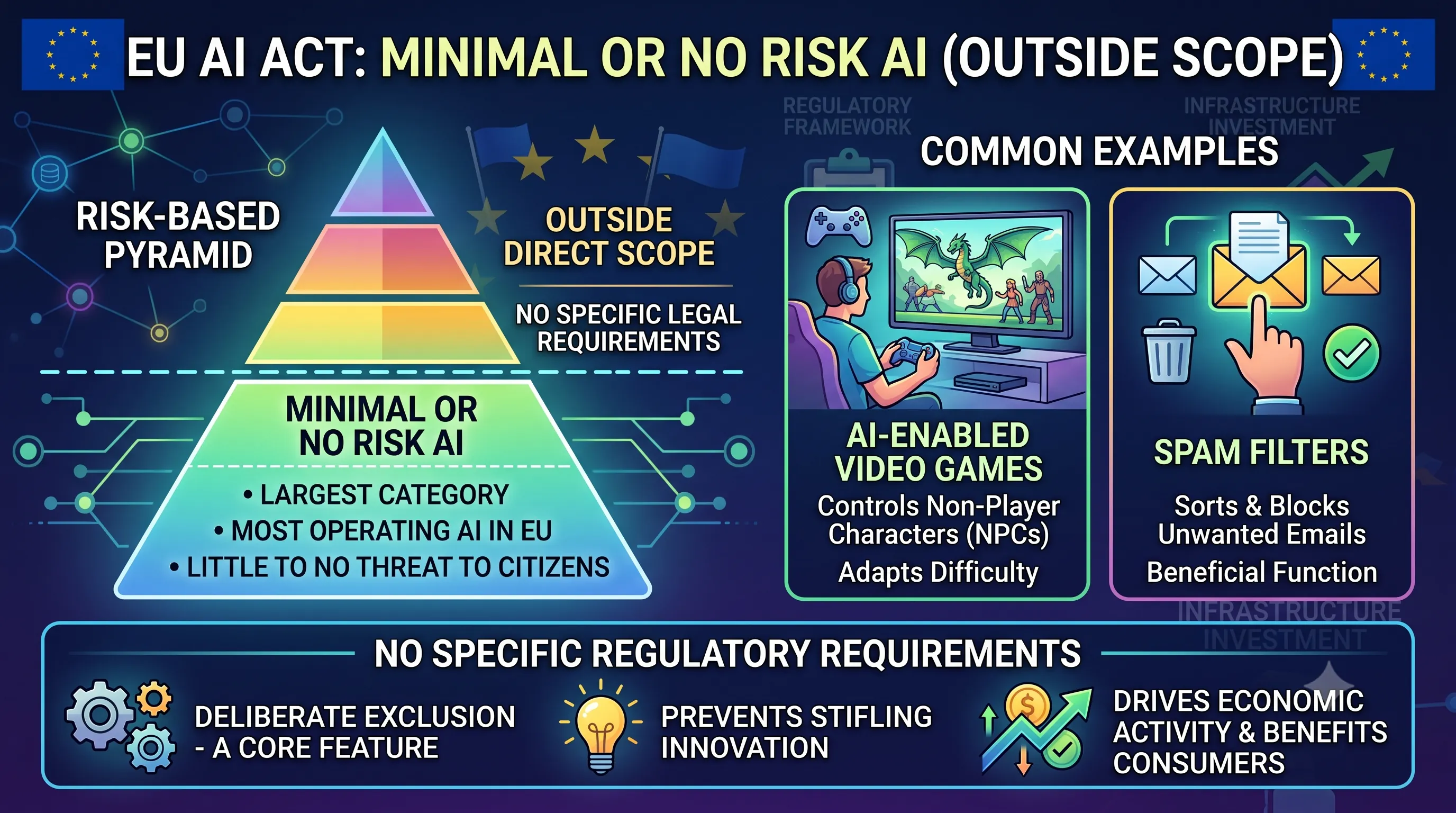
The EU AI Act is structured around a risk-based pyramid, and at its foundation is the largest category: systems with minimal or no risk.In fact, the vast majority of AI systems currently in operation and used by citizens across the European Union fall into this classification.
This category encompasses AI applications that pose little to no threat to citizens' safety, fundamental rights, or societal well-being.
Common Examples
Everyday examples of minimal-risk AI are widespread and often go unnoticed by the user.These include common applications such as AI-enabled video games, where artificial intelligence is used to control non-player characters or adapt game difficulty.
Another ubiquitous example is the spam filter, which uses AI to sort and block unwanted emails, a function considered beneficial with negligible risk.
No Specific Regulatory Requirements
Crucially for developers and users, the AI Act does not introduce any new, specific legal requirements or compliance rules for systems that are deemed to have minimal or no risk.This deliberate exclusion is a core feature of the Act's design, intended to avoid stifling innovation for the countless low-risk AI applications that drive economic activity and provide consumer benefits without posing a significant threat.
7. Regulating General-Purpose AI (GPAI) Models
As a core component of "EU AI Act's major provisions taking effect and large-scale infrastructure investment," the regulation of General-Purpose AI (GPAI) models is foundational. These rules, which directly shape the development and deployment of the large-scale AI systems being built, establish critical guardrails for the technology's most powerful and versatile building blocks.The Importance of GPAI Regulation
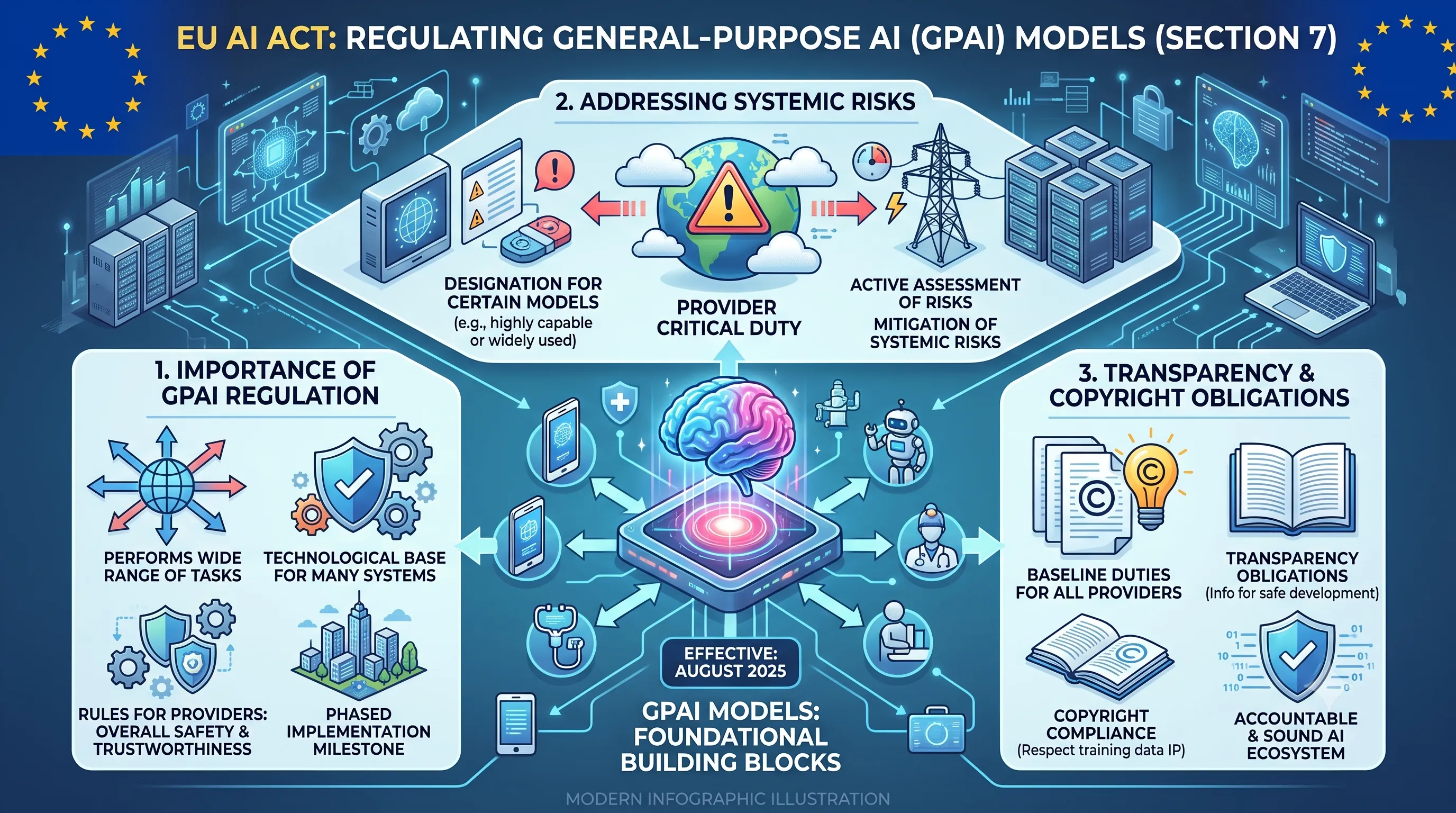
General-Purpose AI models are distinct because they can perform a wide range of tasks and serve as the technological base for many different AI systems deployed across the European Union.Recognizing their foundational role, the AI Act established a dedicated set of rules for the providers of these models, aiming to ensure their overall safety and trustworthiness.
These specific regulations for GPAI models became effective in August 2025, marking a significant milestone in the Act's phased implementation.
Addressing Systemic Risks
The AI Act acknowledges that not all GPAI models present the same level of societal risk.Certain GPAI models are identified as potentially carrying systemic risks, a designation applied if they are either very capable or become exceptionally widely used.
For providers of these specific high-impact models, the legislation imposes a critical duty: they are required to actively assess and mitigate the systemic risks their models could pose.
Transparency and Copyright Obligations
Beyond the special category of systemic risk, the AI Act imposes baseline duties on all GPAI model providers.The rules mandate a set of transparency and copyright-related obligations.
These requirements ensure that developers who build systems on top of these models have the necessary information to do so safely and that the intellectual property used in training the models is respected, creating a more accountable and legally sound AI ecosystem.
8. Supporting Implementation and Compliance: EU Initiatives
As key provisions of the EU AI Act come into effect and large-scale infrastructure investments are made, the European Commission has concurrently launched a suite of initiatives to ensure a smooth transition and facilitate compliance for organizations across the Union.These support mechanisms are designed to provide clarity, reduce administrative burdens, and encourage early adoption of the new regulatory framework.
Voluntary Compliance and Service Desk
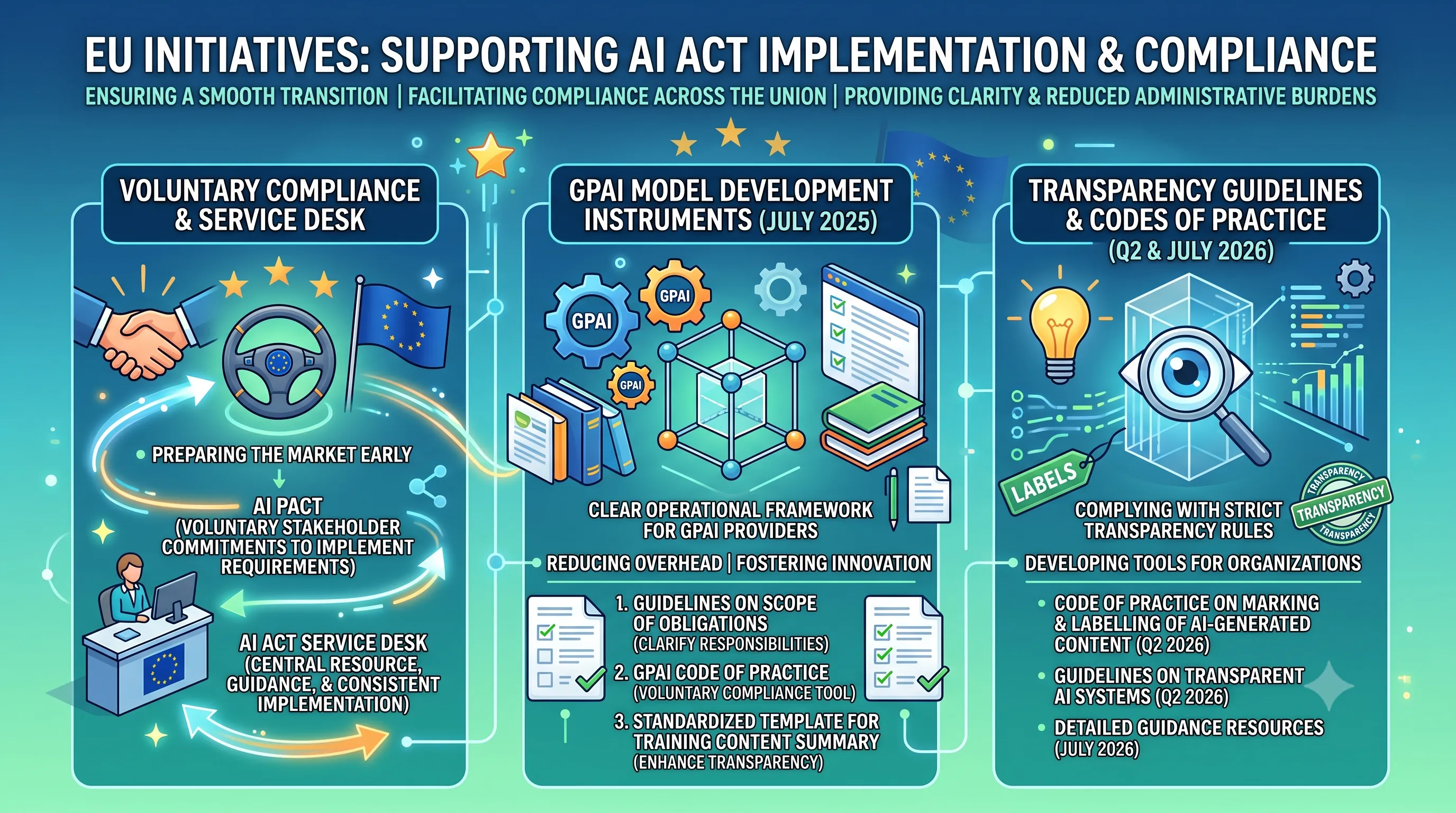
To prepare the market ahead of legal deadlines, the Commission launched the AI Pact.This voluntary initiative actively engages with stakeholders, inviting AI providers and deployers to commit to implementing the Act's requirements early.
In parallel, the AI Act Service Desk was established as a central resource, providing essential information and support to guide organizations through the complexities of the new regulation and ensure consistent implementation across all member states.
GPAI Model Development Instruments
Recognizing the unique challenges of General-Purpose AI (GPAI) models, the Commission published three key instruments in July 2025 to promote their responsible development and deployment.These tools were created to provide a clear operational framework for GPAI providers, helping to reduce administrative overhead while fostering continued innovation.
The instruments include:
- Guidelines on the scope of obligations for providers of GPAI models, clarifying the specific responsibilities under the Act.
- The GPAI Code of Practice, which serves as a crucial voluntary compliance tool.
- A standardized Template for the public summary of training content used for GPAI models, enhancing transparency.
Transparency Guidelines and Codes of Practice
More recently, the Commission has focused on developing tools to help organizations comply with the Act's stringent transparency rules.During the second quarter of 2026, it published a Code of Practice on marking and labelling of AI-generated content and a set of Guidelines on transparent AI systems.
This was followed by more detailed guidance in July 2026, providing specific resources for providers and deployers to meet their obligations.
The key publications focused on transparency are summarized below.
| Instrument / Guideline | Publication Date |
|---|---|
| Code of Practice on marking and labelling of AI-generated content | Q2 2026 |
| Guidelines on transparent AI systems | Q2 2026 |
| Commission opinion on the Code of Practice on Transparency of AI-generated Content | 2026-07-09 |
| Guidelines on transparency obligations for providers and deployers of AI systems | 2026-07-20 |
9. Governance and Enforcement: The AI Office and Member State Roles
With major provisions of the EU AI Act now taking effect and significant infrastructure investments underway, the focus shifts to the crucial governance and enforcement framework designed to oversee the regulation's real-world application.This section details the new institutional structure, led by the European AI Office, that is now responsible for translating the Act's principles into practice.
Responsibilities of the AI Office and Member States
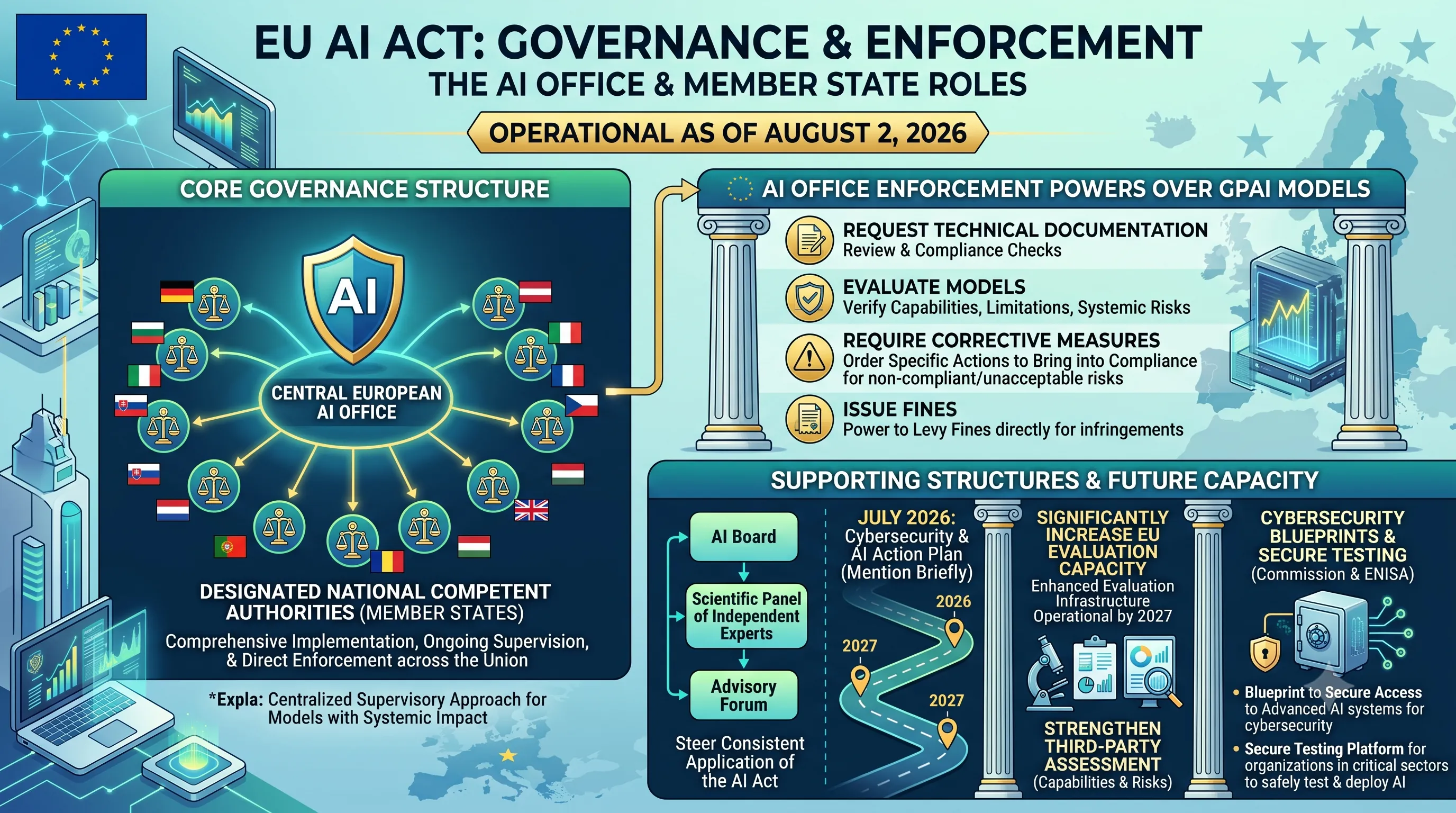
As of today, August 2, 2026, the formal governance structure of the AI Act is operational.The primary responsibility for the Act's day-to-day application now rests with two key groups: the central European AI Office and the designated national competent authorities within each EU Member State.
Together, they are tasked with the comprehensive implementation, ongoing supervision, and direct enforcement of the regulation across the Union.
AI Office's Enforcement Powers
The newly established AI Office holds significant and direct enforcement powers, particularly concerning the providers of general-purpose AI (GPAI) models.It is equipped with a range of tools to ensure these powerful systems comply with the Act's requirements.
These centralized powers are designed to provide a consistent supervisory approach for models that have a systemic impact across the EU.
| Key Enforcement Power over GPAI Models | Description |
|---|---|
| Request Technical Documentation | The Office can compel GPAI model providers to submit their technical documentation for review and compliance checks. |
| Evaluate Models | It has the authority to initiate and conduct evaluations of GPAI models to verify their capabilities, limitations, and potential systemic risks. |
| Require Corrective Measures | If a model is found to be non-compliant or poses an unacceptable risk, the Office can order its provider to take specific actions to bring it into compliance. |
| Issue Fines | The AI Office has the power to levy fines directly against GPAI providers for infringements of the AI Act. |
Supporting Governance Structures and Future Capacity
The AI Office does not operate in isolation.Its work is guided by several supporting bodies, including the AI Board, a Scientific Panel of independent experts, and an Advisory Forum, which together help steer the consistent application of the AI Act.
Building on this new framework, the EU is already taking steps to bolster its technical and strategic capacity.
Last month, in July 2026, an action plan on Cybersecurity and AI was established to create a coordinated strategic approach for Member States, businesses, and public authorities at the intersection of these critical fields.
Looking ahead, the Commission will launch a call to significantly increase the EU's evaluation capacity for AI models before they are placed on the market, strengthening third-party assessment of their capabilities and risks.
This enhanced evaluation infrastructure is expected to be fully operational by 2027.
Furthermore, the Commission and ENISA, the EU Agency for Cybersecurity, will create a blueprint to secure access to advanced AI systems for cybersecurity purposes and will establish a secure testing platform, enabling organizations in critical sectors to safely test and deploy AI solutions.
10. The AI Omnibus: Streamlining Implementation and Amendments
This section connects directly to the main topic by detailing the "AI Omnibus," a crucial legislative package that amends and clarifies the original EU AI Act.As the Act's major provisions begin to take effect, this omnibus instrument is essential for understanding the refined rules, updated timelines, and expanded support structures that will govern AI implementation across the Union.
Key Legislative Updates via the 'AI Omnibus'
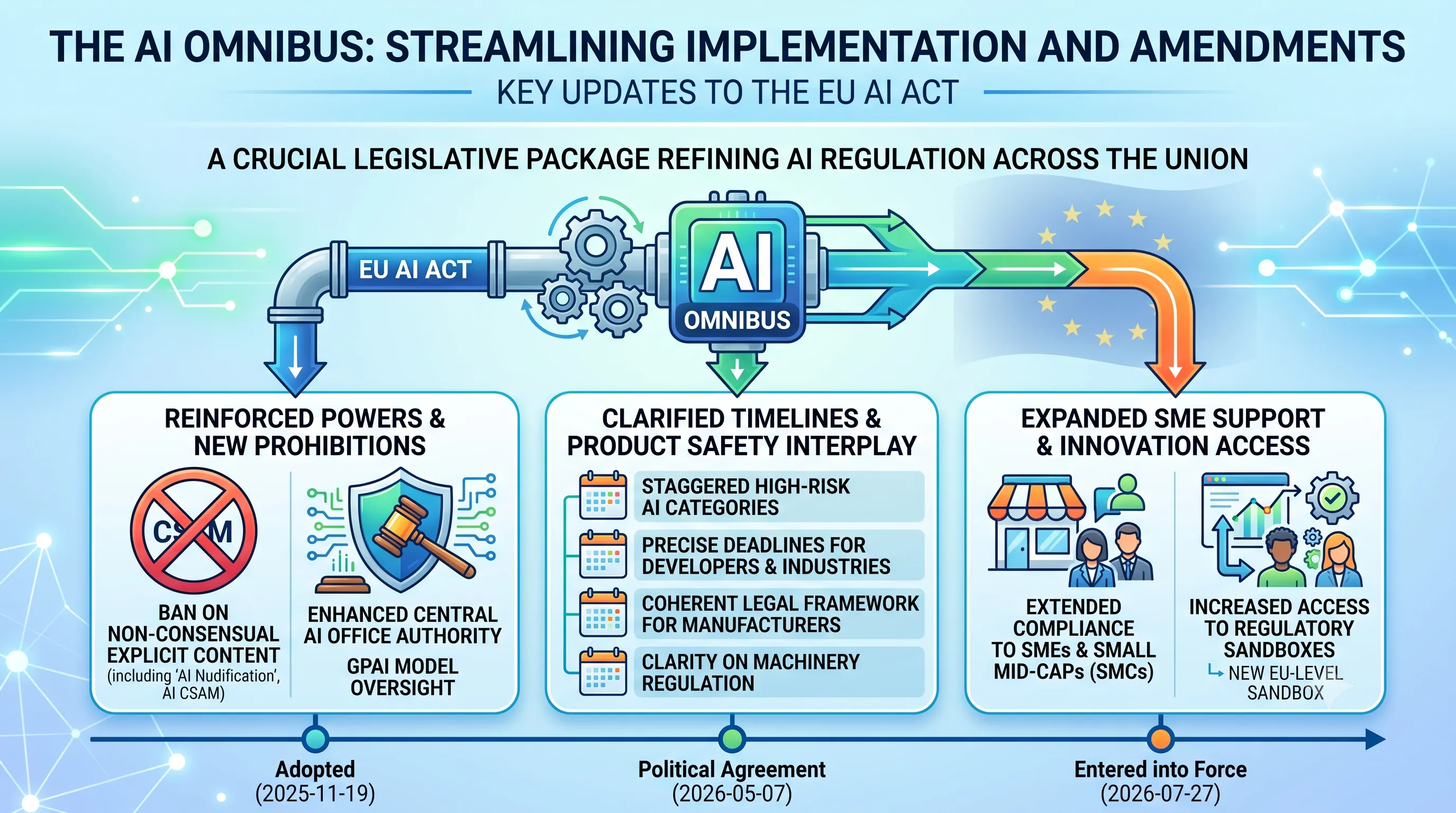
To streamline the practical application of the landmark AI Act, the EU introduced a set of amendments known as the "AI Omnibus" as part of the Digital Package on Simplification.This significant legislative proposal was first adopted on 2025-11-19, with a political agreement subsequently reached on 2026-05-07.
Following this agreement, the AI Omnibus officially entered into force just last month, on 2026-07-27, providing critical clarifications for organizations now navigating the regulation's requirements.
Reinforced Powers and New Prohibitions
The AI Omnibus introduced several substantive changes, most notably a strict prohibition on AI systems designed to generate non-consensual sexually explicit or intimate content, a direct response to the rise of so-called AI ‘nudification' apps and concerns over AI-generated Child Sexual Abuse Material (CSAM).Concurrently, the legislation reinforced the authority of the central AI Office, enhancing its powers and centralizing its oversight capabilities, particularly for AI systems built on General-Purpose AI (GPAI) models.
The amendments also provided much-needed clarity on the interplay between the AI Act and existing EU product safety laws, such as the Machinery Regulation, ensuring a more coherent legal framework for manufacturers.
Clarified Timelines and SME Support
A key focus of the Omnibus was to support a broader range of businesses and innovators.The simplified compliance requirements originally intended for small and medium-sized enterprises (SMEs) were officially extended to also include small mid-cap companies (SMCs).
Furthermore, access to regulatory sandboxes has been expanded to allow more innovators to test their systems in a controlled environment, including the establishment of a new EU-level sandbox.
Critically, the AI Omnibus set a clear and staggered implementation timeline for different categories of high-risk AI systems, giving developers and industries precise deadlines to work towards.
| High-Risk AI System Category | Rules Application Date |
|---|---|
| Systems in areas like biometrics, critical infrastructure, education, employment, migration, asylum, and border control. | 2027-12-02 |
| Systems integrated into products governed by EU product safety law, such as lifts or toys. | 2028-08-02 |
11. Boosting EU AI Capability: Large-Scale Infrastructure Investment
Complementing the new regulatory landscape of the AI Act, the European Union is undertaking a significant financial initiative to ensure it has the domestic capacity to develop and deploy cutting-edge artificial intelligence.This strategic investment in foundational technology aims to create a robust European AI ecosystem that can innovate responsibly within the established legal framework.
€10 Billion Investment for AI Infrastructure
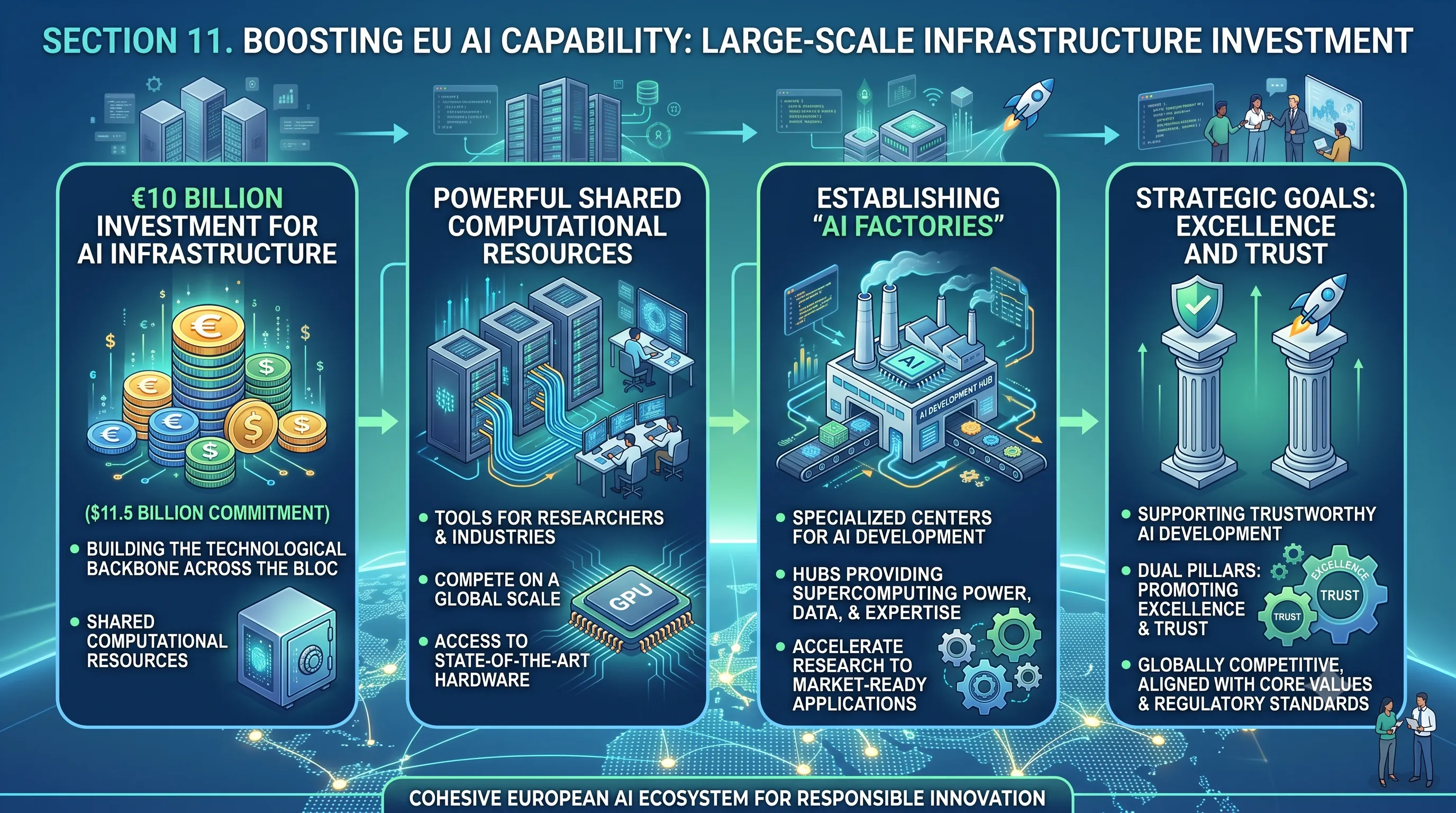
The European Union has committed a substantial investment of €10 billion ($11.5 billion) specifically to build up its technological backbone for artificial intelligence.This funding is dedicated to the creation of a large-scale AI computing infrastructure across the bloc.
By providing a powerful, shared computational resource, the EU aims to give its researchers and industries the tools necessary to compete on a global scale.
Establishing AI Factories
A central pillar of the infrastructure plan includes initiatives to establish "AI Factories".These specialized centers are designed to be hubs of AI development, providing access to supercomputing power, data, and expertise.
The goal of these factories is to accelerate the entire AI development lifecycle, from foundational research to market-ready applications, fostering a collaborative and resource-rich environment.
Strategic Goals: Excellence and Trust
This massive infrastructure spending is not an isolated effort; it is a key component of the EU's wider policy measures designed to support trustworthy AI development.The EU's overall approach is built on the dual pillars of promoting both excellence and trust.
By directly boosting Europe's research and industrial capacity through these investments, the Union seeks to ensure that its technological advancements in AI are both globally competitive and aligned with its core values and regulatory standards.
Related Posts

Anthropic's Claude: Unveiling Invisible AI Watermarks, C2PA & EU AI Act ComplianceAnthropic's Claude now features invisible AI watermarks for text and C2PA content credentials for...

Suno AI Copyright Ruling Collides with EU AI Act's Full Enforcement: New Era for Generative AI, GPAI Transparency & Risk RegulationGerman court rules Suno AI infringed copyright as EU AI Act becomes fully applicable. New era for...

Analysis of Illicit Industrial-Scale Model Distillation and Chain-of-Thought Extraction CampaignsA technical report on illicit industrial-scale distillation campaigns targeting Claude, detailing...