
Anthropic's Claude: Unveiling Invisible AI Watermarks, C2PA & EU AI Act Compliance
🚀 Key Takeaways
- Future Claude models will generate text containing an invisible watermark to indicate AI involvement.
- This watermarking method has no practical impact on the quality, content, or speed of Claude’s outputs.
- Watermarked and un-watermarked text will be indistinguishable to human readers, with nothing visibly added or hidden.
- The watermark operates by subtly influencing low-stakes word choices to embed a detectable pattern.
- Watermarking primarily helps determine the likelihood of Claude’s partial involvement, rather than definitive human authorship.
- Beyond text, Claude will attach cryptographically signed content credentials (C2PA standard) to generated images and files.
- Anthropic is implementing these measures globally to comply with regulations, including the EU AI Act.
The rapid advancement of AI models, exemplified by Anthropic's Claude, has brought unprecedented capabilities but also heightened challenges in discerning the origin of digital content. As AI-generated text becomes increasingly sophisticated and indistinguishable from human writing, the imperative for transparency and accountability in content creation has moved to the forefront, especially with new regulatory landscapes emerging globally.
In a significant step towards addressing these concerns and aligning with evolving standards such as the EU AI Act, Anthropic is introducing an innovative system of invisible watermarking for its Claude models. This groundbreaking technology allows for the probabilistic identification of text generated by Claude without altering the output's quality, creativity, or readability, ensuring that the integrity of AI-assisted content remains high while providing crucial provenance.
This initiative extends beyond text, as Claude will also incorporate content credentialing for various generated files like images, utilizing the open industry C2PA standard. These measures collectively mark a new era in AI responsibility, offering tools to establish the origin of AI-produced content and foster greater trust in the digital information ecosystem, all while having a negligible impact on model performance.
In a significant step towards addressing these concerns and aligning with evolving standards such as the EU AI Act, Anthropic is introducing an innovative system of invisible watermarking for its Claude models. This groundbreaking technology allows for the probabilistic identification of text generated by Claude without altering the output's quality, creativity, or readability, ensuring that the integrity of AI-assisted content remains high while providing crucial provenance.
This initiative extends beyond text, as Claude will also incorporate content credentialing for various generated files like images, utilizing the open industry C2PA standard. These measures collectively mark a new era in AI responsibility, offering tools to establish the origin of AI-produced content and foster greater trust in the digital information ecosystem, all while having a negligible impact on model performance.
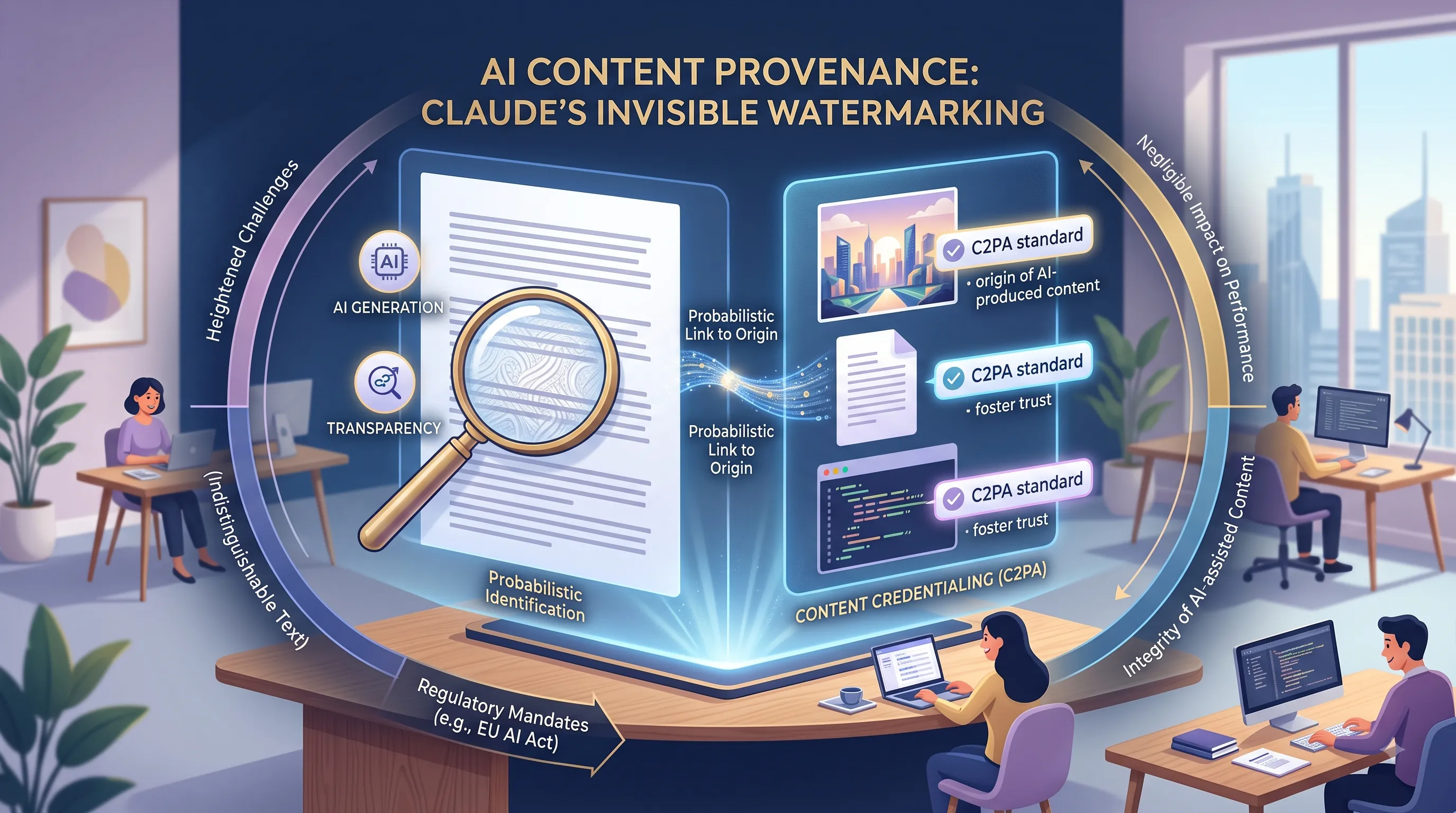
1. Claude's Invisible Watermarks: Ensuring AI Transparency and EU Compliance
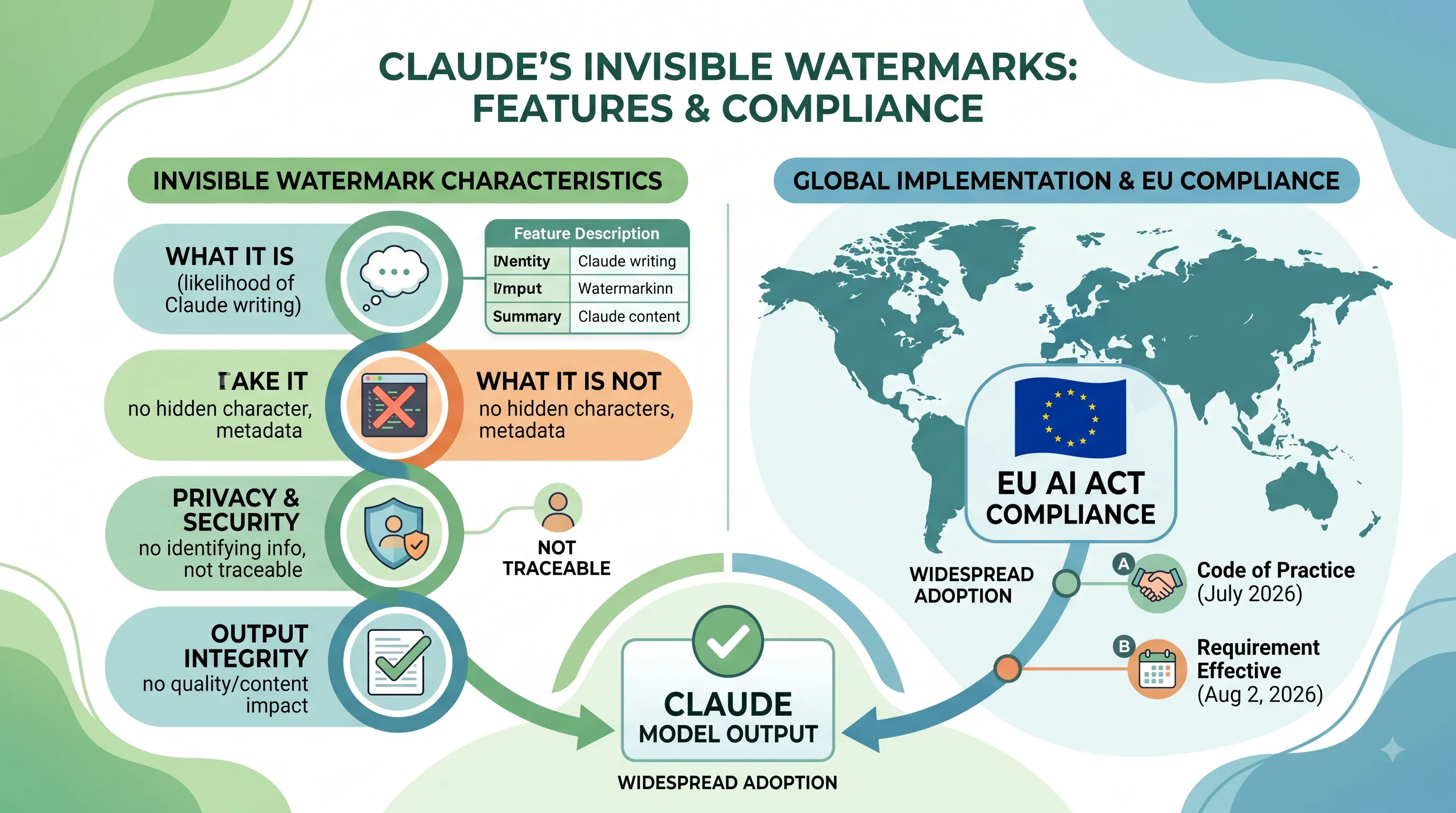
This section details the fundamental characteristics of the watermarking system Anthropic implemented for its Claude models.Understanding these features—particularly what the watermark is and what it is not—is crucial context for the main article's broader discussion on the principles and tools used for detecting AI-generated text.
What are Claude's Invisible Watermarks?
Anthropic's watermarking system is designed to determine the likelihood that a given piece of text was written with Claude's involvement.Crucially, this method was engineered to have no practical impact on the quality or content of the AI's output.
The primary characteristic is its complete invisibility to the human reader; watermarked and un-watermarked text are indistinguishable.
This is achieved without adding anything to the text itself, meaning there are no hidden characters or metadata embedded in the visible content.
The system also prioritizes privacy and security.
The watermark carries no identifying information and cannot be traced back to a specific person, organization, or individual chat session.
While this technology is a significant step for Anthropic, it is important to note that the practice of watermarking is not exclusive to Claude; other major model developers are also implementing their own proprietary systems.
| Feature | Description |
|---|---|
| Reader Experience | Watermarked text is completely indistinguishable from un-watermarked text to a human reader. |
| Output Quality | The watermarking process has no practical impact on the quality or substance of Claude's generated content. |
| Technical Method | The system does not add any content or hidden characters to the text string. |
| Anonymity | The watermark contains no identifying information and is not traceable to a specific user, organization, or chat. |
Global Implementation and EU Regulatory Compliance
Anthropic applied its watermarking feature globally at launch for all applicable Claude models.This widespread implementation was driven by a commitment to transparency and the need to adhere to new regulatory frameworks, most notably in Europe.
As Anthropic noted, it and several other major AI providers implemented this change to comply with the EU AI Act.
This move followed two key events earlier this year.
In July 2026, Anthropic became a signatory to the EU Code of Practice on Transparency of AI-Generated Content.
Subsequently, a requirement for AI providers serving the European market to clearly mark AI-generated content went into effect on August 2, 2026.
2. The Subtle Art of Detection: How Claude's Watermarks Work
This section delves into the specific technical underpinnings of Claude's invisible watermarking, providing the "how" that enables the detection capabilities discussed throughout the main article.Embedding Patterns Through Word Choices
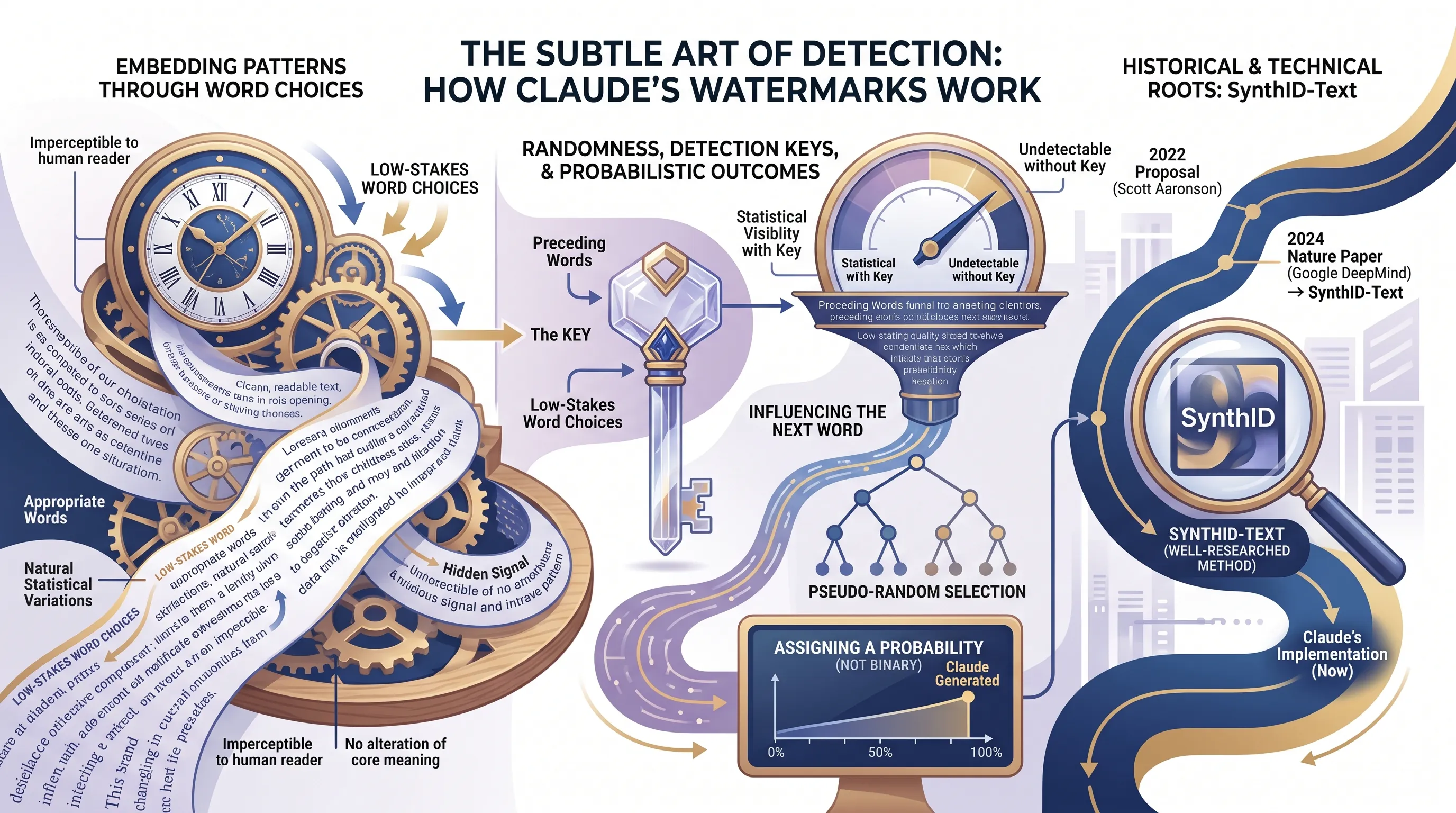
At the heart of Claude's watermarking technology is a subtle manipulation of language generation.The system leverages low-stakes word choices within the text to embed a discernible pattern throughout Claude’s responses.
This method is designed to be imperceptible because it does not alter the core meaning or quality of the output.
Crucially, the watermarking process does not bias the model to choose words it would not have otherwise considered, nor does it push Claude to select obscure or unusual vocabulary.
Instead, it operates within the natural statistical variations of language, selecting from a list of appropriate words to create a signal hidden in plain sight.
The Role of Randomness and Detection Keys
The brilliance of this approach lies in its keyed detection system.The embedded pattern is completely undetectable to a human reader or any analysis tool that does not possess a specific key.
However, for anyone with the key, the pattern becomes statistically visible.
The mechanism uses this key in conjunction with a few preceding words to influence the selection of the next word.
This does not eliminate the inherent randomness of AI text generation; rather, it changes its source.
Word choices are still made at random from a set of plausible options, but the key guides the pseudo-random selection process to favor certain choices over others, thereby encoding the watermark.
When a piece of text is analyzed using the key, the system can assign a probability that the text was generated by Claude, rather than providing a simple binary yes-or-no answer.
Historical and Technical Roots: SynthID-Text
Claude's implementation is not a completely novel invention but is a version of a well-researched method known as the SynthID-Text approach.This specific framework gained prominence after being detailed in a Nature paper published by Google DeepMind in 2024.
The foundational concepts for this family of AI text watermarking, however, date back even further.
The core idea traces its lineage to a proposal put forth by computer scientist Scott Aaronson in 2022, highlighting a multi-year development cycle within the AI research community to address the challenge of provenance for generated content.
3. Preserving Quality: Watermarking's Negligible Impact on Claude's Output
This section directly addresses a critical question for the adoption of AI content tracking discussed in our main article.By demonstrating that this powerful safety feature comes with no discernible trade-offs in performance or quality, we establish its viability as a practical, scalable solution for responsible AI deployment.
Maintaining Content Quality and Creativity
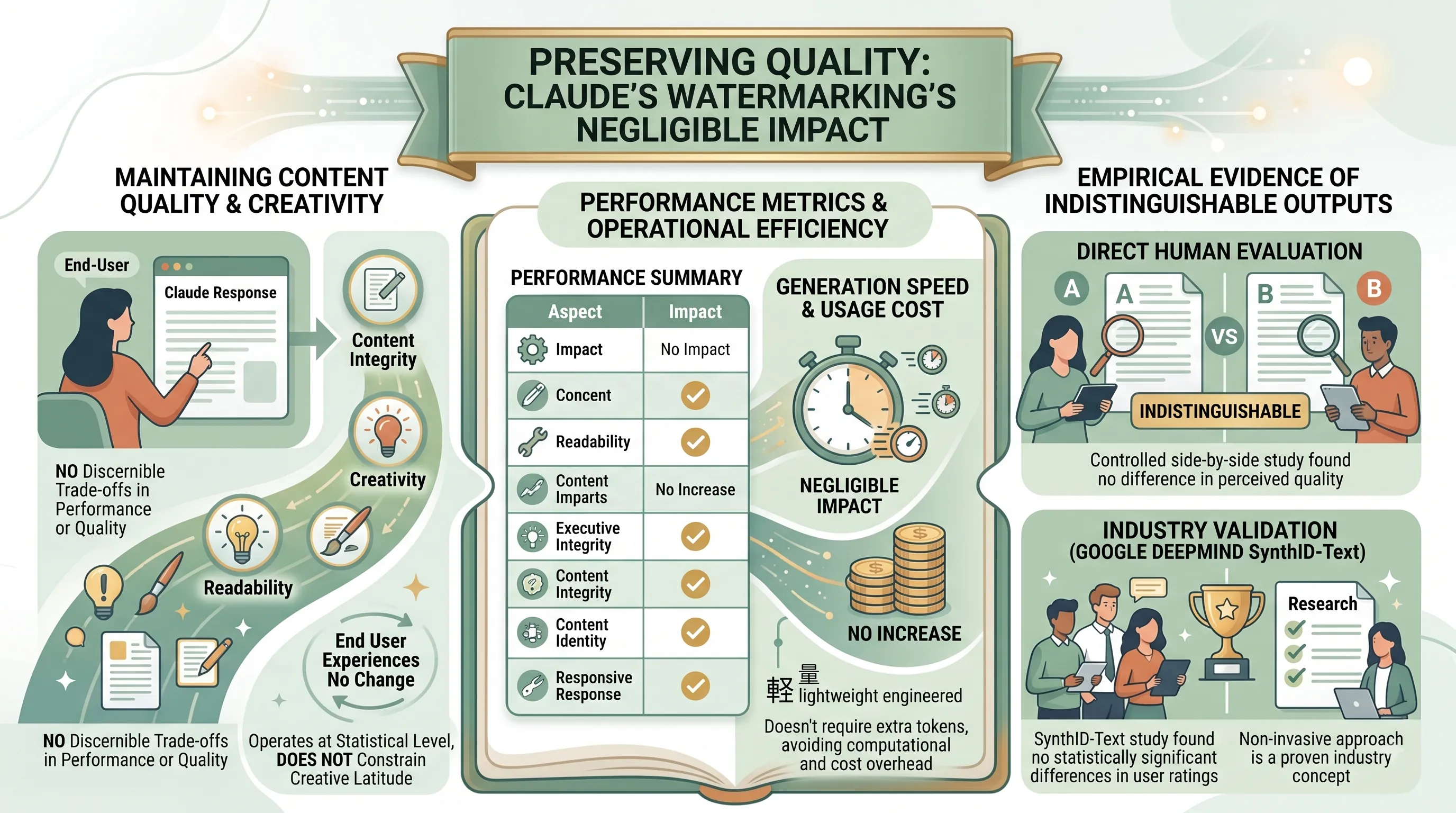
A primary concern with any modification to a large language model's generation process is its potential effect on the final output.However, comprehensive internal testing has confirmed that the implementation of invisible watermarking has no impact on the content, creativity, or readability of Claude’s text.
For the end user, this means the sophisticated, nuanced, and contextually aware responses they expect from Claude remain entirely intact.
The watermarking mechanism operates at a statistical level that does not constrain the model's creative latitude or degrade the logical flow and clarity of its writing.
Ultimately, the quality of Claude's output is unaffected by the presence of the watermark.
Performance Metrics: Speed and Cost
Beyond content quality, operational efficiency is paramount for both developers and end-users.The watermarking technique has been engineered to be exceptionally lightweight, ensuring it has only a negligible impact on the speed of the models.
This efficiency extends to the financial aspect as well, as the process does not make the models more expensive to serve and use.
A key reason for this is that the watermarking process doesn't require extra tokens, avoiding the additional computational and cost overhead that token-based methods might introduce.
This ensures that adding a layer of traceability and safety does not create a barrier to access or performance.
| Performance Aspect | Impact of Watermarking |
|---|---|
| Overall Output Quality | No impact |
| Creativity & Readability | No impact |
| Generation Speed | Negligible impact |
| Service & Usage Cost | No increase |
| Token Consumption | No extra tokens required |
Empirical Evidence of Indistinguishable Outputs
The most compelling validation of the watermarking system's subtlety comes from direct human evaluation.The core finding is that to a human reader, a watermarked response is indistinguishable from an unwatermarked one.
This conclusion is not merely an internal assessment; it is supported by rigorous external studies.
A controlled study involving human raters who compared watermarked and unwatermarked answers side-by-side found no difference in perceived quality.
Further reinforcing this, research from Google DeepMind on its similar SynthID-Text system found no statistically significant differences in user ratings between its watermarked and unwatermarked models, demonstrating that this non-invasive approach is a proven industry concept.
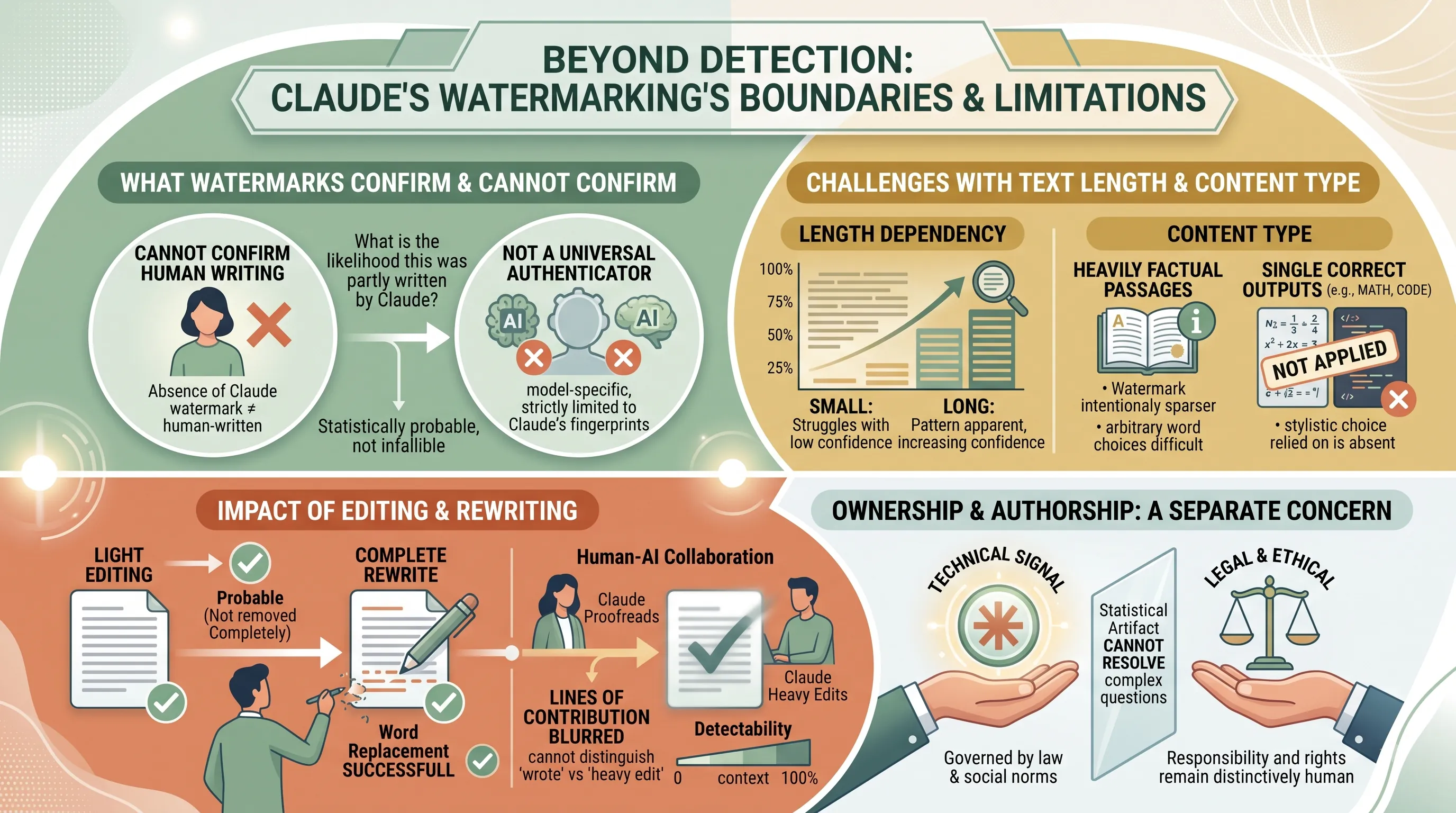
4. Beyond Detection: Understanding Watermarking's Boundaries and Limitations
This section delves into the critical limitations of Claude's watermarking system, providing a necessary counterbalance to its capabilities.By understanding what the technology cannot do, we can better appreciate its intended role: not as an infallible authenticator, but as a probabilistic tool that offers a single, specific piece of information about a text's origin.
What Watermarks Can and Cannot Confirm
At its core, Claude's watermarking technology is designed to answer a very narrow question: "What is the likelihood this was partly written by Claude?"It is not a universal authenticator for human-written text.
The absence of a Claude watermark does not confirm that a passage was written by a person; it simply means it doesn't carry Claude's specific signature.
Furthermore, this system is entirely model-specific.
It cannot determine if a text was generated by a different AI model, as other systems would use a distinct, incompatible watermarking key or method.
The tool's scope is strictly limited to identifying the statistical fingerprints of its own generation process.
Challenges with Text Length and Content Type
The effectiveness of watermark detection is highly dependent on the nature of the text itself.The system struggles with small samples of text, as there isn't enough data to build a confident statistical case.
Confidence about Claude’s involvement increases proportionally as a passage gets longer, allowing the subtle patterns to become more apparent.
Content type also presents a significant challenge.
The watermark is intentionally sparser on heavily factual passages.
This is because in such contexts—like reciting historical facts or scientific data—there are far fewer arbitrary word choices the model can make without sacrificing accuracy.
In cases where there is only one correct output, such as providing a mathematical answer or a specific snippet of code, watermarks are not applied at all, as there is no room for the kind of stylistic choice the system relies on.
Impact of Editing and Rewriting
A generated text is not a final, immutable artifact, and human intervention can disrupt or erase the watermark.While light editing will probably not remove the watermark completely, a determined effort to rewrite a passage can circumvent detection.
A complete rewrite where every word is replaced will successfully remove the watermark.
This creates ambiguity in cases of human-AI collaboration.
For instance, when Claude is used to proofread or lightly edit a text written by a person, the watermark applies to very little of the content, if anything, as most of the word choices belong to the human author.
Detectability in these scenarios depends on the length of the text and the extent of Claude's edits.
Crucially, even when a watermark is detected, it cannot distinguish between 'Claude wrote this' and 'Claude heavily edited this', blurring the lines of contribution.
Ownership and Authorship: A Separate Concern
It is vital to understand that the watermark is a technical signal, not a legal or ethical one.The presence or absence of a watermark does not say anything about the legal ownership of the text or the proper attribution of authorship.
These concepts are governed by law and social norms, and a statistical artifact embedded in text cannot resolve complex questions about who created or owns a piece of work.
The watermark identifies a potential tool used in the process, but the responsibility and rights associated with the final product remain a distinctly human domain.
5. Expanding Reach: Where Claude's Watermarks Apply and Future Tools
This section details the specific types of content where Anthropic’s invisible watermark is applied and outlines the company's roadmap for detection tools and broader model support, connecting the technical principles of the main article to their real-world implementation and future accessibility.Application Across Diverse Content Types
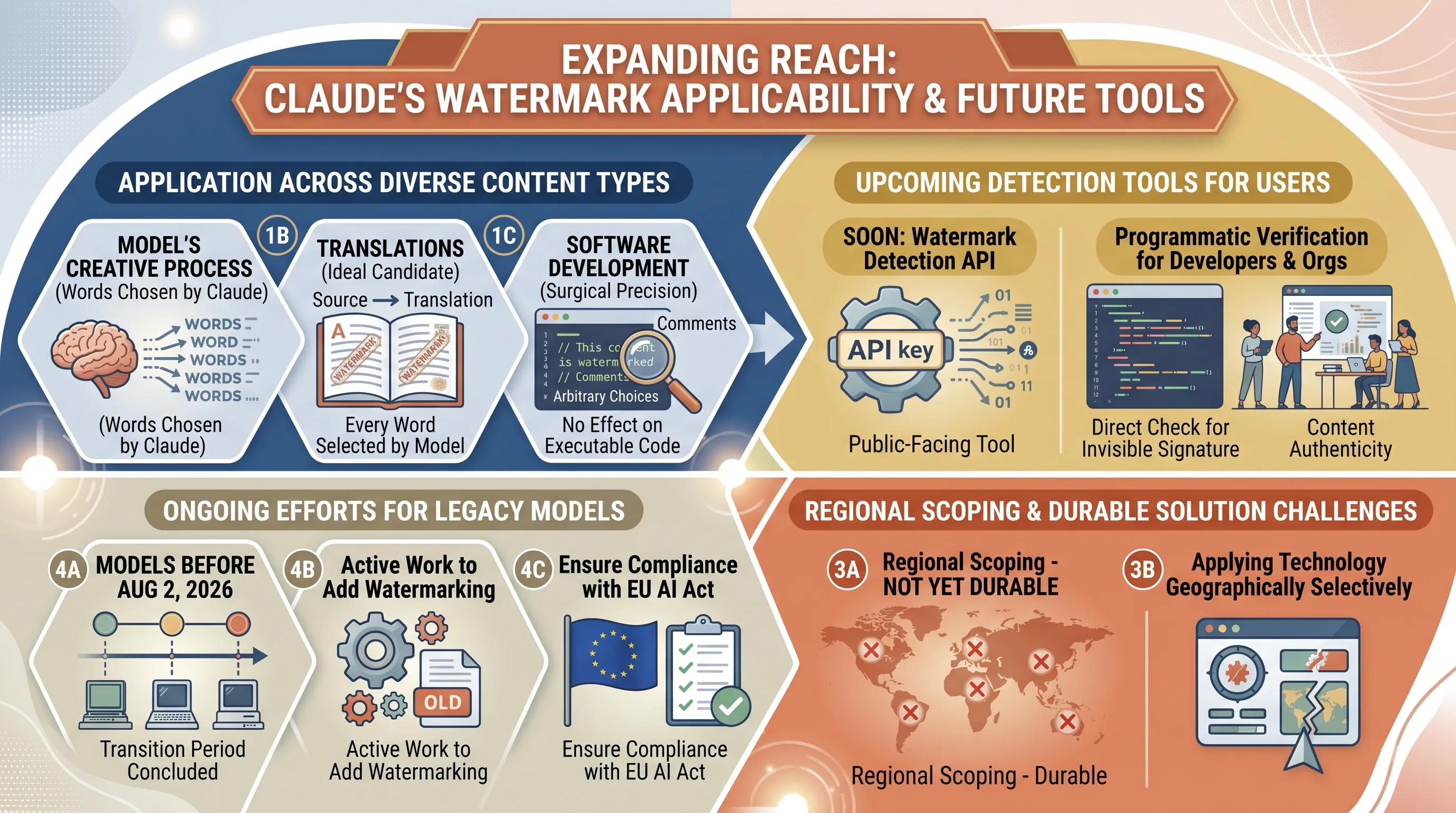
The application of Claude's watermark is fundamentally tied to the model's own creative process.A core principle is that the watermark is only embedded in words chosen by Claude.
This makes certain types of content ideal candidates for watermarking.
For instance, a translation generated by Claude will carry a watermark because every single word in the output is selected by the model to convey the meaning of the source text.
In the context of software development, the watermark is applied with surgical precision to avoid disrupting functionality.
It is used in areas where there is an arbitrary choice between particular words or terms, such as in the text of code comments.
This targeted approach ensures the watermarking process has a negligible effect on the actual executable code produced, preserving its integrity while still allowing for origin tracking.
Upcoming Detection Tools for Users
To make this technology useful for identifying AI-generated content, Anthropic is preparing to provide public-facing tools.The company has announced that it will soon offer a watermark detection API.
This will grant developers and organizations a direct and programmatic way to check text for the presence of Claude's invisible signature, enabling a new layer of verification for content authenticity.
Ongoing Efforts for Legacy Models and Regional Scoping
Anthropic's commitment to watermarking extends beyond its latest models.The company is actively working to add watermarking for models that were launched before August 2, 2026.
This effort is crucial for ensuring comprehensive compliance with regulations like the EU AI Act, which provided a transition period for older models that has now concluded.
However, the global implementation still faces challenges.
As of now, Anthropic does not yet have a durable way to scope watermarking by region, indicating a current limitation in applying the technology on a geographically selective basis.
6. Beyond Text: Content Credentialing for Claude's Image and File Outputs
While the main article focuses on the nuanced methods for watermarking AI-generated text, Anthropic employs a different, more transparent approach for non-text outputs like images and files, known as content credentialing.This system moves beyond embedding hidden signals within content and instead attaches a verifiable, standardized digital label to files Claude produces, providing a clear and distinct method for establishing provenance.
C2PA Standard for File Integrity
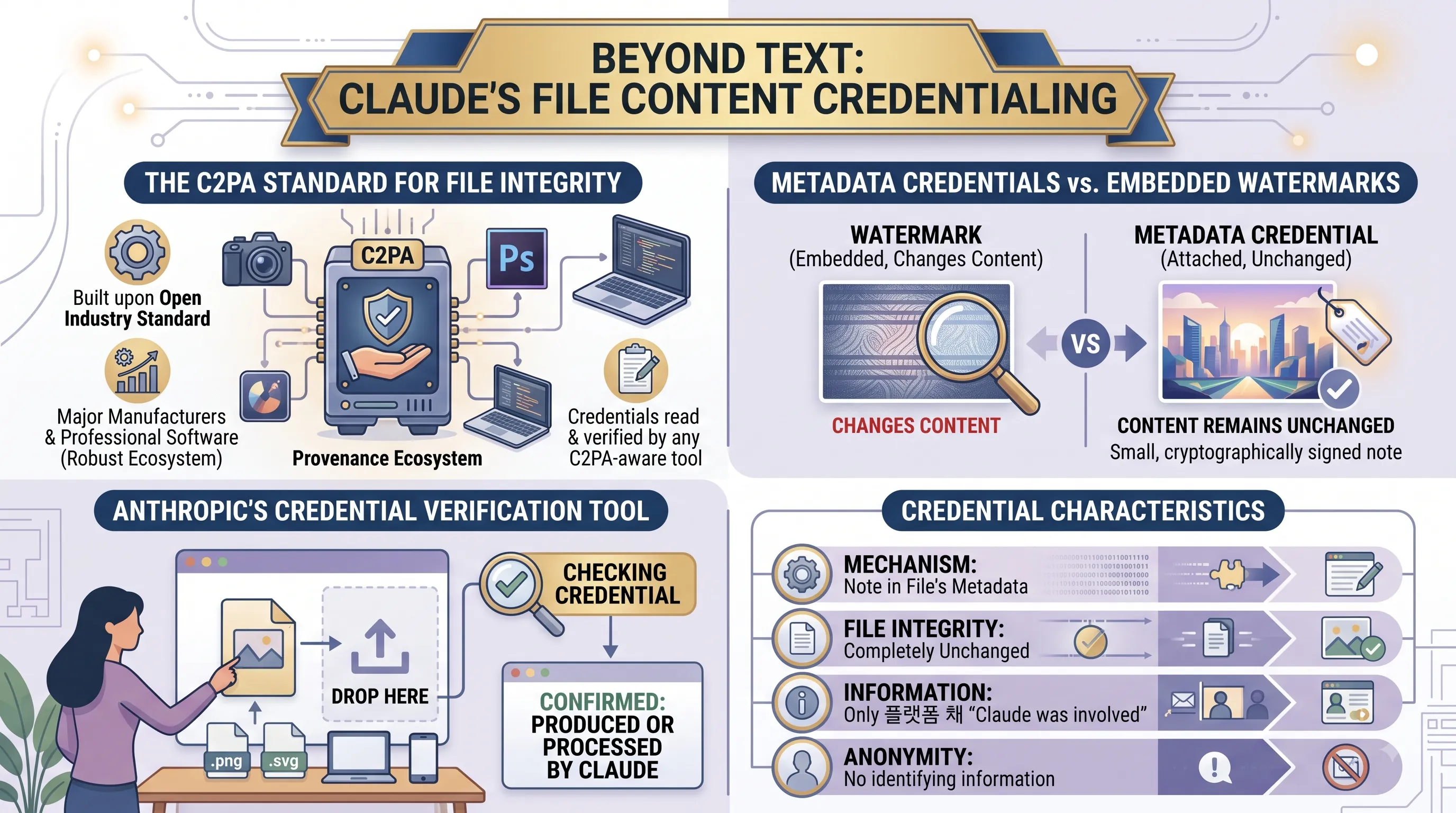
When Claude generates a file of a supported type, such as a .png, .jpg, or .svg, it attaches what is known as a content credential.This process is not a proprietary Anthropic invention but is built upon C2PA (Coalition for Content Provenance and Authenticity), an open industry standard for certifying the source and history of media content.
This is the same robust standard used by major camera manufacturers and in professional photo-editing software, creating a broad ecosystem for digital provenance.
By adopting C2PA, Anthropic ensures that the credentials attached to its generated files can be read and verified by any C2PA-aware tool, not just its own.
Metadata Credentials vs. Embedded Watermarks
A critical distinction of this system is that the content credential is not a watermark.Nothing in the visual or structural content of the file itself is changed, embedded, or hidden.
Instead, the credential is a small, cryptographically signed note placed within the file’s metadata.
This metadata label serves a singular, clear purpose: it states only that Claude was involved in producing or processing the file.
Importantly, the credential does not include any identifying information about the user or the specific session, focusing solely on platform-level attribution.
| Credential Characteristic | Description |
|---|---|
| Mechanism | A small, cryptographically signed note attached to the file’s metadata. |
| File Integrity | The file's content remains completely unchanged; nothing is embedded or hidden. |
| Information Conveyed | The credential only states that Claude was involved in producing or processing the file. |
| Anonymity | The file credential does not include any identifying information. |
| Supported File Types | .png, .jpg, .svg |
Anthropic's Credential Verification Tool
While any tool compatible with the C2PA standard can read these metadata credentials, Anthropic is also simplifying the verification process for its users.The company will provide its own dedicated tool where a user can drop a file and immediately check its credential.
This provides a direct and accessible way for anyone to confirm whether an image or file has been produced or processed by Claude, furthering the goal of transparently identifying AI-generated content.
7. Not Just Any Detector: Claude's Watermarks vs. General AI Detection Software
This section of our analysis clarifies a critical distinction: the technology behind Claude's watermarking is fundamentally separate from the methods used by general-purpose AI detection software. Understanding this difference is key to appreciating both the power of Anthropic's approach and the limitations of existing third-party tools.Methodological Differences
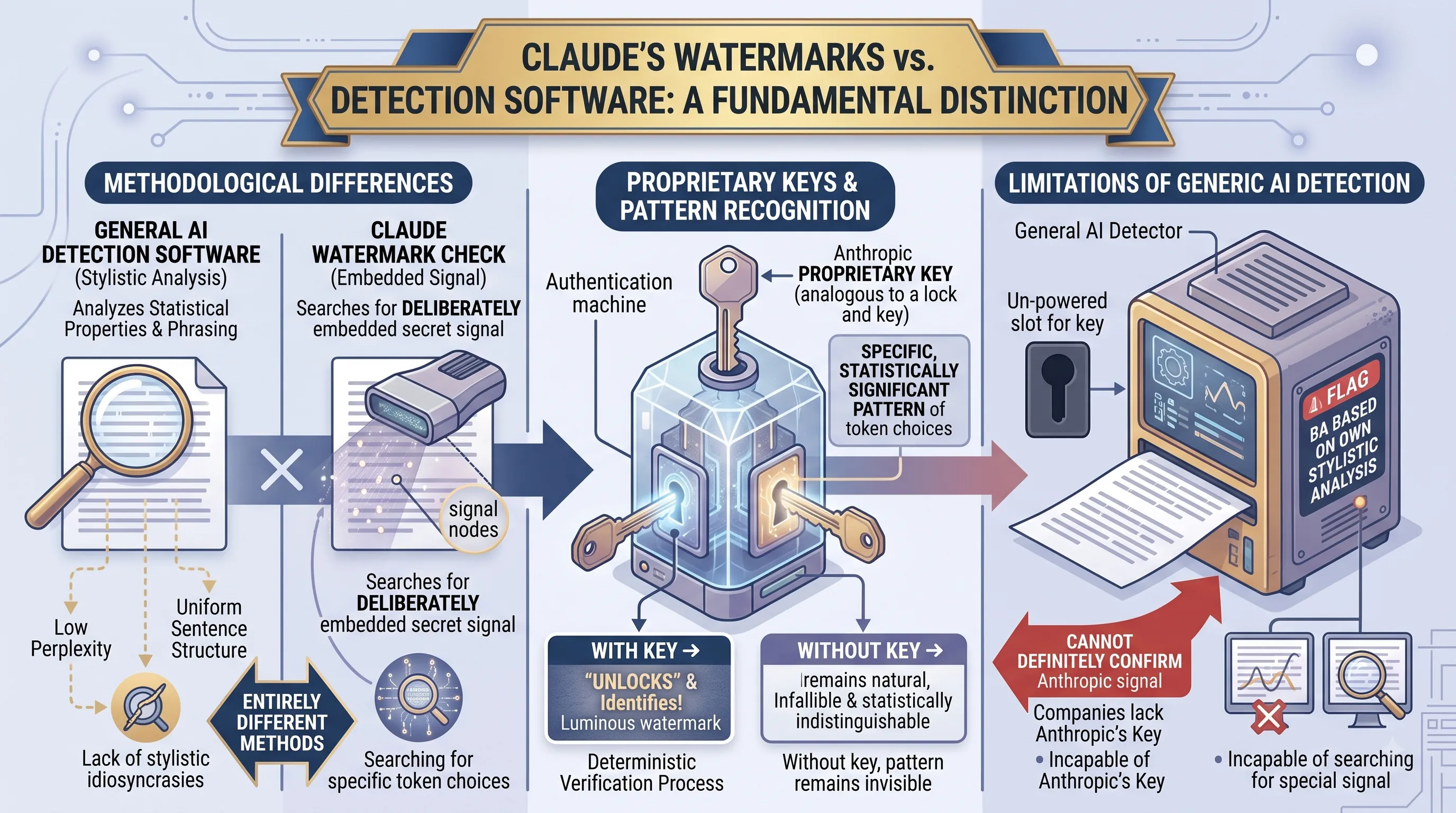
The core distinction lies in the methodology used for identification.AI detection software and watermarking employ entirely different methods to determine if a text was machine-generated.
Commercially available AI detection services operate by analyzing the statistical properties and phrasing of a text for subtle 'tells'.
These tools look for patterns common in AI writing, such as low perplexity (predictable word choices), uniform sentence structure, and a lack of stylistic idiosyncrasies that characterize human writing.
This process is essentially a form of sophisticated stylistic analysis.
In contrast, checking for a watermark is not about analyzing style; it is about searching for a deliberately embedded, secret signal within the text's structure.
Therefore, checking for these general linguistic patterns is fundamentally different from checking for a specific, embedded watermark.
Proprietary Keys and Pattern Recognition
The mechanism for identifying a Claude watermark relies on a cryptographic concept: a proprietary key.This system is analogous to a lock and key; the watermark is the lock embedded within the text, and only Anthropic possesses the specific digital key required to "unlock" or identify it.
The watermark itself is a specific, statistically significant pattern of token choices made during the text generation process.
Without the corresponding key, which details the rules of this pattern, the watermark remains invisible and statistically indistinguishable from natural text variations.
This is a deterministic verification process, not a probabilistic guess based on writing style.
Limitations of Generic AI Detection
The primary limitation of third-party AI detectors in this context is their lack of access to the necessary authentication tool.Simply put, companies that provide general AI detection software do not have Anthropic's key.
As a result, their software is incapable of searching for or verifying the presence of Claude's specific watermark.
While these tools may still flag a watermarked text as likely AI-generated based on their own stylistic analysis, they cannot definitively confirm the presence of the Anthropic signal.
They are analyzing the text's surface characteristics, completely blind to the cryptographic signature hidden within its structure.
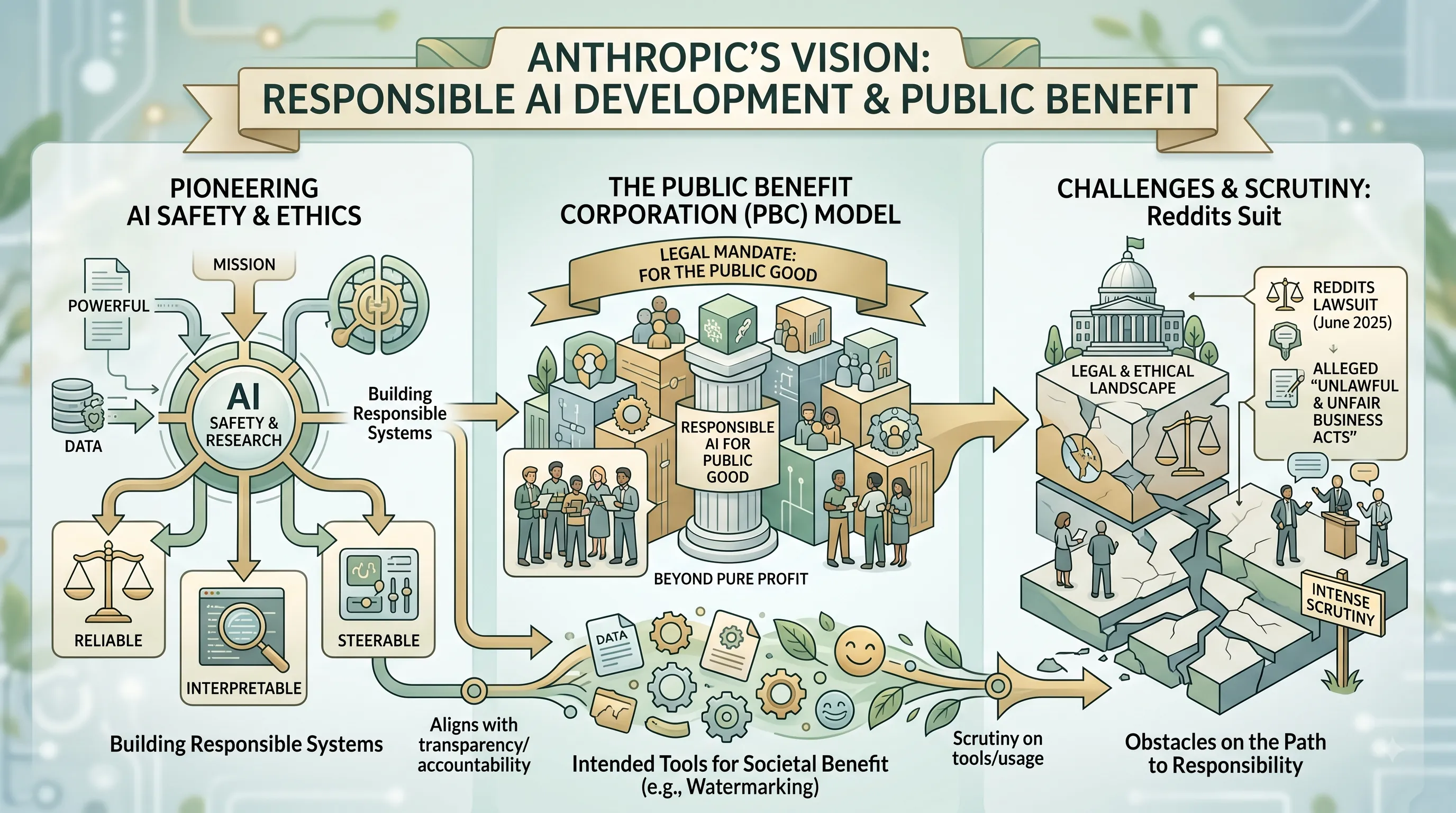
8. Anthropic's Vision: Responsible AI Development and Public Benefit
This section provides crucial context on Anthropic's corporate identity and mission, which underpins its development of technologies like invisible watermarking.Understanding that the company is founded on the principles of AI safety and public benefit helps explain why it prioritizes creating tools for the responsible tracking and management of AI-generated content.
Pioneering AI Safety and Ethics
Anthropic operates fundamentally as an AI safety and research company.Its primary technical and ethical focus is on the challenge of building AI systems that are not just powerful, but also reliable, interpretable, and steerable.
This mission directly informs the creation of features designed to make AI outputs more transparent and accountable, which is the core goal of a watermarking system.
The Public Benefit Corporation Model
Reinforcing its commitment to safety, Anthropic is legally structured as a Public Benefit Corporation (PBC).This corporate framework legally binds the company to a purpose beyond pure profit: the responsible development and maintenance of advanced AI for the public good.
This structure positions its research and commercial products as tools intended to serve a broader societal benefit, aligning with the goal of preventing misuse of AI-generated text.
Challenges and Commitments
The path to responsible AI development is not without its obstacles and scrutiny.As a notable past example, Reddit sued Anthropic in June 2025, demonstrating the complex legal and ethical landscape these research labs must navigate.
The lawsuit included allegations of "unlawful and unfair business acts," highlighting the intense scrutiny placed on companies at the forefront of advanced AI development and data usage.
9. Introducing Claude: Anthropic's Next-Generation AI Assistant
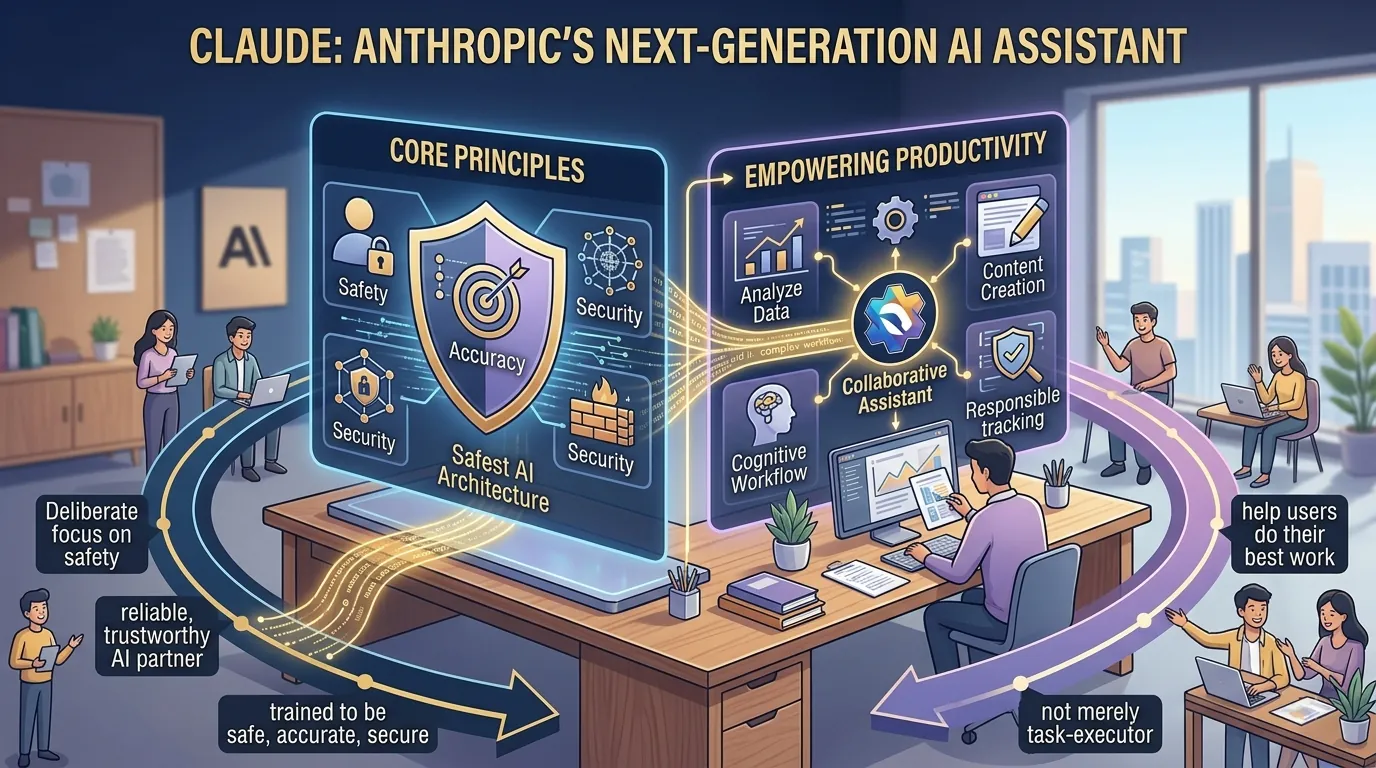
Before delving into the specifics of Claude's innovative invisible watermarking technology, it is essential to understand the AI at its core.This section introduces Claude, the next-generation AI assistant from Anthropic, whose foundational design principles directly inform its approach to content authenticity and traceability.
Core Principles: Safety, Accuracy, Security
At the heart of Claude's architecture is a deliberate focus on responsible AI development.Developed by the AI company Anthropic, Claude is a next-generation assistant that was explicitly trained to be safe, accurate, and secure.
These three pillars guide its operational behavior, representing a foundational commitment to creating a reliable and trustworthy AI partner for users.
Empowering User Productivity
Beyond its core safety principles, Claude is positioned as a powerful tool for professional and creative endeavors.As a next-generation AI assistant, its primary function is to help users do their best work.
This design objective frames Claude not merely as a task-executor but as a collaborative assistant capable of aiding in complex cognitive workflows, from analysis to content creation.
Related Posts

Model Context Protocol (MCP): Anthropic's Open Standard for AI Integration, Claude's Capabilities, & Data EthicsExplore Anthropic's Model Context Protocol (MCP), an open standard revolutionizing AI integration,...

Suno AI Copyright Ruling Collides with EU AI Act's Full Enforcement: New Era for Generative AI, GPAI Transparency & Risk RegulationGerman court rules Suno AI infringed copyright as EU AI Act becomes fully applicable. New era for...
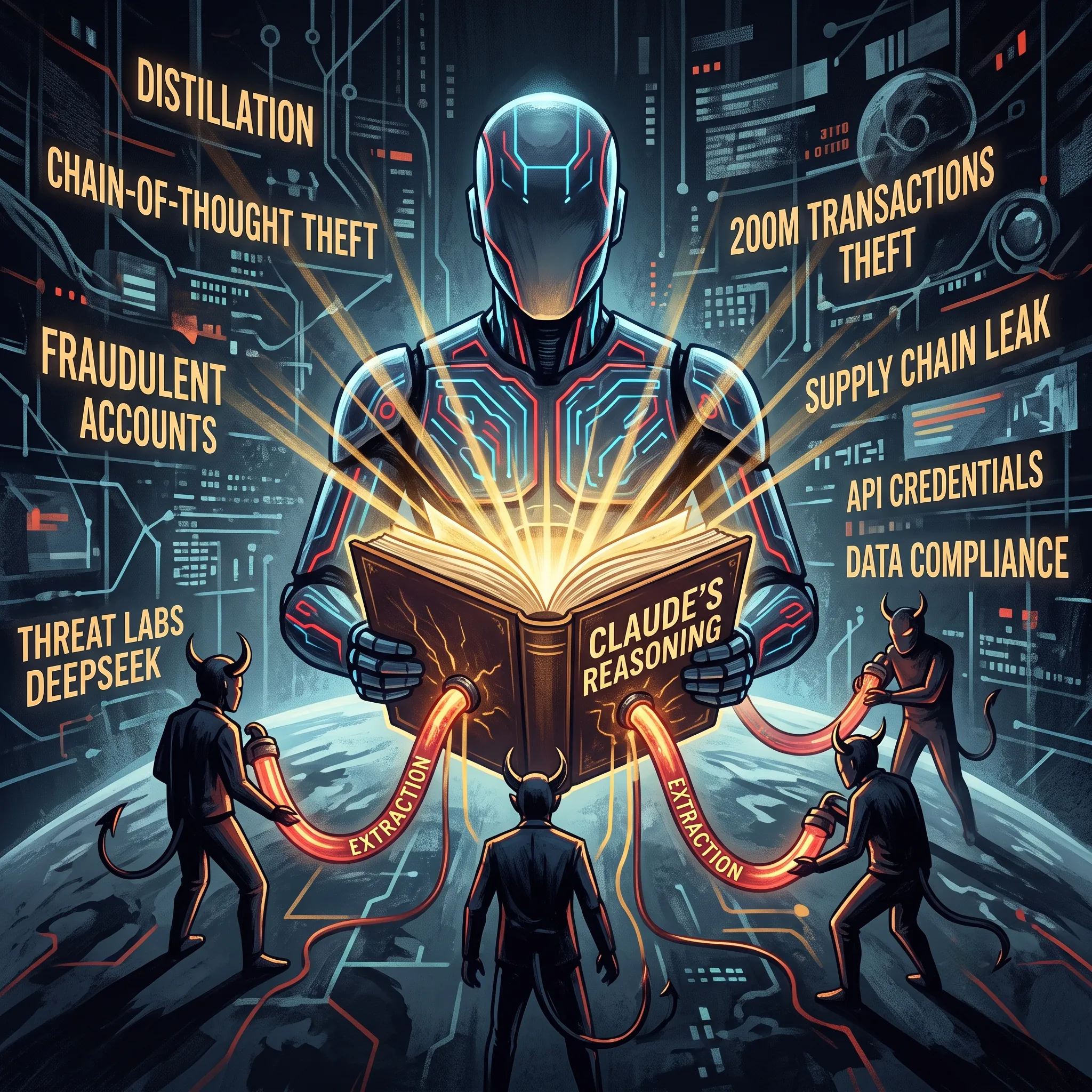
Analysis of Illicit Industrial-Scale Model Distillation and Chain-of-Thought Extraction CampaignsA technical report on illicit industrial-scale distillation campaigns targeting Claude, detailing...